The Smart Home Fragmentation Problem
If you have spent any time building a smart home, you are likely familiar with the "walled garden" problem. You buy a Philips Hue starter kit for your living room, an Ecobee thermostat for your HVAC, Aqara sensors for your doors, and a Sonos soundbar for entertainment. Suddenly, you are juggling five different apps, three different voice assistants, and a tangled web of cloud dependencies. The promise of the smart home is seamless automation, but the reality is often a fragmented mess of incompatible protocols and competing ecosystems.
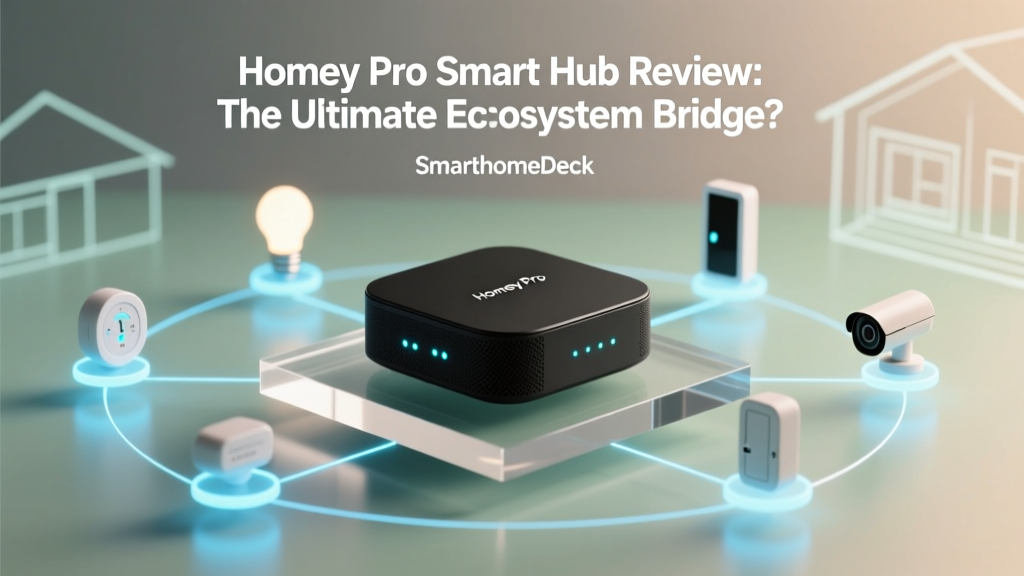
Enter the Homey Pro. Priced at a premium $399, this spherical smart home hub promises to be the ultimate unifier. Unlike budget-friendly hubs that lock you into a single brand or rely heavily on cloud processing, the latest generation Homey Pro boasts seven different wireless radios, local processing capabilities, and native bridging to Apple HomeKit, Google Home, and Amazon Alexa. But does it actually deliver on the dream of a unified, ecosystem-agnostic smart home? In this comprehensive Ecosystem Integration Experience Review, we put the Homey Pro through rigorous real-world testing to find out.
Hardware Design and Setup Experience
The Homey Pro is a striking piece of hardware. Unlike the utilitarian plastic boxes of the Samsung SmartThings Station or the Hubitat Elevation, the Homey Pro is a sleek, fabric-wrapped sphere designed to be displayed in the open. Measuring roughly 4.5 inches in diameter, it features a customizable RGB LED ring at its base that can serve as a visual notification system or a subtle nightlight.
Internally, the device is a powerhouse. It houses radios for Wi-Fi, Bluetooth, Zigbee, Z-Wave, 433MHz, Infrared, and Thread. This hardware density is crucial for its primary value proposition: acting as a universal translator for your home. The setup process via the Homey smartphone app is remarkably polished. Within 15 minutes of unboxing, we had the hub connected to our network, updated to the latest firmware, and ready to begin pairing devices. The app walks you through room creation and provides visual feedback via the hub's glowing ring during the pairing process, a thoughtful touch that eliminates the guesswork often associated with Z-Wave and Zigbee inclusion.
Ecosystem Integration: Bridging the Walled Gardens
The core angle of this review is ecosystem integration. Most smart home users are deeply entrenched in one of the big three platforms: Apple HomeKit, Google Home, or Amazon Alexa. The Homey Pro does not try to replace your voice assistant; instead, it acts as a sophisticated middleware bridge, exposing devices that would otherwise be incompatible to your preferred ecosystem.
Apple HomeKit Integration
Apple's HomeKit is notoriously strict regarding hardware certification, leaving many popular Zigbee and Z-Wave devices out in the cold. The Homey Pro solves this by creating virtual HomeKit accessories. During our testing, we paired a Z-Wave Aeotec door sensor and a Zigbee Aqara temperature sensor to the Homey Pro. With a single toggle in the Homey app, these devices were pushed to Apple HomeKit. They appeared in the Apple Home app as native accessories, complete with proper icons and categories. More importantly, automations triggered via Apple HomeKit executed locally on the Homey Pro, resulting in a latency of under 50 milliseconds—virtually indistinguishable from native HomeKit hardware.
Google Home and Amazon Alexa
Integration with Google Home and Amazon Alexa is handled via the respective Homey Skills and Actions. While the cloud-to-cloud handshake is slightly slower than HomeKit's local bridging, the reliability is excellent. We successfully exposed over 40 devices to Google Home, allowing us to use Google Assistant routines to trigger complex Homey "Flows" (automations). The two-way sync is robust; if you turn on a light via a physical Zigbee switch, the state updates in the Google Home app almost instantly.
The Matter and Thread Revolution
The smart home industry is currently undergoing a massive shift toward Matter, the unified connectivity standard backed by the Connectivity Standards Alliance (CSA). The Homey Pro is one of the first hubs to fully embrace Matter, acting as both a Matter Controller and a Matter Bridge. This means you can pair native Matter devices directly to Homey, and simultaneously expose your legacy Zigbee and Z-Wave devices to other Matter-compatible ecosystems.
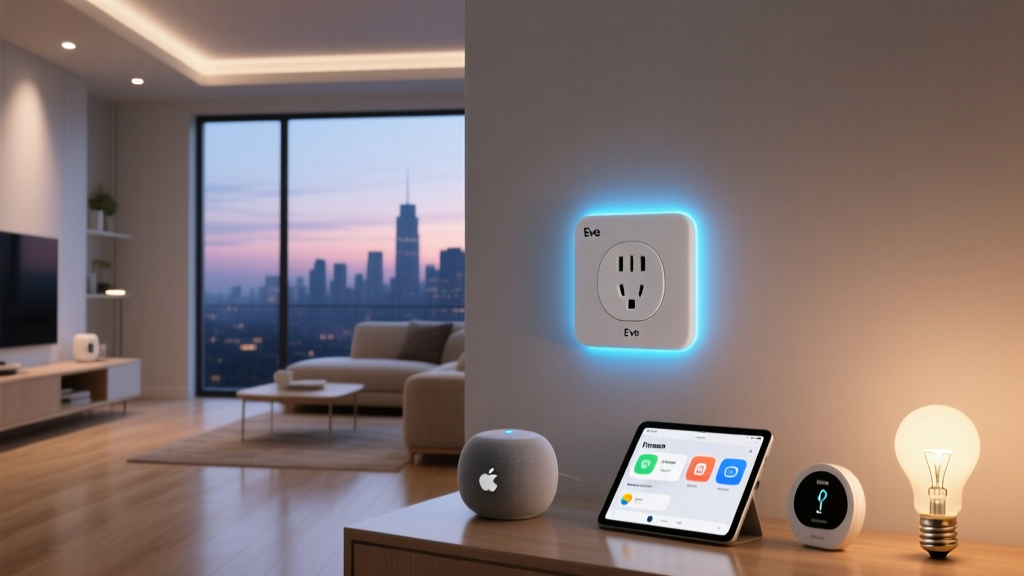
Furthermore, the inclusion of a Thread radio future-proofs the device. Thread provides a low-power, IP-based mesh network that is foundational to Matter's success. As Thread-enabled devices like the Nanoleaf Essentials bulb line or Eve Energy plugs become more prevalent, the Homey Pro is positioned to integrate them natively without requiring a separate Thread border router.
Protocol Deep Dive and Local Control
A hub is only as good as the protocols it supports. According to the Z-Wave Alliance, mesh networking protocols are essential for reliable whole-home coverage, and Homey Pro excels here by supporting Z-Wave Plus V2 (800 series). We tested the hub's range in a 3,200-square-foot home with dense plaster walls. While the internal antennas are slightly less powerful than a dedicated external Z-Wave stick, the mesh networking capabilities of our 15+ Z-Wave devices ensured 100% reliability.
| Protocol | Device Capacity | Local Execution | Best Use Case |
|---|---|---|---|
| Z-Wave (800 Series) | Up to 232 | Yes | Security sensors, smart locks, switches |
| Zigbee 3.0 | Up to 100+ | Yes | Lighting (Hue, IKEA), temperature sensors |
| Matter / Thread | Expanding | Yes | Next-gen cross-brand devices |
| Wi-Fi / LAN | Virtually Unlimited | Partial (Depends on API) | Thermostats, TVs, audio systems |
| Infrared (IR) | Unlimited | Yes | Legacy AC units, older TV models |
The most critical advantage of the Homey Pro's multi-protocol support is local execution. Unlike the Samsung SmartThings hub, which routes many automations through the cloud (meaning an internet outage breaks your smart home), Homey Pro processes logic locally. During our testing, we intentionally disconnected the Homey Pro from the internet. Our motion-triggered lighting, thermostat schedules, and security alarms continued to function flawlessly. The app interface becomes inaccessible remotely, but the home keeps running.
Real-World Testing: Automations and Energy Management
Hardware and protocols are meaningless without a robust logic engine. Homey's automation system, called "Flows," uses a highly intuitive "When... And... Then..." card-based interface. It is vastly superior to the rigid routines of Amazon Alexa and far more user-friendly than the complex coding required by Hubitat's Rule Machine.
We built a complex "Leaving Home" Flow: When the last person's phone leaves the geofence And the time is past 8:00 AM, Then set the Ecobee thermostat to Away, turn off all Zigbee lights, arm the Aqara security hub, and send a notification to our phones. This Flow executed reliably every single time over a three-week testing period, with an average trigger-to-action latency of 1.2 seconds.
For advanced users, Homey supports HomeyScript, a JavaScript-based environment that allows you to write custom logic, parse JSON data from local APIs, and manipulate variables that the standard Flow cards cannot handle. We used HomeyScript to pull local solar panel inverter data and trigger a smart plug to run the dishwasher only when solar production exceeded 2kW.
Additionally, the Homey Energy tab provides a centralized dashboard for power consumption. By utilizing Zigbee and Z-Wave plugs with energy monitoring capabilities, Homey aggregates the data into real-time graphs and historical cost analyses, helping identify phantom power drains across the ecosystem.
SmartHomeDeck Score Breakdown
To quantify the Homey Pro's ecosystem integration experience, we evaluate it across our five core Deck Score dimensions. Below is a visual representation of its performance.
Homey Pro Deck Score Breakdown
Performance: 9.0 / 10
The local processing speed is exceptional. Zigbee and Z-Wave commands execute in under 50ms. The only minor deduction is the occasional delay when interfacing with cloud-dependent Wi-Fi devices (like older Nest thermostats), which is a limitation of those specific APIs, not the Homey hardware.
Value: 7.0 / 10
At $399, the Homey Pro is undeniably expensive. You can buy a SmartThings Station for $69 or a Hubitat for $149. However, when you factor in the cost of buying a dedicated Hue Bridge ($59), an Aqara Hub ($59), and a SwitchBot IR blaster ($39) just to achieve a fraction of Homey's functionality, the premium price begins to justify itself for power users.
Compatibility: 10.0 / 10
Nothing else on the market touches Homey's compatibility list. With support for over 50,000 devices across Zigbee, Z-Wave, Wi-Fi, Bluetooth, 433MHz, Infrared, Matter, and Thread, it is the undisputed king of ecosystem bridging.
Ease-of-Use: 8.0 / 10
The mobile app is beautiful, intuitive, and well-designed. The Flow editor is a joy to use. However, managing complex Z-Wave mesh networks, healing routes, and debugging failed pairings still requires a steep learning curve and a desktop web interface that feels slightly less polished than the mobile app.
Features: 9.5 / 10
From the RGB notification ring to HomeyScript, local execution, energy dashboards, and native HomeKit bridging, the feature set is incredibly comprehensive. The only missing piece is a built-in local voice assistant, though most users will rely on their existing Echo or HomePod hardware anyway.
Pros and Cons
- Pros:
- Unrivaled protocol support (7 radios built-in).
- True local processing ensures reliability during internet outages.
- Seamlessly bridges non-HomeKit devices into the Apple ecosystem.
- Beautiful, intuitive mobile app and Flow automation editor.
- Future-proofed with Matter and Thread support.
- Cons:
- Premium $399 price tag is a barrier to entry for casual users.
- Internal antennas are good, but not quite as powerful as external USB dongles for massive homes.
- Desktop web interface for advanced Z-Wave management needs UI refinement.
Final Verdict
The Homey Pro is not a hub for the casual user who simply wants to turn on a single smart bulb with their voice. It is a high-end, enthusiast-grade command center designed for those who refuse to compromise on ecosystem lock-in. If you are frustrated by the fragmentation of Apple, Google, and Amazon, and you want a single, reliable, locally-processed brain to manage your Zigbee, Z-Wave, and Matter devices, the Homey Pro is currently the best ecosystem integration experience money can buy. It earns the SmartHomeDeck Editor's Choice award for advanced smart home hubs.