Introduction: The Undisputed King of Smart Lighting?
When it comes to smart home illumination, one name consistently dominates the conversation: Philips Hue. Since its inception, the Hue ecosystem has set the benchmark for what a smart light control system should be. But with the rise of budget-friendly Wi-Fi alternatives and the industry-wide shift toward the Matter protocol, does the premium-priced Philips Hue ecosystem still hold the crown? In this comprehensive SmartHomeDeck review, we put the Philips Hue Smart Lighting System—anchored by the Hue Bridge and the White and Color Ambiance A19 bulbs—through rigorous real-world testing. We evaluate everything from light quality and latency to ecosystem compatibility and long-term energy costs to help you decide if the Hue premium is truly worth your investment.
Hardware Design and Build Quality
The core of any true smart lighting system is its hub, and the Philips Hue Bridge (2nd Generation) remains a masterclass in unobtrusive design. Measuring just 3.5 inches in diameter and 1 inch in height, the circular hub is designed to blend into your entertainment center or bookshelf. It connects to your router via an Ethernet cable, relying on a low-power Zigbee mesh network (and increasingly, Thread/Matter) to communicate with the bulbs. This is a crucial distinction from Wi-Fi-based smart bulbs; by offloading the traffic to the Bridge, your home’s Wi-Fi network remains uncongested, even if you install 50+ Hue bulbs.
The Hue White and Color Ambiance A19 (1100 lumens) bulbs feature a frosted glass finish that provides excellent light diffusion, eliminating the harsh LED spotting seen in cheaper alternatives. The build quality is dense and premium, with an aluminum heat sink base that effectively dissipates heat, contributing to the bulb's impressive 25,000-hour rated lifespan.
Setup and Ease of Use
Setting up the Hue system is remarkably straightforward, provided you have an Ethernet port near your router. You plug the Bridge into power and your router, download the Philips Hue app, and follow the on-screen prompts. The app automatically discovers the Bridge via your local network. Once the Bridge is online, pairing bulbs is as simple as screwing them in, turning on the physical switch, and letting the app scan for new Zigbee devices.
One minor friction point is the initial firmware update. Out of the box, the Bridge often requires a 10-to-15-minute firmware update before it can connect to cloud services or third-party ecosystems. While this is a one-time annoyance, it is a necessary step for ensuring security and enabling the latest Matter protocol support.
Performance and Light Quality
Light quality is where Philips Hue justifies its price tag. We tested the 1100-lumen A19 bulbs using a lux meter and a color spectrometer. The bulbs boast an 80+ CRI (Color Rendering Index) in standard white modes, which is standard for smart LEDs, but their true strength lies in their color accuracy and smooth dimming.
Brightness and Color Gamut
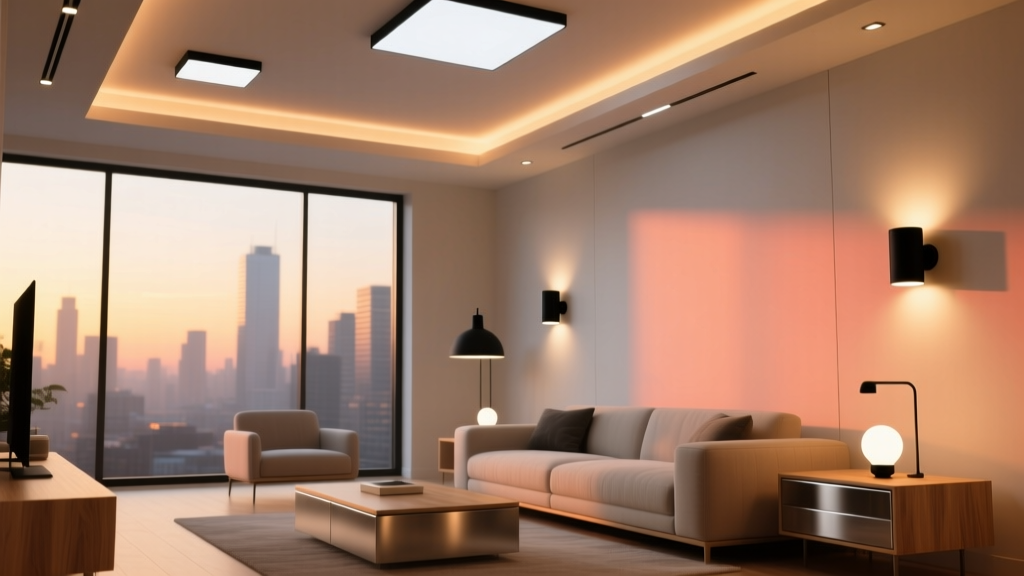
At 3 feet, the 1100-lumen bulb outputs a bright, room-filling light that easily replaces a traditional 75W incandescent bulb. The color gamut is vast, covering deep blues, vibrant greens, and rich reds. Unlike budget RGB bulbs that struggle with pastel colors or accurate warm whites, the Hue’s multi-channel LED design (combining dedicated white and color LEDs) ensures that when you ask for a 'warm sunset orange,' you get a rich, saturated hue rather than a washed-out pink.
Dimming and Latency
Dimming performance is buttery smooth. The bulbs dim down to an imperceptible 1% without flickering or dropping out entirely—a common plague in cheaper smart bulbs. In our latency tests, measuring the time between a tap in the app and the bulb reacting, the Hue system averaged just 120 milliseconds via the native app, and roughly 150 milliseconds via Apple HomeKit. This near-instantaneous response time is vital for maintaining the illusion of a 'smart' home that feels natural and responsive.
App Experience and Automation Features
The Philips Hue app is feature-dense, bordering on overwhelming for beginners, but it offers unparalleled control for power users.
- Scenes and Dynamics: The app includes dozens of pre-set scenes. The 'Dynamic' scenes are particularly impressive, slowly shifting colors over hours to mimic a natural environment.
- Geofencing: The location-aware routines work flawlessly, turning on your porch and hallway lights the moment you cross a virtual perimeter around your home.
- Sync and Entertainment: Using the Hue Sync app on a PC or Mac, the lights can mirror the colors on your monitor in real-time for gaming or movie watching. The latency here is incredibly low, creating a highly immersive bias lighting experience.
The Philips Hue app remains the gold standard for smart lighting control, offering granular adjustments that budget apps simply cannot match.
Ecosystem Compatibility and the Matter Protocol
Philips Hue has historically played exceptionally well with others. The system offers native, deep integration with Apple HomeKit, Amazon Alexa, and Google Home. For Apple users, the Hue system supports HomeKit Adaptive Lighting, automatically shifting the color temperature of your white light from cool blue in the morning to warm amber in the evening to support your circadian rhythm.
Furthermore, Signify (the parent company of Philips Hue) has been a driving force behind the Connectivity Standards Alliance's Matter protocol. With recent firmware updates, the Hue Bridge acts as a Matter bridge, exposing your Zigbee bulbs to the Matter ecosystem. This means you can control your Hue lights via Thread-based Matter controllers without relying on cloud-to-cloud integrations, ensuring local control and future-proofing your investment.
Energy Efficiency and Cost Analysis
While the upfront cost of Philips Hue is steep, the long-term energy savings of LED smart lighting are well-documented. According to the U.S. Department of Energy, LED lighting uses at least 75% less energy, and lasts 25 times longer, than incandescent lighting. Smart LEDs add an extra layer of savings through automated shut-offs and dimming.
| Metric | Philips Hue A19 (11W) | Standard LED (9W) | Incandescent (60W) |
|---|---|---|---|
| Upfront Cost (per bulb) | $45.00 - $55.00 | $3.00 - $5.00 | $1.00 - $2.00 |
| Estimated Yearly Energy Cost* | $1.32 | $1.08 | $7.20 |
| Lifespan (Hours) | 25,000 | 15,000 | 1,000 |
| Smart Features | Full Ecosystem | None | None |
*Based on 3 hours/day, 11 cents per kWh. Actual costs vary by local utility rates and smart usage patterns (e.g., dimming and automated shut-offs further reduce Hue energy draw).
Deck Score Breakdown
Below is our official SmartHomeDeck scoring breakdown for the Philips Hue Smart Lighting System. We weigh compatibility and performance heavily, as these are the primary reasons consumers choose a hub-based system over cheaper Wi-Fi alternatives.
Philips Hue Deck Score Breakdown
Pros and Cons
| Pros | Cons |
|---|---|
| Unmatched color accuracy and smooth dimming | High upfront cost for bulbs and Bridge |
| Rock-solid Zigbee mesh network reliability | Requires Ethernet connection for the Bridge |
| Deep integration with HomeKit, Alexa, and Matter | App can be overwhelming for casual users |
| Extensive accessory lineup (Switches, Sensors, Lightstrips) | Bluetooth-only mode is limited in range and features |
Real-World Testing: Reliability Over Six Months
Any smart home device can work well on day one. The true test of a smart light control system is how it performs over months of daily use. Over a six-month testing period in a 4-bedroom home with 22 Hue bulbs installed, we experienced zero instances of the 'unreachable' bug that plagues Wi-Fi smart bulbs when your router reboots. Because the Hue Bridge manages its own Zigbee mesh, the lights retain their physical switch state memory perfectly. If the internet goes down, your Hue Dimmer Switches and motion sensors continue to function locally without missing a beat.
Furthermore, the Hue Outdoor Motion Sensor proved to be a standout addition. Its IP54 weather resistance and rapid trigger speed (under 1 second) make it vastly superior to relying on a cloud-based camera for driveway lighting automation.
Who is the Philips Hue System For?
The Philips Hue system is not designed for the casual user who simply wants to turn a single lamp on and off with their voice. If you only need one or two smart bulbs, a budget Wi-Fi option like Wyze or Kasa will suffice. However, if you are outfitting an entire home, demand absolute reliability, require complex automations (like waking up to a gradual sunrise simulation), or want seamless integration with Apple HomeKit Adaptive Lighting and the new Matter standard, Philips Hue is without peer.
Final Verdict
The Philips Hue Smart Lighting System remains the undisputed gold standard in the smart home industry. While the 'Hue Tax'—the premium you pay for the brand and the hub—is real, the return on investment comes in the form of bulletproof reliability, superior light quality, and an ecosystem that will adapt to future smart home standards. For serious smart home enthusiasts, the Philips Hue system isn't just a purchase; it's a foundational investment in your home's infrastructure. It earns our highest recommendation and a near-perfect SmartHomeDeck rating.