The Smart Home Privacy Dilemma
As smart home technology becomes deeply integrated into our daily lives, the front door has become one of the most heavily monitored areas of the modern household. Video doorbells offer undeniable convenience and security, but they also introduce significant privacy vulnerabilities. The core of the issue lies in cloud dependency. Major industry players have built their ecosystems around mandatory cloud processing, meaning every ring, motion event, and video snippet is routed through third-party servers. This architecture not only introduces latency and subscription fees but also creates massive honeypots of sensitive biometric and lifestyle data.
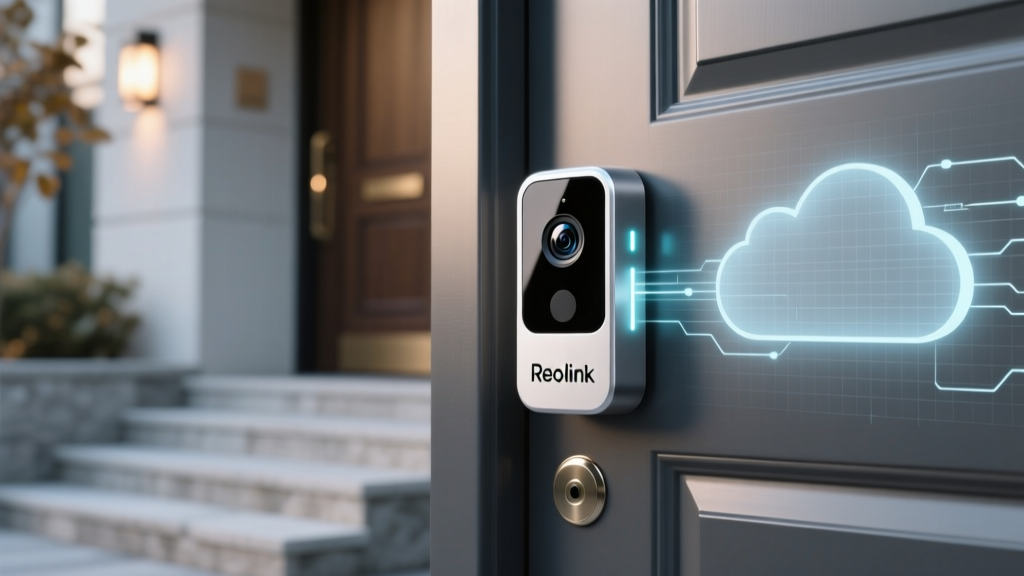
Recent regulatory actions have highlighted these risks. For instance, the FTC has previously cracked down on smart home giants for sharing user footage with law enforcement without warrants and for failing to secure data against unauthorized employee access. As noted by Mozilla's Privacy Not Included project, many popular doorbells fail to meet basic privacy standards, relying on vague data retention policies and mandatory internet connectivity just to function as a simple chime. For privacy-conscious consumers, the solution is not necessarily to abandon smart security, but to shift toward local-first hardware. Enter the Reolink Video Doorbell PoE, a device that promises high-resolution security without the privacy compromises of cloud-dependent alternatives.
Hardware Overview: Built for Reliability
Before diving into the data architecture, it is essential to understand the physical foundation of the Reolink Video Doorbell PoE. Unlike battery-powered or Wi-Fi-dependent models, this device utilizes Power over Ethernet (PoE), specifically the 802.3af standard. This means a single Cat5e or Cat6 Ethernet cable delivers both stable power and high-bandwidth data transmission. The elimination of Wi-Fi interference and battery degradation is a massive win for reliability, ensuring the camera is always online and ready to record.
The optical hardware features a 5MP Super HD sensor with HDR (High Dynamic Range), which is crucial for capturing clear faces when a subject is backlit by the sun. The 180-degree diagonal field of view (FOV) provides a fisheye-like perspective that captures the entire porch, including packages left at your feet. The IP65 weather resistance rating ensures it can withstand heavy rain and dust. However, the true value of this hardware is unlocked only when paired with a robust local network configuration.
Cloud Dependency vs. True Local Storage
The defining characteristic of the Reolink Video Doorbell PoE is its approach to cloud dependency. Unlike Ring or Nest, which require an active internet connection to authenticate your account, process motion alerts, and store video clips, the Reolink PoE doorbell can operate entirely on a closed local area network (LAN). You can physically block the device's MAC address from accessing the WAN (Wide Area Network) via your router's firewall, and it will continue to record, detect motion, and trigger local chimes without interruption.
The MicroSD and NVR Advantage
For standalone users, the doorbell features an internal MicroSD card slot supporting up to 256GB of storage. This allows for continuous loop recording or event-based recording directly on the device. However, for serious privacy enthusiasts, the real power lies in its compatibility with Network Video Recorders (NVRs). When connected to a Reolink NVR or a third-party ONVIF-compliant NVR, the footage is written directly to local hard drives. This data never touches a cloud server, eliminating the risk of remote data breaches or unauthorized server-side access.
ONVIF and RTSP Support
One of the most significant barriers to privacy in the smart home space is proprietary ecosystems that lock you into specific apps and cloud services. Reolink circumvents this by supporting the ONVIF open standard protocol (specifically Profiles S and T) as well as RTSP (Real-Time Streaming Protocol). RTSP allows you to pull the raw video feed directly from the camera using a simple URL string, such as rtsp://admin:password@192.168.1.x:554/h264Preview_01_main. This means you are not forced to use the Reolink app; you can integrate the video feed into virtually any local software, completely bypassing the manufacturer's cloud infrastructure.
Privacy Data Evaluation: Where Does Your Footage Go?
To properly evaluate the privacy of this device, we must look at data transmission, encryption, and telemetry. When the Reolink PoE doorbell is set up for local-only operation, the data pipeline is entirely contained within your home's physical perimeter. Video streams are encrypted in transit across your local network using standard TLS protocols when accessed via the local web UI or app. If you choose to use the Reolink app for remote access, the company utilizes P2P (Peer-to-Peer) tunneling via UID servers. While this requires Reolink's servers to establish the handshake, the actual video payload is encrypted end-to-end, meaning the servers act merely as a relay and cannot decrypt the footage.
However, for maximum privacy, users are encouraged to disable the UID P2P feature entirely and instead use a local VPN (like WireGuard or Tailscale) to access their home network remotely. This ensures that zero telemetry or video data is routed through Reolink's servers. As highlighted by the Electronic Frontier Foundation's IoT guidelines, minimizing third-party data brokers and utilizing local network isolation are the most effective ways to protect against mass surveillance and corporate data monetization.
Ecosystem Compatibility & Integration
The true test of a privacy-focused smart home device is how well it integrates with local home automation hubs without relying on cloud-based IFTTT or proprietary APIs. The Reolink PoE doorbell excels in this arena.
- Home Assistant: Through the official Reolink integration or generic ONVIF/RTSP integrations, the doorbell exposes dozens of local entities to Home Assistant. You can trigger local automations, such as turning on porch lights when a person is detected, with sub-second latency and zero cloud reliance.
- Frigate NVR: For advanced AI object detection, Frigate can ingest the RTSP stream directly. Because the Reolink outputs a stable, high-bitrate H.264/H.265 stream over Ethernet, Frigate can perform local machine learning inference to differentiate between humans, animals, and vehicles without sending a single frame to the cloud.
- Blue Iris & Synology Surveillance Station: Both platforms natively support ONVIF discovery, making the addition of the Reolink doorbell a plug-and-play experience for existing local surveillance setups.
Comparison Table: Privacy Metrics
| Feature | Reolink Video Doorbell PoE | Eufy Video Doorbell Dual | Ring Video Doorbell Wired | Google Nest Doorbell |
|---|---|---|---|---|
| Mandatory Cloud Account | No | Yes (for setup) | Yes | Yes |
| Local RTSP / ONVIF | Yes | No | No | No |
| VLAN Isolation Support | Yes (Fully Functional) | Limited | No (Breaks App) | No (Breaks App) |
| Native Local AI Detection | Yes (On-device) | Yes (On HomeBase) | No (Cloud) | Partial |
| Law Enforcement Data Sharing | Not Possible (Local) | Possible via Cloud | Opt-in / Subpoena | Subpoena |
Deck Score Dimensions
Performance: 8.5/10
The 5MP sensor delivers exceptionally crisp daytime footage, and the HDR handles high-contrast porch lighting beautifully. Nighttime performance is solid, though the lack of a dedicated high-powered spotlight means color night vision relies on ambient street lighting or infrared fallback.
Value: 9/10
Priced significantly lower than its battery-powered counterparts and requiring absolutely no monthly subscription fees, the ROI on this device is unmatched. The upfront cost of running an Ethernet cable is quickly offset by the elimination of cloud storage fees.
Compatibility: 9.5/10
ONVIF and RTSP support make this the most compatible privacy-focused doorbell on the market. It plays nicely with almost every major local NVR and smart home hub.
Ease-of-Use: 6.5/10
This is where the privacy tax comes in. Running PoE requires drilling, fishing cables, and potentially configuring a PoE switch or injector. Furthermore, setting up VLAN isolation and local NVR recording requires a baseline understanding of networking, which may alienate casual users.
Features: 8/10
It includes two-way audio, on-device person/vehicle/pet detection, and customizable motion zones. It lacks the advanced package-specific delivery alerts found in cloud-heavy competitors, but it covers the essentials flawlessly.
Pros and Cons
Pros
- True local operation; functions perfectly on an isolated VLAN with no WAN access.
- ONVIF and RTSP support for seamless integration with Frigate, Blue Iris, and Home Assistant.
- 5MP Super HD resolution with excellent HDR performance.
- Zero mandatory subscription fees or cloud storage requirements.
- Reliable PoE power eliminates battery maintenance and Wi-Fi dropouts.
Cons
- Requires Ethernet cabling, which can be difficult to install in existing homes.
- Two-way audio latency can be slightly higher when routed through third-party local NVRs.
- Lacks advanced cloud-based AI features like specific delivery driver recognition.
- Initial setup and network hardening require moderate technical expertise.
Final Verdict
The Reolink Video Doorbell PoE is a masterclass in local-first smart home security. For users who are tired of paying monthly subscription fees to access their own front porch, or for those deeply concerned about the privacy implications of cloud-dependent surveillance networks, this device is the gold standard. By leveraging PoE for reliability and ONVIF/RTSP for open integration, it hands the control of your biometric and lifestyle data back to you. While the installation requires a bit of elbow grease and networking knowledge, the peace of mind that comes from knowing your footage never leaves your property is well worth the effort. If privacy and data sovereignty are your top priorities, the Reolink PoE Doorbell is the undisputed champion of the category.