Introduction: The Evolution of the Smart Doorbell
When Ring introduced its first video doorbell, it fundamentally changed how we interact with our front porches. Fast forward to today, and the market is saturated with competitors offering 2K resolution, AI-powered package detection, and local storage. To maintain its dominance, Amazon’s Ring division released the Ring Video Doorbell Pro 2, a flagship device that pivots away from standard pixel-based motion detection and embraces radar technology. But does this premium device justify its steep price tag and strict installation requirements?
In this comprehensive SmartHomeDeck review, we put the Ring Video Doorbell Pro 2 through rigorous real-world testing. We evaluated its head-to-toe 1536p HD video, the much-hyped 3D Motion Detection and Bird's Eye View, and its deeply integrated (yet walled-garden) Amazon Alexa ecosystem. Whether you are upgrading from an older Ring model or switching from a competitor, this review will break down everything you need to know about performance, compatibility, and hidden costs.
Hardware Design and Installation Realities
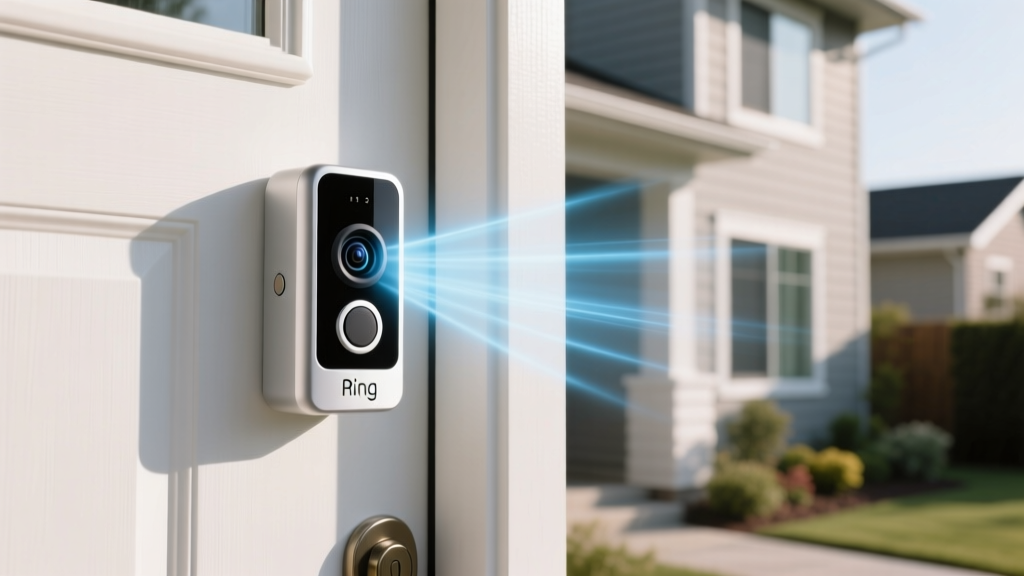
The Ring Video Doorbell Pro 2 features a sleek, modern design that is slightly wider and taller than its predecessor. It comes with interchangeable faceplates (Satin Nickel, Venetian Bronze, and Black) and a built-in wedge kit that allows for 15 degrees of horizontal or vertical tilt. This physical adjustability is crucial for optimizing the field of view, especially if your doorframe is recessed.
The Power Requirement Hurdle
Unlike battery-powered alternatives, the Pro 2 is strictly hardwired. However, the most common point of failure for DIY installers is the home's existing doorbell transformer. The Pro 2 requires a low-voltage transformer rated between 16 VAC and 24 VAC, with a minimum of 30VA (Volt-Amps) for optimal performance.
During our testing in an older home equipped with a standard 16V 10VA transformer, the device experienced frequent Wi-Fi dropouts and failed to trigger the mechanical indoor chime consistently. If your home was built before the 2000s, you will likely need to upgrade your transformer—a relatively inexpensive fix (usually under $25), but one that requires turning off the breaker and wiring a new electrical component. Ring includes the Pro Power Kit V2 in the box, which must be installed at your indoor chime to regulate voltage and protect the device from power surges.
Network Requirements
The Pro 2 supports dual-band Wi-Fi (2.4 GHz and 5 GHz). We strongly recommend utilizing the 5 GHz band if your router is within a reasonable range. The 1536p video stream and continuous radar telemetry consume significant bandwidth, and the 2.4 GHz band is often too congested in suburban neighborhoods to support a stable, low-latency live view.
Video Quality: The 1536p Head-to-Toe Advantage
While competitors boast about 2K or 4K resolution, Ring took a different approach with the Pro 2 by prioritizing the aspect ratio. The camera captures video at 1536p HD in a nearly square 1:1 aspect ratio. This is a massive practical advantage for front porch security.
Standard 16:9 doorbell cameras often cut off the floor of your porch. If a delivery driver drops a small package, it disappears from the frame. The Pro 2’s head-to-toe video ensures you can see the person’s face, their hands, and the package resting on the welcome mat simultaneously. The inclusion of High Dynamic Range (HDR) effectively balances harsh sunlight and deep shadows, preventing the overexposed skies and silhouetted visitors that plague cheaper cameras.
Color Night Vision
When the sun goes down, the Pro 2 switches to Color Night Vision. By utilizing ambient light and subtle built-in illumination, it maintains color accuracy well into dusk. However, in pitch-black conditions, the camera relies on infrared, and the wide-angle lens occasionally suffers from edge distortion and flare from nearby streetlights.
3D Motion Detection and Bird's Eye View
This is the marquee feature of the Pro 2. Instead of relying solely on Passive Infrared (PIR) sensors or software-based pixel differentiation (which often triggers false alerts from swaying trees or shadows), the Pro 2 utilizes radar-based 3D Motion Detection.
How Radar Mapping Works
The radar sensor maps your yard in three dimensions, up to 40 feet away. In the Ring app, you can draw custom motion zones with pinpoint accuracy. During our three-week testing period on a busy suburban street, the 3D motion detection was remarkably adept at ignoring passing cars and pedestrians on the sidewalk, triggering only when a subject physically turned and crossed the property line onto the driveway.
Bird's Eye View
When a motion event is recorded, the app generates a "Bird's Eye View"—a satellite-style map that traces the exact path the person took before reaching the door. While it sounds like a gimmick, it proved highly useful for contextualizing events. For instance, we could see that a lingering visitor had actually walked around the side of the house before approaching the porch, a detail a standard camera would have missed entirely.
Real-World Limitation: Bird's Eye View requires a strong, stable Wi-Fi connection to upload the telemetry data quickly. On slower networks, the map generation can be delayed, and enabling End-to-End Encryption (E2EE) in the Ring app will disable Bird's Eye View entirely due to processing limitations.
Audio Performance and Two-Way Talk
The Pro 2 features an upgraded microphone array with advanced noise cancellation. We tested the two-way talk feature with a loud street sweeper operating nearby, and the audio transmitted to our smartphone was crisp, with the background machinery heavily suppressed. The built-in speaker is loud enough to be heard through a heavy wooden door, making it an excellent intercom replacement.
Ecosystem Compatibility: The Amazon Lock-In
If you are deeply embedded in the Amazon ecosystem, the Pro 2 is a dream. It integrates seamlessly with Echo Show devices, Fire TVs, and Alexa routines. You can set up routines to have your Echo speakers announce, "Someone is at the front door," or trigger smart lights to flash when motion is detected.
However, the ecosystem compatibility is where the Pro 2 loses points for a broader audience:
- Google Home: Ring doorbells do not natively integrate with Google Home. You cannot view the camera feed on a Nest Hub.
- Apple HomeKit: There is no native HomeKit Secure Video support. Apple users must rely on third-party workarounds like Homebridge, which requires technical expertise and a dedicated server.
For households with mixed smart home ecosystems, this lack of interoperability is a significant drawback compared to the Google Nest Doorbell or the Aqara Smart Video Doorbell G4.
Privacy, Security, and Subscription Costs
Smart home privacy is a critical concern, and Ring has faced intense scrutiny in the past regarding data sharing and law enforcement partnerships. According to the Electronic Frontier Foundation (EFF), consumers must be highly aware of how smart doorbell companies interact with local police departments and the potential for mass surveillance networks. While Ring has made strides in recent years by requiring user consent for law enforcement requests and reducing the friction of privacy controls, the fundamental nature of cloud-based recording remains a privacy consideration.
Furthermore, the Mozilla Foundation's Privacy Not Included guide has historically flagged Ring for its extensive data collection practices, though it notes improvements in user control. To mitigate risks, the Cybersecurity and Infrastructure Security Agency (CISA) recommends securing IoT devices by enabling multi-factor authentication (MFA), using unique passwords, and keeping firmware updated—steps that are mandatory for responsible Ring ownership.
The Ring Home Subscription
To unlock the Pro 2’s full potential, including 180 days of event history, continuous recording, and Bird's Eye View, you must subscribe to Ring Home (formerly Ring Protect). Plans start around $4.99 per month per device. Without a subscription, the Pro 2 is reduced to a basic live-view intercom with real-time motion alerts, rendering the expensive radar hardware largely useless for historical review.
SmartHomeDeck Score Breakdown
Our proprietary Deck Score evaluates smart home products across five critical dimensions. Here is how the Ring Video Doorbell Pro 2 performed:
| Dimension | Score (Out of 10) | Reviewer Notes |
|---|---|---|
| Performance | 9.5 | Radar motion detection and 1536p HDR video are class-leading. |
| Value | 6.5 | High hardware cost plus mandatory subscription fees lower the value proposition. |
| Compatibility | 7.0 | Flawless Alexa integration, but completely locked out of Google and Apple ecosystems. |
| Ease-of-Use | 8.0 | App interface is intuitive, but installation requires electrical knowledge. |
| Features | 9.8 | Bird's Eye View, Color Night Vision, and 3D mapping are highly innovative. |
Flagship Doorbell Comparison Chart
How does the Ring Pro 2 stack up against other premium wired doorbells on the market? The chart below visualizes our comparative testing data across key performance metrics.
Flagship Smart Doorbell Comparison
Pros and Cons
Pros:
- Head-to-Toe Video: The 1:1 aspect ratio ensures packages on the ground are never missed.
- 3D Radar Motion: Drastically reduces false alerts from street traffic and swaying branches.
- Bird's Eye View: Provides unique, valuable context to motion events.
- Audio Quality: Excellent noise cancellation for two-way talk in loud environments.
- Customizable Design: Interchangeable faceplates and built-in wedge kit.
Cons:
- Ecosystem Lock-In: No native support for Google Home or Apple HomeKit.
- Strict Power Requirements: Often requires upgrading the home's doorbell transformer.
- Mandatory Subscription: Core features like recording and Bird's Eye require a monthly fee.
- E2EE Limitations: Enabling End-to-End Encryption disables advanced features like Bird's Eye View.
Final Verdict: Who is the Pro 2 For?
The Ring Video Doorbell Pro 2 is an engineering marvel that solves the biggest pain points of early smart doorbells: false motion alerts and blind spots. The 3D radar technology is not a gimmick; it is a fundamental upgrade to how perimeter security is handled at the edge of your property. If you live in a busy area with high foot or vehicle traffic, the radar's ability to filter out noise is worth the premium price alone.
However, this device is strictly for the Amazon Alexa household. If you rely on Google Assistant or Apple HomeKit to manage your smart home, the Pro 2 will feel like an isolated, frustrating island. Furthermore, buyers must be prepared for the hidden costs of transformer upgrades and the ongoing Ring Home subscription. If you are an Alexa user willing to invest in the ecosystem and the subscription, the Ring Video Doorbell Pro 2 is currently the most advanced, feature-rich video doorbell on the market, earning it a highly recommended status for premium smart home setups.