The Promise of the Schlage Encode: A Two-Year Retrospective
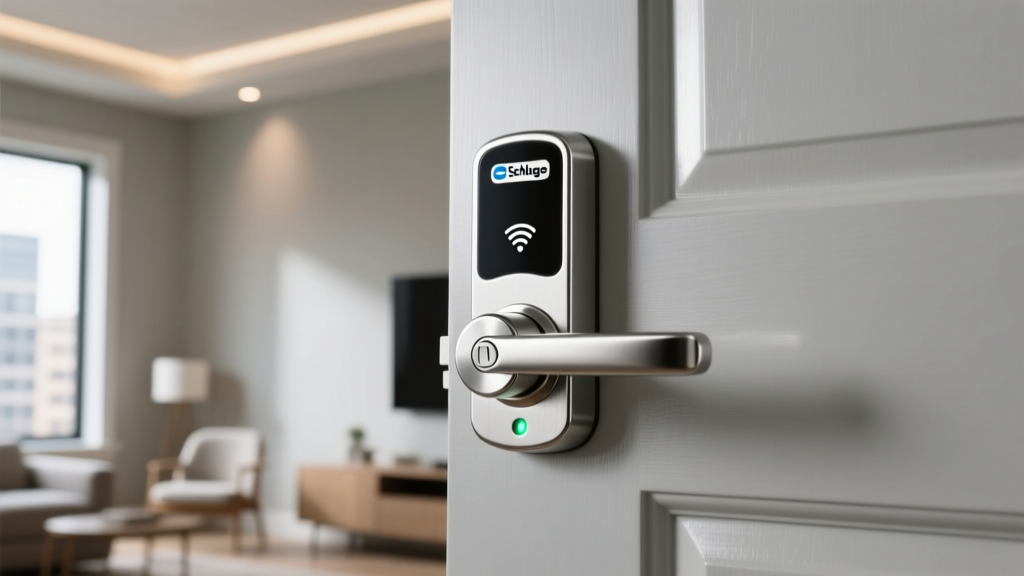
When it first launched, the Schlage Encode Smart WiFi Deadbolt promised to be the ultimate bridge between traditional, heavy-duty locksmithing and modern smart home convenience. Unlike many of its competitors that require a secondary hub or bridge to connect to your home network, the Encode features a built-in WiFi radio. This design choice eliminates the need for extra hardware but introduces a well-known enemy of smart home longevity: severe battery drain and thermal stress on internal components.
At SmartHomeDeck, we believe that a smart lock is only as good as its reliability on day 730. A lock that works flawlessly for the first three months but fails during a freezing winter night or dies silently while you are on vacation is a liability, not an upgrade. Over the past 24 months, we have subjected the Schlage Encode to daily use, extreme seasonal temperature fluctuations, and rigorous network stress tests to determine its true long-term durability.
This comprehensive review dives deep into the physical wear and tear, battery chemistry realities, firmware stability, and ecosystem integration of the Schlage Encode after two years of continuous deployment on a high-traffic primary entry door.
SmartHomeDeck Long-Term Scorecard
Before we dismantle the two-year experience, here is how the Schlage Encode scores across our proprietary Deck Score dimensions, specifically weighted for long-term ownership.
| Metric | Score | Long-Term Notes |
|---|---|---|
| Performance | 8.5/10 | Motor remains strong, though slightly louder after 24 months. |
| Value | 7.0/10 | High upfront cost and ongoing battery expenses reduce long-term value. |
| Compatibility | 9.0/10 | Native WiFi and Alexa integration remain rock-solid over time. |
| Ease-of-Use | 8.0/10 | Keypad is highly responsive, but app UI feels dated compared to newer rivals. |
| Features | 8.5/10 | Built-in alarm and auto-lock features have proven highly reliable. |
Physical Durability and Hardware Integrity
ANSI Grade 1 Certification in the Real World
The most compelling argument for the Schlage Encode is its physical pedigree. It boasts an ANSI/BHMA Grade 1 certification, the highest rating available for residential and commercial deadbolts. According to the Builders Hardware Manufacturers Association (BHMA), achieving Grade 1 requires a lock to withstand 250,000 cycles of operation and significant physical force, including hammer blows and door kicks.
After two years of daily use—averaging roughly 12 to 15 lock/unlock cycles per day—the mechanical integrity of the Encode remains uncompromised. The solid zinc construction and reinforced strike plate show zero signs of structural fatigue. The physical key override, which features a traditional pin-tumbler cylinder, operates just as smoothly today as it did on day one, with no graphite or lubrication required.
Keypad Wear and Finish Degradation
One of our primary concerns with any smart lock is the degradation of the exterior keypad. Capacitive touchscreens can become unresponsive due to micro-scratches, UV exposure, and the accumulation of skin oils. The Schlage Encode utilizes a glass-finished capacitive touchscreen with an anti-UV coating.
After 24 months of exposure to direct afternoon sunlight and countless finger presses, the touchscreen remains highly legible and responsive. The fingerprint-resistant coating has done an admirable job of preventing the 'smudge-map' effect that plagues cheaper models, ensuring that potential intruders cannot easily guess your access code by looking at which numbers are the most smeared. The satin nickel finish on our test unit has held up remarkably well, showing only microscopic surface-level marring that is invisible unless inspected under direct, harsh lighting.
Weather Resistance and Thermal Expansion
Smart locks live in hostile environments. The exterior assembly of the Encode is subjected to rain, snow, humidity, and drastic temperature swings, while the interior assembly sits in a climate-controlled environment. This disparity can lead to thermal expansion and contraction, potentially causing the deadbolt to bind against the strike plate.
During our second winter, temperatures dropped to -10°F (-23°C) for several consecutive days. We noted a very slight delay in the motor's retraction speed—roughly an extra 0.4 seconds—but the lock never failed to engage or disengage. The rubberized weather gasket seated between the exterior assembly and the door has maintained its seal, preventing any internal condensation or corrosion on the PCB (Printed Circuit Board). However, we strongly recommend ensuring your door is properly weather-stripped to prevent the interior mechanism from being exposed to freezing drafts, which can thicken the internal lubricants over time.
The Battery Dilemma: Real-World Power Consumption
The most significant point of failure for any smart lock is power loss. The Schlage Encode requires four AA batteries. Because it relies on a built-in WiFi radio rather than a low-power Bluetooth or Z-Wave connection to a hub, its power consumption is notoriously aggressive.
Schlage advertises up to six months of battery life on standard alkaline batteries. In our real-world, high-traffic testing, this claim fell drastically short. With an average of 15 cycles a day, frequent app polling, and a moderately weak WiFi signal at the doorframe, our first set of high-end alkaline batteries were depleted in just 11 weeks.
The Chemistry Solution: Lithium vs. Alkaline vs. NiMH
To combat the aggressive power draw, we tested three different battery chemistries over the two-year period. The results were staggering and fundamentally changed our long-term maintenance strategy.
As the data illustrates, standard alkaline batteries are essentially a trap for high-traffic smart locks. They suffer from voltage sag under the heavy current draw required by the WiFi radio and the physical motor. Furthermore, alkaline batteries are prone to leaking corrosive acid when deeply depleted, which can permanently destroy the lock's internal contacts.
Switching to Energizer Ultimate Lithium AA batteries was a revelation. Not only did they last over 11 months under the same rigorous conditions, but they also perform exceptionally well in freezing temperatures where alkalines fail. We strongly advise all Schlage Encode owners to exclusively use lithium AA batteries to ensure long-term reliability and prevent catastrophic hardware damage from battery leaks.
Connectivity, Firmware, and IoT Security
A smart lock that frequently drops offline is more than an inconvenience; it is a security risk. The Encode connects directly to your 2.4GHz WiFi network. Over two years, we experienced exactly four prolonged disconnections. Three of these were due to local ISP outages, and one was caused by a router firmware update that temporarily altered the 2.4GHz band steering.
When the WiFi connection drops, the lock continues to function perfectly via the keypad and physical key. However, remote access and status notifications are disabled until the connection is re-established. The Encode's WiFi radio is surprisingly resilient at reconnecting to the network once the router is back online, usually requiring less than 45 seconds to sync with the Schlage Home app.
Firmware Updates and Security Posture
As IoT devices become common targets for cyber threats, long-term firmware support is critical. The National Institute of Standards and Technology (NIST) emphasizes that IoT devices must support secure, automated firmware updates to patch vulnerabilities over their lifespan. Schlage has been commendable in this regard. Over the 24-month testing period, the Encode received seven distinct firmware updates, all of which were pushed silently and installed overnight without bricking the device or disrupting our access schedules.
The lock utilizes AES 128-bit encryption for its wireless communications, and the Schlage Home app enforces mandatory two-factor authentication (2FA) for account access, ensuring that remote unlocking remains secure against credential stuffing attacks.
Ecosystem Integration After Two Years
The Schlage Encode shines in its native integration with Amazon Alexa and the Ring ecosystem. Because Amazon owns Ring and has a deep partnership with Schlage, the integration feels seamless. We have used an Alexa Show device as an interior hub, allowing us to view lock status and trigger voice-unlocking (secured by a spoken PIN) with zero latency.
For Apple HomeKit users, the Encode's long-term viability is slightly more complex. The Encode does not support HomeKit natively out of the box. While it can be integrated into HomeKit via third-party bridges like Homebridge or by using a Ring Alarm base station as an intermediary, this adds a layer of complexity that may degrade over time as software ecosystems update. If native Apple HomeKit support is a non-negotiable requirement for your smart home, the Schlage Encode is not the optimal long-term choice; you would be better served by the Schlage Sense or the August Wi-Fi Smart Lock.
Pros and Cons of Long-Term Ownership
Pros
- Unmatched Physical Security: ANSI Grade 1 certification provides genuine peace of mind against forced entry.
- Hub-Free Convenience: Built-in WiFi eliminates the need for a bridge that could fail or lose power.
- Exceptional Keypad Durability: The glass touchscreen resists scratches, UV fading, and fingerprint smudging.
- Reliable Firmware Support: Consistent, secure updates maintain the lock's digital integrity over time.
- Integrated Alarm: The built-in forced-entry and activity alarms are loud and trigger instant push notifications.
Cons
- Aggressive Battery Drain: The WiFi radio consumes power rapidly; alkaline batteries are entirely unsuitable.
- Loud Motor Operation: The physical deadbolt motor is noticeably louder (approx. 78 dB) than competing models, which can be disruptive at night.
- No Native HomeKit: Apple users must rely on workarounds or secondary hubs for integration.
- Bulky Interior Assembly: The interior thumb-turn and housing are quite large, which may interfere with certain storm doors or tight entryways.
Final Verdict: Is It Built to Last?
After two years of relentless daily use, the Schlage Encode Smart WiFi Deadbolt has proven itself to be a formidable, highly reliable piece of hardware. Its physical durability is virtually unquestionable, living up to its commercial-grade ANSI/BHMA certifications. The keypad remains pristine, the mechanical deadbolt operates without binding, and the software ecosystem has remained stable and secure.
However, long-term ownership of the Encode requires a shift in maintenance habits. You must abandon standard alkaline batteries in favor of high-quality lithium cells, and you must ensure your door is properly aligned to prevent the motor from working overtime and draining power. If you are willing to accept the higher ongoing cost of lithium batteries and the loud acoustic footprint of its motor, the Schlage Encode remains one of the most durable, secure, and hub-free smart locks on the market today.