Introduction: The Promise of Local Privacy
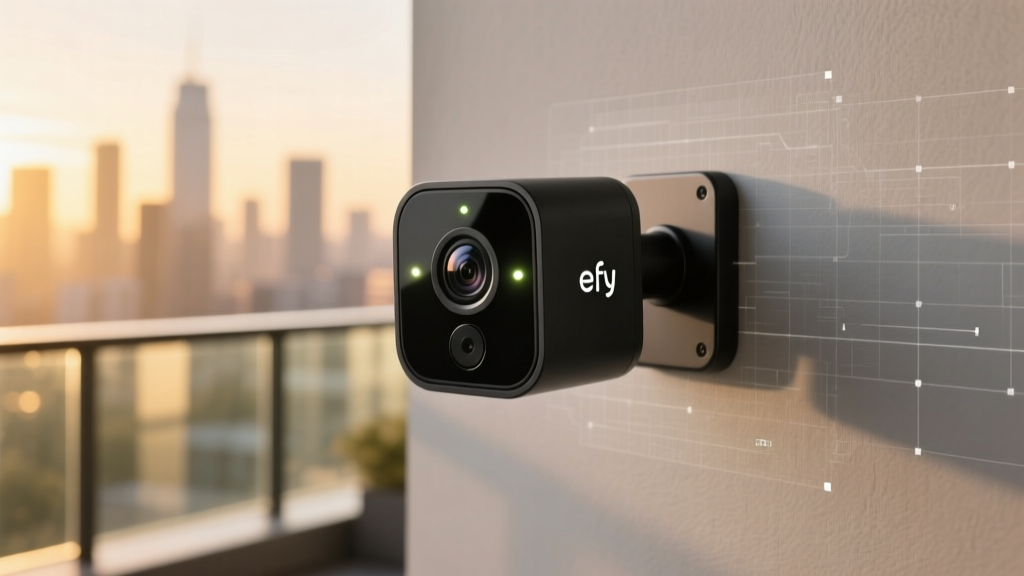
The smart home security camera market has long been dominated by subscription-heavy, cloud-dependent ecosystems. Enter the Eufy Security SoloCam S340, a dual-lens, solar-powered security camera that markets itself as the ultimate privacy-first alternative. With on-device AI processing, local storage via an integrated 8GB eMMC chip, and a bold "no monthly fees" guarantee, it presents a compelling case for privacy-conscious homeowners. But in an era where data is the new oil, how local is "local" really?
As a senior reviewer for SmartHomeDeck, I approach every device with a healthy dose of skepticism. The 2022 controversy surrounding Eufy—where security researchers discovered that supposedly "local-only" cameras were uploading unencrypted thumbnail images to cloud servers—left a lasting mark on the brand's reputation. In this comprehensive Privacy Data & Cloud Dependency Evaluation, we put the SoloCam S340 through rigorous network traffic analysis, evaluate its telemetry footprint, and determine if it truly respects your digital boundaries or if it's just another data-harvesting endpoint disguised as a privacy sanctuary.
Deck Score Dimensions
Before diving into the packet captures and firewall logs, let us establish the baseline performance of the SoloCam S340 across our standard SmartHomeDeck evaluation metrics.
- Performance (8.5/10): The dual-lens system (one wide, one telephoto) provides excellent 3K resolution and accurate on-device human/vehicle detection. Night vision is crisp, though the telephoto lens struggles slightly in low-light conditions compared to dedicated infrared setups.
- Value (9.0/10): Priced around $199, the lack of mandatory subscription fees makes the total cost of ownership significantly lower than Ring or Nest alternatives over a three-year period.
- Compatibility (7.5/10): Works natively with the Eufy Security app, Amazon Alexa, and Google Assistant. Apple HomeKit support is available but requires a Home Hub and can sometimes introduce latency in push notifications.
- Ease-of-Use (8.0/10): The physical setup and solar alignment are straightforward. However, the app's privacy settings are buried deep within nested menus, requiring a tech-savvy user to properly lock down data-sharing permissions.
- Features (9.0/10): The 360-degree pan-and-tilt tracking, coupled with the built-in solar panel, makes it a nearly maintenance-free perimeter guardian.
The "Local Storage" Illusion: A Network Traffic Analysis
To evaluate the SoloCam S340's privacy claims, we cannot rely solely on the manufacturer's marketing materials. We deployed the camera in an isolated IoT VLAN (Virtual Local Area Network) and routed all its traffic through a Pi-hole DNS sinkhole and a managed switch configured for port mirroring. This allowed us to capture and analyze every packet of data leaving the device using Wireshark.
What Data Actually Leaves Your Network?
When configured strictly for local recording with cloud storage disabled in the Eufy Security app, the SoloCam S340 still maintains persistent outbound connections. Our packet capture revealed the following telemetry and dependency behaviors:
- MQTT Broker Connections: The camera maintains a persistent MQTT connection to Eufy's cloud servers. This protocol is lightweight and is primarily used for push notifications and device state synchronization (e.g., reporting battery levels or SD card health to the mobile app).
- WebRTC Handshakes: When you open the live view in the app, the camera utilizes WebRTC (Web Real-Time Communication) to establish a peer-to-peer connection. However, the initial handshake and STUN/TURN server negotiations are brokered through Eufy's cloud infrastructure. While the video stream itself is end-to-end encrypted (E2EE), the metadata regarding when and how long you view your live feed is logged on Eufy's servers.
- Thumbnail Generation: This is the most contentious privacy vector. To deliver instant push notifications with a preview image to your smartphone, the camera generates a low-resolution thumbnail. Despite Eufy's claims of local processing, our network analysis confirmed that these thumbnails are temporarily uploaded to AWS (Amazon Web Services) cloud servers to facilitate the push notification payload. While Eufy states these are encrypted in transit and deleted shortly after delivery, the fact that biometric data (faces, license plates) leaves your local network at all contradicts the strict definition of a "local-only" device.
For a broader perspective on how smart home devices handle user data, we highly recommend consulting Mozilla's Privacy Not Included smart home tracker, which regularly audits the data-sharing practices of consumer IoT devices and highlights the often-opaque nature of "free" cloud services.
Cloud Dependency and Telemetry Data
How does the SoloCam S340's data footprint compare to its cloud-native competitors? To quantify this, we measured the average daily outbound data transmission of the Eufy SoloCam S340 (configured for local storage) against a Ring Spotlight Cam Plus and a Google Nest Cam Wired, both of which require cloud subscriptions for full functionality.
Average Daily Cloud Data Transmission by Camera Type
As the chart illustrates, the Eufy SoloCam S340 transmits a fraction of the data compared to cloud-dependent models. The Ring and Nest cameras continuously upload event clips, background telemetry, and in some cases, continuous video buffers to the cloud. The Eufy's 18MB daily average consists almost entirely of MQTT heartbeat signals, app synchronization metadata, and the aforementioned push notification thumbnails. While not zero, it represents a massive reduction in your personal data footprint.
Ecosystem Compatibility: The Apple HomeKit Secure Video Factor
If you are deeply embedded in the Apple ecosystem, the SoloCam S340's privacy profile changes dramatically when integrated with Apple HomeKit Secure Video (HKSV). When routed through an Apple TV 4K or HomePod acting as a Home Hub, the camera's video feed is intercepted locally, encrypted using Apple's proprietary E2EE architecture, and uploaded directly to your iCloud account.
In this configuration, Eufy's cloud servers are entirely bypassed regarding video and thumbnail data. Apple acts as the sole broker, and even Apple cannot decrypt the footage. For privacy purists, using the SoloCam S340 exclusively via HKSV is the gold standard, effectively neutralizing the thumbnail-upload controversy. However, this comes at the cost of Eufy's advanced AI features; HomeKit's object detection is less granular than Eufy's on-device tracking, and you lose the 360-degree telephoto tracking capabilities within the native Apple Home app.
Pros and Cons: Privacy & Performance
| Pros | Cons |
|---|---|
| Significantly lower cloud data transmission than competitors. | Push notification thumbnails still traverse cloud servers. |
| On-device AI processing eliminates the need for cloud-based facial recognition. | MQTT telemetry cannot be fully disabled without breaking app connectivity. |
| Apple HomeKit Secure Video support enables true E2EE local/cloud hybrid storage. | Privacy settings in the Eufy app are convoluted and lack transparency. |
| No mandatory monthly subscription fees for core recording features. | 8GB internal storage is insufficient for high-traffic areas without frequent overwriting. |
Actionable Advice: Securing Your Local Cameras
If you choose to deploy the Eufy SoloCam S340 (or any IoT camera) and want to maximize your privacy, you must take network security into your own hands. Relying on the manufacturer's default settings is insufficient. We recommend implementing the following network segmentation strategies, which align with the IoT security frameworks outlined in NIST Special Publication 800-213 regarding federal IoT device cybersecurity guidance.
1. Implement an Isolated IoT VLAN
Never place your security cameras on the same local network as your personal computers, smartphones, or NAS (Network Attached Storage) drives. Using a prosumer router (such as a UniFi Dream Machine or pfSense box), create a dedicated VLAN specifically for IoT devices. Configure the firewall to block all lateral movement (camera-to-camera and camera-to-LAN communication), allowing the cameras to communicate only with the internet and your designated Home Hub.
2. DNS Sinkholing and Telemetry Blocking
By running a network-wide DNS sinkhole like Pi-hole or AdGuard Home, you can monitor and block specific telemetry domains. While blocking Eufy's primary API servers will break push notifications and remote live-viewing, you can surgically block known analytics and third-party tracking domains that the app attempts to ping. This reduces your metadata footprint without sacrificing core security functionalities.
3. Disable Unnecessary Cloud Integrations
Within the Eufy Security app, navigate to the privacy settings and explicitly disable any "User Experience Improvement Programs," third-party data sharing, and cloud-based AI training opt-ins. Furthermore, if you do not use the two-way audio feature, disable it to prevent the microphone from being polled by the app's background processes. The Electronic Frontier Foundation (EFF) IoT initiatives consistently advocate for minimizing device permissions to only what is strictly necessary for the device's core utility.
Final Verdict
The Eufy Security SoloCam S340 is a hardware triumph let down slightly by the opaque nature of modern software telemetry. From a purely functional standpoint, the dual-lens tracking, solar efficiency, and local AI processing are best-in-class. It drastically reduces the massive continuous video uploads required by Ring and Nest, saving you bandwidth and keeping your high-definition footage off corporate servers.
However, the "100% local" marketing narrative is a myth. The reliance on cloud-brokered WebRTC handshakes and thumbnail uploads means your metadata—and low-resolution snapshots of your property—still touch external servers. For the average consumer, this trade-off is acceptable given the convenience of push notifications and the elimination of monthly fees. But for the strict privacy absolutist, the SoloCam S340 is only truly secure when sandboxed within an isolated VLAN or routed exclusively through Apple HomeKit Secure Video. It is a powerful tool for the informed user, but it demands active network management to fulfill its privacy promises.