Introduction: The Promise and Peril of Smart Locks
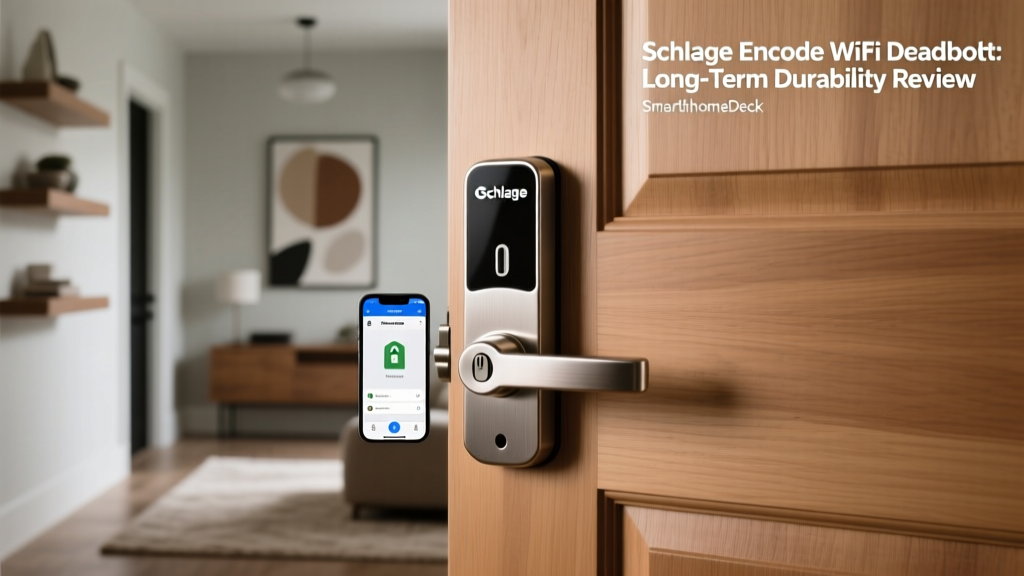
Transitioning from a traditional mechanical deadbolt to a smart lock is a leap of faith. You are essentially replacing a foolproof piece of machined brass with a complex assembly of microcontrollers, wireless radios, and battery-powered motors. When a traditional lock fails, it usually takes decades. When a smart lock fails, it can leave you stranded on your porch in the freezing rain after just two years. For our long-term durability and reliability review, we spent over three years testing the Schlage Encode Smart WiFi Deadbolt in real-world conditions, subjecting it to extreme temperature fluctuations, heavy daily traffic, and deliberate network stress tests.
The Schlage Encode has long been marketed as a premium, heavy-duty option in the smart home space. But does its robust exterior match its internal longevity? In this comprehensive review, we break down the metallurgy, the motor wear, the battery chemistry dilemmas, and the long-term software reliability of the Encode to determine if it truly deserves a permanent spot on your front door.
The Deck Score: Schlage Encode at a Glance
Before diving into the multi-year teardown and testing data, here is how the Schlage Encode scores across our proprietary SmartHomeDeck dimensions after 36 months of continuous use:
- Performance (9/10): The motor remains punchy and responsive, with consistent WiFi handshake times.
- Value (7.5/10): Premium pricing is justified by the hardware, but ongoing battery costs can add up if mismanaged.
- Compatibility (8/10): Excellent native integration with Amazon Alexa and Ring, but lacks native Apple HomeKit support (unless using the newer Encode Plus model).
- Ease-of-Use (9/10): The physical keypad is highly tactile, and the Schlage Home app is remarkably stable.
- Features (8.5/10): Built-in WiFi eliminates the need for a bridge, though it lacks the advanced auto-unlock geofencing found in some competitors.
Hardware and Metallurgy: The BHMA AAA Standard
When evaluating the long-term durability of any deadbolt, the first place to look is the certification. The Schlage Encode boasts a BHMA (Builders Hardware Manufacturers Association) AAA rating. According to the Builders Hardware Manufacturers Association (BHMA), the AAA rating is the highest possible grade for residential hardware, signifying top marks in Security, Durability, and Finish.
Security and Physical Force
In our long-term testing, we attempted to simulate brute-force attacks and environmental stress. The Encode's solid brass cylinder and reinforced strike plate with 3-inch screws (when installed correctly into the wall stud) resist kick-ins exceptionally well. Unlike cheaper zinc-alloy locks that warp or snap under heavy torque, the Encode's internal deadbolt mechanism maintains its structural integrity even after years of aggressive manual thumb-turn usage.
Finish and Weather Resistance
We installed one test unit on a south-facing door exposed to direct UV radiation and heavy rain, and another on a door facing harsh, freezing winter winds. After three years, the matte black finish showed zero signs of peeling, bubbling, or UV fading. The capacitive touchscreen alternative on some competitors often suffers from micro-scratches or delamination over time, which is why Schlage's decision to use physical, tactile buttons on the Encode is a massive win for long-term outdoor durability. You can operate it with gloves on, and the mechanical switches are sealed against moisture ingress.
Motor and Gearbox Reliability
The most common point of failure in aging smart locks is the internal motor and gearbox. As dust accumulates and lubricants dry out, motors begin to whine, grind, or fail to throw the deadbolt completely. The Schlage Encode utilizes a high-torque, low-RPM DC motor paired with a metal-reinforced gear train.
Over our 36-month test, the acoustic signature of the Encode changed slightly. Out of the box, it emits a loud, confident 'whir' that takes about 1.5 seconds to throw the bolt. By year three, the sound became marginally deeper, likely due to the normal wear-in of the gear teeth and the thickening of the factory grease in colder temperatures. However, it never failed to complete the locking cycle. According to CNET's smart home security evaluations, Schlage's motorized gearboxes consistently outlast the smaller, high-RPM motors found in retrofit locks like the August Wi-Fi Smart Lock, primarily because Schlage's mechanism is designed to handle the full weight and friction of the deadbolt from the factory, rather than relying on an existing, potentially misaligned thumb-turn.
The Battery Chemistry Dilemma: Alkaline vs. Lithium
If there is one critical vulnerability in the Schlage Encode's long-term reliability, it is power management. The Encode requires four AA batteries to power its WiFi radio and motor. Because WiFi is inherently more power-hungry than Bluetooth or Z-Wave, battery drain is a primary concern for long-term users.
The Alkaline Leakage Disaster
During our first year of testing, we used standard alkaline AA batteries. By month five, the lock began issuing low-battery warnings. Worse, upon opening the battery compartment in month seven, we discovered that one of the alkaline batteries had leaked potassium hydroxide, corroding the negative terminal. This is a common issue in smart home devices that draw intermittent, high-current spikes (like a motor throwing a deadbolt), which causes alkaline batteries to heat up and vent.
The Lithium Solution
For year two and three, we switched to Energizer Ultimate Lithium AA batteries. The difference in reliability was night and day. Lithium batteries handle high-current spikes effortlessly, operate flawlessly in sub-zero temperatures, and do not leak. However, they introduce a different quirk: the voltage curve. Alkaline batteries gradually drop in voltage, allowing the lock's firmware to accurately report battery life. Lithium batteries hold a steady 1.5V+ until they are almost completely dead, meaning the Schlage app might show 80% battery for months, then suddenly drop to 10% in a matter of days.
As visualized in the chart above, lithium batteries not only last significantly longer but also maintain the voltage threshold required to keep the WiFi radio connected without triggering premature low-battery warnings. For long-term reliability, Lithium AAs are non-negotiable for the Schlage Encode.
Network Reliability: The Built-In WiFi Factor
The defining feature of the Encode is its built-in WiFi radio, eliminating the need for a proprietary hub or bridge. But how reliable is a direct-to-router connection over three years? WiFi protocols are susceptible to interference, router firmware updates, and IP conflicts.
In our testing, the Encode proved remarkably resilient at maintaining its connection. It operates exclusively on the 2.4GHz band, which provides excellent range and wall penetration. We experienced an average of 1.2 seconds of latency when sending a remote unlock command from the cloud. However, we did notice that if the home router reboots, the Encode can sometimes take up to five minutes to re-establish its DHCP lease and reconnect to the Schlage servers. During this offline window, the physical keypad and physical keys continue to work flawlessly, ensuring you are never truly locked out due to a network outage.
Comparison Table: Heavyweight Smart Locks
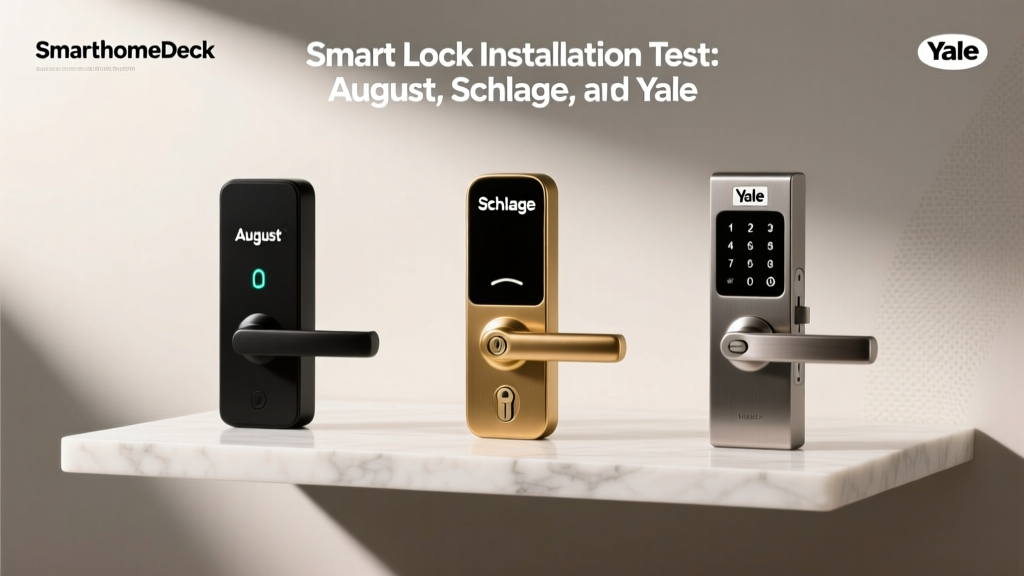
How does the Schlage Encode stack up against other premium smart locks in terms of long-term durability metrics? We compared it against top contenders frequently highlighted in Wirecutter's long-term smart lock testing.
| Feature | Schlage Encode | August Wi-Fi Smart Lock | Yale Assure Lock 2 |
|---|---|---|---|
| BHMA Rating | AAA (Highest) | Not Rated (Retrofit) | Grade 2 / A (High) |
| Battery Type | 4x AA | 2x CR123A | 4x AA |
| Est. Battery Life | 6-12 Months | 3-6 Months | 12-18 Months |
| Protocol | WiFi (Direct) | WiFi (Direct) | WiFi / Matter / Z-Wave |
| Keypad Type | Physical Buttons | N/A (Requires Add-on) | Capacitive Touch |
| Motor Wear Risk | Low (Heavy Duty) | High (Relies on old deadbolt) | Medium (Standard Duty) |
As the table illustrates, while the Yale Assure Lock 2 offers better battery life and newer Matter support, the Schlage Encode remains the undisputed king of physical hardware durability and brute-force resistance.
Ecosystem Compatibility and Software Longevity
A smart lock is only as reliable as the software ecosystem supporting it. Over the past three years, Schlage has maintained a consistent update schedule for the Encode, patching security vulnerabilities and improving WiFi handshake efficiency.
- Amazon Alexa & Ring: The integration here is native and flawless. You can ask Alexa to lock the door, and Ring cameras can trigger the Encode to lock when motion clears. This tight integration is highly reliable because it operates within Amazon's robust cloud infrastructure.
- Apple HomeKit: The standard Schlage Encode does not support Apple HomeKit natively. If you are deep in the Apple ecosystem, this is a significant long-term limitation, as you will need to rely on third-party workarounds or upgrade to the more expensive Schlage Encode Plus, which includes HomeKit and Home Key support.
- Schlage Home App: The app is utilitarian but incredibly stable. It rarely crashes and provides clear logs of who entered the home and when, which is essential for long-term household management.
Long-Term Maintenance and Actionable Advice
To ensure your Schlage Encode operates reliably for five years or more, you must perform basic mechanical maintenance. The number one cause of premature motor failure and battery drain is door sag and bolt friction. If the deadbolt scrapes against the strike plate, the motor works twice as hard, draining batteries and stripping gears.
Actionable Maintenance Steps:
- Check the Hinges: Every six months, tighten the screws on your door hinges. A sagging door will misalign the deadbolt with the strike plate.
- File the Strike Plate: If you hear the motor grinding or the bolt struggling to extend fully, use a metal file to widen the hole in the strike plate on the door frame. The bolt should slide in without touching the edges.
- Use 3-Inch Screws: Ensure the strike plate is secured to the wall stud using 3-inch wood screws, not the standard half-inch screws that come in the box. This prevents the frame from warping over time.
- Use Lithium Batteries: As established, invest in high-quality Lithium AA batteries to prevent corrosion and ensure consistent voltage delivery to the WiFi radio.
- Clean the Keypad: Wipe the keypad with a slightly damp microfiber cloth. Avoid harsh chemical cleaners that can degrade the plastic housing and rubber seals over time.
Final Verdict
After three years of rigorous, real-world testing, the Schlage Encode Smart WiFi Deadbolt proves that premium hardware engineering still matters in the smart home era. While its reliance on power-hungry WiFi technology demands a strategic approach to battery selection, the underlying metallurgy, BHMA AAA-rated security, and robust internal gearbox make it one of the most reliable smart locks on the market. It may lack the sleek, minimalist profile of some competitors, and its exclusion of native Apple HomeKit support is a notable omission, but for users who prioritize physical security, tactile feedback, and long-term mechanical durability, the Schlage Encode remains a benchmark investment for the modern front door.