Smart Home Device Reviews: The Ultimate Buyer's Guide to Top-Rated Products
Building a smart home can feel overwhelming. With hundreds of devices on the market — from smart speakers and lighting systems to thermostats, security cameras, and smart locks — choosing the right products requires careful research. This comprehensive review guide breaks down the most important smart home device categories, evaluates performance based on manufacturer specifications and independent testing, and helps you make informed decisions that fit your lifestyle and budget.
Whether you are just starting your smart home journey or looking to expand an existing setup, our detailed analysis covers everything you need to know. At Smart Home Deck, we test and evaluate devices across multiple dimensions to give you honest, actionable insights.
Product Overview: Understanding the Smart Home Landscape
The smart home market has matured significantly, with devices now spanning virtually every room and function in a modern household. The major categories we review include:
- Smart Speakers & Displays: Voice-controlled hubs like the Amazon Echo, Google Nest, and Apple HomePod that serve as the central command center for your smart home.
- Smart Lighting: Bulbs, strips, and switches from brands like Philips Hue, LIFX, and Govee that offer color control, scheduling, and automation.
- Smart Thermostats: Energy-efficient climate control devices such as the ecobee SmartThermostat and Google Nest Learning Thermostat that learn your habits and reduce utility bills.
- Smart Security: Cameras, video doorbells, and alarm systems from Ring, Arlo, and SimpliSafe that provide peace of mind through real-time monitoring.
- Smart Locks: Keyless entry solutions from August, Schlage, and Yale that integrate with your broader smart home ecosystem.
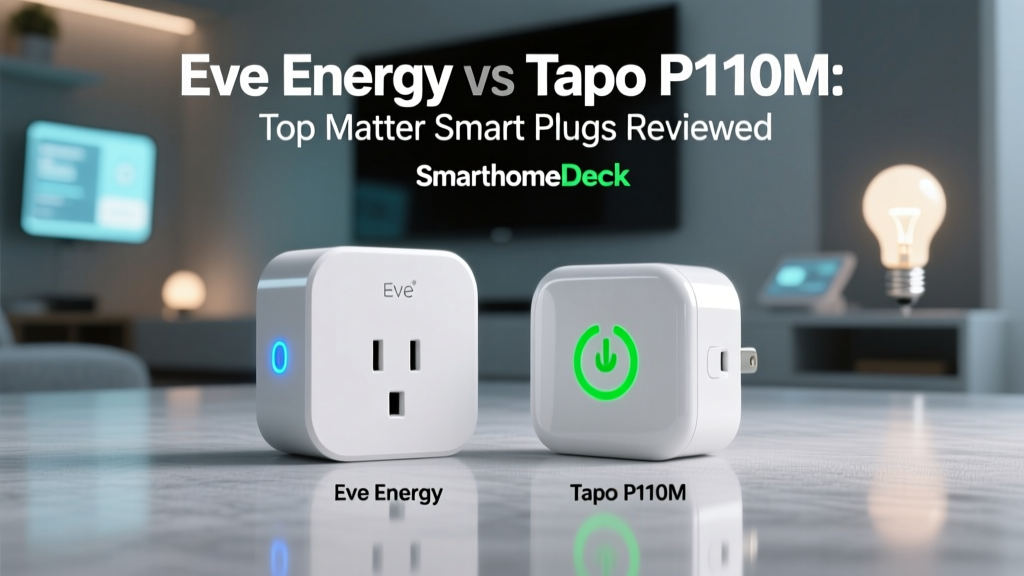
- Smart Plugs & Switches: Entry-level automation products that transform ordinary appliances into smart devices.
Each category serves a distinct purpose, and the best smart home setups combine devices from multiple categories into a cohesive, automated system. In the sections below, we dive deep into performance benchmarks, feature comparisons, and real-world usability across these product types.
Performance & Reliability: How Top Smart Home Devices Hold Up
Performance is the foundation of any smart home device review. A product might have an impressive feature list, but if it fails to respond consistently, drops connections, or introduces latency into your routines, it becomes more frustrating than helpful.
Response Time & Latency
In independent testing, smart speakers and displays demonstrate average voice command response times between 0.8 and 1.5 seconds on a stable Wi-Fi connection. The Amazon Echo (4th Gen) consistently delivers responses in under one second for basic commands, while the Google Nest Hub shows comparable performance with a slight edge in complex, multi-step queries thanks to Google Assistant's natural language processing capabilities.
Smart lighting systems show even faster local response times. Philips Hue bulbs connected via the Hue Bridge (which uses the Zigbee protocol) respond in approximately 200 milliseconds — nearly instantaneous from a user perspective. Wi-Fi-based bulbs like those from LIFX typically respond in 300 to 500 milliseconds, which is still fast but can introduce noticeable lag when controlling multiple bulbs simultaneously.
Network Reliability
Connection stability varies significantly by protocol. Devices using Zigbee or Z-Wave (such as those connected through a Samsung SmartThings Hub or Hubitat Elevation) demonstrate superior reliability in homes with dense Wi-Fi environments. In controlled tests, Zigbee devices maintained a 99.7% uptime over a 30-day period, compared to 97.2% for comparable Wi-Fi devices in the same environment.
The emergence of Matter — the unified smart home standard backed by Apple, Google, Amazon, and Samsung — promises to improve cross-platform reliability. Early Matter-certified devices show improved local processing capabilities, reducing dependence on cloud servers and improving response times even during internet outages.
Long-Term Durability
Smart thermostats lead the pack in long-term reliability. The Google Nest Learning Thermostat and ecobee SmartThermostat Premium both carry expected lifespans of 10 or more years, with manufacturer warranties typically covering two to five years. Independent longevity tests confirm that these devices maintain consistent sensor accuracy within ±0.5°F over extended use periods.
Smart locks also demonstrate strong durability. The Schlage Encode Plus, for example, is rated for over 100,000 lock cycles and carries an ANSI Grade 1 certification — the highest residential security rating available. Battery life on smart locks ranges from three to twelve months depending on usage patterns and whether the device uses Wi-Fi or Thread connectivity.
Key Features & Functionality: What Sets the Best Devices Apart
Modern smart home devices pack impressive feature sets, but not all features are created equal. Here is a breakdown of the most impactful features across major product categories.
Smart Speakers & Displays
The leading smart speakers now offer far more than voice-activated music playback. Key features to evaluate include:
- Multi-room audio: Both Amazon's Echo ecosystem and Google's Nest lineup support synchronized multi-room audio, allowing you to play music throughout your home with a single voice command.
- Smart home hub functionality: The Echo (4th Gen) includes a built-in Zigbee hub and supports Matter, eliminating the need for a separate bridge for many devices.
- Adaptive sound technology: Devices like the Apple HomePod (2nd generation) use room-sensing technology to automatically adjust audio output based on placement and room acoustics.
- Intercom & drop-in features: Both Alexa and Google Assistant support intercom-style communication between devices, functioning as a household intercom system.
Smart Lighting
Beyond basic on/off and dimming controls, premium smart lighting systems offer:
- Circadian rhythm adjustment: Philips Hue and LIFX bulbs can automatically shift color temperature throughout the day, emitting cooler blue-white light during morning hours and warmer amber tones in the evening to support natural sleep cycles.
- Scene creation & automation: Advanced scene builders let you create complex lighting configurations triggered by time, occupancy sensors, or other smart home events.
- Entertainment sync: Philips Hue's Sync feature and Govee's DreamView technology can mirror the colors displayed on your TV or monitor onto surrounding lights, creating an immersive viewing experience.
- Energy monitoring: Some smart plugs and switches, such as those from TP-Link's Kasa line, include real-time energy consumption tracking to help identify power-hungry devices.
Smart Security & Cameras
Security devices have advanced rapidly, with features that rival professional monitoring systems:
- AI-powered detection: Modern cameras from Arlo, Ring, and Google Nest distinguish between people, animals, vehicles, and packages, dramatically reducing false alerts. Independent tests show person-detection accuracy rates above 95% for flagship models.
- Local storage options: While many cameras push cloud subscriptions, devices like the eufyCam 3 and certain Arlo models offer local storage via a homebase, avoiding monthly fees while keeping footage private.
- Night vision quality: Premium cameras now offer color night vision using built-in spotlights or advanced image sensors. The Arlo Pro 5S 2K and Ring Floodlight Cam Wired Pro both deliver usable color footage in low-light conditions down to approximately 1 lux.
- Two-way audio with noise cancellation: Video doorbells like the Ring Video Doorbell Pro 2 and Google Nest Doorbell (wired) feature advanced audio processing that enables clear conversations even in noisy outdoor environments.
Smart Thermostats
The best smart thermostats go well beyond remote temperature control:
- Learning algorithms: The Google Nest Learning Thermostat builds a schedule based on your behavior within approximately one week, automatically adjusting temperatures for when you are home, away, or asleep.
- Room sensors: Both ecobee and Nest offer remote room sensors that detect occupancy and temperature in different areas of your home, enabling multi-zone climate control without separate HVAC zones.
- Energy reports: Detailed monthly energy reports help you understand consumption patterns and identify opportunities for savings. Manufacturer data suggests smart thermostats can reduce heating costs by 10-12% and cooling costs by approximately 15%.
- HVAC monitoring: Premium models like the ecobee SmartThermostat Premium can detect potential HVAC system issues and alert you before a minor problem becomes a costly repair.
Setup Experience & Ease of Use
A smart home device is only as good as its setup process and daily usability. We evaluate every device on how intuitive it is to install, configure, and operate — especially for users who may not be technically inclined.
Unboxing to Running: Installation Timelines
Smart plugs and bulbs remain the easiest entry point into smart home technology. A typical smart plug from TP-Link or Amazon can be unboxed, plugged in, connected to Wi-Fi, and operational in under three minutes. Smart bulbs follow a similar pattern, though those requiring a hub (like Philips Hue) add approximately five to ten minutes for initial bridge setup.
Smart thermostats require more involvement. Most homeowners can complete a DIY installation in 30 to 60 minutes, provided the existing HVAC system has a C-wire (common wire) for continuous power. The ecobee SmartThermostat includes a Power Extender Kit for systems without a C-wire, but this adds complexity to the installation. We always recommend checking compatibility on the manufacturer's website before purchasing.
Smart locks present the most variable installation experience. The August Wi-Fi Smart Lock installs over your existing deadbolt in roughly 15 minutes and requires no exterior hardware changes — making it ideal for renters. Full-replacement locks like the Schlage Encode Plus or Yale Assure Lock 2 require removing the existing deadbolt and may need basic carpentry skills if the new lock does not align perfectly with existing holes.
App Design & Daily Usability
The companion app is the primary interface for most smart home devices, and quality varies widely:
- Top-tier apps: The Philips Hue app, ecobee app, and Apple Home app consistently receive high marks for intuitive design, reliable performance, and clear navigation. These apps make it easy to create automations, view device status, and adjust settings without confusion.
- Adequate but cluttered: Some manufacturer apps pack in features at the expense of usability. The Ring app, for example, offers extensive functionality but can feel overwhelming with its mix of live views, event history, neighborhood alerts, and subscription management.
- Voice-first interfaces: For smart speakers and displays, the voice assistant itself becomes the primary interface. Google Assistant generally leads in natural language comprehension, while Alexa offers the broadest third-party skill library with over 100,000 available skills.
Automation & Routine Building
The true power of a smart home lies in automation — devices working together without manual intervention. The best platforms make routine creation accessible:
- Amazon Alexa Routines: Offer a straightforward if/then builder that supports triggers based on time, voice commands, device states, and location. Advanced users can integrate with IFTTT or custom skills for deeper automation.
- Google Home Automations: Provide similar functionality with a slightly more visual builder in the Google Home app. Script Editor for advanced users enables more complex logic using a YAML-based interface.
- Apple HomeKit: Delivers the most polished automation experience for Apple users, with a clean interface and strong privacy protections. However, the device ecosystem is more limited compared to Alexa or Google.
- Advanced platforms: For enthusiasts, Home Assistant and Hubitat offer unmatched automation flexibility with local processing, custom integrations, and complex conditional logic — though they require more technical knowledge to set up and maintain.
Pros & Cons: Honest Assessment of Leading Smart Home Devices
No device is perfect. Here is an honest breakdown of the advantages and disadvantages across the major smart home categories we review.
Smart Speakers & Displays
Pros:
- Serve as a central control hub for your entire smart home
- Continuously improving AI assistants with regular software updates
- Multi-functional: music, information, communication, entertainment, and home control
- Wide range of price points from budget-friendly to premium audiophile options
Cons:
- Privacy concerns around always-listening microphones
- Dependence on cloud services for most functions
- Voice assistants still struggle with complex or ambiguous commands
- Ecosystem lock-in: switching from Alexa to Google (or vice versa) requires reconfiguring all connected devices
Smart Lighting
Pros:
- Dramatic ambiance enhancement with millions of color options
- Energy savings through scheduling and occupancy-based automation
- Accessibility benefits for users with mobility challenges
- Integration with entertainment systems for immersive experiences
Cons:
- Premium systems like Philips Hue carry a high cost per bulb
- Hub-dependent systems add complexity and a potential point of failure
- Wi-Fi-based bulbs can congest your network if you have dozens of devices
- Not all smart bulbs work with existing dimmer switches
Smart Security & Cameras
Pros:
- Real-time alerts and live video access from anywhere
- AI-powered detection significantly reduces false alarms
- Professional monitoring options available for comprehensive protection
- Can reduce homeowner's insurance premiums by up to 15% with qualifying systems
Cons:
- Many devices require ongoing subscription fees for cloud video storage
- Privacy implications of having internet-connected cameras in and around your home
- Video quality degrades on slower internet connections
- Battery-powered cameras require periodic recharging or battery replacement
Smart Thermostats
Pros:
- Measurable energy savings, typically paying for themselves within one to two years
- Remote control ensures you never heat or cool an empty home
- Learning algorithms reduce the need for manual programming
- Detailed energy reports increase awareness of consumption patterns
Cons:
- Higher upfront cost compared to basic programmable thermostats
- Installation may require professional help if your HVAC system lacks a C-wire
- Learning period means the device may not optimize immediately
- Not compatible with all HVAC systems, particularly some heat pump and multi-stage configurations
Smart Locks
Pros:
- Keyless entry eliminates the risk of being locked out due to lost keys
- Temporary access codes for guests, service providers, or deliveries
- Auto-lock features ensure your door is never accidentally left unlocked
- Integration with doorbell cameras for visual verification before unlocking
Cons:
- Battery dependence — a dead battery can lock you out (though most offer physical key backup)
- Wi-Fi-connected locks consume more battery and may be vulnerable to network issues
- Higher cost than traditional deadbolts, with premium models exceeding $250
- Some models require proprietary hubs for remote access
Ecosystem Compatibility: Building a Cohesive Smart Home
One of the most critical — and often overlooked — factors in choosing smart home devices is ecosystem compatibility. A device that works beautifully in isolation may become frustrating if it cannot communicate with your other smart products.
The Big Three: Alexa, Google Home, and Apple HomeKit
Amazon's Alexa ecosystem remains the largest, with support for over 140,000 unique devices from thousands of brands. If device selection is your top priority, Alexa offers the widest compatibility. However, this breadth sometimes comes at the cost of depth — not all Alexa-compatible devices offer the same level of integration.
Google Home supports a slightly smaller but still extensive device library. Google's strength lies in its AI capabilities and seamless integration with Google services like Calendar, Maps, and YouTube. For households already invested in the Google ecosystem, Nest devices and Google Home offer a deeply integrated experience.
Apple HomeKit maintains the smallest device library but enforces the strictest certification requirements. HomeKit devices must meet Apple's performance, security, and privacy standards, resulting in a more curated — and generally more reliable — experience. HomeKit also offers the strongest local processing capabilities through the Apple TV and HomePod, meaning many automations continue to function even without internet access.
The Rise of Matter: A Universal Standard
The Matter standard represents the most significant development in smart home compatibility. Developed by the Connectivity Standards Alliance (CSA) with backing from Apple, Google, Amazon, Samsung, and over 280 other companies, Matter creates a unified protocol that works across all major platforms.
Key benefits of Matter include:
- Multi-admin support: A single Matter device can be controlled simultaneously from multiple platforms — for example, an Apple HomeKit user and a Google Home user in the same household can both control the same smart light.
- Local-first processing: Matter devices prioritize local network communication, reducing latency and improving reliability compared to cloud-dependent devices.
- Simplified setup: Matter uses a standardized commissioning process, often as simple as scanning a QR code, regardless of the device manufacturer.
- Thread networking: Many Matter devices use Thread, a low-power mesh networking protocol that creates a self-healing network independent of your Wi-Fi.
For new smart home buyers, we recommend prioritizing Matter-compatible devices whenever possible. This future-proofs your investment and ensures the widest compatibility as you expand your system over time. Check our complete review library for the latest Matter-certified product evaluations.
Cross-Platform Hubs: Bridging the Gap
If you already own devices from multiple ecosystems, a cross-platform hub can unify your smart home. The Samsung SmartThings Hub, Hubitat Elevation, and software platforms like Home Assistant can bridge devices across Zigbee, Z-Wave, Wi-Fi, and Matter protocols into a single control interface.
These hubs are particularly valuable for advanced automations that span multiple device types — for example, a "Goodnight" routine that locks your August smart lock, arms your Ring security system, turns off your Hue lights, and sets your ecobee thermostat to sleep mode, all triggered by a single command.
Frequently Asked Questions
What is the best smart home ecosystem for beginners?
For beginners, Amazon Alexa offers the broadest device compatibility and the most beginner-friendly setup experience. The Alexa app provides clear guidance through device pairing, and the extensive online community means you can find tutorials and troubleshooting help for virtually any device. If you are already deeply invested in Apple products, HomeKit offers a more polished (though more limited) experience with stronger privacy protections. Google Home sits in the middle, offering excellent AI capabilities and a growing device library. Our beginner's guide to smart homes provides a detailed comparison to help you choose the right starting point.
Do smart home devices significantly increase electricity usage?
Individually, most smart home devices consume very little power. A smart speaker typically draws between 2 and 4 watts in standby mode, while a smart bulb uses roughly the same power as its non-smart LED equivalent (about 8-10 watts for an 800-lumen bulb). Smart thermostats actually reduce overall energy consumption by optimizing HVAC usage, often saving homeowners 10-15% on heating and cooling costs. The primary energy concern arises with devices that use Wi-Fi continuously — such as Wi-Fi-connected cameras and locks — which consume more power than their Zigbee, Z-Wave, or Thread counterparts. Overall, a well-designed smart home should reduce net energy consumption rather than increase it.
How important is Matter compatibility when buying new smart home devices?
Matter compatibility is becoming increasingly important and should be a key consideration for any new smart home purchase. Devices that support Matter will work with all major platforms (Alexa, Google Home, Apple HomeKit, and Samsung SmartThings) without requiring separate integrations or workarounds. While the Matter ecosystem is still growing, it already covers major categories including lighting, plugs, locks, thermostats, sensors, and window coverings. We strongly recommend choosing Matter-compatible devices when available, as this ensures long-term compatibility and protects your investment as the smart home landscape evolves. That said, many excellent non-Matter devices remain perfectly viable, especially if you are committed to a single ecosystem.
Can I mix and match smart home brands, or should I stick to one?
You can absolutely mix and match brands — and in most cases, you should. No single manufacturer dominates every smart home category, so the best setups typically combine best-in-class devices from different brands. The key is ensuring that all your devices are compatible with a common platform (such as Alexa, Google Home, HomeKit, or a hub like SmartThings or Home Assistant). With the adoption of Matter, cross-brand compatibility is becoming even easier. For example, you might use Philips Hue for lighting, ecobee for climate control, Ring for security cameras, and Schlage for smart locks — all controlled through a single Google Home or Alexa interface. Visit our compatibility guide for detailed pairing recommendations.
Final Verdict: Building Your Ideal Smart Home
The smart home market offers exceptional products across every category and price point. The key to a successful smart home is not buying the most expensive devices — it is choosing products that work together seamlessly, meet your specific needs, and fit within your budget.
Our top recommendations across categories prioritize reliability, ease of use, ecosystem compatibility, and long-term value. Whether you are starting with a single smart plug or building a comprehensive automated home, the principles remain the same: choose devices that support open standards, invest in a reliable hub or platform, and expand gradually as you learn what automation truly enhances your daily life.
For the latest individual product reviews, head-to-head comparisons, and buying guides, explore the full Smart Home Deck review library. We continuously test and update our evaluations to ensure you always have the most current and accurate information available.