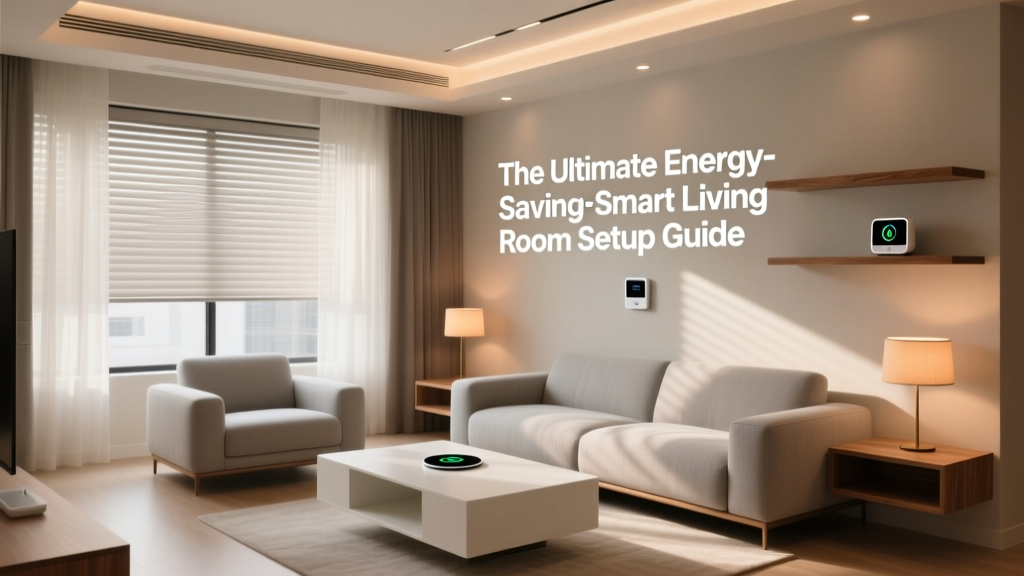
The Living Room: Your Home's Seasonal Command Center
The living room is the heart of the home, serving as the primary gathering space for family entertainment, relaxation, and socializing. However, as the seasons shift from the scorching heat of summer to the freezing depths of winter, the environmental demands on this central hub change dramatically. A static smart home setup is an inefficient one. To truly maximize comfort, energy efficiency, and aesthetic appeal, your living room's smart ecosystem must adapt to the solar angles, temperature gradients, and ambient lighting requirements of the current season.
According to the U.S. Department of Energy, you can save as much as 10% a year on heating and cooling by simply turning your thermostat back 7°-10°F for 8 hours a day from its normal setting. Smart home automation takes this concept further by dynamically adjusting window treatments, zonal heating, and lighting based on real-time weather data and occupancy. In this comprehensive guide, we will explore how to configure your living room for peak summer cooling and winter warmth, complete with specific product recommendations, budget tiers, and automation routines.
Summer Setup: Beating the Heat with Smart Sun Control and Cooling
During the summer months, the primary enemy of living room comfort is solar heat gain. South and west-facing windows can turn your living space into a greenhouse, forcing your HVAC system into overdrive. The goal of a summer smart living room is to block UV rays, manage glare on television screens, and circulate air efficiently without relying solely on central air conditioning.
Smart Blinds and Solar Management
Automated window treatments are your first line of defense against summer heat. For a budget-friendly retrofit, the SwitchBot Blind Tilt (approx. $85) is an exceptional choice. This compact motor attaches to your existing blind wand and uses a light sensor to automatically close the slats when direct sunlight hits the window. For a premium, built-in solution, Lutron Serena Honeycomb Shades (starting at $600 per window) offer superior insulation and seamless integration with the Lutron Caseta ecosystem. Honeycomb shades trap air in distinct pockets, reducing solar heat gain by up to 40% during peak afternoon hours.
Smart Fans and Air Circulation
Ceiling fans create a wind-chill effect that can make a room feel up to 4 degrees cooler, allowing you to raise your thermostat setting and save on cooling costs. If you have existing 'dumb' ceiling fans with RF or IR remotes, the Bond Bridge ($119) is a mandatory addition. It intercepts your remote's signals and connects your fan to your smart hub, allowing you to trigger fan speeds based on room temperature. If you are purchasing a new fan, the Hunter Symphony with built-in Wi-Fi allows direct integration with Apple HomeKit and Amazon Alexa, enabling voice commands and geofenced automation.
The Brain: Smart Thermostats with Room Sensors
The living room is often the largest zone in the house, meaning a single hallway thermostat might misread the actual temperature where you are sitting. The Ecobee SmartThermostat Premium ($249) solves this with its included SmartSensor. Place the sensor on your living room bookshelf or end table. During the summer, configure the ecobee app to prioritize the living room sensor during 'Home' hours, ensuring the room you are actually occupying is kept at a crisp 72°F, while allowing bedrooms to drift slightly warmer to save energy.
Winter Setup: Cultivating Warmth and Cozy Ambiance
When winter arrives, the smart living room transitions from a cooling sanctuary to a cozy, insulated retreat. The focus shifts to retaining heat, eliminating cold drafts from windows, and adjusting the lighting to match the shorter, darker days.
Zonal Heating and Radiator Control
If your living room features hydronic radiators or baseboard heaters, zonal control is the key to winter comfort. The Eve Thermo smart radiator valve (approx. $80 each) replaces your manual valves and utilizes Thread/Matter connectivity for instantaneous response times. By setting a custom schedule, Eve Thermo can lower the radiator output when you leave for work and ramp up the heat 30 minutes before you return. Furthermore, Eve's window-open detection automatically shuts off the radiator if you crack a window for fresh air, preventing wasted energy.
Warm Ambiance and Circadian Lighting
Winter evenings demand warm, inviting lighting to combat the early sunset. The Philips Hue White Ambiance starter kit ($150) allows you to tune your living room lamps from a stark, daylight 6500K (useful for morning cleaning) down to a fire-like 2200K for evening movie watching. Pair these bulbs with a Hue Dimmer Switch mounted near the couch, allowing you to transition the room from 'Reading Mode' to 'Cinema Mode' with a single button press, without needing to reach for your phone.
Smart Plugs for Seasonal Decor and Space Heaters
Winter often brings space heaters and seasonal decor. A Kasa Smart Plug Mini (EP25) ($25) can be used to automate your living room's winter string lights or a small, safe ceramic space heater (always ensure the heater has a physical 'on' switch and safety tip-over features before using a smart plug). Set the plug to turn on automatically at sunset and turn off at 11:00 PM to ensure safety and convenience.
Indoor Air Quality: The Invisible Seasonal Factor
Sealing your living room for winter traps indoor pollutants, while summer humidity can foster mold. The Aqara TVOC Air Quality Monitor ($70) tracks temperature, humidity, and Volatile Organic Compounds (VOCs). In winter, if humidity drops below 30% (causing dry skin and static), the Aqara sensor can trigger a smart plug connected to your humidifier. In summer, if humidity exceeds 60%, it can trigger your HVAC's dehumidification mode or alert your phone to open a window.
Budget Tiers for Seasonal Living Room Upgrades
Transforming your living room does not require an unlimited budget. Below is a breakdown of three distinct tiers to help you plan your seasonal smart home investments.
| Tier | Estimated Cost | Core Components | Best For |
|---|---|---|---|
| Starter | $150 - $250 | SwitchBot Blind Tilt, Kasa Smart Plugs, Budget Smart Bulbs | Renters and those testing the waters with basic sun control and lighting automation. |
| Mid-Range | $400 - $600 | Ecobee Thermostat + Sensor, Bond Bridge, Philips Hue Ambiance | Homeowners wanting precise climate prioritization and premium circadian lighting. |
| Pro | $1,000+ | Lutron Serena Shades, Eve Thermo Valves, Full Hue Ecosystem, Aqara Sensors | Tech enthusiasts demanding total environmental control, Matter/Thread integration, and luxury aesthetics. |
Energy Savings and Efficiency Analytics
Implementing seasonal adjustments is not just about comfort; it is a financial strategy. The EPA Energy Star program notes that certified smart thermostats can save users up to 8% on heating and cooling bills annually. When combined with automated solar shading in the summer and zonal heating in the winter, the compounding savings are significant.
The chart below illustrates the estimated seasonal energy costs for a standard 400-square-foot living room based on different levels of smart automation. By preventing the HVAC system from fighting the sun in July and avoiding heating an empty room in January, Pro setups drastically reduce seasonal overhead.
Estimated Seasonal Energy Costs by Automation Tier
Seasonal Automation Routines to Program Today
The true power of a smart living room lies in 'set and forget' routines. Here are two essential automations to configure in your Apple Home, Google Home, or Alexa app.
Summer Routine: 'Sun Block & Chill'
- Trigger: Time is between 1:00 PM and 5:00 PM AND Outdoor Temperature is above 80°F.
- Condition: Living Room Occupancy sensor detects motion (or Wi-Fi geofencing shows someone is home).
- Actions: Close SwitchBot Blinds to 80% tilt to block direct glare but maintain outward visibility. Turn on ceiling fan via Bond Bridge to medium speed. Set Ecobee to 74°F.
Winter Routine: 'Fireside & Frost Guard'
- Trigger: Sunset occurs (using local weather API) OR Living Room TV is turned on.
- Condition: Outdoor Temperature is below 45°F.
- Actions: Fade Philips Hue lamps to 2200K (warm amber) at 60% brightness. Ensure Eve Thermo radiator valve is set to 70°F. Turn on Kasa Smart Plug connected to the accent floor lamp.
Design and Aesthetic Considerations
When integrating smart devices into your living room, aesthetics are just as important as functionality. Bulky sensors and trailing wires can ruin a carefully curated interior design. For the Ecobee room sensor, consider mounting it on a floating shelf using a discreet 3M Command strip rather than drilling into drywall. For smart plugs, choose ultra-mini models like the Kasa EP25 that do not block the adjacent outlet, and hide them behind heavy winter curtains or large potted plants.
Lighting fixtures should also be considered. Instead of relying solely on smart bulbs, consider installing a smart switch like the Lutron Caseta Dimmer behind your existing wall plate. This allows you to keep your beautiful, designer living room lamps with their original Edison bulbs while still gaining smart, seasonal dimming capabilities. Finally, remember to update your smart speaker's routines and ambient sounds to match the season—swapping summer nature sounds for winter crackling fire audio when the lights dim.
Conclusion
Adapting your living room to the shifting seasons transforms it from a passive room into an active, responsive environment. By strategically deploying smart blinds to fight summer heat, utilizing zonal valves to capture winter warmth, and tuning your lighting to match the sun's natural cycle, you create a space that is perpetually comfortable. Whether you start with a simple smart plug and blind motor or invest in a fully integrated Matter-compatible ecosystem, these seasonal adjustments will pay dividends in both daily comfort and long-term energy savings.