Why Your Living Room Needs Pet-Aware Smart Tech
The living room is the heart of most homes—and for pet owners, it’s also the epicenter of fur-covered couches, chewed remotes, and midnight zoomies. Yet most smart home setups ignore one critical user: the four-legged family member. According to the American Veterinary Medical Association (AVMA), over 66% of U.S. households own at least one pet, with dogs and cats spending up to 14 hours daily in shared living spaces. A truly intelligent living room doesn’t just respond to voice commands—it anticipates pet behavior, prevents hazards, and adapts to animal physiology.
Core Principles of Pet-Friendly Smart Living Rooms
A pet-intelligent setup rests on three pillars:
- Safety-first sensing: Devices must detect movement, temperature, and obstruction without false triggers from tails or paws.
- Non-toxic & chew-resistant design: Cables, enclosures, and materials should meet ASTM F963-17 (toy safety) or UL 62368-1 (electronics safety) standards.
- Behavior-aware automation: Routines shouldn’t lock doors during separation anxiety episodes or blast cold air when a cat is napping on the vent.
Essential Devices by Function
1. Pet-Safe Climate Control
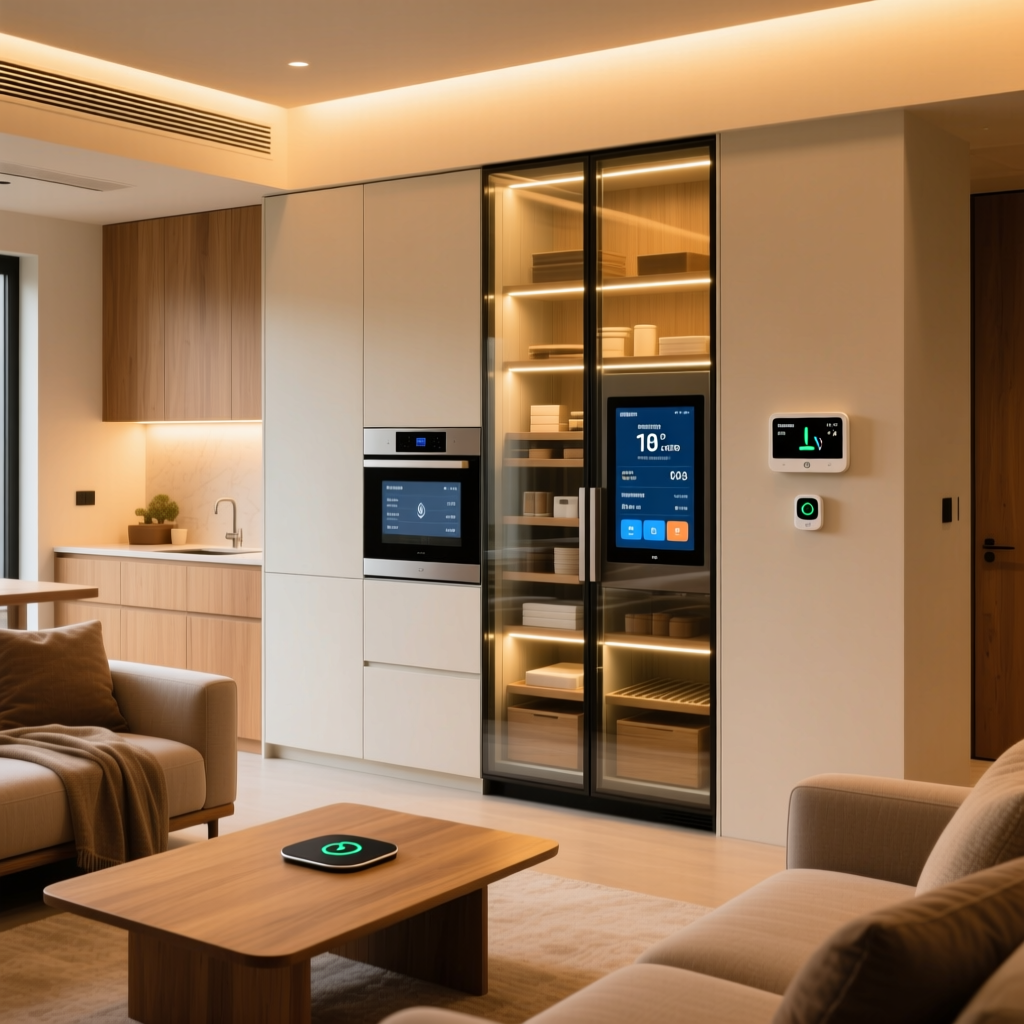
Pets regulate body temperature differently than humans. Dogs can’t sweat effectively; cats prefer ambient temps between 75–80°F. Standard thermostats often overcool or overheat zones where pets rest. The Ecobee SmartThermostat Premium (2026 model) includes built-in occupancy and motion sensing with adjustable sensitivity—crucial for distinguishing between human stillness and cat napping. Its room sensors (sold separately, $79 each) can be mounted 36–48 inches high—out of paw-reach but within thermal sampling range.
Pair it with the Honeywell Home RTH9580WF, which supports geofencing + pet-mode scheduling. When your phone leaves the geofence, it delays cooling/heating ramp-up by 15 minutes—giving pets time to settle before HVAC cycles begin. Both units integrate with Apple HomeKit Secure Video and Matter 1.2, ensuring compatibility with future pet-monitoring cameras.
2. Chew-Resistant Power & Charging
According to the ASPCA Animal Poison Control Center, electrical cords are among the top 10 causes of emergency vet visits for chewing injuries. The Belkin WeMo Insight Smart Plug (2nd Gen) ($34.99) features a reinforced polycarbonate housing (UL 94 V-0 rated) and a 10-foot braided nylon cable—tested to withstand 50+ lbs of tensile force. More importantly, its energy monitoring lets you detect abnormal draw spikes (e.g., if a dog chews into a cord and shorts the circuit).
For floor-level outlets, the Legrand Adorne Smart Outlet with USB-C ($49.99) mounts flush into standard wall boxes and includes tamper-resistant shutters—designed to meet NEC 406.12 requirements for child (and pet) safety. It supports Matter over Thread, enabling local control even during Wi-Fi outages—a critical redundancy when automatic feeders or aquarium pumps rely on power scheduling.
3. Pet-Aware Lighting & Motion
Standard motion sensors trigger lights for every tail flick. The Philips Hue Outdoor Motion Sensor ($39.99), repurposed indoors, offers adjustable sensitivity (low/medium/high) and a 120° field of view with 25-ft range. Set it to “Low” sensitivity and pair with Hue White Ambiance bulbs ($19.99 each) to deliver warm-white (2200K) light only when full-body motion is detected—not whisker twitches.
For stairwells or pet-accessible thresholds, the Lutron Caseta PD-6WCL-WH ($49.99) includes an integrated occupancy/vacancy sensor with customizable timeout (30 sec to 30 min) and daylight harvesting. Its wall-mount design eliminates dangling wires, and its Class 2 low-voltage wiring meets NEC Article 725—ideal for retrofitting older homes with exposed baseboards where puppies investigate every crevice.
4. Secure & Calming Audio
Thunderstorms, fireworks, and construction noise spike canine cortisol levels by up to 208%, per a 2022 study published in Applied Animal Behaviour Science (DOI:10.1016/j.applanim.2022.105632). The Sonos Era 100 ($249) supports multi-room audio zoning and integrates with Amazon Alexa routines to auto-play certified calming soundscapes (e.g., Through a Dog’s Ear albums) when outdoor decibel levels exceed 75 dB—detected via the Netatmo Weather Station ($199.99)’s external mic.
Mount speakers at ear-height for medium/large dogs (24–36 inches off floor) and avoid bass-heavy placements near litter boxes or cat trees—low frequencies can induce stress in felines, as confirmed by Cornell University’s Feline Health Center (Cornell Feline Health Center).
Room Layout & Measurement Guidelines
Pet movement patterns dictate device placement. Use these evidence-based spacing rules:
- Cat zones: Mount motion sensors ≥48" high and angle downward 15°—cats rarely trigger floor-level PIRs unless leaping.
- Dog pathways: Place smart plugs and outlets ≥18" above baseboards; avoid locations within 3 ft of known “zoomie lanes.”
- Resting areas: Keep thermostats and vents ≥6 ft from common napping spots (sofas, window sills, heated pet beds) to prevent localized overheating.
Product Comparison: Pet-Safe Smart Living Room Essentials
| Device | Key Pet-Safety Feature | Matter/Thread Support | Price Range | Installation Notes |
|---|---|---|---|---|
| Ecobee SmartThermostat Premium | Adjustable motion sensitivity + room sensors (36–48" mounting) | Yes (Matter 1.2) | $249.99 | Requires 24V C-wire; room sensors need AA batteries (2-year life) |
| Belkin WeMo Insight Plug | UL 94 V-0 housing + 50-lb tensile cable | No (Wi-Fi only) | $34.99 | Plug-and-play; no hub required |
| Legrand Adorne Smart Outlet | Tamper-resistant shutters + Class 2 wiring | Yes (Matter over Thread) | $49.99 | Requires licensed electrician for hardwiring |
| Philips Hue Outdoor Motion Sensor | Adjustable sensitivity + weatherproof casing (IP65) | Yes (via Hue Bridge v2) | $39.99 | Indoor use OK; mount with included screws or 3M Command Strips |
Automation Routines That Respect Pet Behavior
Smart routines must account for biological rhythms—not just human schedules. Here are vet-validated automations:
- “Calm Down Mode” (triggered at sunset): Dim lights to 20% brightness, play white noise at 55 dB, and lower thermostat to 72°F—aligning with natural circadian dips in canine activity (NIH Circadian Biology Review, 2020).
- “Paw Patrol Pause” (motion detected during work hours): If the Ecobee detects sustained motion >15 min while geofence shows owner absence, delay smart plug shutdowns for 30 min—preventing accidental deactivation of aquarium pumps or heated beds.
- “Litter Box Alert” (for multi-cat homes): Use the SmartCat Litter-Robot 4 Connect ($649) with IFTTT to trigger Sonos audio: “Litter box cleaned—time for fresh water!” when waste drawer is emptied. Reduces territorial marking by reinforcing positive association.
Design & Aesthetic Integration
Pet-friendly doesn’t mean industrial. Choose finishes that hide hair and resist scratches:
- Switch plates: Legrand Adorne’s matte black or brushed nickel plates resist claw marks better than glossy white.
- Cable management: Use Command Cord Organizers ($12.99/pack) with adhesive backing rated for textured walls—no nails or screws that could snag collars.
- Speaker grilles: Sonos Era 100’s fabric wrap resists embedded fur better than plastic mesh; vacuum weekly with upholstery brush attachment.
Cost Breakdown by Tier
Building a pet-intelligent living room doesn’t require full-home overhaul. Here’s how to scale:
- Starter Tier ($199–$299): Ecobee room sensor + 2 Belkin WeMo plugs + Philips Hue motion sensor. Covers climate awareness, cord safety, and adaptive lighting.
- Mid Tier ($499–$699): Ecobee thermostat + Legrand smart outlet + Sonos Era 100 + Netatmo Weather Station. Adds audio calming, secure power, and environmental monitoring.
- Pro Tier ($1,100–$1,400): All Mid Tier devices + SmartCat Litter-Robot 4 + Lutron Caseta dimmers + custom IFTTT/Automations Pro logic. Enables full behavioral adaptation and multi-pet orchestration.
Pet-Friendly Smart Living Room Device Cost vs. Safety Score Comparison
Final Considerations: What Not to Automate
Some systems should remain manual—even with AI:
- Automatic door locks: Never auto-lock interior doors pets use for bathroom access. The American Kennel Club advises against timed locking mechanisms in homes with unsupervised dogs (AKC Dog Door Safety Guide).
- Robotic vacuums during active hours: iRobot Roomba j9+’s obstacle avoidance still misclassifies tails as debris. Run only when pets are crated or in another room.
- UV-C sanitizers: Devices like the Xiaomi Mi Air Purifier 4 Lite emit ozone at unsafe levels for avian and small-mammal respiratory systems. Avoid in multi-species homes.
Conclusion: Intelligence That Includes All Family Members
A pet-friendly smart living room isn’t about adding gadgets—it’s about redefining intelligence to include nonverbal users. By prioritizing physiological needs, behavioral science, and physical safety in device selection and automation logic, you create a space that works with your pets—not around them. Start small: pick one pain point (chewed cords, temperature spikes, noise anxiety) and deploy one vetted device. Measure success not in app notifications, but in calmer resting postures, fewer vet visits, and longer naps on the sofa—shared, safely.