The Philosophy of the Premium Smart Living Room
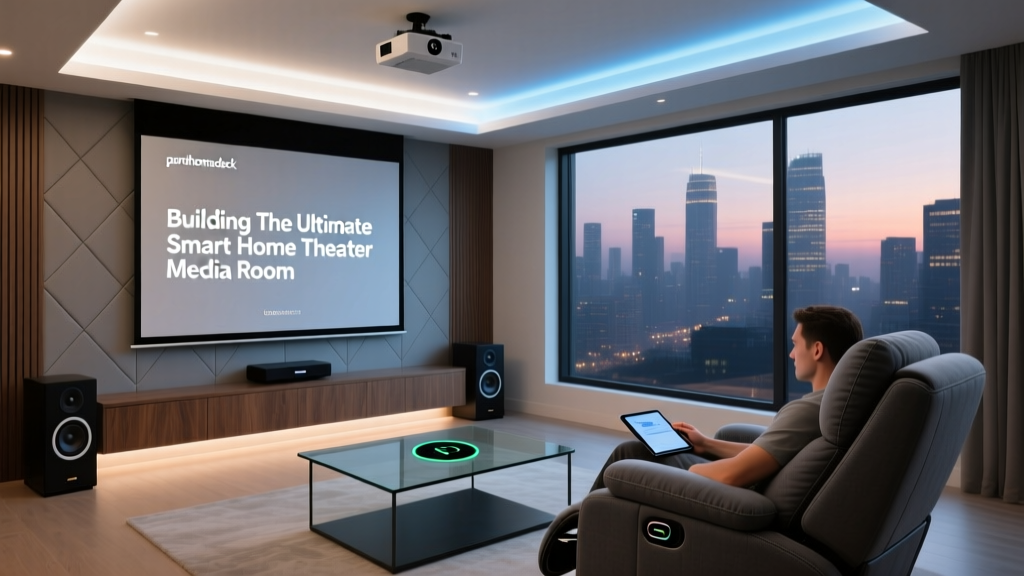
When designing a luxury home, the living room serves as the central hub for entertainment, relaxation, and social gathering. A premium smart living room is not merely a space with a large television and a soundbar; it is a meticulously engineered environment where high-end audiovisual technology, architectural lighting, and seamless automation converge. The goal of a high-end experience is invisibility. The technology should remain hidden or unobtrusive until the exact moment it is needed, at which point it delivers a cinematic or audiophile-grade performance that rivals commercial theaters.
Achieving this level of sophistication requires moving beyond consumer-grade, off-the-shelf products. Premium setups demand custom installation speakers, dedicated power circuits, acoustic treatments disguised as architectural elements, and enterprise-grade control systems. In this comprehensive guide, we will break down the essential components required to build a high-end smart living room home theater, exploring specific product recommendations, installation nuances, and automation routines that define true luxury.
Visual Mastery: Selecting the Ultimate Display
The visual centerpiece of any premium living room theater is the display. In the high-end tier, you are generally choosing between three distinct technologies: flagship QD-OLED, custom MicroLED, and ultra-short-throw or traditional laser projection. Each has its place depending on the room's ambient light and architectural constraints.
Flagship QD-OLED vs. MicroLED
For living rooms where space is at a premium and absolute contrast is desired, the Sony BRAVIA XR A95L QD-OLED remains the gold standard. Available in sizes up to 77 inches, it delivers infinite contrast, perfect blacks, and vibrant color volume that makes HDR content breathtaking. However, for ultra-luxury spaces where budget is secondary to sheer scale, Samsung's The Wall (MicroLED) is the ultimate flex. MicroLED modules can be configured to fit any dimension, creating a seamless, bezel-less 100-inch or even 146-inch display that is immune to burn-in and emits staggering levels of brightness, completely overcoming daytime ambient light.
Laser Projection and ALR Screens
If your living room features a massive 120-inch or 150-inch focal wall, a premium laser projector paired with an Ambient Light Rejecting (ALR) screen is the ideal choice. The Sony VPL-XW7000ES native 4K SXRD laser projector delivers incredible black levels and crisp detail. When paired with a Stewart Filmscreen BlackHawk or a Screen Innovations Slate ALR material, you can maintain a high-contrast image even with some ambient light present. The key to a premium installation here is housing the projector in a custom, acoustically treated soffit or a motorized ceiling lift to keep it out of sight when not in use.
Acoustic and Audio Supremacy
A true high-end home theater experience is defined by its audio. While consumer setups rely on soundbars, a premium living room utilizes a dedicated multi-channel surround sound system, often configured in a 7.2.4 or 9.4.6 Dolby Atmos layout. According to Dolby's official Atmos guidelines, achieving true three-dimensional sound requires precise speaker placement, dedicated overhead channels, and advanced room correction processing.
Custom Installation Speakers
In a luxury living room, visible speaker cabinets can disrupt the interior design. Therefore, high-end installations utilize custom architectural speakers that are plastered directly into the drywall or hidden behind acoustically transparent fabric walls. Brands like Bowers & Wilkins offer their prestigious 800 Series Diamond technology in custom in-wall and in-ceiling formats. These speakers deliver audiophile-grade clarity and dynamic range without occupying floor space. For the low-frequency effects (LFE), dual or quad subwoofers from brands like JL Audio or SVS are built into custom millwork or soffits to ensure even bass distribution and eliminate room modes.
Processing and Amplification
The brain of your audio system is the AV processor. For the absolute pinnacle of audio decoding and room correction, the Trinnov Altitude16 or Altitude32 is the industry standard. Trinnov's proprietary 3D loudspeaker remapping technology ensures that even if your architectural constraints prevent perfect speaker placement, the processor digitally steers the sound to create a flawless acoustic image. This processor must be paired with dedicated multi-channel amplifiers, such as those from McIntosh or Anthem, to provide clean, distortion-free power to every channel.
Lighting and Shading: Setting the Cinematic Scene
Lighting and shading are the unsung heroes of a premium home theater. You cannot achieve a cinematic image if sunlight is washing out your display, and you cannot create an immersive atmosphere with harsh, static overhead lighting.
Dynamic Spectrum Lighting
Luxury integrators frequently turn to Ketra by Savant for its dynamic spectrum lighting capabilities. Ketra fixtures replicate the exact color temperature and intensity of natural sunlight, shifting seamlessly throughout the day to support circadian rhythms. During a movie, Ketra lighting can be programmed to dim to a warm 1800K, providing just enough illumination for safe navigation without reflecting off the screen. Furthermore, Ketra's high Color Rendering Index (CRI) ensures that the room's artwork and furnishings look spectacular when the lights are up.
Automated Blackout Shading
To control ambient light, automated blackout shades are mandatory. Lutron Sivoia QS Triathlon or hardwired Sivoia QS roller shades offer whisper-quiet operation and precise alignment across multiple windows. In a premium setup, these shades are housed in concealed ceiling pockets with integrated fascia, ensuring the hardware is completely invisible. When the 'Movie' scene is triggered, the shades descend in perfect unison, plunging the room into darkness.
The Brain: Control and Automation Systems
Managing a high-end AV receiver, laser projector, lighting system, and shading network requires a robust, professional-grade control system. While DIY hubs like Home Assistant are powerful, luxury living rooms demand the reliability, elegant user interfaces, and dedicated dealer support of systems like Savant or Control4.
Savant, in particular, excels in premium environments due to its deeply integrated ecosystem (especially if using Ketra lighting) and its stunning, customizable touch panels. A Savant Pro system utilizes a central host processor that communicates via IP, RS-232, and proprietary protocols to ensure instantaneous, lag-free control. Wall-mounted keypads with engraved, backlit buttons replace banks of traditional light switches, offering a clean, minimalist aesthetic.
Infrastructure: Power, Networking, and Acoustics
The foundation of any premium smart room is its infrastructure. High-end audio and video equipment is highly sensitive to power fluctuations and electrical noise. A dedicated 20-amp circuit for the AV rack and display is the bare minimum. Furthermore, integrating a Furman or Panamax power conditioner with an uninterruptible power supply (UPS) ensures that your expensive gear is protected from surges and that projectors can safely complete their cooling cycles during a power outage.
Networking must be handled by enterprise-grade equipment, such as a Netgear M4300 switch or a Ruckus access point system, configured with a dedicated VLAN for AV traffic to prevent buffering and ensure seamless 4K streaming. Finally, acoustic treatments—such as bass traps in the corners and diffusion panels on the rear wall—should be integrated into the room's design, perhaps hidden behind custom upholstered wall panels or acoustic plaster.
Premium Budget Tiers and Cost Breakdown
Building a luxury smart living room theater is a significant investment. Below is a structured comparison of three premium tiers, illustrating how costs scale with performance and customization.
| Tier | Visual Display | Immersive Audio | Control & Lighting | Estimated Cost |
|---|---|---|---|---|
| Starter Premium | Sony A80L OLED (77') | Sennheiser Ambeo Max + SVS Sub | Lutron Caseta / Hubitat | $15,000 - $25,000 |
| Mid-Tier Luxury | Sony A95L QD-OLED (83') | B&W 700 Series + Anthem MRX | Control4 Core 3 + Lutron RA3 | $45,000 - $75,000 |
| Pro Custom | Samsung MicroLED (110'+) | Trinnov Altitude + B&W 800 Diamond | Savant Pro + Ketra + Sivoia QS | $150,000 - $300,000+ |
To visualize how a typical Pro Custom budget is allocated across different technological disciplines, refer to the chart below. Audio and Visual components naturally command the largest share of the investment, but lighting and control are what tie the experience together.
Automation Routines: The High-End Experience
The true mark of a premium smart living room is how effortlessly it transitions between different modes of use. Through Savant or Control4 programming, you can create sophisticated scenes that adjust multiple subsystems simultaneously.
The 'Cinematic Immersion' Routine
When the user selects 'Watch Movie' on the Savant touchscreen, the system executes a precise, timed sequence. The Lutron blackout shades silently descend to 100%. The Ketra lighting fades the main overhead fixtures to 0%, while the cove lighting shifts to a deep, warm amber at 10% intensity. The projector powers on, the screen mask adjusts to the correct aspect ratio (e.g., 2.35:1 for widescreen films), and the Trinnov processor boots up, setting the volume to the perfect reference level. This entire sequence takes exactly 15 seconds, building anticipation without requiring the user to touch a single remote.
The 'Intermission' and 'Hosting' Routines
Pressing 'Pause' or 'Intermission' shouldn't just freeze the screen; it should adapt the room. The system gently raises the cove lighting to 30% and shifts the color temperature to a neutral white, allowing guests to safely navigate to the kitchen or bar area without ruining their night vision. Conversely, the 'Hosting' routine retracts the shades, turns on the Ketra fixtures to a vibrant, daylight-mimicking 4000K, and switches the audio system from surround sound to a high-fidelity two-channel stereo mode, perfect for playing background jazz while entertaining guests.
Design and Aesthetic Considerations
In a luxury home, the interior designer and the AV integrator must collaborate from the earliest stages of architectural planning. Equipment racks should never be placed in the living room; the fan noise from amplifiers and processors will ruin the quiet passages of a film. Instead, all core electronics should be housed in a dedicated, climate-controlled AV closet or basement rack room, with signals transmitted back to the living room via fiber-optic HDMI cables and shielded CAT6A wiring.
Furthermore, consider the use of motorized artwork or acoustic panels. Companies like Leon Speakers offer custom soundbars that are completely hidden behind motorized canvas artwork. When the TV is off, a beautiful painting is displayed; when it is time to watch, the art rolls up to reveal a high-performance speaker array. This level of bespoke integration is what separates a standard media room from a true premium smart living room.
Conclusion
Creating a premium smart living room home theater is an exercise in balancing cutting-edge technology with timeless interior design. By investing in flagship displays like MicroLED or QD-OLED, architecturally hidden audiophile speakers, dynamic lighting systems like Ketra, and a robust control platform like Savant, you create a space that is as beautiful as it is technologically advanced. The ultimate luxury is not just the hardware itself, but the effortless, invisible automation that allows you and your guests to simply sit back and enjoy the experience.