Premium Smart Bedroom: The Ultimate Room-by-Room Setup Guide
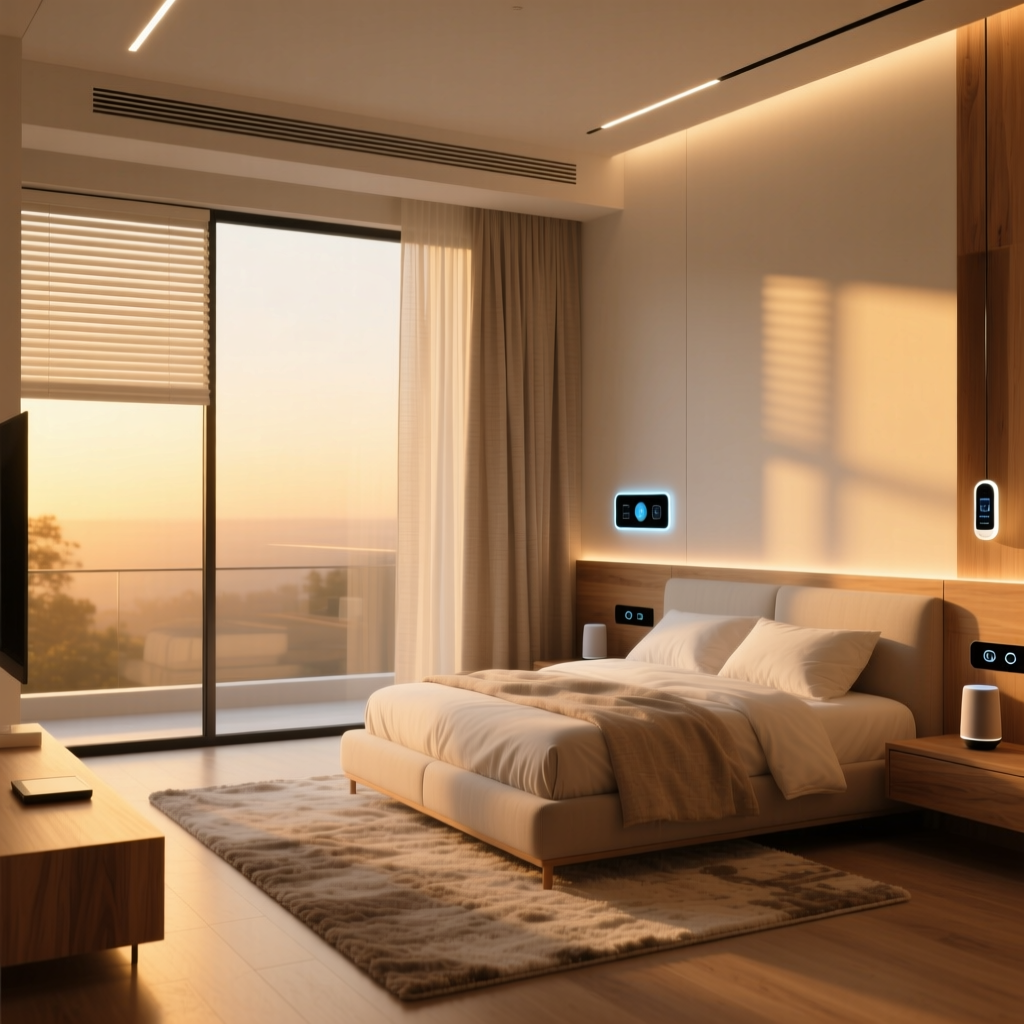
Your bedroom is more than just a place to sleep — it is your personal sanctuary, a retreat where comfort meets technology. A premium smart bedroom elevates every aspect of your rest and relaxation, from lighting that mirrors your circadian rhythm to climate control that anticipates your preferences before you even step through the door. Whether you are starting from scratch or upgrading an existing setup, this comprehensive guide will walk you through everything you need to create a bedroom that is as intelligent as it is inviting.
In this guide, we will cover budget tiers for every level of investment, the best devices across multiple categories, installation tips that save time and frustration, automation routines that transform daily life, and design principles that ensure your technology enhances rather than distracts from your space. Let us build the smart bedroom you have always envisioned.
Room Overview: What Makes a Premium Smart Bedroom Different
A standard smart bedroom might include a few connected bulbs and a smart speaker. A premium smart bedroom goes far beyond that. It integrates multiple systems — lighting, climate, audio, window treatments, security, sleep tracking, and entertainment — into a cohesive ecosystem that responds to your habits, preferences, and routines automatically.
The hallmark of a truly premium setup is seamlessness. You should not need to open six different apps to prepare your room for sleep. Instead, a single command or automated routine should dim the lights, lower the blinds, adjust the thermostat, start your white noise machine, and arm your security system. When you wake up, the reverse happens gradually and naturally, with warm light simulating a sunrise and your favorite playlist easing you into the day.
Key characteristics of a premium smart bedroom include:
- Circadian-aligned lighting that shifts color temperature throughout the day
- Zoned climate control that maintains your ideal sleeping temperature
- Motorized window treatments that respond to time of day and sunlight intensity
- Multi-zone audio for immersive sound without disturbing others in the home
- Sleep optimization technology including smart mattresses and environmental sensors
- Voice and gesture control so you never need to reach for a phone or remote
- Privacy-first security with thoughtful device placement and data controls
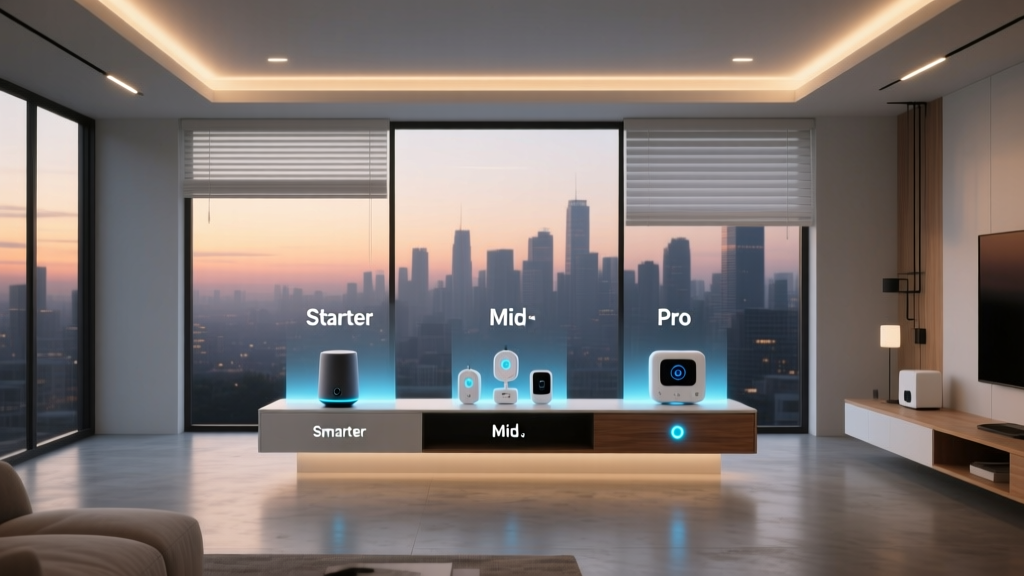
Before diving into specific devices, let us break down what you can expect to invest at each tier.
Budget Tiers: Starter, Mid-Range, and Professional
Starter Tier ($300–$800)
The Starter tier is perfect for renters, first-time smart home enthusiasts, or anyone who wants to dip their toes into bedroom automation without a massive investment. At this level, you focus on high-impact, easy-to-install devices that deliver immediate results.
- Smart lighting: A pair of color-changing smart bulbs or a smart light strip behind your headboard ($40–$100)
- Smart speaker/display: A voice assistant hub for controlling devices and setting alarms ($50–$150)
- Smart plug bundle: Control lamps, fans, or a white noise machine with smart plugs ($25–$50)
- Smart thermostat or smart radiator valve: Basic temperature scheduling ($80–$180)
- Smart sleep tracker: An under-mattress sensor or wearable device ($70–$150)
At this tier, you are primarily using Wi-Fi and Bluetooth devices that connect directly to your router or phone. Setup is straightforward, and most devices can be installed in under an hour. Check out our best smart home devices for beginners guide for more entry-level recommendations.
Mid-Range Tier ($800–$2,500)
The Mid-Range tier introduces more sophisticated devices, better integration, and the beginnings of a truly automated bedroom experience. This is the sweet spot for most homeowners who want premium features without a professional installer.
- Premium smart lighting system: Multi-bulb setups with dedicated hubs, light panels, or architectural lighting ($200–$500)
- Motorized smart blinds: Custom-fit window treatments with app and voice control ($300–$700 per window)
- Smart mattress or mattress topper: Temperature-regulating sleep surfaces ($400–$800)
- Smart air purifier and sensor suite: Monitor and improve air quality automatically ($200–$400)
- Multi-room audio: Premium wireless speakers with spatial audio ($200–$500)
- Smart home hub: A dedicated hub for reliable local processing and advanced automations ($100–$200)
At this level, you are likely mixing protocols — Zigbee, Z-Wave, Thread, and Wi-Fi — and using a central hub to tie everything together. Automations become more complex and reliable. Browse our smart home hub comparison to find the right backbone for your setup.
Professional Tier ($2,500–$8,000+)
The Professional tier is for those who want a fully custom, integrator-grade smart bedroom. This level typically involves professional installation, in-wall wiring, and enterprise-grade equipment that delivers unparalleled performance and reliability.
- Architectural lighting design: Recessed smart fixtures, cove lighting, and professionally designed scenes ($1,000–$3,000)
- Hardwired motorized shades: Premium fabrics with silent motors and light sensors ($500–$1,500 per window)
- Integrated AV system: In-wall or in-ceiling speakers, hidden displays, and acoustic treatment ($1,000–$3,000)
- Whole-home climate zoning: Dedicated HVAC zone with smart dampers and sensors ($500–$2,000)
- Professional control system: A unified control platform with custom programming ($500–$2,000)
- Sleep environment optimization: Integrated sound masking, air quality management, and biometric tracking ($500–$1,500)
At this tier, you are working with a professional integrator who designs the system around your specific room, lifestyle, and preferences. The result is a bedroom that feels magical — everything works perfectly, every time, with zero effort on your part.
Recommended Devices for a Premium Smart Bedroom
Now let us explore the specific device categories that make up a premium smart bedroom. Each category plays a distinct role, and the best setups thoughtfully combine them into a unified experience.
Smart Lighting: Setting the Mood Around the Clock
Lighting is arguably the single most impactful element of a smart bedroom. The right lighting system supports your circadian rhythm, creates ambiance for relaxation, and ensures safe navigation during nighttime wake-ups.
Overhead and ambient lighting: Replace your main bedroom fixture with a smart ceiling light or install smart bulbs in existing fixtures. Look for products that offer tunable white light (2200K–6500K) so you can shift from energizing cool tones in the morning to warm, sleep-inducing amber in the evening. Premium options include flush-mount smart panels that offer both color and tunable white in a sleek, modern form factor.
Accent and task lighting: Smart light strips installed behind your headboard, under your bed frame, or along crown molding add depth and drama to the room. Bedside lamps with smart bulbs provide task lighting for reading. Consider wireless smart switches mounted to your nightstand for convenient control without reaching for your phone.
Motion-activated night lights: Small smart night lights with motion sensors are invaluable for bathroom trips. Set them to activate at 5–10% brightness in a warm amber tone so they illuminate your path without disrupting melatonin production.
For a detailed breakdown of the best options available, read our smart bedroom lighting reviews.
Smart Climate Control: Your Ideal Sleeping Temperature
Research consistently shows that a cool bedroom — typically between 60°F and 67°F (15.5°C to 19.5°C) — promotes deeper, more restorative sleep. Smart climate devices ensure your bedroom stays in this optimal range without constant manual adjustment.
Smart thermostats: A smart thermostat with room sensors allows you to prioritize bedroom temperature during sleeping hours. The sensor detects occupancy and ensures the room reaches your target temperature by bedtime, then adjusts during the early morning hours to support natural wake cycles. Look for models with geofencing so the system adjusts when you leave or approach home.
Smart bed cooling and heating systems: For couples with different temperature preferences, bed-level climate devices are game-changing. These systems circulate water or air through a mattress topper, allowing each side of the bed to maintain a different temperature independently.
Smart fans and air purifiers: A smart ceiling fan or portable air purifier with automatic mode adjusts speed based on air quality readings and temperature. Some models include sleep modes that gradually reduce fan speed throughout the night as your body temperature naturally drops.
Smart radiator valves and vent controllers: If you have a zoned heating system or radiators, smart valves let you control bedroom temperature independently from the rest of the house. This is especially valuable in multi-story homes where upstairs bedrooms tend to run warmer.
Explore our smart thermostat reviews for top picks across all budgets.
Smart Window Treatments: Automated Blinds and Curtains
Motorized window treatments are one of the most transformative additions to a premium smart bedroom. They offer convenience, energy savings, and a significant upgrade to your wake-up experience.
Why they matter: Natural light is the most powerful cue for your circadian rhythm. Smart blinds that gradually open in the morning simulate a natural sunrise, triggering cortisol release and helping you wake up feeling refreshed rather than jolted by an alarm. In the evening, automated closing provides privacy and blocks light pollution that can interfere with sleep.
Types to consider:
- Roller shades: Clean, minimal aesthetic with excellent light blocking when paired with blackout fabric
- Honeycomb shades: Superior insulation properties that help maintain bedroom temperature
- Smart curtains: Motorized curtain tracks that silently glide open and closed, ideal for a luxurious feel
- Smart blinds with tilt control: Venetian-style smart blinds that adjust slat angle for precise light management
Power options: Battery-powered models are easier to install and ideal for renters, while hardwired options offer silent operation and eliminate the need for periodic charging. Solar-powered accessories can extend battery life significantly for south-facing windows.
Integration tips: Pair your smart blinds with a light sensor so they respond to actual sunlight conditions rather than just a fixed schedule. This is particularly useful during seasonal changes when sunrise and sunset times shift dramatically.
Smart Audio and Entertainment
A premium smart bedroom deserves premium sound. Whether you are winding down with a podcast, falling asleep to ambient sounds, or starting the day with music, your audio setup should be immersive yet unobtrusive.
Smart speakers and displays: A smart speaker on your nightstand serves as the command center for your bedroom. Choose a model with a built-in display if you want visual alarm clocks, weather forecasts, and video calling. Models with adaptive sound technology adjust audio output based on room acoustics for optimal quality.
Soundbars and in-wall speakers: If your bedroom doubles as a media room, a compact soundbar or in-wall speakers deliver cinematic audio without cluttering the space. Look for models with night mode that compress dynamic range so you can enjoy movies at lower volumes without losing dialogue clarity.
White noise and sound masking: Dedicated smart sound machines offer a wider range of sleep-promoting sounds than a simple speaker. Some models use adaptive algorithms that adjust sound profiles based on ambient noise levels, masking traffic, neighbors, or household sounds that might disrupt your sleep.
Multi-room audio: If you have speakers throughout your home, group your bedroom speaker into a whole-home audio zone. This lets you start a playlist in the kitchen and continue listening as you move to the bedroom without interruption.
See our smart speaker reviews for recommendations that fit every room and budget.
Smart Sleep Technology and Sensors
The most advanced smart bedrooms go beyond convenience and actively optimize your sleep quality through data collection and environmental adjustments.
Smart mattresses: Premium smart mattresses feature built-in sensors that track heart rate, breathing rate, movement, and sleep stages throughout the night. Some models automatically adjust firmness or elevation based on your sleeping position, and many offer gentle wake-up vibrations that rouse you during your lightest sleep phase within a set window.
Under-mattress sleep trackers: If you are not ready to replace your mattress, an under-mattress sensor pad provides similar tracking capabilities. These thin pads detect movement and biometric data through your existing mattress and sync with companion apps that provide detailed sleep reports and personalized recommendations.
Environmental sensors: A multi-sensor device that monitors temperature, humidity, light levels, noise, and air quality gives you a complete picture of your sleep environment. Use this data to trigger automations — for example, if humidity drops below 35%, your smart humidifier activates automatically.
Smart pillows: Emerging smart pillow technology includes built-in speakers for private audio, snoring detection that gently adjusts head position, and temperature regulation through gel-infused materials with active cooling.
Installation Tips and Best Practices
A premium smart bedroom is only as good as its installation. Even the most expensive devices will underperform if they are poorly placed, improperly configured, or running on an unreliable network. Follow these best practices to ensure a smooth setup.
Network Foundation: Build a Rock-Solid Backbone
Your smart bedroom likely contains 15–30 connected devices, and every one of them depends on your home network. Before installing any devices, ensure your network is ready:
- Dedicated IoT network: Create a separate SSID or VLAN for smart home devices. This improves security and prevents your smart bulbs from competing with your streaming video for bandwidth.
- Mesh Wi-Fi or access points: Bedrooms are often located at the far end of a home, far from the main router. A mesh Wi-Fi system or a dedicated access point in or near the bedroom ensures strong signal coverage.
- Hub placement: If you are using a Zigbee, Z-Wave, or Thread hub, place it centrally in the bedroom or in an adjacent hallway. These protocols create mesh networks, and proper hub placement ensures reliable communication with every device.
Electrical Planning and Wiring
Even if you are not doing a full renovation, some advance electrical planning will save headaches later:
- Neutral wire check: Many smart switches require a neutral wire. Open your switch boxes to confirm you have one before purchasing smart switches. If you do not, look for no-neutral-required models or hire an electrician to add one.
- Outlet placement: Motorized blinds, bed climate systems, and smart mattresses all need dedicated power. Plan outlet locations near windows for blinds and near the bed for sleep technology.
- USB-C and wireless charging: Install smart outlets or bedside tables with built-in wireless charging pads to reduce cable clutter on your nightstand.
- Conduit for future upgrades: If you are renovating, run empty conduit from your electrical panel to the bedroom. This makes it easy to add new circuits or low-voltage wiring for future devices.
Device Placement and Aesthetics
A premium bedroom should look and feel premium. Technology should enhance the space, not dominate it:
- Hide the hardware: Use in-wall or in-ceiling speakers instead of bookshelf speakers. Choose flush-mount smart lights instead of bulky fixtures. Run cables behind walls or through cable management channels.
- Sensor positioning: Motion sensors should be placed where they can detect entry and movement without false triggers from pets or curtains. Temperature sensors should be away from direct sunlight, vents, and electronics for accurate readings.
- Camera considerations: If you choose to include a camera for security or baby monitoring, place it thoughtfully and choose models with physical privacy shutters. Many smart bedroom setups exclude cameras entirely for privacy peace of mind.
- Minimize light pollution: Cover or disable LED indicators on devices that emit light at night. Even small standby LEDs can disrupt sleep in a dark room. Use electrical tape or choose devices with adjustable indicator brightness.
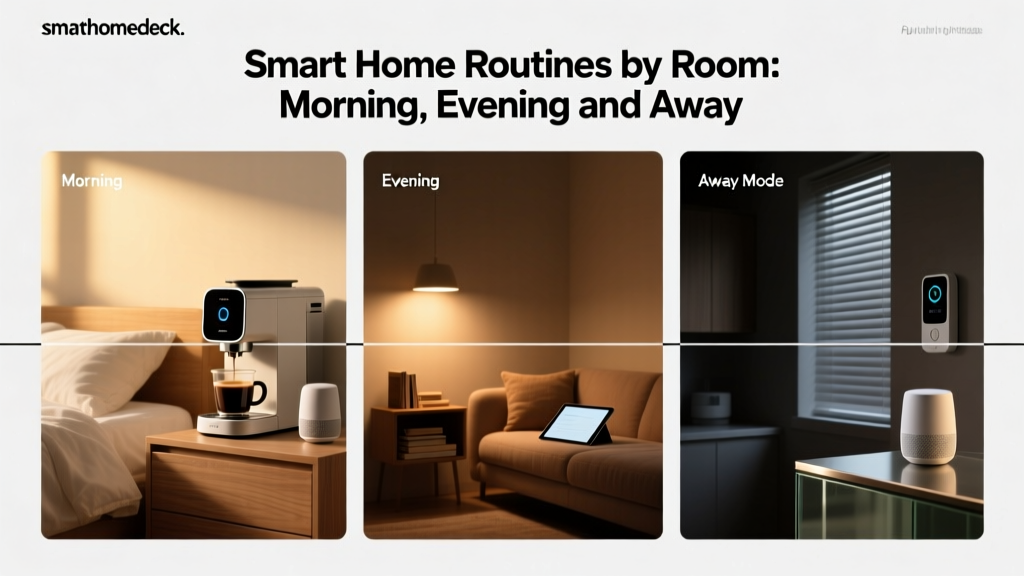
Automation Routines That Transform Your Daily Life
The true magic of a premium smart bedroom lies in its automations — the routines that run silently in the background, making your life easier without requiring any input from you. Here are the essential routines every smart bedroom should have.
The Perfect Goodnight Routine
Trigger this routine with a voice command ("Goodnight"), a bedside button, or a schedule. A well-designed goodnight routine should:
- Dim all lights to 10% warm amber, then turn them off after 5 minutes
- Close all motorized blinds and curtains
- Set the thermostat to your ideal sleeping temperature (typically 65°F / 18°C)
- Activate your white noise machine or sound masking system
- Turn on your bed cooling or heating system to your preferred setting
- Lock all exterior doors and arm your security system
- Enable do-not-disturb mode on your smart speaker
- Turn off any unnecessary devices — televisions, fans, or air purifiers in other rooms
- Activate under-bed motion sensors for nighttime navigation
The Natural Wake-Up Routine
Replace jarring alarm clocks with a gradual, multi-sensory wake-up experience:
- 30 minutes before your wake time: blinds begin opening slowly, starting at 10% and reaching full open by wake time
- 20 minutes before: lights begin a simulated sunrise, transitioning from deep amber to warm white
- 10 minutes before: your sound machine transitions from white noise to gentle nature sounds or your favorite morning playlist at low volume
- At wake time: lights reach full brightness in a warm white tone, and your smart speaker announces the weather and your calendar for the day
- The thermostat begins warming the room to your daytime comfort level
- Your coffee maker in the kitchen starts brewing (if connected)
Away Mode and Energy Savings
When your phone leaves the home geofence, your bedroom can automatically:
- Turn off all lights and electronics
- Close blinds to reduce solar heat gain in summer or open them for passive heating in winter
- Adjust the thermostat to an energy-saving setpoint
- Run the air purifier on high for 30 minutes to refresh the room before your return
- Activate security sensors and cameras
Adaptive Routines Based on Sensors
The most advanced automations respond to real-time conditions rather than fixed schedules:
- Temperature-triggered: If the bedroom exceeds 72°F (22°C), the smart fan activates and the thermostat adjusts
- Air quality-triggered: If VOC or particulate levels rise, the air purifier switches to a higher speed
- Humidity-triggered: If humidity drops below 35% in winter, a smart humidifier activates to protect your respiratory health and skin
- Light-triggered: If afternoon sun creates glare on your workspace or TV, blinds automatically adjust their tilt angle
- Sleep-stage-triggered: If your sleep tracker detects you have entered deep sleep, it can signal other devices to reduce noise and light further
For more automation ideas across your entire home, visit our smart home automation routines guide.
Design Principles: Blending Technology with Elegance
A premium smart bedroom should feel like a luxury hotel suite, not a technology showroom. The best smart home technology disappears into the background, revealing itself only when needed. Here are the design principles that separate a premium smart bedroom from a cluttered gadget room.
Color and Material Harmony
Choose smart devices that complement your bedroom's color palette and material finishes. Many premium smart lights, speakers, and thermostats come in multiple finishes — matte black, brushed nickel, white, wood grain — so you can match them to your existing décor. If a device does not match, consider vinyl wraps or custom enclosures that help it blend in.
The Invisible Interface
The best interface is no interface at all. Rely on voice commands, automated routines, and discreet physical controls rather than glowing screens and apps. Small wireless buttons mounted to your nightstand or headboard provide one-tap access to your most-used routines without the visual noise of a touchscreen. Some premium setups use gesture sensors that let you wave a hand to dim lights or silence an alarm.
Layered Lighting Design
Professional lighting designers use multiple layers of light to create depth and flexibility. Apply the same approach to your smart bedroom:
- Ambient layer: Overhead or cove lighting that provides general illumination
- Task layer: Bedside reading lights and closet lighting that serve specific functions
- Accent layer: LED strips, art lighting, and architectural highlights that add visual interest
- Kinetic layer: Candle-simulation bulbs and dynamic scenes that create movement and life
Each layer should be independently controllable and included in your automation scenes. A "Relax" scene might use only the accent and kinetic layers at 30% brightness, while a "Getting Ready" scene activates all layers at full brightness with cool white tones.
Acoustic Considerations
A premium bedroom should sound as good as it looks. Consider these acoustic enhancements:
- Soundproofing: Weatherstripping on doors, acoustic curtains, and solid-core doors reduce noise intrusion from outside and other rooms
- Sound absorption: Plush rugs, upholstered headboards, and fabric wall panels reduce echo and improve audio quality from your speakers
- Device noise audit: Run every device in your bedroom at night and listen for hums, clicks, or whirs. Replace or relocate any device that produces audible noise during operation
Furniture Integration
Smart furniture bridges the gap between technology and design:
- Nightstands with built-in wireless charging pads and USB ports eliminate cable clutter
- Bed frames with integrated LED strips provide under-bed lighting without aftermarket additions
- Media consoles with built-in smart home hubs keep technology organized and ventilated
- Dresser mirrors with embedded smart displays provide information without a visible screen when turned off
Frequently Asked Questions
Is a smart bedroom worth the investment for improving sleep quality?
Absolutely. While no technology can replace good sleep hygiene habits, a smart bedroom removes many of the environmental barriers to restful sleep. Automated light management supports your circadian rhythm, precise temperature control prevents the overheating that causes nighttime awakenings, and sound masking eliminates disruptive noises. Many users report falling asleep faster, waking less during the night, and feeling more refreshed in the morning after optimizing their bedroom environment with smart technology. The key is choosing devices that work together seamlessly rather than creating new friction points with complicated apps and controls.
How do I ensure privacy and security in a smart bedroom?
Privacy is a valid concern, especially in the most personal room of your home. Follow these guidelines to protect yourself:
- Avoid cameras in the bedroom entirely, or choose models with physical lens covers and local-only storage
- Use a dedicated IoT network to isolate smart devices from your personal computers and phones
- Choose devices from reputable manufacturers with clear privacy policies and regular security updates
- Disable microphones on smart speakers when not needed — most models have a physical mute button
- Review and minimize the data sharing permissions in each device's companion app
- Keep your smart home hub and router firmware updated to protect against known vulnerabilities
- For maximum privacy, consider local-first platforms like Home Assistant that process data on your own network rather than in the cloud
For more on this topic, read our smart home privacy and security guide.
Can I mix different smart home ecosystems in my bedroom?
Yes, and in many cases it is the best approach. While staying within a single ecosystem (such as Apple HomeKit, Google Home, or Amazon Alexa) simplifies setup, the best device for each category may come from different ecosystems. The solution is to use a smart home hub or platform that bridges multiple protocols. Platforms like Home Assistant, Samsung SmartThings, and Hubitat support devices from hundreds of manufacturers across Zigbee, Z-Wave, Wi-Fi, Thread, and Matter. The Matter standard, in particular, is designed to enable cross-ecosystem compatibility and is becoming widely supported by major manufacturers. When selecting devices, look for Matter-compatible products to ensure maximum flexibility both now and in the future.
What is the best way to handle smart bedroom lighting for couples with different preferences?
Couples often have different sleep schedules, reading habits, and lighting preferences. Smart lighting solves this elegantly with independent zones. Install individually controllable bedside lights so each person can set their own brightness and color temperature. Use smart switches with multiple buttons or scenes so each side of the bed has its own controls. For overhead lighting, consider fixtures with independent left and right zones, or supplement a single overhead light with individual reading lamps. Automations can also be personalized — a goodnight routine triggered from one side of the bed can turn off only that person's reading light while leaving the other side active. Many premium smart sleep systems also offer dual-zone bed climate control, solving the equally common disagreement over bedroom temperature.
How much does it cost to run a smart bedroom in terms of electricity?
The electricity cost of a smart bedroom is surprisingly low. Most smart devices consume very little power — smart bulbs use 7–11 watts (compared to 60 watts for incandescent bulbs), smart speakers use 2–5 watts in standby, and sensors use fractions of a watt. A fully equipped smart bedroom with 20 devices might add $3–$8 per month to your electricity bill. However, smart devices often save money overall. Smart thermostats reduce heating and cooling costs by 10–15%, smart blinds reduce solar heat gain in summer and heat loss in winter, and automated lighting ensures lights are never left on accidentally. The net effect is typically a small savings on your total energy bill, meaning your smart bedroom pays for a portion of its own cost over time. For more on energy-efficient smart home setups, check our energy-efficient smart home guide.
Final Thoughts: Building Your Premium Smart Bedroom Step by Step
Creating a premium smart bedroom is a journey, not a one-time project. Start with the devices that will have the biggest impact on your daily life — typically lighting, climate control, and a reliable voice assistant. Once those foundations are in place, layer in motorized window treatments, advanced sleep technology, and premium audio. Each addition should be tested and integrated into your existing automations before moving on to the next.
Remember that the goal is not to fill your bedroom with gadgets but to create a space that supports your well-being, respects your privacy, and feels effortlessly comfortable. The best smart bedroom is one where you barely notice the technology — you simply notice that the room always feels perfect, the lighting is always right, and you sleep better than you ever have before.
Ready to get started? Explore our complete smart home guides for room-by-room recommendations, or browse our device reviews to find the perfect products for your setup. Your dream bedroom is closer than you think.