The Science of Seasonal Smart Home Comfort
As the seasons shift from the sweltering heat of summer to the biting chill of winter, your home's internal environment undergoes significant stress. Maintaining a comfortable living space is no longer just about cranking up the HVAC system; it is about leveraging smart home technology to create dynamic, room-by-room microclimates. According to the U.S. Department of Energy, optimizing your heating and cooling with smart technology can save homeowners up to 10-15% on annual energy bills. However, true comfort requires looking beyond the central thermostat and addressing the unique needs of individual rooms.
In this comprehensive guide, we will explore how to adjust your living room and bedroom smart setups for extreme seasonal shifts. By integrating smart blinds, localized climate controllers, and advanced sleep technology, you can ensure your home remains a sanctuary of comfort, regardless of the weather outside. Devices certified by ENERGY STAR meet strict efficiency guidelines, ensuring that your seasonal adjustments do not come at the cost of skyrocketing utility bills.
Living Room: Adapting Your Primary Hub
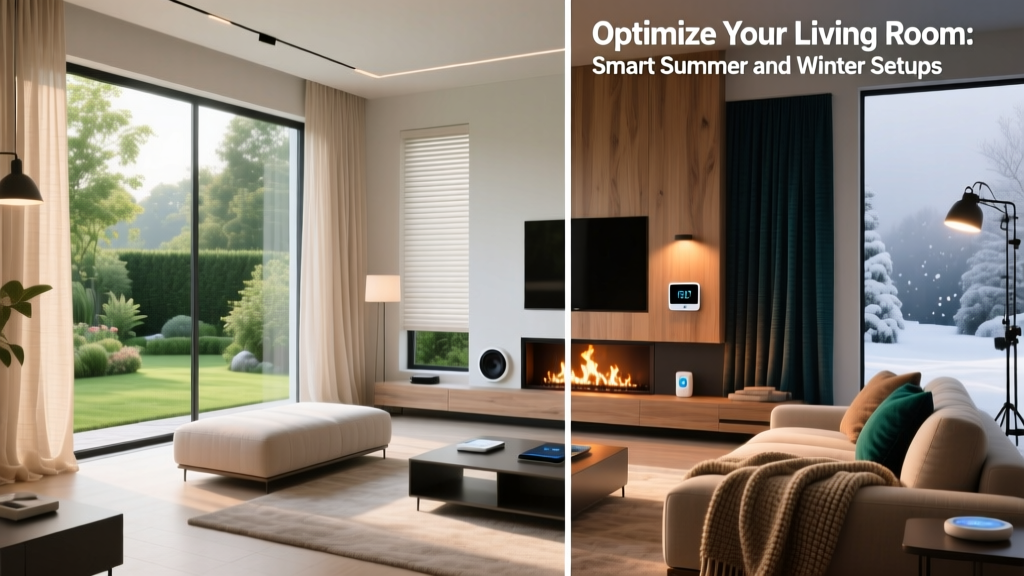
The living room is the most utilized space in most homes, making it the primary battleground for seasonal temperature control. Because living rooms often feature large windows and high ceilings, they are particularly susceptible to solar heat gain in the summer and draft-induced heat loss in the winter.
Summer Setup: Blocking Heat and Optimizing Airflow
During the summer, the goal is to prevent heat from entering the room while maximizing localized cooling. Start by installing the SwitchBot Blind Tilt (approx. $89). This retrofit device attaches to your existing blind wands and uses light sensors to automatically close blinds during peak sunlight hours (typically 11 AM to 4 PM). By blocking direct UV rays, you can reduce room temperatures by up to 5°F without touching the thermostat.
Next, integrate the Sensibo Sky (approx. $119). This smart IR blaster connects to your existing ductless mini-split or window AC units via Wi-Fi (2.4GHz). It features geofencing to turn off the AC when the living room is empty and utilizes 'Climate React' to maintain a precise 72°F, adjusting for the room's natural humidity spikes during summer afternoons. Pair this with a Bond Bridge to control your smart ceiling fans, creating a cross-breeze effect that allows you to raise the thermostat by 4°F without sacrificing perceived comfort.
Winter Setup: Retaining Warmth and Creating Ambiance
Winter living room comfort is about heat retention and ambient warmth. Upgrade your central control with the Ecobee Smart Thermostat Premium (approx. $249). The key to winterizing the living room is placing Ecobee's remote SmartSensors in the room's primary seating area. While the main thermostat in the hallway might read 70°F, the living room near drafty windows might be 64°F. The SmartSensors prioritize the occupied living room, ensuring the space remains warm during evening movie nights.
For ambiance and supplemental heating, integrate smart plugs like the TP-Link Kasa Smart Plug Mini to control electric fireplace inserts or ceramic space heaters. Set a routine to turn these on only when the room's occupancy sensor detects motion, preventing energy waste. Complement this with Philips Hue White Ambiance bulbs, shifting the color temperature to a warm 2200K in the evenings to psychologically enhance the feeling of warmth.
Bedroom: Mastering Sleep Temperatures Year-Round
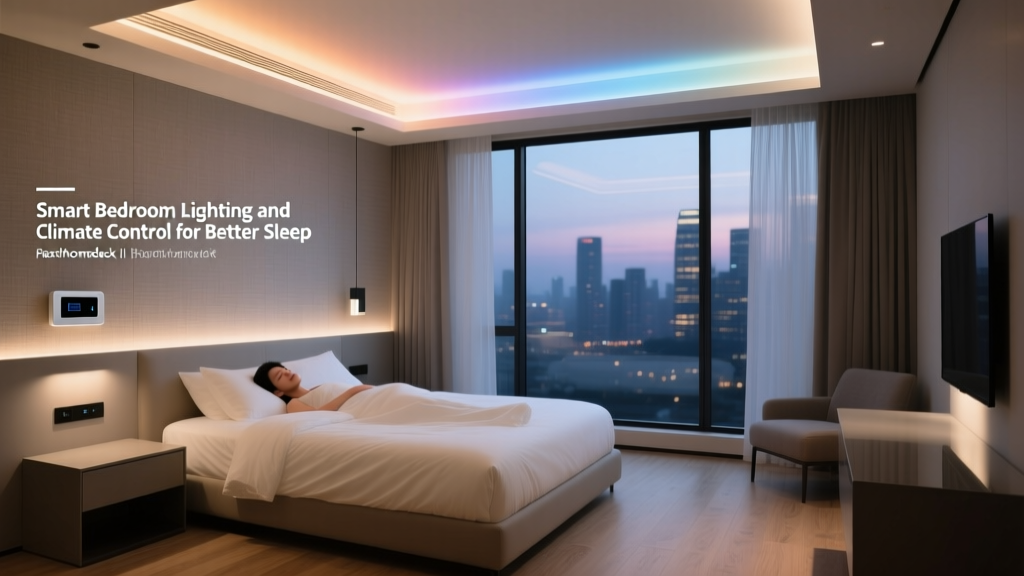
The bedroom requires a radically different approach to climate control. The Sleep Foundation recommends keeping the bedroom temperature between 60°F and 67°F for optimal sleep quality. Achieving this in a closed-off room requires specialized smart devices that address both temperature and humidity.
Summer: Active Cooling and Blackout Automation
Summer nights can be stifling, and traditional AC units often cycle on and off, creating disruptive temperature swings. The ultimate summer bedroom upgrade is the Eight Sleep Pod Cover (starting at $2,000). This smart mattress cover uses water-based thermoregulation to actively cool your side of the bed down to 55°F, independent of the room's ambient air temperature. It tracks biometric data and adjusts the temperature in real-time as you move through different sleep cycles.
If the Eight Sleep is out of budget, utilize a Sensibo Air paired with a wireless temperature sensor placed directly on your nightstand. Program a 'Sleep' routine that gradually raises the AC temperature by 2°F over the course of the night, mimicking the body's natural circadian temperature drop while saving energy. Additionally, use Ikea Dirigera smart blinds set to a 100% blackout schedule, closing automatically at 9 PM to trap cool air and block early summer sunrises.
Winter: Humidity Control and Warming Routines
Winter brings a different adversary: dry air. Forced-air heating systems strip moisture from the bedroom, leading to dry skin, irritated sinuses, and disrupted sleep. Introduce the Levoit OasisMist Smart Humidifier (approx. $99). Connected via the VeSync app, this device monitors the room's humidity levels and automatically maintains an optimal 45% relative humidity. It operates at a whisper-quiet 22dB, ensuring your sleep is undisturbed.
For warmth, consider a Sunbeam Restful Heated Mattress Pad connected to a smart plug. Program the plug to turn on 30 minutes before your bedtime and shut off automatically after two hours. Combine this with a smart lighting routine that shifts your bedside lamps to a dim, amber glow at 9:30 PM, promoting melatonin production while the bed warms up.
Seasonal Climate Control Device Comparison
Choosing the right devices for your seasonal adjustments requires understanding their connectivity, range, and primary use cases. Below is a comparison of the top devices mentioned in this guide.
| Device | Category | Best Season | Connectivity | Est. Cost |
|---|---|---|---|---|
| Sensibo Sky | AC Controller | Summer | Wi-Fi (2.4GHz) | $119 |
| SwitchBot Blind Tilt | Smart Blinds | Summer/Winter | Bluetooth / Hub | $89 |
| Ecobee Premium | Smart Thermostat | Winter | Wi-Fi / Matter | $249 |
| Eight Sleep Pod | Sleep Tech | Summer | Wi-Fi (5GHz) | $2,099 |
| Levoit OasisMist | Smart Humidifier | Winter | Wi-Fi (2.4GHz) | $99 |
Energy Savings Visualization
Implementing room-specific seasonal routines yields significant energy savings compared to relying solely on a central, non-zoned HVAC system. The chart below illustrates the average percentage of energy saved per season when utilizing localized smart climate controls (smart blinds, AC controllers, and zone sensors) versus traditional manual adjustments.
Automation Routines for Seasonal Shifts
The true power of smart home technology lies in automation. Here are two advanced routines to implement via Apple HomeKit, SmartThings, or IFTTT to manage your seasonal transitions seamlessly.
The 'Summer Solstice' Routine
- Trigger: Local weather API reports outdoor temperature exceeding 80°F and solar elevation is at peak.
- Action 1: SwitchBot Blind Tilt closes living room and bedroom blinds to 85% to block direct solar radiation.
- Action 2: Sensibo Sky activates living room AC to 74°F with 'Fan Auto' mode.
- Action 3: Bond Bridge turns on ceiling fans to medium speed, creating a wind-chill effect.
- Action 4: Smart plugs disable space heaters and winter ambient lighting.
The 'Winter Hearth' Routine
- Trigger: Time is 5:00 PM AND Ecobee SmartSensor detects occupancy in the living room AND outdoor temp is below 40°F.
- Action 1: Ecobee overrides hallway thermostat, prioritizing the living room sensor to maintain 71°F.
- Action 2: Philips Hue lights shift to 2200K (Warm Amber) and dim to 60% brightness.
- Action 3: TP-Link Kasa plug activates the electric fireplace insert.
- Action 4: Levoit Humidifier engages 'Auto Mode' to counteract the drying effect of the heating system.
Budget Tiers for Seasonal Upgrades
Not every home requires a complete overhaul to achieve seasonal comfort. We have broken down the upgrades into three budget tiers to suit different needs and financial constraints.
Starter Tier ($150 - $300)
Focus on high-impact, low-cost interventions. Purchase a Sensibo Sky to smarten your existing window AC or mini-split, and add a TP-Link Kasa Smart Plug to control a winter space heater or summer dehumidifier. This tier provides immediate localized control without replacing major appliances.
Mid Tier ($400 - $800)
This tier introduces automated solar management and central intelligence. Upgrade to the Ecobee Smart Thermostat Enhanced with an extra room sensor, and install SwitchBot Blind Tilt devices on your three most sun-exposed windows. This combination drastically reduces the load on your central HVAC system by managing passive solar heat gain and loss.
Pro Tier ($2,000+)
The ultimate tier for bio-optimized comfort. This includes the Eight Sleep Pod Cover for active bed cooling and heating, the Ecobee Premium with built-in air quality monitoring, and a whole-home smart humidifier/dehumidifier integration. This setup guarantees perfect sleep and living conditions regardless of external weather extremes.
Installation and Aesthetic Considerations
When integrating seasonal smart devices, aesthetics and sensor placement are crucial. For the SwitchBot Blind Tilt, ensure the device is mounted on the side of the blind wand that receives the least direct sunlight to prevent the internal light sensor from being blinded by harsh glare, which can cause erratic automation behavior. If your blinds are heavy, consider purchasing the optional SwitchBot solar panel accessory to eliminate the need for bi-annual battery swaps.
For the Ecobee SmartSensors, avoid placing them near exterior doors, drafty windows, or direct HVAC vents. A sensor placed in the direct path of a winter heating vent will prematurely shut off the furnace, leaving the rest of the room cold. Mount sensors at chest height (approx. 4 to 5 feet from the floor) on an interior wall for the most accurate representation of human comfort levels.
Finally, manage your cables. Devices like the Sensibo Sky and Levoit humidifiers require constant power. Use paintable cord covers or route cables behind baseboards to maintain a clean, uncluttered aesthetic that fits both the bright, airy feel of summer and the cozy, enclosed vibe of winter.
Conclusion
Adapting your smart home to the changing seasons is an ongoing process of refinement. By treating your living room and bedroom as distinct microclimates and utilizing targeted devices like smart blinds, localized AC controllers, and active sleep technology, you can achieve unparalleled comfort. Whether you are battling the summer sun or the winter chill, these room-by-room adjustments ensure your home remains efficient, beautiful, and perfectly tailored to your biological needs year-round.