Room Overview: The Smart Approach to Zone Heating
Central heating systems are designed to treat your entire home as a single thermal zone. However, modern homes with open floor plans, vaulted ceilings, drafty windows, and poorly insulated additions rarely heat evenly. This is where the smart home space heater becomes an essential tool. By leveraging smart space heaters, you can practice "zone heating"—the process of heating only the rooms you are actively using while allowing the rest of the house to remain at a lower, energy-saving baseline temperature.
Integrating a smart space heater into your home automation ecosystem goes far beyond simply turning a device on and off with your phone. True smart heating involves pairing your heater with wireless temperature sensors, occupancy detectors, and smart thermostats to create a responsive, dynamic climate control system. Whether you are trying to keep your toes warm in a drafty home office, ensuring the nursery stays at a precise temperature, or taking the chill off the air in a finished basement, smart space heaters offer targeted comfort without the massive energy bill associated with cranking up the central furnace.
In this comprehensive guide, we will break down how to select, install, automate, and design around smart space heaters for every room in your house. We will also cover critical electrical safety protocols that every smart home enthusiast must know before plugging a high-wattage heating device into a smart relay or plug.
Budget Tiers: Choosing Your Smart Heating Strategy
Not every smart home setup requires a premium budget. Depending on your existing ecosystem, technical expertise, and aesthetic requirements, you can build a highly effective smart heating network at various price points. Here is how the three primary budget tiers break down for smart space heaters.
Starter Tier: The Smart Plug & Digital Heater Combo
Estimated Cost: $40 - $80 (Heater + Smart Plug)
Best For: Renters, budget-conscious users, and existing smart home ecosystems.
The Strategy: The most accessible entry point into smart heating is pairing a heavy-duty smart plug with a standard, digitally controlled space heater. Crucial Safety Note: You must use a heater with digital controls and an "auto-resume" or "memory" feature. If the power cuts out and returns, a digital heater will remember its previous state and safely wait for a smart command, whereas a manual dial heater will immediately power on, creating a severe fire hazard.
Pros & Cons: This tier is highly affordable and allows you to repurpose existing heaters. However, it lacks native temperature reporting, meaning you will need to purchase separate smart temperature sensors to trigger automations based on room climate.
Mid Tier: Native Wi-Fi & App-Enabled Heaters
Estimated Cost: $90 - $180
Best For: Users wanting an all-in-one solution with native app control and voice assistant integration.
The Strategy: Mid-tier smart heaters come with built-in Wi-Fi modules and companion apps (often powered by Tuya or SmartLife). These devices feature internal thermostats, scheduling capabilities, and direct integration with platforms like Amazon Alexa and Google Home. Many mid-tier oil-filled radiators and ceramic tower heaters now include native smart features, allowing you to set precise temperature targets directly from your smartphone.
Pros & Cons: You get native temperature reporting and built-in safety shut-offs tied directly to the device's internal logic. The downside is that many mid-tier Wi-Fi heaters rely on cloud-based apps, which can introduce latency and fail during internet outages unless you use local control bridges.
Pro Tier: Matter, Thread, & Premium Ecosystem Integration
Estimated Cost: $250 - $600+
Best For: Advanced smart home builders, Home Assistant/Hubitat users, and design-conscious homeowners.
The Strategy: The pro tier includes premium devices like the Dyson Hot+Cool series, high-end wall-mounted infrared panels, and heaters featuring native Matter or Thread support for local, low-latency mesh networking. Pro setups often involve integrating the heater into a complex Home Assistant PID (Proportional-Integral-Derivative) controller, which modulates the heater's duty cycle to maintain a room's temperature within a fraction of a degree without overshooting.
Pros & Cons: Unmatched reliability, local control, advanced air purification features, and superior aesthetics. The primary drawback is the steep initial investment and the technical knowledge required to set up advanced local automations.
Top Smart Space Heater Recommendations by Room
Different rooms have vastly different thermal requirements, acoustic tolerances, and spatial constraints. A device that works perfectly in a garage may be entirely unsuited for a bedroom. Here is a room-by-room breakdown of the best smart heating strategies.
The Living Room: Aesthetics & Radiant Comfort
The living room is typically the largest shared space in the home, often featuring high ceilings and large windows that bleed heat. For this space, smart infrared panel heaters or premium smart tower heaters are ideal. Infrared heaters do not heat the air; instead, they emit radiant energy that warms objects and people directly. This makes them incredibly efficient in drafty living rooms where heated air would quickly escape.
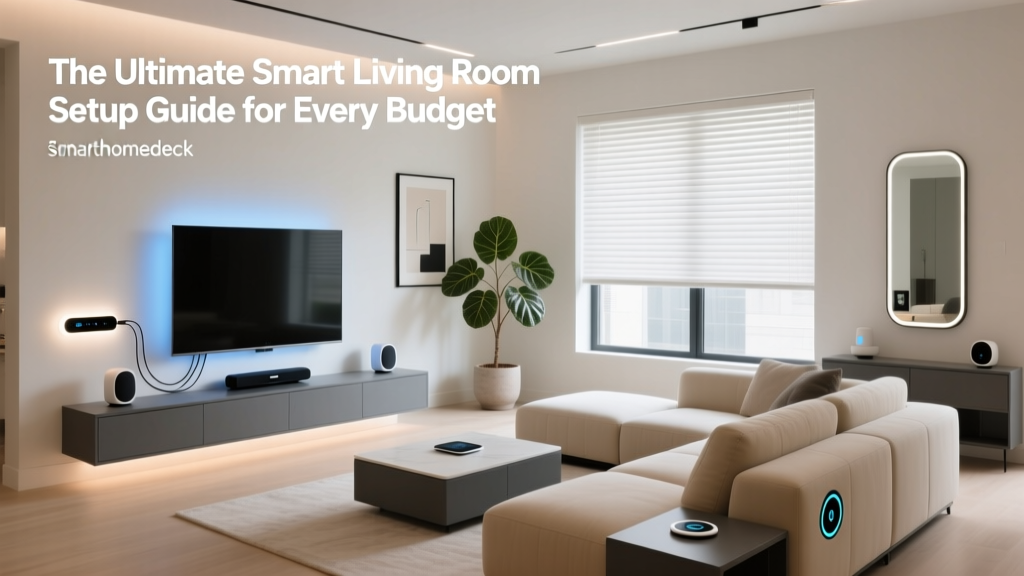
Look for wall-mounted smart infrared panels that double as art pieces or mirrors. These devices connect via Wi-Fi and can be integrated into your smart living room setup to turn on automatically when the smart TV is activated and the ambient temperature drops below your comfort threshold. For freestanding options, bladeless smart heaters with HEPA filtration are excellent choices, as they circulate clean air while providing widespread thermal coverage without the visual clutter of traditional radiator fins.
The Bedroom: Silence & Light Pollution Control
When outfitting a smart bedroom, acoustic and visual comfort are just as important as thermal comfort. Fan-forced ceramic heaters are generally too loud for light sleepers, and the bright LED displays found on many budget heaters can disrupt circadian rhythms.
The undisputed champion of the smart bedroom is the smart oil-filled radiator. These devices use diathermic oil to retain and radiate heat silently. Because they have no moving parts or fans, they operate in complete silence. Pair a smart oil-filled radiator with a wireless smart temperature sensor placed near the bed. You can create an automation that gently warms the room 30 minutes before your wake-up time and powers down once you leave for work. Ensure the model you choose features a "dark mode" or an app-controlled display dimmer to eliminate light pollution.
The Home Office: Targeted & Directional Heating
Home offices are often spare rooms or converted spaces that suffer from poor ductwork routing. Sitting at a desk for eight hours requires consistent, localized warmth. Smart under-desk panel heaters or directional smart ceramic heaters are perfect for this environment.
Under-desk smart panels mount directly to the underside of your desk, radiating heat upward to your legs and core without taking up valuable floor space. Alternatively, a small smart ceramic heater with oscillation can be placed on a side table. By integrating your home office heater with your home office presence detection routine, the heater will instantly power on when your smart chair sensor or room occupancy detector registers your arrival, ensuring you never sit down in a freezing room.
The Garage & Basement: Heavy-Duty & Rugged Heating
Garages, workshops, and unfinished basements require serious thermal output and rugged durability. Standard 1500W smart heaters often struggle in these uninsulated environments. For these spaces, you need high-wattage smart garage heaters (often 240V) or heavy-duty forced-air units.
Because many high-output heaters exceed the safe continuous draw of standard smart plugs, you will likely need to install a smart relay switch directly into the wall line or use a heavy-duty, 20-amp rated smart plug designed specifically for appliances. Always consult a licensed electrician when integrating smart controls into 240V garage circuits. Pair these heavy-duty heaters with smart garage door sensors; if the garage door is left open for more than five minutes, the automation should immediately cut power to the heater to prevent energy waste.
Installation, Safety, and Placement Tips
Space heaters are notoriously high-wattage devices, and introducing smart home automation into the mix requires a strict adherence to electrical safety and physical placement rules. A smart home should be a safe home, and heating devices are the most common point of failure in DIY smart setups.
The Smart Plug Rule: Amperage & Continuous Load
Most standard space heaters draw 1500 watts on a 120-volt circuit. Using the formula Watts / Volts = Amps, a 1500W heater draws exactly 12.5 amps. Standard household circuits are rated for 15 amps, and standard smart plugs are also typically rated for 15 amps. However, electrical codes dictate that continuous loads (devices running for 3 hours or more) should only use 80% of a circuit's capacity. Running a 12.5A heater on a 15A smart plug for hours can cause the plug's internal relay to overheat, melt, or cause a fire.
The Solution: If you must use a smart plug, ensure it is explicitly rated for heavy-duty appliance use (15A continuous / 20A peak) and monitor the plug's temperature during the first few hours of use. Better yet, bypass the smart plug entirely by using a native smart heater, or install a smart in-wall relay rated for 20 amps on a dedicated 20-amp circuit. For a deeper dive into electrical safety, read our comprehensive guide to smart plug safety and load management.
The 3-Foot Clearance Rule
Smart automations can sometimes behave unpredictably. A geofencing glitch or a misconfigured sensor might cause a heater to turn on when you are not home. To mitigate fire risks, strictly enforce the National Fire Protection Association's 3-foot rule. Your smart space heater must have a minimum of three feet of clearance on all sides from combustible materials, including curtains, rugs, bedding, and upholstery. Never use smart automations to control a heater that is placed in a high-traffic walkway or near a pet's sleeping area.
Sensor Placement for Accurate Automation
The intelligence of your smart heater is entirely dependent on the accuracy of your temperature sensors. Do not rely on the internal thermostat built into the heater itself; it is located inches from the heating element and will always read artificially high. Instead, place a wireless smart temperature sensor across the room, at seated or sleeping height, away from direct sunlight and drafty windows. This ensures your automation routines are reacting to the actual ambient temperature of the living space, not the micro-climate immediately surrounding the device.
Automation Routines and Ecosystem Integration
The true magic of a smart home space heater is realized when it operates autonomously, responding to environmental changes and human behavior without manual intervention. Whether you use Apple HomeKit, SmartThings, Hubitat, or Home Assistant, here are the most effective automation routines for smart heating.
The Morning Warm-Up Routine
Waking up in a freezing room is a jarring experience. By combining your smart heater with your smart alarm clock or sleep tracker, you can create a seamless morning routine. Set an automation that triggers 45 minutes before your scheduled wake time. The routine checks the room's smart temperature sensor; if the temperature is below 68°F (20°C), the smart heater powers on. Once your smart mattress pad or motion sensor detects that you have gotten out of bed, the heater powers down, allowing the central heating system to take over for the day.
The Geofencing Energy Saver
Space heaters are incredibly expensive to run if left on accidentally. Create a master "Away Mode" automation tied to your smartphone's GPS geofencing or your smart home's presence detection system. When the last registered user leaves the home' virtual perimeter, a master switch triggers, cutting power to all smart space heaters in the house. This provides ultimate peace of mind, ensuring that a rogue voice command or a forgotten manual switch never results in a massive electricity bill or a fire hazard while the house is empty.
Multi-Sensor Averaging for Large Rooms
In large living spaces or open-concept rooms, a single temperature sensor is rarely enough. One corner of the room near a window might be 62°F, while the area near the kitchen might be 72°F. Advanced ecosystems like Home Assistant allow you to create a "Min/Max" or "Average" sensor entity. By placing three or four wireless sensors around the room and averaging their readings, your smart space heater will trigger based on the true, holistic temperature of the space, preventing the heater from short-cycling or running endlessly due to a localized cold draft.
Smart Blind & Heater Synergy
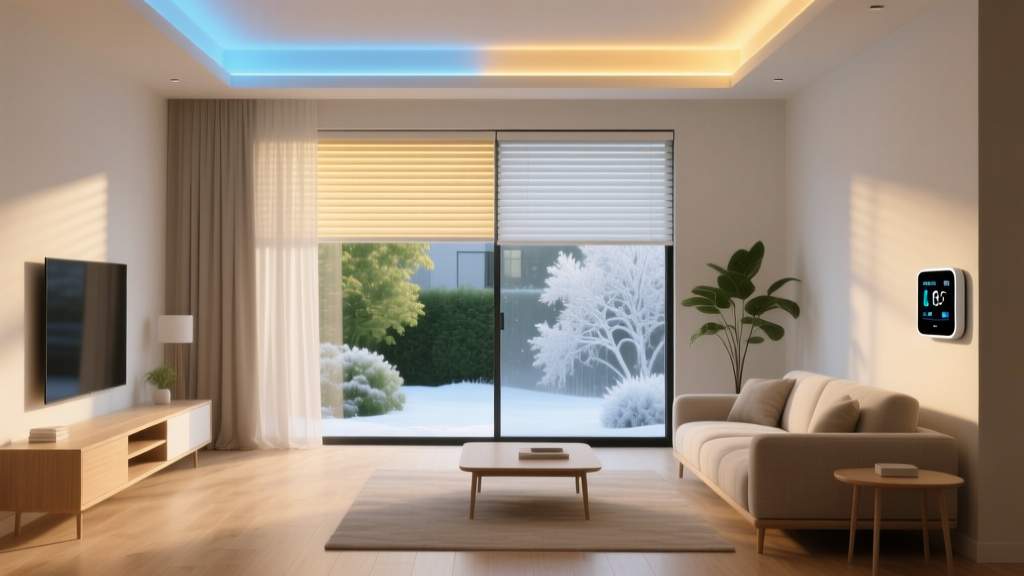
Thermal retention is just as important as thermal generation. Create a routine that links your smart blinds to your smart heater. During winter days, if the outdoor temperature is cold but the sun is shining, the smart blinds open automatically to allow passive solar heating. As the sun sets and the room temperature begins to drop, the smart blinds close to insulate the glass, and the smart space heater powers on to maintain the baseline comfort level. This synergy drastically reduces the electrical load required from your heater.
Design and Aesthetics: Blending Tech with Decor
Space heaters are traditionally bulky, utilitarian, and visually disruptive. However, the modern smart home demands that technology blends seamlessly into the interior design. When selecting a smart space heater, consider the visual footprint of the device and how it interacts with your room's aesthetic.
Wall-Mounted Infrared Panels
For minimalist and modern interiors, freestanding heaters can clutter the floor plan. Wall-mounted smart infrared panels are incredibly thin, often less than two inches deep, and can be mounted high on the wall or even on the ceiling. Many premium models allow you to customize the front panel with fabric wraps, wood veneers, or even custom printed artwork, turning your heating appliance into a focal point of your room's decor rather than an eyesore.
Cable Management & Visual Clutter
A smart heater with a trailing white power cord and a bulky smart plug adapter ruins the illusion of a high-end smart home. Invest in paintable cable management channels to hide the power cord along the baseboards. If you are using a smart plug, consider replacing the standard outlet with a smart in-wall outlet. This eliminates the need for a dongle entirely, providing a clean, flush look while offering superior electrical safety and load handling for high-wattage heating devices.
Color & Material Matching
When choosing a freestanding smart tower or oil-filled radiator, pay attention to the chassis material. Matte black or brushed aluminum finishes tend to blend well with modern home office equipment and living room electronics. For nurseries and bedrooms, look for soft, rounded edges with matte white or pastel finishes that evoke a sense of calm and safety. Avoid cheap, glossy plastics that reflect light and draw unnecessary attention to the appliance.
Frequently Asked Questions (FAQ)
Can I use a smart plug with any space heater?
No, and doing so incorrectly is a major fire hazard. You should only use a smart plug with a space heater if the heater features digital controls and an auto-resume memory function. If you use a smart plug with a manual, analog dial heater, a power outage followed by a power restoration will cause the heater to turn on immediately, even if you are not home. Furthermore, ensure your smart plug is rated for at least 15 amps of continuous load, as standard 10-amp smart plugs will melt under the electrical draw of a 1500W heater.
Are smart space heaters energy efficient?
All electric resistance space heaters are technically 100% efficient at converting electrical energy into heat. However, electricity is generally much more expensive per BTU than natural gas or heat pump systems. The "efficiency" of a smart space heater comes from its zone heating capabilities. By using smart automations to heat only the room you occupy while lowering your central thermostat by 5 to 10 degrees, you can achieve significant net savings on your overall monthly energy bill.
How do I integrate a space heater with my smart thermostat?
Most smart thermostats (like Ecobee or Nest) are designed to control central HVAC systems, not plug-in appliances. To integrate a space heater, you must use a smart home hub (like SmartThings, Hubitat, or Home Assistant) as the middleman. You can create an automation where the smart thermostat's remote room sensor acts as the trigger. If the central thermostat detects that a specific room is too cold to reach the target temperature, the hub commands the smart space heater in that specific room to turn on, assisting the central system without overworking the main furnace.
What safety features should I look for in a smart heater?
Beyond smart home connectivity, the physical device must have robust hardware safety features. Always look for tip-over switches that instantly cut power if the unit is knocked over by a pet or child. Overheat protection sensors are mandatory, shutting the device down if internal components reach dangerous temperatures. Additionally, look for cool-touch exteriors, especially for oil-filled radiators and ceramic towers, and ensure the device is certified by a recognized testing laboratory like UL (Underwriters Laboratories) or ETL.
Can I control my smart heater while away from home?
Yes, most Wi-Fi-enabled smart heaters and smart plugs offer remote access via their companion apps, allowing you to turn the heater on while driving home so the room is warm upon your arrival. However, for safety reasons, it is highly recommended to avoid turning on high-wattage heating devices remotely when no one is home. Instead, use smart automations tied to local occupancy sensors or geofencing to ensure the heater only operates when someone is physically present to respond to a potential malfunction or smoke alarm.