Mastering the Living Room: A Seasonal Smart Home Approach
The living room is the undisputed hub of the modern home. It is where families gather, guests are entertained, and evenings are spent unwinding. However, because living rooms often feature large windows, high ceilings, and open-concept layouts, they are notoriously difficult to keep comfortable during extreme seasonal shifts. In the sweltering heat of summer, solar heat gain can turn your living space into a greenhouse. In the depths of winter, drafty windows and poor air circulation can leave the room feeling chilly despite the furnace running overtime.
Rather than relying solely on brute-force HVAC usage, modern smart home technology allows for nuanced, room-by-room climate management. By integrating smart thermostats, automated window treatments, intelligent air circulators, and zoning vents, you can maintain perfect thermal comfort year-round while significantly reducing your energy footprint. According to the U.S. Department of Energy, homeowners can save as much as 10% a year on heating and cooling by simply adjusting their thermostat 7 to 10 degrees Fahrenheit for eight hours a day from its normal setting. Smart home automation makes these adjustments effortless, invisible, and perfectly timed to the seasons.
In this comprehensive guide, we will break down the ultimate smart living room climate control strategy, exploring specific devices, budget tiers, automation routines, and aesthetic considerations for both summer cooling and winter heating.
The Core Ecosystem: Smart Thermostats and Room Sensors
The foundation of any seasonal climate strategy is the smart thermostat. However, a single thermostat located in a hallway or bedroom cannot accurately gauge the temperature of a large, sun-drenched living room. This is where smart room sensors become critical.
Ecobee SmartThermostat Premium vs. Google Nest Learning Thermostat
For living room optimization, the Ecobee SmartThermostat Premium (approx. $249) is generally superior to the Nest Learning Thermostat due to its included SmartSensor. The Ecobee SmartSensor utilizes passive infrared (PIR) technology to detect occupancy. During the summer, if your living room is occupied but the hallway thermostat reads a cool 72°F, the Ecobee will prioritize the living room's sensor, ensuring the space remains comfortable even if it means running the AC slightly longer. Furthermore, the Premium model includes a built-in air quality monitor that tracks volatile organic compounds (VOCs) and carbon dioxide, which is invaluable during winter months when homes are sealed tight against the cold.
The Google Nest Learning Thermostat (approx. $279) is an excellent alternative for those deeply embedded in the Google ecosystem. It features a beautiful mirrored display that blends well with modern living room decor. While it supports Nest Temperature Sensors (sold separately for around $39), they lack the occupancy detection of Ecobee's sensors, relying instead on a schedule-based prioritization system. For a dynamic living room where occupancy varies wildly between summer gatherings and quiet winter evenings, occupancy-based sensing is highly recommended.
Pro Tip: Place your living room smart sensor on an interior wall, roughly five feet off the ground, and away from direct sunlight, HVAC supply vents, or drafty windows to ensure the most accurate ambient temperature readings.
Summer Adjustments: Beating the Solar Heat Gain
During the summer, the primary enemy of living room comfort is Solar Heat Gain Coefficient (SHGC). When direct sunlight penetrates your windows, it heats up the furniture, flooring, and air. Addressing this at the source is far more energy-efficient than trying to cool the room after the fact.
Smart Blinds and Window Treatments
Automated blinds are a game-changer for summer cooling. The Lutron Serena Shades are the gold standard for reliability and integration. Powered by Lutron's proprietary Clear Connect RF technology, they operate silently and can be scheduled via the Lutron app or integrated into broader ecosystems like Caseta or RadioRA 3. They can be set to automatically lower when the living room's smart sensor detects a temperature spike above 74°F or when a connected weather API reports peak UV index hours.
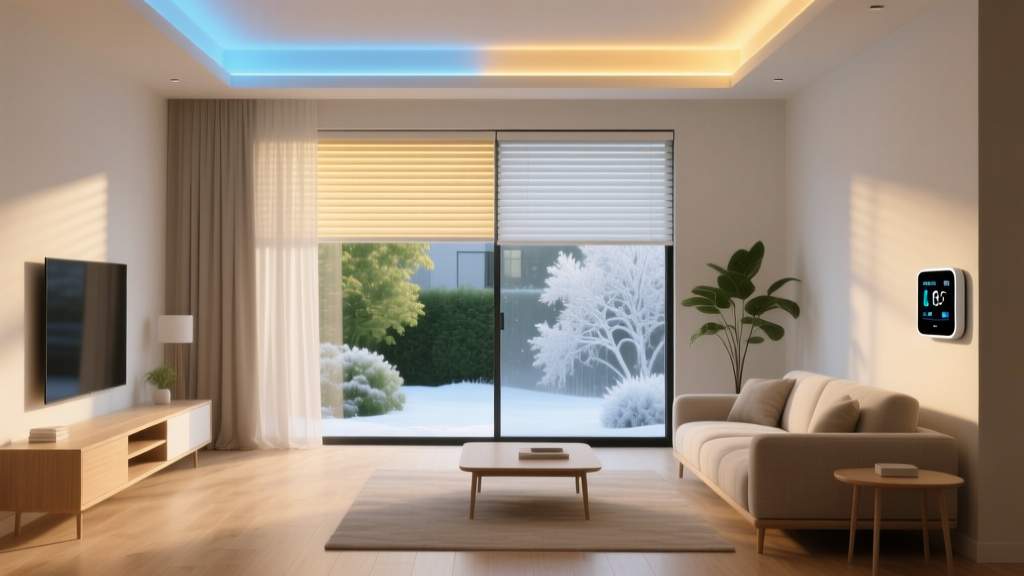
For a more budget-friendly and retrofit option, the SwitchBot Blind Tilt (approx. $89) is an ingenious device that attaches to the existing wand of your horizontal blinds. It uses a light sensor and Bluetooth (or Zigbee/Matter via the SwitchBot Hub 2) to automatically tilt the slats. In the summer, it can angle the slats upward to block direct sunlight while still allowing ambient, diffused light to enter the room, preserving the living room's airy feel without the thermal penalty.
Smart Ceiling Fans and Air Circulation
Wind chill is a powerful tool for summer comfort. A smart ceiling fan can make a room feel up to 4 degrees Fahrenheit cooler without actually lowering the air temperature. The Hunter Symphony Smart Ceiling Fan features built-in Wi-Fi and integrates seamlessly with Apple HomeKit, Alexa, and Google Home. It allows you to set specific RPMs based on the room's temperature.
If you already have a beautiful, non-smart ceiling fan or a collection of pedestal fans, the Bond Bridge (approx. $149) is an essential hub. It records and replicates the infrared (IR) or radio frequency (RF) signals from your existing fan remotes, instantly turning your 'dumb' fans into smart, automatable devices. You can set the Bond Bridge to turn on the living room fans the moment the Ecobee sensor registers a temperature increase, creating a localized micro-climate of comfort.
Winter Adjustments: Retaining Warmth and Eliminating Drafts
Winter presents a different set of challenges. Heat naturally rises, meaning living rooms with vaulted ceilings often trap warm air near the roofline, leaving the seating area cold. Additionally, large glass windows become radiant cooling panels, drawing heat away from your body.
Smart Vents and Zoning
Traditional forced-air systems often overheat bedrooms while under-heating expansive living areas. Flair Smart Vents (approx. $79 each) solve this by replacing standard floor or wall registers. These motorized vents open and close based on the temperature readings from Flair Pucks (smart room sensors) placed in each room. If the living room is occupied and cold, the Flair system will open the living room vents to 100% while partially closing vents in unoccupied guest rooms, directing the furnace's full heating power exactly where it is needed. Note that Flair requires a Flair Puck in each room to function optimally and operates best with a smart thermostat that supports static pressure monitoring to protect your HVAC blower motor.
Infrared Control for Supplemental Heating
Many living rooms feature supplemental heating sources, such as smart electric fireplaces or infrared space heaters. Using a SwitchBot Universal Remote or an IR blaster like the Sensibo Sky, you can integrate these standalone heaters into your smart home routines. For example, if the smart thermostat is struggling to reach the target temperature during a polar vortex, the IR blaster can automatically trigger the living room's infrared fireplace to provide localized, radiant warmth to the seating area, preventing the central furnace from short-cycling or overworking.
Seasonal Automation Routines
The true power of smart home technology lies in automation. Here are two foundational routines to implement for your living room:
- Summer 'Solar Shield' Routine: Triggered when the local weather API reports a UV Index above 7 and the living room temperature exceeds 73°F. Action: SwitchBot Blind Tilt closes slats to 0 degrees (fully shut), Lutron shades lower to 50%, and ceiling fans turn on to a medium speed (approx. 60% RPM). The thermostat setpoint is allowed to drift to 76°F, relying on the wind chill effect for comfort.
- Winter 'Cozy Evening' Routine: Triggered by the Ecobee sensor detecting occupancy after 6:00 PM and outdoor temperatures dropping below 40°F. Action: Smart blinds close fully to create an insulating dead-air space against the glass, smart vents open to 100%, and the smart fireplace is triggered via IR blaster to a low heat setting. The thermostat setpoint drops by 2 degrees, as the radiant heat from the fireplace and the insulated windows maintain perceived comfort.
Budget Tiers: Starter, Mid, and Pro
Outfitting a living room for seasonal shifts can be done on various budgets. Below is a breakdown of three distinct tiers.
| Tier | Estimated Cost | Core Devices Included | Best For |
|---|---|---|---|
| Starter | $250 - $400 | Smart Thermostat (e.g., Wyze or Amazon Smart Thermostat), SwitchBot Blind Tilt, Bond Bridge Mini. | Apartments or renters looking for non-invasive, easy-to-install climate hacks. |
| Mid | $600 - $900 | Ecobee Premium + 2 Sensors, SwitchBot Hub 2 + 4 Blind Tilts, Smart Plug-enabled pedestal fans. | Homeowners wanting robust occupancy tracking and automated solar management. |
| Pro | $1,800 - $3,500+ | Ecobee Premium, Custom Lutron Serena Shades, Flair Smart Vents (x4) + Pucks, Hunter Smart Ceiling Fan. | Large, open-concept living rooms with high ceilings and severe seasonal temperature swings. |
Energy Savings Visualization
Investing in smart climate control yields measurable returns. The chart below illustrates the estimated seasonal energy savings (as a percentage of total HVAC energy usage) attributed to specific smart devices when deployed in a primary living space.
As demonstrated, smart thermostats and automated blinds provide the highest year-round ROI. Furthermore, ENERGY STAR reports that certified smart thermostats can save users roughly 8% on heating and cooling bills annually, provided they are utilized with scheduling and geofencing features enabled. When combined with automated shading, the compounding effect on your utility bills is substantial.
Design and Aesthetic Considerations
Because the living room is a primary aesthetic space, the technology must blend seamlessly with your interior design. When selecting smart blinds, opt for cellular (honeycomb) shades. Not only do they look elegant and modern, but their unique structure traps air, providing a higher R-value (thermal resistance) than traditional roller shades, which is crucial for winter insulation.
For smart sensors and vents, consider the visual footprint. The Ecobee SmartSensor is a small, unobtrusive white puck that can easily be hidden on a bookshelf or mounted discreetly behind a sofa. Flair vents, while slightly bulkier than standard metal registers, feature a clean, white louvered design that matches standard baseboards. If your living room features dark wood floors or painted baseboards, consider painting the outer flange of the smart vent to match, ensuring the tech remains visually invisible while the comfort it provides is deeply felt.
Conclusion
Transforming your living room into a seasonally adaptive space is one of the most rewarding smart home projects you can undertake. By moving beyond the basic smart thermostat and embracing a holistic ecosystem of sensors, automated shading, intelligent air circulation, and zoning vents, you eliminate the discomfort of summer heat and winter drafts. Whether you are starting with a simple SwitchBot Blind Tilt or investing in a full Lutron and Flair ecosystem, the result is a living room that intuitively responds to the environment, saving energy and elevating your daily comfort.