Introduction: The Art of Seasonal Smart Home Adaptation
As the seasons shift from the sweltering heat of summer to the biting chill of winter, maintaining a comfortable indoor environment becomes a complex balancing act. Traditional homes rely on manual adjustments—cranking the air conditioning in July and blasting the furnace in January. However, modern smart home ecosystems allow for granular, room-by-room seasonal adjustments that not only maximize comfort but also drastically reduce energy consumption. By treating your home as a dynamic environment rather than a static box, you can leverage smart climate control, automated shading, and circadian lighting to adapt to the changing solar angles and temperature fluctuations outside.
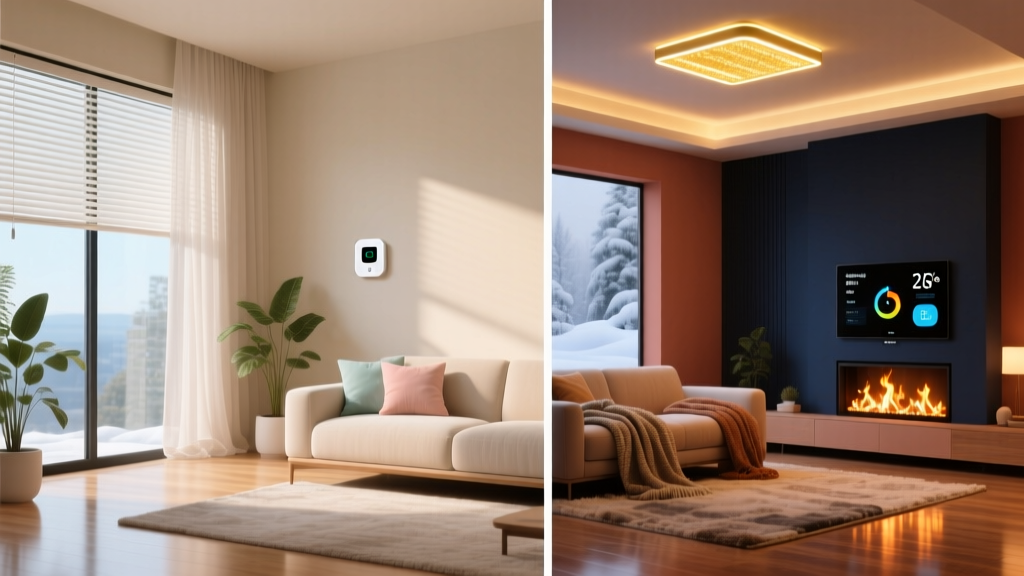
Seasonal room adjustments are not just about changing the thermostat setpoint. They involve rethinking how each room functions throughout the year. The living room, which might serve as a sun-drenched reading nook in the winter, can quickly become an unbearable greenhouse in the summer without automated solar management. Similarly, the bedroom requires distinct micro-climate controls to ensure deep sleep, whether you are battling high humidity in August or dry, static-filled air in December. This comprehensive guide explores how to outfit your living spaces with the right smart devices, establish budget-friendly tiers, and program automation routines that seamlessly transition your home from summer to winter.
The Core of Seasonal Comfort: Smart Thermostats and Room Sensors
The foundation of any seasonal smart home strategy is the central HVAC controller. Upgrading to a smart thermostat is the single most impactful change you can make for seasonal transitions. Devices like the ecobee SmartThermostat Premium (approx. $249) or the Google Nest Learning Thermostat (approx. $229) utilize advanced algorithms to learn your household's patterns, adjusting the baseline temperature based on local weather forecasts and time-of-year data.
However, a central thermostat only measures the temperature in the hallway or living room, often ignoring the unique thermal properties of individual spaces. This is where smart room sensors become critical. According to the U.S. Department of Energy, you can save as much as 10% a year on heating and cooling by simply turning your thermostat back 7°-10°F for 8 hours a day from its normal setting. Smart sensors take this a step further by enabling occupancy-based climate control. In the summer, the ecobee sensor can tell the HVAC system to prioritize cooling the occupied living room during the day and shift focus to the bedroom at night. In the winter, it ensures that drafty guest rooms are not wasting energy when unoccupied, but instantly warm up when motion is detected.
For homes without central HVAC, such as apartments or older builds relying on window units and portable heaters, smart infrared (IR) blasters like the Sensibo Sky (approx. $119) bridge the gap. The Sensibo Sky connects to your Wi-Fi and translates smart home commands into IR signals, allowing you to schedule your window AC or portable heater, set temperature triggers, and integrate with voice assistants, effectively giving dumb seasonal appliances a smart brain.
Living Room Adaptations: Battling Summer Heat and Winter Drafts
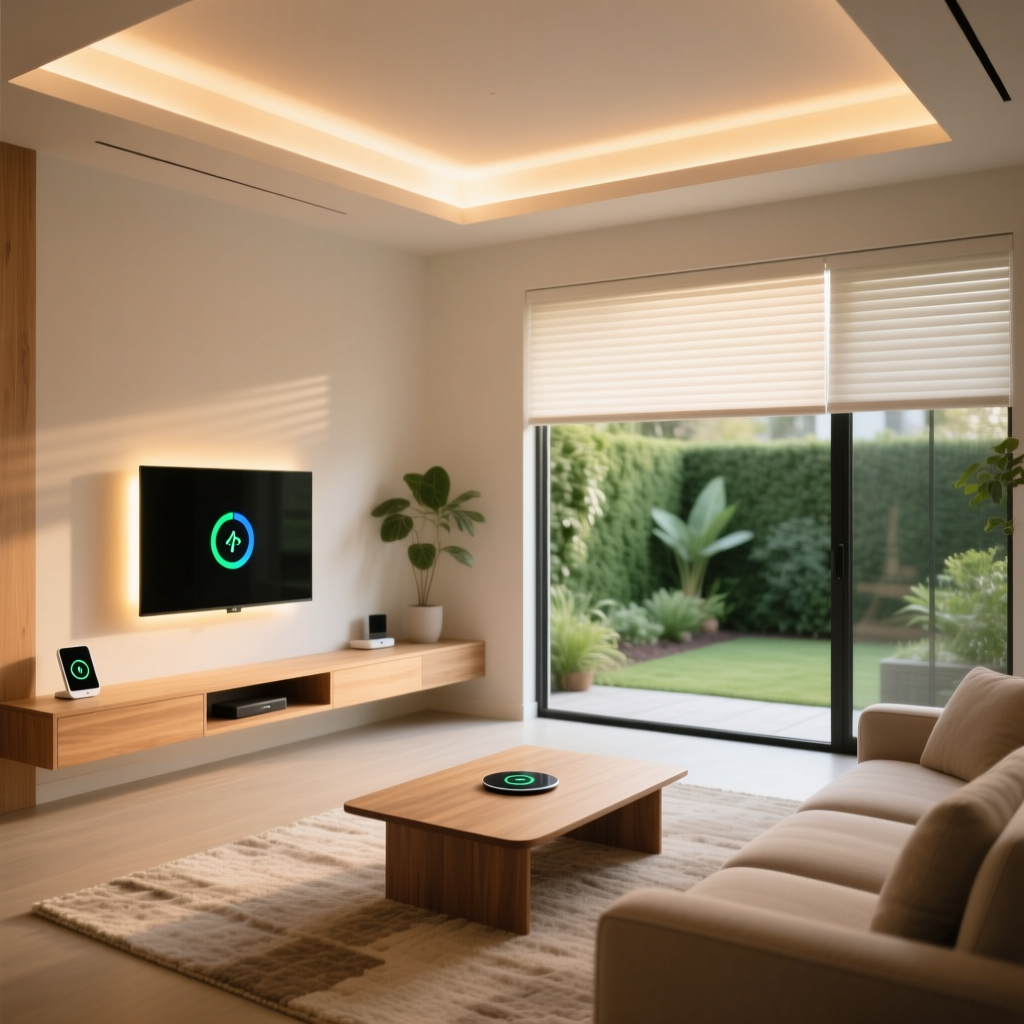
The living room is typically the largest communal space and often features the most windows, making it highly susceptible to seasonal solar gain and thermal loss.
Summer: Solar Management and Airflow
In the summer, the primary enemy is solar heat gain. Before your AC even turns on, you can prevent the room from heating up by automating your window treatments. The SwitchBot Blind Tilt (approx. $89) is a retrofit device that attaches to your existing blind wands. By integrating it with a smart hub and a light sensor, you can create a routine that tilts the blinds shut during peak afternoon sun (typically 1 PM to 4 PM), reducing the ambient room temperature by several degrees. Pair this with a smart ceiling fan controller like the Bond Bridge (approx. $149), which allows you to automate fan speeds based on the room's temperature, creating a wind-chill effect that allows you to raise the AC setpoint by 4°F without sacrificing comfort.
Winter: Radiant Heat and Cozy Ambiance
During winter, the goal shifts to retaining heat and eliminating cold drafts. If your living room features traditional radiators, smart radiator valves like the Eve Thermo (approx. $79 per valve) are essential. These devices replace your manual radiator knobs and allow for precise, room-specific temperature scheduling. If the living room is only used in the evenings, the Eve Thermo can keep the radiator in an eco-mode during the day and ramp up the heat just before you settle in to watch a movie. Furthermore, winter lighting plays a massive role in perceived warmth. Transitioning your smart bulbs, such as Philips Hue White Ambiance, to warmer color temperatures (2000K-2700K) in the evening mimics the warm glow of a fireplace, psychologically enhancing the feeling of coziness without touching the thermostat.
Bedroom Optimization: Circadian Lighting and Micro-Climates
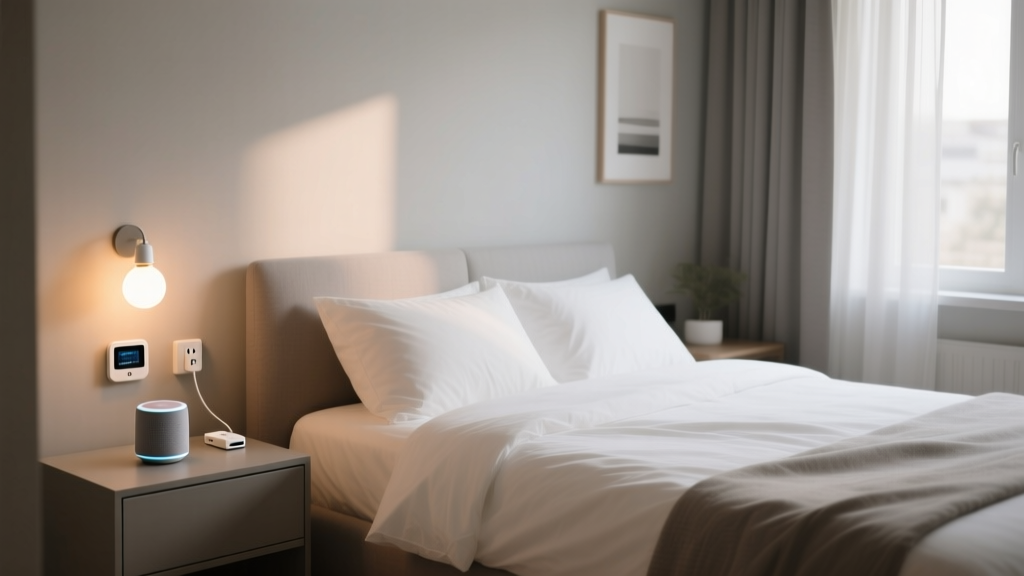
Sleep quality is heavily dependent on ambient temperature and humidity, both of which fluctuate wildly between summer and winter. The ideal sleep temperature is generally around 65°F (18.3°C), but achieving this efficiently requires specialized micro-climate devices.
Summer: Active Cooling and Humidity Control
Summer nights can be oppressive, especially in humid climates. The Eight Sleep Pod 4 (starting approx. $2,299) represents the pinnacle of seasonal bedroom tech. It uses a water-based thermal regulation system to actively cool the mattress surface, allowing you to keep the whole-house thermostat higher at night while maintaining a perfect sleep micro-climate. For a more budget-friendly approach, combining a Govee Smart Thermo-Hygrometer (approx. $15) with a smart plug connected to a dehumidifier or portable AC ensures that your bedroom's humidity never exceeds the 50% threshold, preventing that sticky, restless sleep feeling.
Winter: Humidification and Draft Prevention
Winter introduces the opposite problem: indoor heating strips moisture from the air, leading to dry skin, irritated sinuses, and static electricity. A smart humidifier, such as the Levoit OasisMist Smart Humidifier (approx. $89), can be integrated into your smart home ecosystem to maintain an optimal humidity level of 40-45%. By linking the humidifier to your smart thermostat's humidity readings, the device will automatically engage when the furnace dries out the room, ensuring you wake up refreshed rather than parched. Additionally, utilizing smart heavy curtains or automated cellular shades provides an extra layer of insulation against cold window panes, trapping a layer of dead air that acts as a thermal barrier.
Budget Tiers for Seasonal Smart Upgrades
Outfitting your home for seasonal transitions does not have to break the bank. Below is a structured breakdown of budget tiers to help you plan your upgrades based on your financial comfort zone and technical requirements.
| Tier | Focus Area | Recommended Devices | Estimated Cost |
|---|---|---|---|
| Starter | Basic Climate & Light Control | Sensibo Sky, Wyze Bulb Color, Smart Plug (for fans/humidifiers) | $150 - $200 |
| Mid | Zoned Comfort & Automation | ecobee SmartThermostat + 1 Sensor, SwitchBot Blind Tilt, Eve Thermo | $400 - $600 |
| Pro | Micro-Climates & Full Integration | Eight Sleep Pod 4, Lutron Caseta Shading, Ecobee + Multi-Room Sensors | $1,500 - $2,500+ |
The Starter Tier is perfect for renters or those looking to test the waters, focusing on making existing "dumb" appliances smart via IR blasters and smart plugs. The Mid Tier introduces hardwired or semi-permanent solutions that drastically improve HVAC efficiency through zoning. The Pro Tier is designed for homeowners seeking absolute environmental mastery, integrating active sleep surfaces and architectural-grade shading systems.
Automation Routines: Set It and Forget It
The true magic of seasonal adjustments lies in automation. By utilizing platforms like Apple HomeKit, Google Home, Amazon Alexa, or advanced hubs like Home Assistant, you can create routines that adapt to the season automatically based on the date or local weather conditions.
The "Summer Breeze" Routine
- Trigger: Local outdoor temperature exceeds 75°F (24°C) and time is between 8 AM and 6 PM.
- Action 1: SwitchBot Blinds tilt to 10% (closed) on south and west-facing windows to block solar heat gain.
- Action 2: Sensibo Sky sets the living room AC to 74°F (23°C) with the fan on "Auto".
- Action 3: Smart ceiling fans in occupied rooms turn on to a medium speed to enhance the wind-chill effect.
The "Winter Evening" Routine
- Trigger: Sun sets (based on local astronomical data) and outdoor temperature drops below 45°F (7°C).
- Action 1: Philips Hue lights transition to a warm 2200K color temperature and dim to 60% brightness.
- Action 2: Eve Thermo radiators in the living room and bedroom increase to 70°F (21°C) for evening comfort.
- Action 3: Smart humidifier engages to maintain 45% relative humidity, counteracting the drying effects of the radiators.
By programming these routines, you remove the cognitive load of managing your home's environment. The house simply reacts to the natural world outside, ensuring optimal comfort the moment you walk through the door.
Visualizing the Energy Impact
Transitioning to smart seasonal automation is not just a matter of luxury; it is a financially sound decision. The U.S. Environmental Protection Agency notes that ENERGY STAR certified smart thermostats and automated zoning strategies are proven to save an average of 8% on heating and cooling bills annually. When you extrapolate this across individual rooms, the energy savings become highly visible, particularly during peak summer months when HVAC systems are under the most strain.
Average Monthly Energy Consumption by Room
As illustrated in the chart above, rooms that traditionally suffer from manual inefficiencies—such as the living room with its large windows and the bedroom with its overnight cooling demands—see the most dramatic reductions in energy consumption when smart automation is applied. The living room sees a drop from 120 kWh to 85 kWh, primarily due to automated solar shading preventing the AC from overworking. The bedroom drops from 95 kWh to 65 kWh by utilizing micro-climate devices and occupancy sensors, ensuring energy is never wasted on an empty room.
Installation and Aesthetic Considerations
When integrating seasonal smart devices, aesthetics and physical installation are just as important as the software logic. In the summer, homes tend to feel more open, airy, and minimalist. Bulky sensors and visible wiring can disrupt this vibe. Opt for low-profile, multi-sensors like the Aqara Motion and Light Sensor, which can be tucked onto high shelves or mounted discreetly in corners. For smart blinds, ensure you choose retrofit motors that hide behind the headrail rather than external motors that dangle visibly on the wall.
In the winter, homes embrace a cozier, more layered aesthetic. This is the perfect time to introduce smart plugs that control ambient lighting, such as salt lamps or LED strip lighting behind media consoles. When installing smart radiator valves, be mindful of the physical clearance required for the device to accurately read the room's ambient temperature; enclosing a smart valve inside a decorative wooden radiator cover will result in false readings and an overheated room. Always ensure that temperature and humidity sensors are placed away from direct sunlight, exterior doors, and the immediate vicinity of HVAC vents to guarantee accurate data collection.
Conclusion
Mastering seasonal room adjustments transforms your home from a passive structure into an active, responsive environment. By strategically deploying smart thermostats, automated shading, micro-climate sleep systems, and intelligent lighting, you can conquer the extremes of summer heat and winter cold. Whether you are starting with a simple IR blaster for your window AC or investing in a comprehensive zoned HVAC ecosystem, the integration of these technologies guarantees a more comfortable, energy-efficient, and aesthetically pleasing home year-round. Embrace the changing seasons, and let your smart home do the heavy lifting.