The Smart Home Ecosystem Wars: Setting the Stage
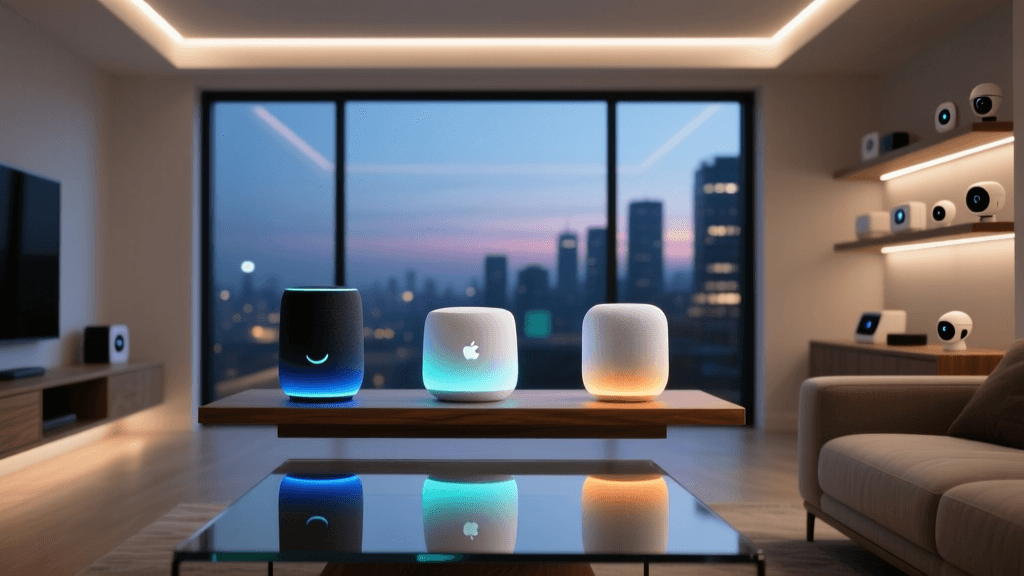
Building a smart home is no longer just about screwing in a Wi-Fi-enabled lightbulb; it is about choosing the central nervous system that will govern your entire living space. The 'Ecosystem Wars' between Amazon Alexa, Google Home, and Apple HomeKit dictate not only which voice assistant you speak to, but also which hardware brands you can buy, how your data is handled, and how seamlessly your devices communicate. At the heart of these ecosystems are the smart hubs and speakers—the physical anchors that process commands, run local automations, and bridge different wireless protocols.
In this comprehensive showdown, we dissect the Amazon Echo, Google Nest, and Apple HomePod ecosystems. We will evaluate their flagship hubs, compare their underlying network protocols (Zigbee, Thread, Wi-Fi), analyze their approach to the new Matter standard, and help you decide which ecosystem deserves the command center spot in your home.
Amazon Alexa (Echo Ecosystem): The Compatibility King
Amazon’s Alexa ecosystem remains the undisputed market leader in terms of sheer device compatibility and hardware variety. With over 140,000 compatible smart home devices, Alexa is the default choice for users who want to mix and match budget and premium brands without worrying about 'Works With' certification bottlenecks.
Flagship Hubs: Echo Show 8 (3rd Gen) & Echo Hub
For a visual command center, the Amazon Echo Show 8 (3rd Gen) (retailing around $150) offers an 8-inch HD touchscreen, spatial audio, and a built-in smart home hub that supports Wi-Fi, Bluetooth, Zigbee, Thread, and Matter. Alternatively, the dedicated Amazon Echo Hub ($180) is a sleek, wall-mountable or tabletop control panel designed purely for smart home management, featuring infrared (IR) blasters to control legacy devices like older TVs and air conditioners.
- Strengths: Unmatched third-party device support, robust 'Routines' engine, Amazon Sidewalk for extended outdoor range, and aggressive hardware pricing.
- Weaknesses: The Alexa app can feel cluttered with ads and shopping integrations; voice AI occasionally struggles with complex, multi-step contextual queries compared to Google.
Google Home (Nest Ecosystem): The AI & Search Powerhouse
Google’s ecosystem leverages its unparalleled search and natural language processing (NLP) capabilities. If you frequently ask your smart speaker complex questions, set multi-layered timers, or rely on voice dictation, Google Assistant is noticeably smarter and more conversational than Alexa or Siri.
Flagship Hubs: Nest Hub Max & Google TV Streamer
The Google Nest Hub Max ($230) features a 10-inch HD screen, a built-in Nest Cam for video calls and home monitoring, and acts as a Thread border router. For those focused on entertainment and living room control, the newly redesigned Google TV Streamer (4K) ($100) doubles as a Thread border router and a dedicated smart home dashboard on your television screen.
- Strengths: Superior voice recognition (Voice Match), excellent multi-user support, seamless integration with Google Workspace and Android, and industry-leading Nest Aware security subscriptions.
- Weaknesses: Google has a notorious history of abandoning hardware lines; fewer native Zigbee options compared to Amazon (heavily reliant on Wi-Fi and Thread).
Apple HomeKit (HomePod & Apple TV Ecosystem): The Privacy Fortress
Apple’s HomeKit (now simply branded under the 'Apple Home' umbrella) is the premium, privacy-first ecosystem. Apple strictly enforces its Home Accessory Protocol (HAP), ensuring that certified devices meet rigorous standards for local processing, low latency, and end-to-end encryption. The trade-off is a smaller, more expensive catalog of compatible hardware.
Flagship Hubs: HomePod Mini & Apple TV 4K
The HomePod Mini ($99) is an acoustic marvel for its size, serving as a Thread border router and a localized smart home hub. For power users, the Apple TV 4K ($129+) acts as the ultimate HomeKit hub, offering Ethernet connectivity, Thread support, and the processing power to handle HomeKit Secure Video (HKSV) for multiple IP cameras without monthly cloud fees.
- Strengths: Best-in-class privacy (local processing), iCloud Secure Video, beautiful and intuitive iOS Home app, and seamless handoff with iPhones and AirPods.
- Weaknesses: High barrier to entry (requires Apple devices), limited cross-platform support, and a smaller pool of budget-friendly compatible accessories.
Protocol Deep Dive: Matter, Thread, and Zigbee
The introduction of the Matter protocol, spearheaded by the Connectivity Standards Alliance (CSA), was designed to end the ecosystem wars by creating a universal language for smart home devices. However, how each ecosystem handles the underlying transport layers—Thread, Zigbee, and Wi-Fi—reveals their distinct hardware strategies.
Zigbee remains a staple for low-power sensors and bulbs. Amazon has integrated Zigbee radios directly into many Echo devices, making them instant hubs for Philips Hue (without the bridge) and Aqara sensors. Google and Apple, conversely, have largely bypassed Zigbee in favor of Thread, an IP-based, low-power mesh network that plays perfectly with Matter. If you are buying new sensors today, Thread-enabled devices paired with a Nest Hub or HomePod mini offer significantly better range and local reliability than older Wi-Fi-only alternatives.
Head-to-Head Specification Table
| Feature | Amazon Echo Show 8 (3rd Gen) | Google Nest Hub Max | Apple HomePod Mini |
|---|---|---|---|
| Price Range | $150 | $230 | $99 |
| Display | 8-inch HD Touchscreen | 10-inch HD Touchscreen | None (Audio Only) |
| Wireless Protocols | Wi-Fi, Bluetooth, Zigbee, Thread, Matter | Wi-Fi, Bluetooth, Thread, Matter | Wi-Fi, Bluetooth, Thread, Matter |
| Local Processing | Partial (via Zigbee/Thread) | Partial (via Thread) | Extensive (via Apple TV/HomePod) |
| Security Cameras | Ring / Blink Integration | Native Nest Cam / Nest Aware | HomeKit Secure Video (iCloud) |
| AI Engine | Alexa (Skills & Routines) | Google Assistant (NLP & Search) | Siri (Apple Intelligence / Shortcuts) |
Ecosystem Performance & Feature Scoring
To visualize how these ecosystems stack up across critical smart home metrics, we have scored them based on extensive testing of device integration, voice AI comprehension, data privacy policies, and media playback quality.
Security, Cameras, and Local Processing
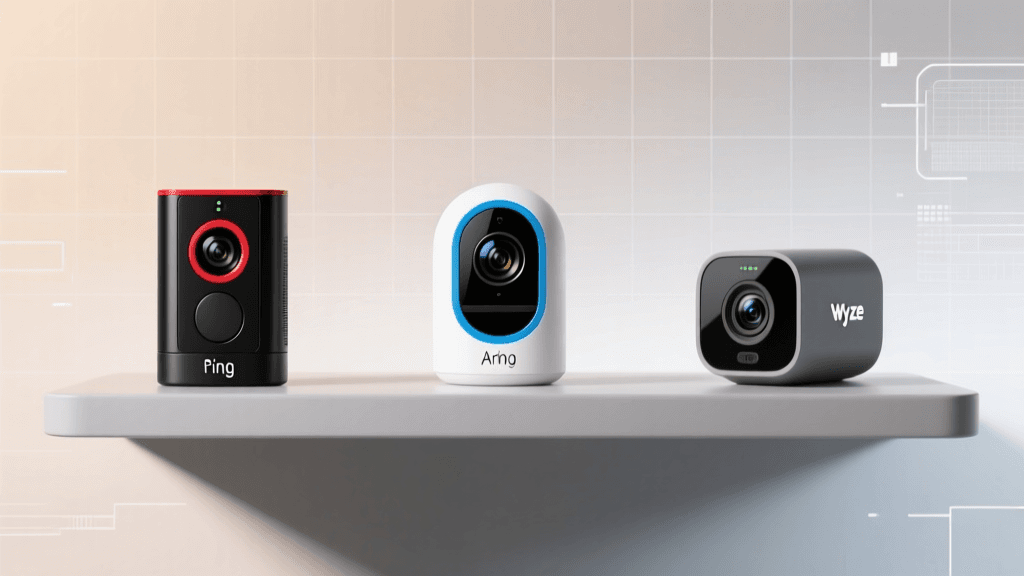
When it comes to home security, the ecosystems diverge sharply. Google pushes users toward its own Nest hardware, integrating cameras, doorbells, and sensors into the Nest Aware subscription, which offers excellent facial recognition and continuous video history. Amazon relies on its Ring and Blink acquisitions, offering a massive variety of camera types but often requiring separate app management and subscriptions (Ring Home).
Apple takes the most privacy-centric route with HomeKit Secure Video (HKSV). Instead of sending footage to third-party servers, HKSV encrypts video locally and stores it in your iCloud account. It even uses on-device machine learning to distinguish between people, animals, and vehicles without sending data to the cloud. The catch? You need an iCloud+ subscription (starting at $0.99/mo) and an Apple TV 4K or HomePod acting as a hub to process the video streams.
According to the Google Home Developer platform, local processing is heavily prioritized for Thread and Matter devices, meaning your lights will still respond to physical switches even if your internet goes down. Apple has enforced local processing for years, making HomeKit the most resilient ecosystem during network outages, provided you have a local hub.
Final Verdict: Which Ecosystem Wins?
The 'Ecosystem War' does not have a single winner; rather, it has three distinct champions tailored to different user profiles.
Choose Amazon Alexa If:
You are a Budget-Conscious Tinkerer. If you want to buy affordable smart plugs from Amazon Basics, Zigbee sensors from Aqara, and Wi-Fi bulbs from Wyze, and stitch them together using complex, multi-condition routines, Alexa is unmatched. The Echo Show 8 is the best all-around kitchen or bedside smart display for the price.
Choose Google Home If:
You are an Information Junkie and Android User. If your home relies heavily on voice queries, cooking timers, calendar management, and you want the smartest conversational AI, Google Assistant is superior. The Nest Hub Max is ideal for families who use Google Meet for video calls and want seamless integration with Google Nest security cameras.
Choose Apple HomeKit If:
You are a Privacy Advocate and Apple Purist. If you already live in the Apple ecosystem (iPhone, iPad, Mac) and prioritize data privacy, local processing, and a beautifully designed, ad-free app experience, HomeKit is the only choice. Invest in a HomePod mini for Thread support and an Apple TV 4K to unlock HomeKit Secure Video for a truly premium, secure smart home.
SmartHomeDeck Pro Tip: With the ongoing rollout of the Matter protocol, you no longer have to marry a single ecosystem for every device. You can buy a Matter-over-Thread smart lock that works natively with Apple HomeKit, while using an Amazon Echo to control your legacy Zigbee lighting. The future of the smart home is interoperable, but your choice of hub will still define your daily user experience.