The Smart Thermostat Dilemma: Budget vs. Premium
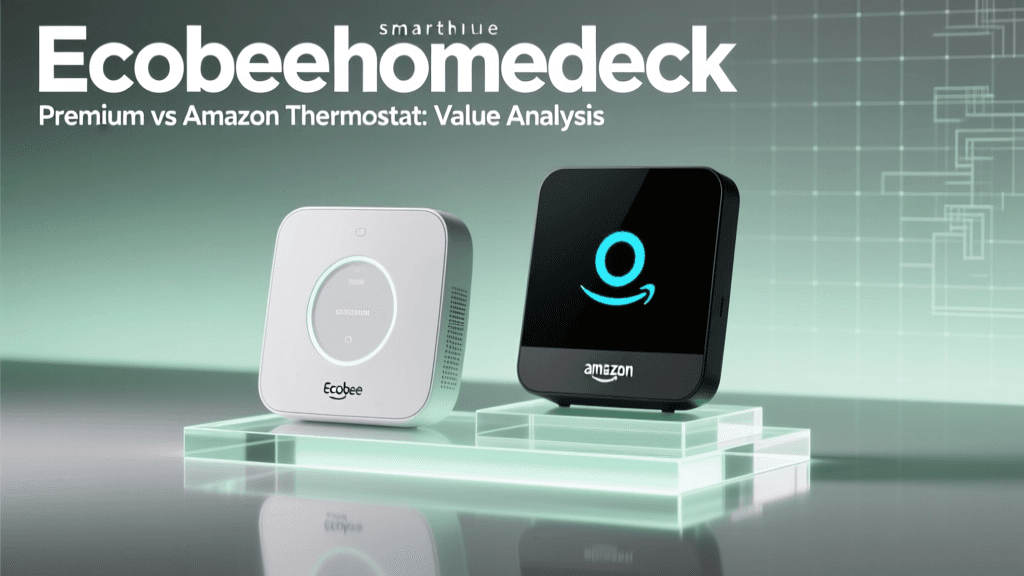
The smart home market is saturated with devices promising convenience and energy savings, but few categories offer as tangible a return on investment as smart thermostats. When upgrading your HVAC control, consumers are typically faced with a stark choice: opt for an affordable, no-frills budget model or invest in a premium, feature-rich powerhouse. In this value analysis, we are putting the ultimate budget pick, the Amazon Smart Thermostat, head-to-head against the flagship premium contender, the Ecobee SmartThermostat Premium.
According to the U.S. Department of Energy, heating and cooling account for nearly half of a typical home's energy use. Upgrading to a smart device can yield significant savings, but does spending three to four times more on a premium unit actually multiply your returns? Let us dive into the specifications, ecosystem compatibility, and long-term value of both devices to determine which thermostat deserves a spot on your wall.
The Budget Contender: Amazon Smart Thermostat
Launched with a disruptive price tag, the Amazon Smart Thermostat was developed in partnership with Honeywell Home. Priced typically around $60 to $80, it undercuts almost every major competitor in the smart home space. The device is built on the reliable Honeywell T-series hardware, meaning the physical relays and wiring logic are proven and robust.
Key Features and Limitations
- Alexa Integration: While it works seamlessly with Alexa routines and the Alexa app, it notably lacks a built-in microphone and speaker. You cannot speak to the thermostat directly; you must use a separate Echo device.
- Scheduling and Geofencing: It utilizes your smartphone's location to adjust temperatures when you leave or return, and offers standard weekly scheduling.
- Design: A minimalist, matte-white plastic interface with a glass front. It is clean but decidedly basic compared to premium screens.
- No Room Sensors: The biggest omission is the lack of support for remote room sensors, meaning it only reads the temperature of the hallway or room where it is installed.
The Amazon Smart Thermostat is the undisputed king of entry-level climate control, provided your home's layout does not require multi-room temperature balancing.
The Premium Powerhouse: Ecobee SmartThermostat Premium
At the opposite end of the spectrum sits the Ecobee SmartThermostat Premium, often retailing between $249 and $279. Ecobee has long been the darling of smart home enthusiasts, and the Premium model justifies its high price tag by acting as a central hub for multiple smart home functions beyond just climate control.
Key Features and Capabilities
- SmartSensor Included: It comes with one SmartSensor (occupancy and temperature) to ensure the rooms you are actually using are comfortable, not just the hallway.
- Built-in Voice Assistants: Features far-field microphones and a high-quality speaker supporting both Amazon Alexa and Apple Siri natively.
- Air Quality Monitor: Built-in VOC (Volatile Organic Compounds) and CO2 sensors alert you to poor indoor air quality and can trigger your HVAC fan or smart purifier.
- Spotify Connect & Intercom: Doubles as a smart speaker for music and an intercom system for other Ecobee devices in the home.
As noted by experts at CNET, the Ecobee Premium's inclusion of room sensors and air quality monitoring elevates it from a simple temperature dial to a comprehensive home health and comfort hub.
Head-to-Head Specification Breakdown
Below is a detailed comparison of the core specifications that differentiate the budget and premium tiers.
| Feature | Amazon Smart Thermostat | Ecobee SmartThermostat Premium |
|---|---|---|
| Retail Price | ~$70 | ~$250 |
| Remote Room Sensors | Not Supported | Supported (1 Included) |
| Built-in Voice Assistant | No (Requires Echo Device) | Yes (Alexa & Siri) |
| Air Quality Monitoring | No | Yes (VOC & CO2) |
| Smart Home Hubs | None | Zigbee Hub Built-in |
| Display | Mirrored Glass, Basic UI | Full Color Touchscreen, Premium UI |
| C-Wire Required | Yes (Strict) | Yes (PEK adapter included) |
Energy Savings and Return on Investment
The primary justification for any smart thermostat is energy conservation. The EPA's Energy Star program certifies that smart thermostats can save homeowners an average of 8% on heating and cooling bills annually. However, the actual dollar amount saved depends heavily on how well the thermostat manages occupancy and multi-zone comfort.
Upfront Cost vs Estimated 5-Year Savings
Analyzing the ROI
As visualized in the chart above, the Amazon Smart Thermostat offers a remarkably fast payback period. Because the upfront cost is so low (around $70), the device essentially pays for itself within the first year of energy savings. Over five years, a typical household might save $400, yielding a net positive of $330.
The Ecobee Premium, on the other hand, costs $250. While its advanced occupancy sensing via room sensors and superior eco-routing algorithms can squeeze out an estimated $550 in savings over five years, the net positive is only $300. From a purely financial perspective, the budget Amazon model actually yields a slightly better pure ROI. The premium model's value proposition must therefore be found in its secondary features: comfort, air quality, and smart home integration.
Smart Home Integration and Room Sensors
Where the Ecobee Premium truly justifies its premium price tag is in its handling of complex home layouts. If you live in a multi-story home or a house with large open-plan areas, the thermostat in the hallway rarely reflects the temperature of your bedroom or home office. The Ecobee's included SmartSensor detects both temperature and occupancy. If you are working in your home office, the Ecobee prioritizes that room's climate over the empty living room.
The Amazon Smart Thermostat relies solely on its internal sensor and geofencing. If the hallway is 72 degrees, but your bedroom is 78 degrees, the Amazon unit will not know, and it will not adjust the HVAC system to cool the bedroom. For larger homes, this limitation can lead to significant comfort issues, negating the convenience of a smart device.
Furthermore, the Ecobee Premium features a built-in Zigbee hub, allowing it to connect directly to smart locks, leak sensors, and other third-party devices without relying on your home Wi-Fi router. The Amazon thermostat is strictly an endpoint device; it connects to Wi-Fi and relies entirely on the cloud and your Alexa app for automation routines.
Aesthetics, Build Quality, and Air Monitoring
Aesthetically, both devices look good on a standard wall plate, but they project different vibes. The Amazon thermostat is understated and utilitarian. It blends into the background, which many minimalists prefer. However, the plastic chassis feels lightweight, and the mirrored glass smudges easily.
The Ecobee Premium is a piece of modern tech jewelry. It features a thick glass faceplate, a premium metal dial option (sold separately in some bundles), and a vibrant, full-color touchscreen interface that is responsive and visually appealing. More importantly, the Premium model acts as an environmental sentinel. Its built-in air quality monitor tracks VOCs (from cleaning supplies, paints, or off-gassing furniture) and CO2 levels. If the air quality degrades, the Ecobee can automatically trigger your HVAC fan to circulate air or send an alert to your phone, a feature entirely absent in the budget tier.
Installation Realities: The C-Wire Factor
Before purchasing either thermostat, you must open your current thermostat's wall plate and check for a C-wire (Common wire). Both the Amazon Smart Thermostat and the Ecobee Premium require continuous 24V power to operate their Wi-Fi radios and displays.
- Amazon's Strict Requirement: Amazon does not include a power extender kit. If your home lacks a C-wire, you must either hire an electrician to run one or purchase a third-party C-wire adapter separately. This can add $20 to $50 to your 'budget' installation.
- Ecobee's Flexibility: The Ecobee Premium includes a Power Extender Kit (PEK) in the box. If you lack a C-wire, the PEK allows you to wire the thermostat using your existing G (Fan) and Y (Cooling) wires. This makes the premium model surprisingly easier to install in older homes.
Final Verdict: Which Thermostat Should You Buy?
The choice between the Amazon Smart Thermostat and the Ecobee SmartThermostat Premium comes down to your home's layout and your smart home ambitions.
Choose the Amazon Smart Thermostat if:
- You are on a strict budget and want the fastest possible financial ROI.
- You live in a smaller home, condo, or apartment where single-zone temperature reading is sufficient.
- You already own Amazon Echo devices in every room and do not need a microphone on the thermostat itself.
- You want a simple, set-it-and-forget-it scheduling interface without complex menus.
Choose the Ecobee SmartThermostat Premium if:
- You have a larger, multi-story home with hot or cold spots that require remote room sensors to balance.
- You care about indoor air quality and want VOC/CO2 monitoring integrated into your climate control.
- You want a premium smart speaker with Spotify Connect and Siri/Alexa support built directly into the device.
- Your home lacks a C-wire, and you want the included PEK adapter to handle the installation without hiring an electrician.
Ultimately, the Amazon Smart Thermostat is a masterclass in budget value, delivering core smart features at an unbeatable price. However, the Ecobee Premium earns its high cost by solving the physical limitations of single-point HVAC systems through room sensors and elevating the device into a comprehensive home health monitor.