The Great Security Divide: DIY vs. Professional Installation
The smart home security landscape has evolved dramatically over the last decade. Gone are the days when securing your property required a dedicated phone line, a bulky DVR, and an expensive contract signed in triplicate. Today, homeowners and renters alike are faced with a fundamental choice that dictates not just how they secure their homes, but how they interact with their living spaces: Do you embrace the flexibility of Do-It-Yourself (DIY) wire-free systems, or do you invest in the robust, hands-off reliability of professionally installed hardwired networks?
This debate is more than just a matter of upfront cost. It touches on network reliability, video fidelity, artificial intelligence capabilities, and the psychological deterrence of visible security measures. According to industry analyses by Safehome.org, the DIY security market has exploded in popularity due to the elimination of activation fees and the rise of user-friendly mobile applications. However, professional monitoring and installation services continue to dominate the premium housing market where seamless integration and zero-maintenance hardware are paramount.
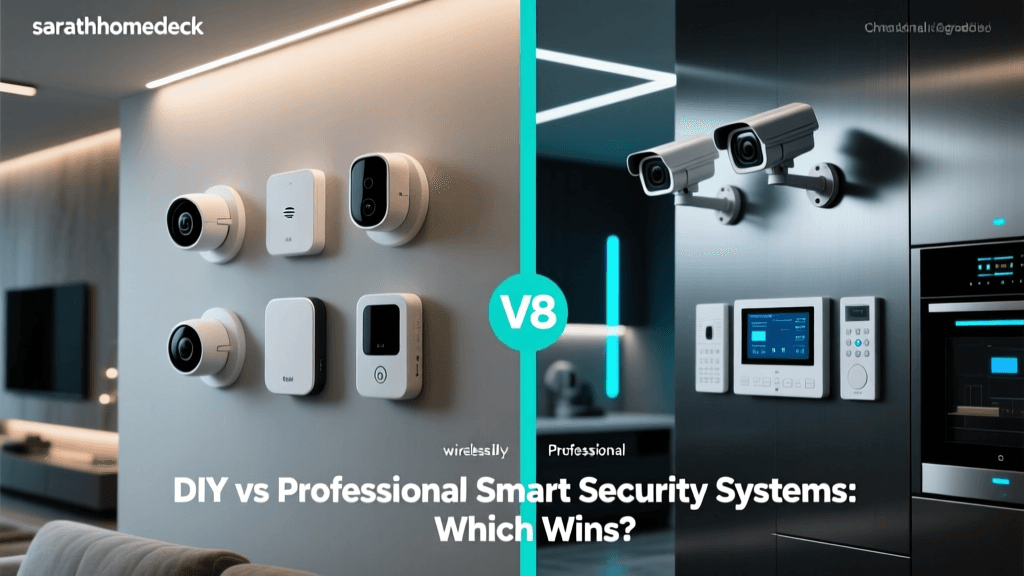
In this comprehensive head-to-head comparison, we are pitting the undisputed king of DIY wire-free security, the Arlo Pro 4, against the heavyweight champion of professional, hardwired smart security, the Vivint Outdoor Camera Pro. We will dissect every angle of the ownership experience, from unboxing and ladder-climbing to monthly subscriptions and AI-driven deterrence.
Meet the Contenders: Arlo Pro 4 vs. Vivint Outdoor Camera Pro
The DIY Champion: Arlo Pro 4
Arlo has long been synonymous with premium wire-free security. The Arlo Pro 4 represents the pinnacle of their DIY lineup, offering a completely wire-free experience with an integrated spotlight, 2K HDR video, and a removable rechargeable battery. It is designed for the modern consumer who wants powerful features without the hassle of running cables through exterior walls or dealing with scheduled contractor visits. You can connect it directly to your home Wi-Fi or use an Arlo SmartHub for extended range and local storage options.
The Professional Heavyweight: Vivint Outdoor Camera Pro
Vivint approaches home security not as a collection of standalone gadgets, but as a unified, professionally managed ecosystem. The Vivint Outdoor Camera Pro is a hardwired, Power-over-Ethernet (PoE) device that requires professional installation. It boasts a massive 4K image sensor (which uses pixel binning to output a pristine, low-light optimized 1080p stream), advanced Smart Sentry AI deterrence, and seamless integration with Vivint's proprietary smart home panels and 24/7 in-house monitoring centers.
Installation Reality Check: Ladders vs. White-Glove Service
The most immediate difference between these two systems is the installation process. This is where your personal comfort with tools, heights, and home modification will dictate your path.
The DIY Experience: Sweat Equity and Wi-Fi Mapping
Installing the Arlo Pro 4 is a weekend project. The box includes a magnetic charging cable, a weather-resistant silicone skin, and a versatile mounting bracket. You will need a ladder, a power drill, and a basic understanding of your home's exterior materials. If you are mounting on vinyl siding, a simple siding clip works wonders. If you are drilling into brick or stucco, you will need a masonry bit and wall anchors.
However, the physical mount is only half the battle. The true challenge of DIY wire-free cameras is network topology. Because the Arlo Pro 4 relies on a 2.4GHz Wi-Fi signal to transmit 2K video, you must ensure your router's signal penetrates your exterior walls. Many DIY users find themselves purchasing Wi-Fi extenders or upgrading to a mesh network system to eliminate dead zones at the edges of their property. Furthermore, you are responsible for the maintenance: swapping or charging batteries every few months, depending on traffic and weather conditions.
The Professional Experience: The White-Glove Truck Roll
Choosing Vivint means scheduling a 'truck roll.' A certified technician arrives at your home with the Vivint Outdoor Camera Pro, a spool of CAT6 Ethernet cable, and a drill. They will walk the property with you to determine optimal sightlines, ensuring the camera's 140-degree field of view covers entry points while minimizing street traffic to reduce false alerts.
The technician will drill through your exterior wall, run the CAT6 cable through your attic or crawlspace, and terminate it at a PoE switch connected to your Vivint Smart Hub. This process guarantees a flawless network connection that is entirely immune to Wi-Fi interference, thick brick walls, or neighboring network congestion. The camera receives both power and data through a single cable, meaning you will never have to climb a ladder to swap a battery. The trade-off is a higher upfront cost and the permanence of the installation, which can be a drawback for renters.
Hardware and Video Quality Specifications
When comparing raw hardware, the two cameras take fundamentally different approaches to imaging and power delivery. Below is a detailed specification breakdown.
| Feature | Arlo Pro 4 (DIY) | Vivint Outdoor Camera Pro (Professional) |
|---|---|---|
| Image Sensor | 2K (2560x1920) HDR | 4K Sensor (Binned to 1080p output) |
| Field of View | 160° Diagonal | 140° Diagonal |
| Power Source | Rechargeable Battery / Solar / Hardwire Kit | Hardwired PoE (Power over Ethernet) |
| Night Vision | Color Night Vision (via Spotlight) | Infrared + Low-Light Sensor Optimization |
| Deterrence | Integrated Spotlight & Siren | Red LED Ring & Smart Sentry Audio |
| Two-Way Audio | Yes (Noise/echo cancellation) | Yes (High-fidelity speaker/mic) |
| Installation | DIY (Magnetic Mount / Screw-in) | Professional Only (Wall-penetration) |
| Weather Resistance | IP65 | IP66 |
The Arlo Pro 4's 2K resolution provides excellent digital zoom capabilities, allowing you to read license plates or identify faces if the subject is within 15 to 20 feet. The integrated spotlight is a fantastic dual-purpose feature, providing color night vision while simultaneously acting as a motion-activated porch light.
Conversely, Vivint's use of a 4K sensor with pixel binning is a masterclass in low-light performance. By combining the data from four adjacent pixels into one, the Vivint camera captures significantly more light, resulting in incredibly clean, noise-free footage at dusk and dawn—the exact times when most property crimes occur. As noted by camera experts at CNET, sensor size and light-gathering capabilities often matter more than raw pixel count for outdoor security applications.
Network Reliability: Wi-Fi vs. Power over Ethernet (PoE)
A security camera is only as good as its connection to the cloud. The Arlo Pro 4 operates on your home's 2.4GHz Wi-Fi network. While 2.4GHz is great for penetrating walls, it is highly susceptible to interference from microwaves, baby monitors, and neighboring routers. In dense urban environments or large suburban estates, Wi-Fi dropouts can lead to missed recordings or delayed push notifications.
The Vivint Outdoor Camera Pro utilizes Power over Ethernet (PoE). This enterprise-grade networking standard ensures a dedicated, hardwired data pipeline directly to the Vivint Smart Hub. There is zero latency, zero packet loss due to weather interference, and a level of reliability that Wi-Fi simply cannot match. Furthermore, because the Vivint hub manages the local network for its cameras, your security system remains isolated from the bandwidth hogs on your main home Wi-Fi network, ensuring that your kids streaming 4K Netflix inside doesn't cause your exterior security cameras to lag.
Artificial Intelligence and Deterrence Features
Both systems utilize advanced AI to differentiate between humans, animals, and vehicles, effectively eliminating the annoying false alerts caused by swaying tree branches or passing cars. However, their approach to active deterrence differs wildly.
Arlo Secure: Reactive and Customizable
Arlo's AI is processed in the cloud (or locally if using a SmartHub with a premium subscription). When a person is detected, the Arlo Pro 4 can trigger its spotlight, sound a siren, and send a rich notification to your smartphone. You can then use the two-way audio to speak to the person. It is a highly customizable, reactive system that puts the control in the hands of the user via the Arlo Secure app.
Vivint Smart Sentry: Proactive Deterrence
Vivint's Smart Sentry is a proactive deterrence system. When the camera's AI detects a human lingering on your property (loitering), the camera's red LED ring begins to spin, signaling to the intruder that they have been identified. If the person does not leave, the camera can automatically play a pre-recorded audio warning, such as 'You are being recorded, please leave the premises.' This automated, immediate response stops package theft and property trespassing before the user even has to look at their phone.
Proactive deterrence is the future of home security. Systems that can autonomously identify and warn potential threats in real-time drastically reduce the window of opportunity for porch pirates and vandals.
The True Cost of Ownership: 5-Year Financial Breakdown
The financial comparison between DIY and Professional systems requires looking beyond the sticker price of the camera. You must factor in installation fees, activation costs, hardware financing, and mandatory monthly subscriptions.
For the Arlo Pro 4, we assume the purchase of a two-camera kit with a SmartHub (approx. $400 upfront) and the Arlo Secure subscription for cloud storage and professional monitoring features (approx. $130/year). For Vivint, the hardware is often rolled into a 60-month contract, but we will calculate the equivalent upfront hardware and installation cost (approx. $600 for two cameras and pro install) plus their mandatory premium monitoring and smart home drive plan (approx. $45/month or $540/year).
As the data illustrates, the DIY route offers massive long-term savings. Over five years, the Arlo ecosystem costs roughly a third of what a comparable Vivint professional setup will drain from your bank account. However, Vivint users are paying for the luxury of zero maintenance, guaranteed network uptime, and a unified smart home panel that controls locks, thermostats, and garage doors alongside the cameras.
Ecosystem Integration and Smart Home Compatibility
The Arlo Pro 4 is an open-ecosystem device. It integrates seamlessly with Amazon Alexa, Google Home, Apple HomeKit, and IFTTT. You can pull up your camera feeds on your Echo Show, Nest Hub, or Apple TV, and create complex automations using third-party platforms. This makes Arlo an ideal choice for the smart home tinkerer who wants to mix and match brands.
Vivint, on the other hand, is a walled garden. The Outdoor Camera Pro does not work with native HomeKit or Alexa camera feeds in the traditional sense; it is designed to live exclusively within the Vivint Smart Hub ecosystem. While this limits third-party flexibility, it ensures that the cameras work in perfect, lag-free harmony with Vivint smart locks, garage door controllers, and thermostats. When you arm your Vivint system at night, the cameras automatically adjust their sensitivity and Smart Sentry protocols without requiring complex third-party API workarounds.
Final Verdict: Which Path Should You Take?
The choice between the Arlo Pro 4 and the Vivint Outdoor Camera Pro is not strictly about which camera has the better spec sheet; it is about choosing a lifestyle and a level of involvement in your home's security infrastructure.
Choose the Arlo Pro 4 (DIY) If:
- You are a renter or plan to move soon: The wire-free, magnetic mount design means you can take your entire security system with you when you break your lease.
- You are budget-conscious: You want to avoid activation fees, long-term contracts, and expensive monthly monitoring bills.
- You love smart home tinkering: You want to integrate your cameras with a mix of Apple, Google, and Amazon devices and build custom automations.
- You have a strong Wi-Fi network: Your property is covered by a robust mesh Wi-Fi system capable of handling 2K video streams.
Choose the Vivint Outdoor Camera Pro (Professional) If:
- You want a 'set it and forget it' system: You never want to climb a ladder to charge a battery or troubleshoot a Wi-Fi dead zone.
- You value proactive deterrence: The Smart Sentry AI and red LED ring provide an autonomous layer of security that stops crimes before they happen.
- You want a unified smart home panel: You prefer controlling your cameras, locks, and alarms from a single, dedicated wall-mounted touchscreen.
- You demand enterprise-grade reliability: You require the flawless, interference-free connection that only hardwired PoE can provide.
Ultimately, the DIY route championed by Arlo democratizes home security, offering premium features at a fraction of the long-term cost. Meanwhile, Vivint's professional service provides unparalleled peace of mind through white-glove installation, hardwired reliability, and proactive AI deterrence. Evaluate your property, your budget, and your tolerance for weekend projects to make the right call for your sanctuary.