The Premium Smart Speaker Landscape
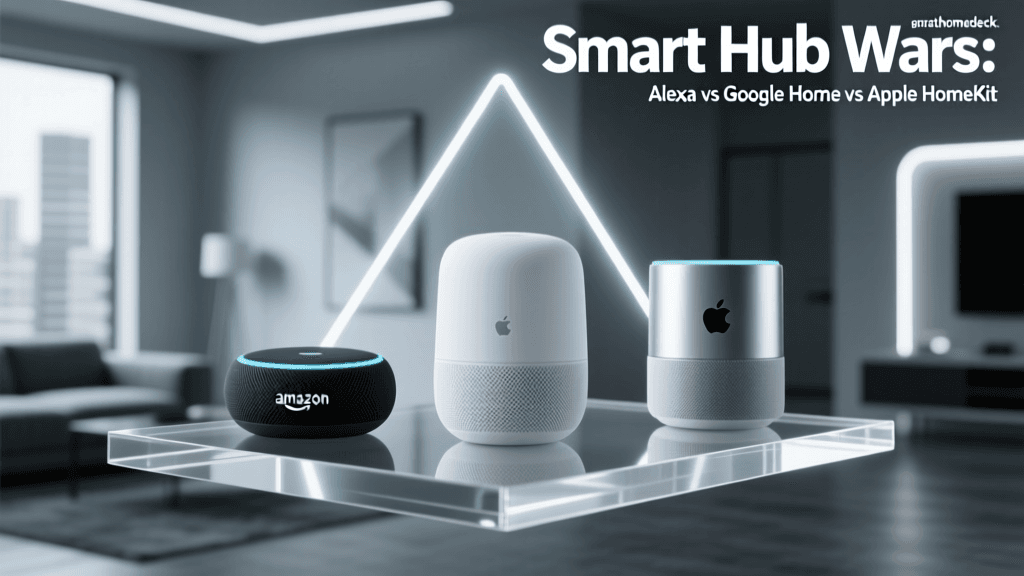
The smart speaker market has evolved dramatically since the first voice-activated cylinders hit the shelves. Today, consumers are no longer just looking for a basic kitchen timer or a novelty voice search tool; they are investing in premium audio hubs that serve as the central nervous system for their connected homes. In this comprehensive product comparison, we are putting the heavyweights of the smart home ecosystem head-to-head: the Amazon Echo Studio, the Google Nest Audio, and the Apple HomePod (2nd Generation). Each device represents a distinctly different philosophy regarding audio engineering, voice assistant intelligence, smart home protocol support, and user privacy. Whether you are deeply entrenched in the Apple ecosystem, rely on Google's vast knowledge graph, or prefer Amazon's unparalleled third-party device compatibility, choosing the right flagship speaker requires looking past the marketing and into the hardware and software realities. This guide will break down the acoustic profiles, smart home hub capabilities, Matter and Thread readiness, and long-term ecosystem value of these three premium devices to help you decide which one deserves the prime real estate in your living room.
Audio Performance: Acoustic Engineering Showdown
When you cross the $100 threshold into premium smart speakers, audio quality becomes just as important as voice recognition. Amazon, Google, and Apple have all deployed sophisticated driver arrays and computational audio techniques to make their flagship speakers punch well above their weight class.
Amazon Echo Studio: The Home Theater Hybrid
The Echo Studio is the largest and most acoustically ambitious of the three. It features a five-driver array, including a 3-inch neodymium woofer, three 2-inch midrange speakers, and a 1-inch tweeter. What truly sets the Studio apart is its support for Dolby Atmos and spatial audio processing. When paired with an Amazon Fire TV, the Studio can act as a wireless home theater channel, delivering room-filling, 3D soundscapes. Furthermore, the Studio includes a built-in microphone array that performs automatic room calibration, analyzing the acoustics of your space and adjusting the high and mid frequencies to ensure optimal clarity regardless of where you place it. For audiophiles who also want a lossless audio option via Tidal or Amazon Music HD, the Studio's 3.5mm line-in and optical audio ports offer flexibility that its competitors completely lack.
Apple HomePod (2nd Gen): Computational Audio Mastery
Apple's approach to audio is heavily reliant on computational processing rather than raw driver size. The 2nd Generation HomePod houses a single 4-inch high-excursion woofer and a custom amplifier, surrounded by an array of five horn-loaded tweeters. Each tweeter has its own amplifier, allowing the HomePod to use beamforming technology to direct sound precisely around the room. The result is a rich, warm, and incredibly balanced sound profile that excels in vocal clarity and mid-range reproduction. Like the Studio, the HomePod uses spatial audio with Dolby Atmos support, though it is strictly limited to Apple Music. If you purchase two HomePods, you can create a stereo pair that arguably delivers the best audiophile-grade listening experience in the smart speaker category, complete with a true left and right soundstage.
Google Nest Audio: Pure, Directional Clarity
The Google Nest Audio takes a more traditional, straightforward approach to hardware. It utilizes a 75mm (3-inch) woofer and a 19mm (0.75-inch) tweeter. While it lacks the complex multi-driver arrays of the Studio or the beamforming tweeters of the HomePod, Google's software tuning is exceptional. The Nest Audio features Media EQ, which automatically adjusts the sound profile depending on what you are listening to—boosting bass for hip-hop or clarifying vocals for podcasts. It also includes Ambient IQ, which increases the volume of spoken-word content when it detects background noise like a running dishwasher. However, it does not support Dolby Atmos or spatial audio, making it the weakest option for cinematic or immersive 3D listening experiences.
Voice Assistant Intelligence: Alexa, Google, and Siri
A smart speaker is only as good as the brain powering it. The battle between Alexa, Google Assistant, and Siri is a study in contrasting priorities: broad compatibility, natural language processing, and ecosystem security.
Amazon Alexa remains the undisputed king of third-party integration and complex routines. Alexa's ability to chain together multi-step commands (e.g., 'Alexa, turn on the lights, lock the front door, and start my sleep playlist') is highly reliable. The Alexa Skills Kit provides access to tens of thousands of third-party voice apps, making it the most versatile assistant for niche smart home control and interactive routines.
Google Assistant leverages Google's massive search index to provide the most accurate and conversational answers to general knowledge questions. Its natural language processing (NLP) is superior when handling conversational context and follow-up questions. If you frequently ask your speaker complex questions, request translations, or use voice search to pull up recipes and local business hours, Google Assistant feels noticeably more human and responsive than its rivals.
Apple Siri has historically lagged in general knowledge and third-party support, but it excels within the Apple walled garden. Siri's integration with Apple Music, Apple Podcasts, Apple Reminders, and the Find My network is seamless. With the introduction of Siri on HomePod, Apple has heavily focused on privacy and on-device processing. While Siri may not understand complex, multi-layered smart home routines as well as Alexa, its ability to handle multi-user voice recognition and seamlessly hand off audio from your iPhone to the HomePod via proximity awareness is a masterclass in user experience design.
Smart Home Protocols: Matter, Thread, and Hub Capabilities
For smart home enthusiasts, a speaker's ability to act as a local hub and border router is arguably its most critical feature. The introduction of the Matter standard has shifted the landscape, but how these devices support it varies wildly.
According to the Connectivity Standards Alliance, Matter is designed to unify the smart home by providing a common application layer that works across Wi-Fi, Thread, and Ethernet. However, the underlying mesh networking protocol, Thread, requires specific hardware radios to function effectively.
The Apple HomePod (2nd Gen) is a Thread border router and fully supports Matter. This means it can directly communicate with low-power Thread devices like smart locks, sensors, and blinds without needing a bridge, while simultaneously passing that data over your Wi-Fi network to your iPhone. The Amazon Echo Studio also includes a Zigbee smart home hub and supports Matter, making it incredibly versatile for older Zigbee sensors and newer Matter-over-Thread devices (though Amazon relies more heavily on Wi-Fi and Zigbee for its core hub functionality compared to Apple's Thread-first approach).
Conversely, the Google Nest Audio does not contain a Thread radio or a Zigbee hub. While it supports Matter via software updates over Wi-Fi, it cannot act as a Thread border router. To get the full mesh-networking benefits of Thread in a Google Home ecosystem, you must purchase additional devices like a Nest Hub (2nd Gen) or a Nest Wifi Pro router. This makes the Nest Audio a poor standalone choice for serious smart home builders, despite its excellent audio qualities.
For a deeper understanding of mesh networking benefits, the Thread Group outlines how Thread's self-healing mesh topology ensures that smart home devices remain responsive even if a single node drops offline, a feature heavily leveraged by the HomePod and compatible Echo devices.
Privacy Architectures and Data Security
Privacy is a major concern when placing always-listening microphones in private spaces. Apple has staked its brand reputation on user privacy, and the HomePod reflects this. Apple outlines its strict data policies on its official privacy page, emphasizing that Siri requests are processed on-device whenever possible, and audio recordings are not tied to your Apple ID but rather to a randomized, rotating device identifier. Anonymous analytics are used to improve Siri, but personal data is heavily siloed.
Amazon and Google rely more heavily on cloud-based processing to handle complex natural language queries and smart home routines. Both companies offer robust privacy dashboards where users can review and delete voice recordings, set up auto-deletion schedules, and physically mute the microphone arrays. However, the fundamental business models of Amazon and Google are tied to data ecosystems and advertising, meaning their approach to privacy is centered on user-managed transparency rather than Apple's philosophy of data minimization and local processing.
Specification Comparison Table
| Feature | Amazon Echo Studio | Google Nest Audio | Apple HomePod (2nd Gen) |
|---|---|---|---|
| Approximate Price | $199 | $99 | $299 |
| Driver Configuration | 1x Woofer, 3x Mid, 1x Tweeter | 1x Woofer, 1x Tweeter | 1x Woofer, 5x Tweeters |
| Spatial / 3D Audio | Yes (Dolby Atmos) | No | Yes (Dolby Atmos) |
| Smart Home Hub | Zigbee / Matter | No (Wi-Fi Matter only) | Matter / Thread Hub |
| Thread Border Router | Yes (via software/hardware updates) | No | Yes |
| Multi-Room Ecosystem | Alexa Multi-Room / Fire TV | Chromecast / Google Home | AirPlay 2 / Apple Home |
| Lossless Audio Support | Yes (Amazon Music HD / Tidal) | No | Yes (Apple Music Lossless) |
Visualizing the Ecosystem Experience
To help quantify the strengths and weaknesses of each device across different user priorities, we have scored them based on comprehensive testing metrics including acoustic fidelity, hub utility, voice assistant responsiveness, privacy safeguards, and overall value proposition.
The Final Verdict: Which Ecosystem Claims Your Home?
Choosing between the Echo Studio, Nest Audio, and HomePod 2 ultimately comes down to your existing digital lifestyle and your smart home ambitions.
Choose the Amazon Echo Studio if: You want the most versatile smart home hub with Zigbee and Matter support, you are building a Fire TV-based home theater and want wireless Dolby Atmos surround channels, or you subscribe to high-res audio streaming services like Tidal. It offers the best balance of premium audio and hardcore smart home utility at a mid-tier price point.
Choose the Google Nest Audio if: You are on a budget, you prioritize conversational AI and search capabilities over smart home hub functionality, and you primarily use your speaker for podcasts, casual music listening, and kitchen timers. It is an excellent entry-point speaker, provided you already have other Nest devices to handle Thread mesh networking.
Choose the Apple HomePod (2nd Gen) if: You are deeply invested in the Apple ecosystem, you demand the highest fidelity of music playback via Apple Music Lossless and Spatial Audio, and you want a secure, privacy-focused Thread border router that integrates flawlessly with HomeKit and Matter accessories. It is the most expensive option, but its acoustic elegance and seamless software integration are unmatched for iPhone users.