Introduction: The Smart Thermostat Showdown
Heating and cooling account for nearly half of a typical home's energy usage, making your thermostat one of the most critical devices in your smart home ecosystem. Upgrading to a smart thermostat is not just about the convenience of adjusting the temperature from your phone; it is one of the most effective ways to reduce your carbon footprint and lower utility bills. According to the U.S. Department of Energy, you can save as much as 10% a year on heating and cooling by simply turning your thermostat back 7°-10°F for 8 hours a day from its normal setting. Smart thermostats automate this process, learning your habits and adjusting accordingly.
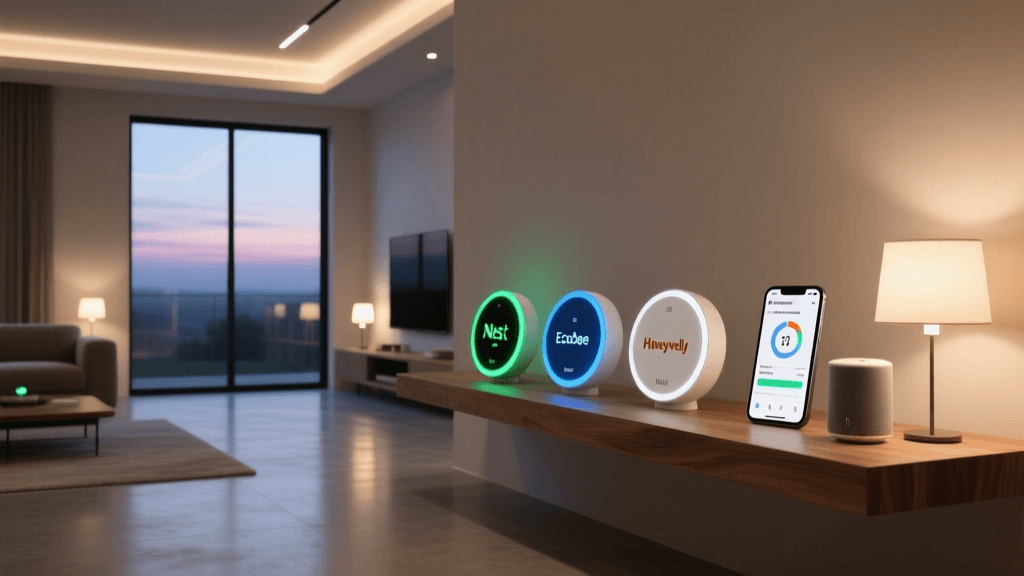
But with the market saturated with high-tech options, choosing the right device can be overwhelming. In this multi-product showdown, we are putting three of the most popular flagship smart thermostats head-to-head: the Ecobee SmartThermostat Premium, the Google Nest Learning Thermostat, and the Honeywell Home T9. Whether you are deep into the Apple HomeKit ecosystem, a Google Home aficionado, or simply need robust multi-room zoning, this comprehensive comparison will help you decide which device deserves a spot on your wall.
The Contenders at a Glance
Before diving into the granular details of sensor technology and wiring requirements, let us introduce our three competitors.
- Ecobee SmartThermostat Premium: The feature-packed powerhouse. Ecobee has long been the darling of smart home enthusiasts who want granular control, broad ecosystem compatibility, and built-in air quality monitoring. The Premium model doubles as a smart speaker with built-in Alexa and Siri.
- Google Nest Learning Thermostat: The pioneer of smart climate control. Famous for its sleek, minimalist design and auto-learning algorithms, the Nest thermostat focuses on a "set it and forget it" philosophy, utilizing advanced presence detection to save energy when you leave.
- Honeywell Home T9: The reliable veteran. Honeywell brings decades of HVAC expertise to the smart home space. The T9 is highly regarded for its exceptional dual-band Wi-Fi connectivity and its focus on multi-room sensor prioritization, making it ideal for larger homes with varying temperature zones.
Detailed Specification Table
To understand how these devices stack up on paper, review the core specifications below.
| Feature | Ecobee Premium | Nest Learning | Honeywell T9 |
|---|---|---|---|
| Retail Price | $249 | $249 | $199 |
| Display | Touchscreen Glass | Mirror Ring Dial | Touchscreen LCD |
| Included Sensors | 1 (Temp + Occupancy) | None (Sold Separately) | 1 (Temp + Humidity + Occupancy) |
| Voice Assistants | Alexa, Siri | Google Assistant | Alexa, Google |
| Matter Support | Yes | Yes | No |
| C-Wire Required | Preferred (PEK included) | Optional (Power stealing) | Strictly Required |
Design, Display, and User Interface
When it comes to aesthetics, the Google Nest Learning Thermostat remains the undisputed champion. Its circular design, featuring a stainless steel ring and a stunning mirror-like display, looks more like a piece of modern art than a piece of HVAC equipment. The Nest utilizes a physical ring that you rotate to adjust the temperature, providing a highly satisfying, tactile user experience. Furthermore, the "Farsight" feature wakes the screen and displays the time, weather, or target temperature when it detects you walking into the room.
The Ecobee SmartThermostat Premium takes a more modern, tech-forward approach. It features a sleek, black glass rectangle with a vibrant, edge-to-edge touchscreen. While it lacks the physical dial of the Nest, the touchscreen interface is incredibly responsive, mimicking the fluidity of a modern smartphone. The UI is detailed, offering quick access to schedules, sensor data, and eco+ settings.
The Honeywell Home T9 adopts a utilitarian, understated design. It is a white rectangle with a subtle touchscreen interface. It will not win any interior design awards, but it blends seamlessly into the background of most hallways. The interface is straightforward and highly legible, prioritizing function over form. If you want a device that gets out of your way and simply does its job, the T9 delivers.
Smart Sensors and Zoning Capabilities
A smart thermostat is only as good as the data it collects, and relying solely on the temperature of the hallway where the main unit is installed is a recipe for comfort issues. This is where remote sensors come into play.
Ecobee includes one SmartSensor in the box, which measures both temperature and occupancy. The brilliance of Ecobee's system is its "Smart Home/Away" and "Follow Me" features. If multiple sensors detect occupancy, the thermostat averages the temperature across those occupied rooms, ensuring you are comfortable wherever you are. Additional sensors are relatively affordable and easy to pair.
The Google Nest Learning Thermostat requires you to purchase Nest Temperature Sensors separately. Crucially, Nest's sensors only measure temperature; they do not have occupancy sensors. The Nest relies on the main thermostat's built-in Soli radar chip and infrared sensors for presence detection, combined with your phone's GPS location. While you can schedule which sensor should be prioritized at different times of the day, it lacks the dynamic, real-time occupancy averaging of the Ecobee.
The Honeywell Home T9 shines brightest in this category. It includes one Smart Room Sensor that tracks temperature, humidity, and occupancy. The T9 allows you to prioritize specific rooms or let the system automatically focus on occupied rooms. Furthermore, the T9 supports up to 20 remote sensors, dwarfing the competition and making it the absolute best choice for large, multi-story homes with significant temperature variances.
Ecosystem Compatibility and Smart Home Integration
Your choice of smart thermostat will heavily depend on the smart home ecosystem you have already invested in. For Apple users, the decision is practically made for you: the Ecobee SmartThermostat Premium is the only one of the three that natively supports Apple HomeKit. It also features built-in Siri, allowing you to use the thermostat itself as a voice command hub. Ecobee also supports Amazon Alexa (built-in), Google Assistant, IFTTT, and the new Matter smart home standard, making it the most versatile device on the market.
The Google Nest Learning Thermostat is, unsurprisingly, deeply integrated into the Google Home ecosystem. It works flawlessly with Google Assistant and supports Matter. It also works with Amazon Alexa. However, it completely lacks Apple HomeKit support. If you are an iPhone user who relies on the Apple Home app, the Nest will feel like an isolated island in your smart home.
The Honeywell Home T9 supports Amazon Alexa and Google Assistant, and it features IFTTT integration for advanced custom automations. Like the Nest, it does not support Apple HomeKit. It also lacks native Matter support at the time of this writing, relying instead on Honeywell's proprietary cloud integrations.
Energy Savings and Learning Algorithms
All three thermostats are Energy Star certified, meaning they have been independently verified to deliver significant energy savings. However, their methods for achieving these savings differ vastly.
The Nest Learning Thermostat lives up to its name. During the first week of installation, it learns your manual adjustments and builds a customized schedule. It also utilizes "Auto-Away" to drop the temperature when it senses the house is empty, and "Seasonal Savings" to subtly tweak your schedule for maximum efficiency without sacrificing comfort.
Ecobee utilizes its "eco+" software, which analyzes local weather patterns, your home's thermal profile, and real-time electricity grid demand. If your utility provider offers time-of-use pricing, Ecobee can pre-cool or pre-heat your home when electricity is cheap, and reduce HVAC usage during peak demand hours, potentially saving you money on dynamic billing plans.
Honeywell focuses on geofencing and multi-room efficiency. By ensuring that you are only heating or cooling the rooms you are actually occupying, the T9 prevents the HVAC system from overworking to satisfy the temperature demands of an empty guest room.
Furthermore, many local utility companies offer rebates for installing Energy Star certified smart thermostats. Before purchasing, check with your local provider, as you might be able to recoup a significant portion of the upfront cost. The EPA notes that smart thermostats can save users an average of 8% on heating and 10% on cooling bills annually, translating to roughly $100 to $150 in pure savings depending on your local climate and energy rates.
Comparison of retail price and estimated annual energy savings across the three smart thermostats.
Installation, C-Wire, and Wiring Quirks
Smart thermostats require constant power to maintain their Wi-Fi connections and vibrant displays. This is typically delivered via a C-wire (common wire).
The Honeywell T9 is the strictest of the bunch; it requires a C-wire for proper operation. If your home lacks one, you will need to purchase and install a separate C-wire adapter kit, which adds to the overall cost and installation time.
The Ecobee Premium also prefers a C-wire but includes a Power Extender Kit (PEK) in the box. If you lack a C-wire, you can install the PEK at your HVAC control board to multiplex the existing wires and deliver constant power to the thermostat. It requires a bit of DIY confidence but saves you from buying extra hardware.
The Google Nest Learning Thermostat famously claims it does not need a C-wire, relying on "power stealing" from the heating and cooling wires. While this works in many modern HVAC systems, it can cause issues with older systems, high-efficiency furnaces, or smart vents. For a reliable experience, Google highly recommends installing the separate Nest Power Connector or running a dedicated C-wire.
If you are uncomfortable working with electrical wiring or your HVAC system's control board, hiring a professional installer is always recommended. A pro can verify your system's compatibility, safely run a new C-wire if necessary, and ensure that your multi-stage heating or cooling setups are correctly mapped to the new thermostat's terminals. Miswiring can not only fry the new smart thermostat but also damage your expensive HVAC control board.
Final Verdict: Which Thermostat Wins?
Declaring a single winner is impossible because the "best" thermostat depends entirely on your home's layout, your existing smart home ecosystem, and your HVAC setup.
Choose the Ecobee SmartThermostat Premium if: You are heavily invested in the Apple HomeKit ecosystem, you want the most comprehensive sensor-based zoning, or you value built-in air quality monitoring and a smart speaker. It is the ultimate powerhouse for smart home enthusiasts who want total control and broad compatibility.
Choose the Google Nest Learning Thermostat if: You prioritize stunning aesthetics, you want a true "set it and forget it" device that learns your schedule automatically, and you are deeply embedded in the Google Home ecosystem. It remains the most beautiful and intuitive option for the average user.
Choose the Honeywell Home T9 if: You have a large home with multiple zones and varying temperatures, you need dual-band Wi-Fi for a congested network, and you want the most robust remote sensor capacity on the market. It is the workhorse that ensures every corner of your house feels comfortable.