The Evolution of Smart Climate Control
The transition from manual dial thermostats to programmable models, and finally to intelligent, connected climate control systems, represents one of the most significant leaps in residential energy efficiency. Today, the smart thermostat market is dominated by three major players: Google Nest, Ecobee, and Resideo's Honeywell Home. Each brand brings a distinct philosophy to home automation, ranging from AI-driven predictive learning to robust multi-room sensor networks and deep ecosystem integrations.
Choosing the right device is no longer just about setting a schedule; it is about integrating your HVAC system into a broader smart home ecosystem, managing energy consumption, and ensuring whole-home comfort. According to the U.S. Department of Energy, heating and cooling account for nearly half of a typical home's energy use, making the thermostat the single most impactful smart device you can install for energy conservation. In this comprehensive comparison, we pit the flagship models of these three giants against each other to determine which smart thermostat deserves a place on your wall.
Contender Profiles: The Flagship Models
Google Nest Learning Thermostat
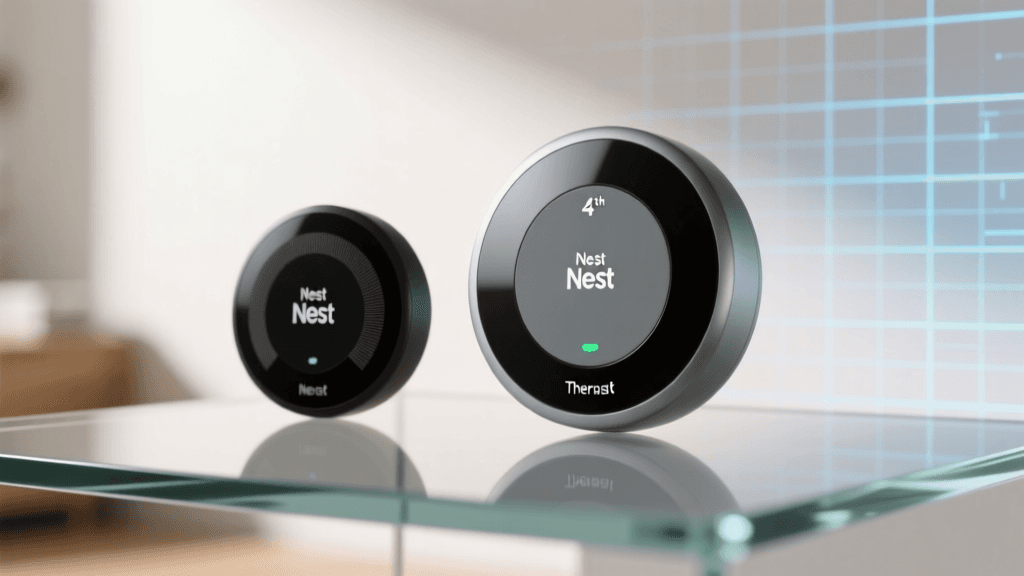
The Google Nest Learning Thermostat (available in its latest generations) is the device that started the smart home revolution. Priced around $249, it is renowned for its premium, minimalist aesthetic featuring a high-resolution glass display and a rotating metal ring. Nest's core philosophy is 'set it and forget it.' The device uses advanced machine learning algorithms to observe your manual adjustments over the first week, eventually building a customized heating and cooling schedule that adapts to your lifestyle. The newest iterations also incorporate the Soli radar chip, enabling highly accurate occupancy detection without the need for additional room sensors.
Ecobee SmartThermostat Premium
Ecobee has long been the favorite among smart home enthusiasts who demand granular control and broad compatibility. The SmartThermostat Premium, also retailing around $249, is a powerhouse of features. It includes a built-in Amazon Alexa speaker, an advanced air quality monitor that tracks volatile organic compounds (VOCs) and CO2 levels, and support for Apple HomeKit. Ecobee's approach relies heavily on its SmartSensor technology, which prioritizes the temperature and occupancy of the rooms you are actually using, rather than just the hallway where the thermostat is mounted.
Honeywell Home T9
Honeywell (now Resideo) brings decades of HVAC expertise to the smart market. The Honeywell Home T9, typically priced around $199, is designed for reliability and extensive multi-zone coverage. While it may lack the premium glass-and-metal finish of the Nest or the built-in voice assistant of the Ecobee, it makes up for it with exceptional sensor range and dual-band Wi-Fi support (2.4GHz and 5GHz). The T9 is the workhorse of the group, favored by homeowners with larger properties or complex HVAC setups that require robust connectivity and straightforward, no-nonsense climate management.
The C-Wire Conundrum and Installation Realities
The most common hurdle in smart thermostat installation is the common wire, or 'C-wire.' This wire provides continuous 24V power to the thermostat, which is essential for keeping Wi-Fi radios and high-resolution screens alive. Older homes often lack a C-wire, leading to compatibility nightmares.
- Google Nest: Google claims the Nest Learning Thermostat can operate without a C-wire by 'power stealing' from the HVAC control wires. While this works in some modern systems, it frequently causes issues with older furnaces, leading to short-cycling or Wi-Fi dropouts. We strongly recommend installing a Nest Power Connector or running a new C-wire for optimal performance.
- Ecobee: Ecobee takes the guesswork out of this problem by including a Power Extender Kit (PEK) in the box. The PEK wires directly into your HVAC control board, multiplexing the existing wires to deliver constant power to the thermostat. It is a highly reliable solution that saves homeowners the cost of hiring an electrician.
- Honeywell T9: Honeywell includes a C-wire adapter module that plugs into a standard wall outlet near the HVAC unit, injecting the necessary voltage into the thermostat wiring. While slightly bulkier than Ecobee's internal PEK, it is incredibly easy for DIYers to install without opening the furnace panel.
Warning: None of these thermostats are compatible with high-voltage (120V/240V) baseboard heaters or millivolt systems without specialized relays. Always check your wiring voltage before purchasing.
Ecosystem Lock-In and Smart Home Compatibility
Your choice of thermostat should align with your existing smart home ecosystem. The fragmentation of the smart home market means that not all devices play nicely together, though the emerging Matter protocol aims to bridge these gaps in the future.
Google Nest is inherently tied to the Google Home ecosystem. It integrates seamlessly with Google Assistant and Nest cameras, allowing for features like home-away assist based on your phone's location and Nest camera activity. However, it lacks native support for Apple HomeKit, making it a poor choice for households deeply invested in the Apple ecosystem.
Ecobee is the undisputed champion of compatibility. It natively supports Apple HomeKit, Amazon Alexa, Samsung SmartThings, and IFTTT. If you use an iPhone and rely on Siri to adjust the temperature, Ecobee is currently the only flagship option among the three that will work out of the box without third-party bridges like Starling or Homebridge.
Honeywell T9 supports Amazon Alexa, Google Assistant, and SmartThings, but it also lacks native Apple HomeKit support. Its integration with Resideo's broader security and water leak detection ecosystem is a unique selling point for users who want a unified dashboard for home protection and climate control.
Sensor Technology and Multi-Zone Management
A thermostat can only measure the temperature of the hallway or room it is installed in. This often leads to the 'hot upstairs, cold downstairs' dilemma. Room sensors are the solution, but the three brands handle them very differently.
Ecobee includes one SmartSensor in the box and supports up to 64 sensors. These sensors detect both temperature and occupancy. If you are working in a closed home office, the Ecobee will prioritize keeping that specific room comfortable, ignoring the empty living room. The sensors use a reliable 915 MHz radio frequency, ensuring they penetrate walls and floors without congesting your Wi-Fi network.
Honeywell T9 also includes one Smart Room Sensor, but its standout feature is the sheer range. Honeywell's sensors can communicate with the base unit from up to 200 feet away, making them ideal for sprawling single-story homes or detached garages. Like Ecobee, they track occupancy, temperature, and humidity, allowing you to set specific humidity thresholds for individual rooms.
Google Nest relies primarily on its built-in Soli radar sensor and phone-based geofencing to determine if someone is home. While you can purchase Nest Temperature Sensors separately, they historically lacked occupancy detection (though newer generations are improving this). Nest's approach is more about whole-home averages and predictive scheduling rather than hyper-local, room-by-room micro-management.
Energy Savings and Return on Investment
The primary justification for a smart thermostat is the potential for energy savings. The ENERGY STAR program has rigorously tested and certified these devices, confirming that smart thermostats can save users an average of 8% on heating and 10% on cooling bills annually. However, the exact ROI depends on your local climate, utility rates, and how aggressively you utilize the eco-modes and geofencing features.
Below is a visualization comparing the upfront costs of the flagship models against their estimated annual energy savings based on national averages.
While the Nest and Ecobee command a higher initial premium, their advanced AI and aggressive eco-routing algorithms tend to yield slightly higher annual savings, allowing them to pay for themselves in roughly 18 to 22 months. The Honeywell T9 offers a faster break-even period due to its lower upfront cost, making it highly attractive for budget-conscious homeowners who still want smart sensor capabilities.
Head-to-Head Specification Table
| Feature | Google Nest Learning | Ecobee SmartThermostat Premium | Honeywell Home T9 |
|---|---|---|---|
| MSRP | $249 | $249 | $199 |
| C-Wire Required | No (but highly recommended) | No (PEK included) | No (Adapter included) |
| Built-in Voice Assistant | None (Uses Google Home app/speakers) | Amazon Alexa | None |
| Apple HomeKit Support | No | Yes | No |
| Sensors Included | No (Radar built-in) | 1 SmartSensor (Temp + Occupancy) | 1 Smart Room Sensor (Temp + Humidity + Occupancy) |
| Max Sensor Capacity | 6 (Nest Temp Sensors) | 64 (Ecobee SmartSensors) | 20 (Honeywell Room Sensors) |
| Wi-Fi Bands | 2.4GHz / 5GHz | 2.4GHz / 5GHz | 2.4GHz / 5GHz |
| Air Quality Monitoring | No | Yes (VOCs, CO2) | No |
The Final Verdict: Which Should You Buy?
There is no single 'best' smart thermostat; the right choice depends entirely on your home's layout, your existing smart home ecosystem, and your personal preferences regarding automation versus manual control.
Choose Google Nest if:
You are heavily invested in the Google ecosystem and prefer a hands-off approach. The Nest Learning Thermostat is perfect for users who want to install the device, train it for a week, and never look at the app again. Its premium design also makes it the best choice for modern, open-concept homes where the thermostat is a visible piece of decor.
Choose Ecobee if:
You are an Apple HomeKit user, an Alexa enthusiast, or a smart home tinkerer who wants maximum control. The inclusion of the Power Extender Kit, the built-in air quality monitor, and the ability to support up to 64 room sensors make the Ecobee SmartThermostat Premium the most versatile and future-proof option on the market. It is the undisputed winner for multi-story homes with varying temperature zones.
Choose Honeywell T9 if:
You want a reliable, cost-effective solution with exceptional sensor range. The T9 is the ideal pick for sprawling ranch-style homes or properties with Wi-Fi dead zones, thanks to its dual-band Wi-Fi and 200-foot sensor range. It provides all the essential smart features—geofencing, multi-room focus, and remote app control—without the premium price tag or the ecosystem lock-in of its competitors.