Introduction to the Smart Thermostat Big Three
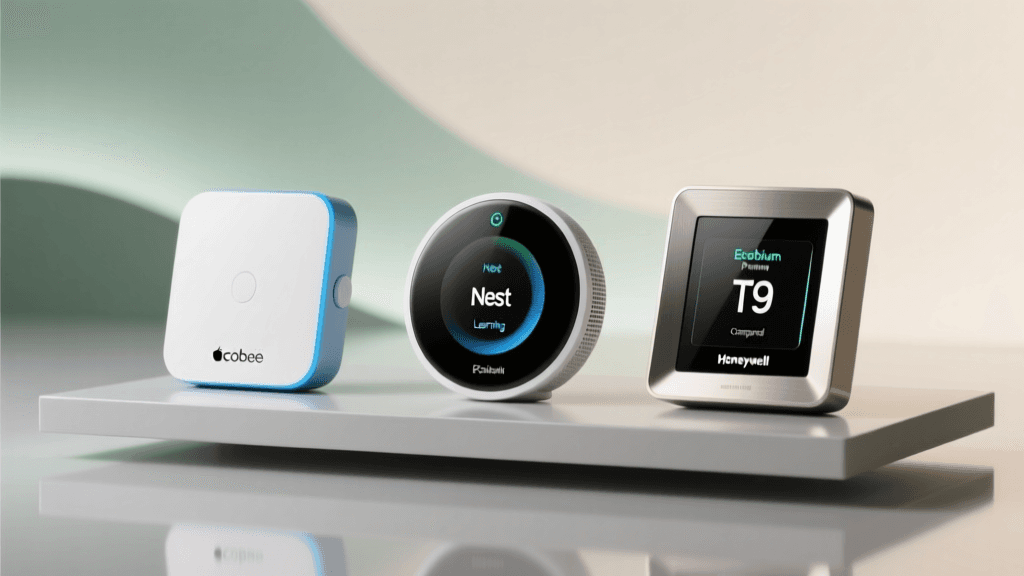
Upgrading to a smart thermostat is one of the most impactful home automation investments you can make. Not only do these devices offer unparalleled convenience, but they also significantly reduce your monthly utility bills by optimizing your HVAC usage. When shopping for the best smart thermostat, the market is dominated by three major players: the Google Nest Learning Thermostat, the Ecobee SmartThermostat Premium, and the Honeywell Home T9. Each of these devices takes a distinctly different approach to climate control, smart home integration, and user experience.
Choosing between Nest, Ecobee, and Honeywell is not just about picking the best-looking dial on your wall. It requires a deep dive into sensor technology, artificial intelligence algorithms, wiring requirements, and smart home ecosystem compatibility. Whether you are an Apple HomeKit purist, a Google Assistant aficionado, or a homeowner with a sprawling floor plan that requires advanced room sensors, this comprehensive comparison will help you find the perfect climate control solution for your home.
Design and Hardware Aesthetics
The physical design of a thermostat matters because it sits prominently in a high-traffic area of your home. The Google Nest Learning Thermostat is widely considered the gold standard for smart home aesthetics. Featuring a heavy, stainless steel ring and a vibrant, edge-to-edge glass display, the Nest looks more like a premium piece of jewelry than an HVAC controller. Its signature "Farsight" feature wakes up the display when you enter the room, showing the temperature, weather, or time in large, crisp digits.
The Ecobee SmartThermostat Premium opts for a modern, minimalist approach. It features a rounded-square profile with a glossy black glass face that blends seamlessly into contemporary decor. While it may not have the physical heft of the Nest, its built-in far-field microphone array and subtle LED light ring give it a high-tech, communicative presence. It also houses a built-in Amazon Alexa speaker, effectively doubling as a smart speaker for your kitchen or hallway.
The Honeywell Home T9 takes a much more utilitarian approach. It features a traditional white plastic rectangular chassis with a color touchscreen. While it lacks the premium materials of its competitors, its design is familiar, unobtrusive, and highly legible from a distance. For homeowners who prefer their technology to blend into the background without drawing attention, the T9's classic aesthetic is a strong selling point.
Artificial Intelligence and Learning Capabilities
Where these thermostats truly differentiate themselves is in their software and automation algorithms. The Nest Learning Thermostat pioneered the "set it and forget it" philosophy. During the first week of use, Nest observes your manual adjustments and builds a custom Auto-Schedule based on your habits. It uses advanced geofencing and built-in occupancy sensors to trigger Home/Away assist, ensuring you never pay to heat or cool an empty house.
Ecobee takes a slightly different approach, prioritizing user-defined rules and eco+ software. Rather than secretly learning your schedule, Ecobee encourages you to set your preferred comfort and sleep schedules via the app, and then uses its Smart Home/Away feature to adjust those baselines based on occupancy. Ecobee's eco+ software also factors in local utility time-of-use rates and indoor humidity levels to optimize your HVAC runtime for maximum efficiency.
Honeywell relies heavily on geofencing via your smartphone's location services to determine when you are coming and going. While it lacks the deep machine-learning algorithms of Nest or the utility-rate integration of Ecobee, its straightforward scheduling interface is highly reliable and easy to program for families with rigid weekly routines.
Room Sensors and Zoning Performance
A single thermostat in the hallway cannot accurately gauge the temperature of a distant bedroom or a sun-drenched living room. This is where remote room sensors become critical.
- Nest Temperature Sensors: Nest's sensors are small, battery-operated pucks that report ambient temperature back to the base unit. However, they lack occupancy detection. You must manually tell the Nest app which sensor to prioritize at specific times of the day (e.g., prioritize the bedroom sensor at night). Furthermore, they are usually sold separately, adding to the overall cost.
- Ecobee SmartSensors: Included in the box with the Premium model, Ecobee's SmartSensors detect both temperature and occupancy. If a room is occupied, the Ecobee automatically factors that room into its average temperature calculation. This dynamic averaging ensures that the rooms you are actually using remain comfortable, making it vastly superior to Nest's time-based approach.
- Honeywell Smart Room Sensors: Honeywell's sensors are the unsung heroes of the T9 ecosystem. Like Ecobee, they detect both temperature and occupancy. However, they boast an impressive range of up to 200 feet and can connect through mesh networking, making them the absolute best choice for large, multi-story homes where Wi-Fi or Bluetooth signals might struggle to reach distant rooms.
Smart Home Ecosystem Compatibility
Your choice of smart home ecosystem will likely dictate which thermostat you should buy. The Ecobee SmartThermostat Premium is the undisputed champion of compatibility. It natively supports Apple HomeKit, Amazon Alexa (built directly into the device), Google Assistant, Samsung SmartThings, and IFTTT. If you have a mixed-ecosystem home, Ecobee is the safest bet.
The Google Nest Learning Thermostat is deeply integrated into the Google Home app and works flawlessly with Google Assistant and Amazon Alexa. However, its most glaring omission is Apple HomeKit. While workarounds like the Starling Home Hub exist, Nest does not offer native HomeKit support, which is a dealbreaker for many Apple-centric smart home enthusiasts.
The Honeywell Home T9 supports Amazon Alexa, Google Assistant, and SmartThings. Like Nest, it lacks native Apple HomeKit support. It is best suited for users who rely on Alexa or Google Home for their voice control needs.
Installation, C-Wire, and Wiring Compatibility
Before purchasing any smart thermostat, you must check your HVAC wiring, specifically for a "C-wire" (common wire), which provides continuous 24V power to the device.
Ecobee requires a C-wire for its premium features but includes a Power Extender Kit (PEK) in the box. The PEK allows you to repurpose existing wires at your HVAC control board to create a reliable power connection, saving you the cost of hiring an electrician. Honeywell is notoriously strict about the C-wire; the T9 requires a dedicated C-wire to function correctly and does not include a workaround kit, meaning older homes may require professional wiring upgrades.
Nest claims it does not need a C-wire, relying on "power stealing" from the heating and cooling wires. While this works in many modern systems, it can cause issues with older HVAC setups, high-impedance systems, or dual-fuel heat pumps, occasionally causing the HVAC system to click or the Nest battery to drain. Google now highly recommends installing a Nest Power Connector if a C-wire is absent.
Energy Savings and Return on Investment
According to the U.S. Department of Energy, you can save as much as 10% a year on heating and 15% on cooling by simply turning your thermostat back 7°-10°F for 8 hours a day from its normal setting. Smart thermostats automate this process, ensuring you never forget to adjust the dial when you leave for work or go on vacation.
Furthermore, devices certified by the EPA Energy Star program are independently verified to deliver energy savings without sacrificing performance. Both Nest and Ecobee have historically held strong Energy Star certifications, often qualifying homeowners for local utility rebates ranging from $50 to $150. These rebates can effectively cut the upfront cost of the thermostat in half, reducing the return-on-investment timeline to under a single year of use.
Smart Thermostat Feature Scores Comparison
Head-to-Head Specifications Table
| Feature | Google Nest Learning (4th Gen) | Ecobee SmartThermostat Premium | Honeywell Home T9 |
|---|---|---|---|
| Retail Price Range | $249 - $279 | $229 - $249 | $179 - $199 |
| Display | 2.7" Round LCD (Mirror finish) | 3.5" Color Touchscreen | 3.5" Color Touchscreen |
| Built-in Voice Assistant | Google Assistant (via external speaker) | Amazon Alexa (Built-in speaker) | None (Requires external smart speaker) |
| Apple HomeKit Support | No | Yes | No |
| Occupancy Sensors Included | No (Sold separately, no occupancy) | Yes (1 SmartSensor included) | Yes (1 Smart Room Sensor included) |
| C-Wire Requirement | Optional (Power stealing/connector) | Required (PEK included) | Required (No adapter included) |
| Wi-Fi Connectivity | 2.4GHz & 5GHz, Thread/Matter | 2.4GHz & 5GHz | 2.4GHz only |
The Final Verdict: Which Thermostat Should You Buy?
The "best" smart thermostat depends entirely on your specific home environment, smart home ecosystem, and budget.
Choose the Google Nest Learning Thermostat if:
You prioritize premium aesthetics and want a device that looks like a high-end architectural fixture. Nest is also the clear choice for homes deeply embedded in the Google ecosystem. If you want a true "set it and forget it" device that uses machine learning to build a schedule for you without requiring manual app programming, Nest's Auto-Schedule remains unmatched in the industry. Just be prepared to purchase remote sensors separately if you have a multi-story home.
Choose the Ecobee SmartThermostat Premium if:
You are an Apple HomeKit user, as Ecobee is the only flagship thermostat on this list that natively supports Siri and Apple's smart home platform. Ecobee is also the best overall value for smart home enthusiasts. The inclusion of an occupancy-aware SmartSensor in the box, combined with a built-in Alexa speaker and support for 5GHz Wi-Fi networks, makes it the most versatile and feature-rich device on the market. It is the ultimate jack-of-all-trades that excels in every category.
Choose the Honeywell Home T9 if:
You have a large, sprawling home with severe temperature disparities between rooms. Honeywell's Smart Room Sensors offer the best range and reliability for zoning large spaces. Additionally, if you prefer a traditional, easy-to-read interface and want to save money upfront without sacrificing core smart features like geofencing and app-based scheduling, the T9 offers incredible value. Just ensure your HVAC system has a dedicated C-wire before purchasing.
Pro Tip: Before checking out, visit your local utility provider's website. Many regional energy companies offer instant rebates or mail-in checks for purchasing Energy Star certified smart thermostats, which can drastically lower your out-of-pocket costs for any of these premium devices.