The Great Security Debate: DIY vs. Professional Installation
The home security landscape has undergone a massive transformation over the last decade. Gone are the days when securing your home meant signing a draconian five-year contract and waiting weeks for a technician to drill holes in your doorframes. Today, homeowners and renters alike are faced with a pivotal choice: do you opt for the flexibility and cost-savings of a DIY wireless system like SimpliSafe, or do you invest in the robust, hardwired reliability and professional installation of a legacy giant like ADT?
Choosing between DIY installation and professional service is not just about upfront costs; it is about ecosystem compatibility, long-term monitoring fees, smart home integration, and the physical layout of your property. According to the Federal Trade Commission, consumers must carefully evaluate monitoring contracts, cancellation fees, and equipment ownership before committing to a home security provider. In this comprehensive head-to-head comparison, we will dissect SimpliSafe and ADT across equipment specs, installation processes, smart home ecosystems, and total cost of ownership to help you decide which system deserves to guard your front door.
SimpliSafe: The King of DIY Smart Security
SimpliSafe built its brand on a simple premise: professional-grade security without the professional installation hassles or long-term contracts. Their current Generation 3 (Gen 3) ecosystem is entirely wireless, utilizing a mix of Wi-Fi and dedicated cellular connections to communicate with their monitoring centers.
Equipment and Upfront Costs
SimpliSafe operates on a transparent, direct-to-consumer retail model. You purchase the equipment upfront, meaning you own it outright from day one. A typical starter kit, which includes the Base Station, Keypad, one Entry Sensor, and one Motion Sensor, retails for around $244. However, most homeowners will need a more robust package, such as the 'Beacon' or 'Lighthouse' bundles, which range from $350 to $500 and include outdoor cameras, smoke detectors, and additional entry sensors.
- Base Station: Features a built-in 24-hour backup battery, Wi-Fi connectivity, and a hidden cellular module (LTE) that activates if your internet goes down or is intentionally cut.
- Sensors: The entry sensors use standard CR2032 coin batteries that last up to five years. The motion sensors offer pet immunity for animals under 50 pounds and utilize passive infrared (PIR) technology to detect body heat.
- Cameras: The SimpliCam (indoor) and Outdoor Camera offer 1080p resolution, two-way audio, and built-in motion spotlights. However, they lack advanced AI person-detection features found in premium competitors unless you subscribe to the highest monitoring tier.
The DIY Installation Experience
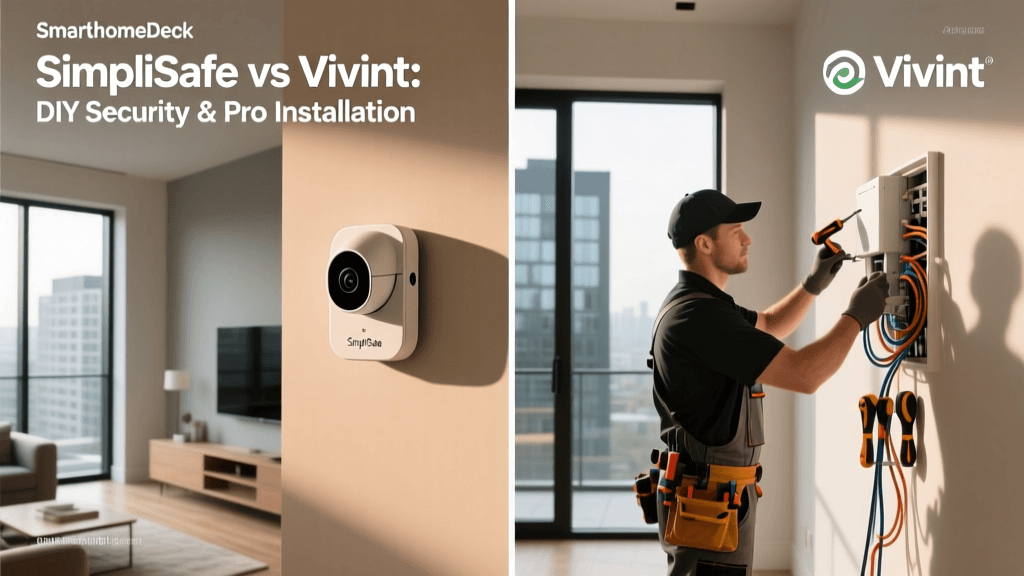
Installation is where SimpliSafe truly shines for the average consumer. The system is entirely 'peel-and-stick.' The Base Station simply needs to be plugged into a standard wall outlet and connected to your home Wi-Fi via the SimpliSafe mobile app. Sensors come with pre-applied 3M adhesive tape. The app guides you through naming each sensor, testing the connection, and mounting them using a built-in digital level on your smartphone. For a standard three-bedroom home, a single user can unbox, configure, and mount the entire system in under 45 minutes. There is no drilling, no drywall patching, and no waiting for a service window.
ADT: The Heavyweight of Professional Installation
ADT is the most recognized name in home security, boasting over 140 years of experience. While they have introduced DIY options (like the ADT Self Setup line), their flagship offering remains their custom-designed, professionally installed smart home security systems, often built around the ADT Control panel and the Google Nest ecosystem.
Equipment and Contract Requirements
Unlike SimpliSafe, ADT rarely sells its flagship equipment outright. Instead, the equipment cost is heavily subsidized or rolled into a mandatory 36-month (or sometimes 60-month) monitoring contract. This means your upfront equipment cost might be $0 to $99, but you are legally bound to pay monthly monitoring fees that range from $45 to $60+ per month. If you cancel early, you are typically responsible for paying out 75% of the remaining contract balance.
ADT's equipment is a mix of proprietary and third-party hardware. Their main touchscreens are often manufactured by industry leaders like Qolsys or DSC, rebranded with ADT firmware. These panels support hardwired zones, Z-Wave smart home devices, and PowerG wireless sensors, which are renowned for their exceptional range (up to 2,000 feet in open air) and encrypted, frequency-hopping signals that are highly resistant to jamming.
The Professional Installation Experience
When you choose ADT, a certified technician will visit your home. For new construction or large homes, this often involves running low-voltage wires through attics, crawlspaces, and walls to connect hardwired door and window contacts. Hardwired sensors are infinitely more reliable than wireless ones; they never require battery changes and are immune to wireless interference. However, the installation process is invasive. It requires drilling into studs, routing cables, and potentially patching drywall. The technician will also configure your network, integrate your smart locks and thermostats, and walk you through the system's operation, a process that typically takes 3 to 6 hours.
Head-to-Head Specification Comparison
To understand the technical differences between these two titans, review the specification table below:
| Feature | SimpliSafe (Gen 3) | ADT Control (Professional) |
|---|---|---|
| Installation Type | 100% DIY (Peel-and-Stick) | Professional (Hardwired & Wireless) |
| Contract Required | No (Month-to-Month) | Yes (Typically 36 Months) |
| Base Connection | Wi-Fi + Cellular Backup | Wi-Fi/Ethernet + Cellular Backup |
| Sensor Tech | 433 MHz Wireless | PowerG Wireless + Hardwired Zones |
| Smart Home Hub | Limited (Alexa/Google/August) | Advanced (Google Nest, Z-Wave, Zigbee) |
| Professional Monitoring | $21.99 - $32.99 / month | $45.99 - $60.00+ / month |
| Battery Backup | 24 Hours (Base Station) | 24 Hours (Panel + Cellular) |
Ecosystem Compatibility and Smart Home Integration
The choice between DIY and professional service heavily impacts your broader smart home ecosystem. As noted in CNET's comprehensive home security guide, the best system depends heavily on your willingness to integrate various smart devices into a single, cohesive automated routine.
SimpliSafe operates as a relatively closed ecosystem. While it integrates with Amazon Alexa and Google Assistant for basic voice commands (e.g., 'Alexa, arm SimpliSafe in Away mode'), and works with August smart locks and Apple Watch, it does not natively support Z-Wave or Zigbee protocols. You cannot use the SimpliSafe hub to control third-party smart lights, thermostats, or garage door openers. It is a dedicated security system, not a whole-home automation hub.
ADT, conversely, has leaned heavily into the Google Nest ecosystem. The ADT Control panel acts as a Z-Wave and Zigbee hub. Through ADT, you can integrate Google Nest Cams, Nest Doorbells, and Nest Thermostats. Furthermore, ADT offers professional video verification; if a Nest Cam detects a person on your property, the ADT monitoring center can view the live feed and dispatch police with higher priority, reducing false alarm fines. For smart home enthusiasts who want their security system to trigger hallway lights when a door opens or adjust the thermostat when the system is armed in 'Away' mode, ADT's professional tier offers vastly superior automation capabilities.
Cost Breakdown Over Time
While ADT often waives upfront equipment and installation fees as part of a promotion, the long-term cost of their mandatory contracts is significantly higher than SimpliSafe's transparent pricing model. The chart below visualizes the estimated 3-year total cost of ownership for a standard home setup.
Over three years, a SimpliSafe user will spend approximately $1,430, while an ADT user will spend upwards of $2,259, not including potential early cancellation fees or add-on equipment costs.
Monitoring Centers and Response Times
Both companies operate UL-listed, Five Diamond Certified monitoring centers, ensuring a high standard of emergency dispatch. SimpliSafe operates multiple redundant centers across the United States and boasts an average dispatch time of under 30 seconds once an alarm is verified. Their highest tier includes 'Fast Protect,' which allows monitoring agents to use the Base Station's two-way audio to speak directly to intruders, deterring break-ins before the police even arrive.
ADT's monitoring network is massive, handling millions of signals daily. Their response times are equally impressive. However, ADT's integration of professional video verification (via Google Nest or ADT's own cameras) gives them a distinct edge in prioritizing police dispatch, as many municipalities require video or audio verification before sending responders to prevent false alarm fatigue.
Which System is Right for Your Home?
The decision ultimately comes down to your living situation, budget, and technical preferences. Here is our verdict for different user profiles:
The Renter or Apartment Dweller: Choose SimpliSafe
If you rent your home, move frequently, or live in an apartment where drilling holes is prohibited, SimpliSafe is the undisputed winner. The peel-and-stick sensors leave no damage, the system is entirely portable, and the lack of a long-term contract means you can cancel your monitoring the day your lease ends without facing a massive penalty fee.
The Large Homeowner or Custom Builder: Choose ADT
If you own a large, multi-story home, a sprawling estate, or a property with detached garages and gatehouses, ADT's professional installation is invaluable. Hardwired sensors ensure that a door on the far side of a brick-and-mortar extension will always trigger the alarm, bypassing the range limitations of wireless signals. Furthermore, having a professional route wires and configure complex automation routines saves you dozens of hours of frustrating DIY troubleshooting.
The Smart Home Tinkerer: Choose ADT (with Google Nest)
If your goal is to build a deeply integrated smart home where your security system talks to your smart blinds, lighting, and HVAC, ADT's Z-Wave hub and Google Nest integration provide the necessary foundation. SimpliSafe is excellent for pure security, but it falls short as a whole-home automation controller.
The Budget-Conscious Homeowner: Choose SimpliSafe
If you want reliable, cellular-backed professional monitoring without signing away 36 months of your life, SimpliSafe's month-to-month flexibility and lower monthly fees make it the most financially responsible choice for the average suburban home.
Conclusion
The battle between DIY smart security and professional installation is not about one being objectively 'better' than the other; it is about matching the service model to your lifestyle. SimpliSafe democratized home security, offering robust, cellular-backed protection that anyone can install in an afternoon with zero contractual obligations. ADT continues to dominate the premium space, offering hardwired reliability, deep smart home automation, and the peace of mind that comes with a white-glove professional installation service. Evaluate your home's layout, your willingness to sign a contract, and your smart home ambitions to make the right choice for your sanctuary.