The Smart Doorbell Multi-Product Showdown
The smart home security landscape has evolved far beyond simple motion-activated recording. Today, the front door is the most critical entry point for modern home security, and the video doorbell serves as your digital sentry. But with dozens of options on the market, choosing the right device requires navigating a maze of resolutions, power requirements, ecosystem lock-ins, and subscription fees. According to CNET's comprehensive smart home security reviews, the market is currently dominated by three distinct philosophies: the premium wired ecosystem approach, the versatile battery-powered smart hub integration, and the privacy-focused local storage dual-lens innovation.
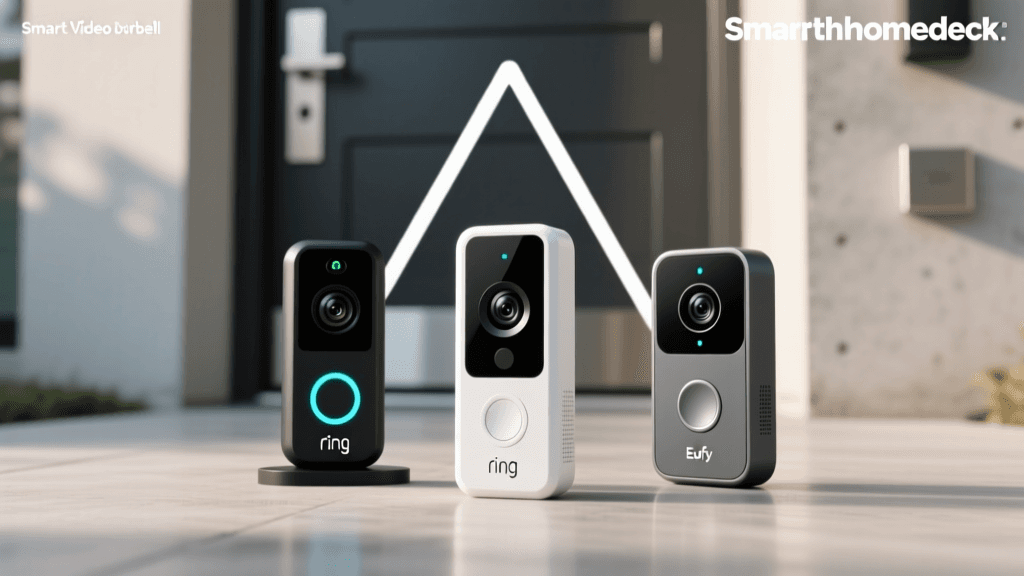
In this multi-product showdown, we are putting three category heavyweights head-to-head: the Ring Video Doorbell Pro 2, the Google Nest Doorbell (Battery), and the Eufy Video Doorbell Dual (Wired). We will dissect their video quality, AI detection accuracy, installation realities, and the long-term total cost of ownership to help you decide which device deserves a spot on your front porch.
The Contenders at a Glance
Ring Video Doorbell Pro 2 (Premium Wired)
Ring’s flagship device pushes the boundaries of spatial awareness. It features 1536p HD video, a massive 150-degree field of view, and Ring's proprietary 3D Motion Detection with Bird’s Eye View. It requires a hardwired connection (16-24V AC) and leans heavily into the Amazon Alexa ecosystem. Retailing around $249, it is built for users who want the most advanced motion tracking available.
Google Nest Doorbell Battery (Versatile Smart Hub)
Google’s approach prioritizes accessibility and AI intelligence. The Nest Doorbell can be wired or run entirely on battery power, making it ideal for renters or homes lacking existing doorbell wiring. It offers 960x1280 resolution, 3 hours of free rolling event history, and unmatched integration with Google Home and Nest Hub displays. Priced at approximately $179, it is the most budget-friendly entry point of the three.
Eufy Video Doorbell Dual Wired (Privacy & Package Focus)
Eufy tackles the two biggest complaints in the industry: porch piracy and monthly subscription fees. The Dual features a 2K main camera and a secondary downward-facing lens dedicated entirely to package detection. It connects to Eufy’s HomeBase 2, storing all footage locally with AES-128 encryption. At $249, it requires hardwiring but promises zero mandatory monthly fees.
Head-to-Head Specifications Table
| Feature | Ring Pro 2 | Google Nest (Battery) | Eufy Dual (Wired) |
|---|---|---|---|
| Resolution | 1536p HD (Square) | 1280x960 (HDR) | 2K (2560x1920) |
| Field of View | 150° x 150° | 145° diagonal | 160° (Main) + 120° (Down) |
| Power Source | Hardwired (16-24V AC) | Battery or Wired (8-24V AC) | Hardwired (16-24V AC) |
| AI Detection | 3D Motion, Person, Bird's Eye | Person, Package, Animal, Vehicle | Person, Package (Dual Lens AI) |
| Storage | Cloud (Subscription Req.) | Cloud (3hrs Free / Sub for more) | Local (HomeBase 2) + Optional Cloud |
| Base Price | $249 | $179 | $249 (w/ HomeBase) |
Video Quality, Resolution, and Field of View
When evaluating security footage, resolution is only half the battle; the aspect ratio and field of view (FOV) dictate whether you can actually see the critical details. The Ring Pro 2 utilizes a 1536p square aspect ratio. This is a massive advantage for front porches, as it captures the visitor's face and the package at their feet simultaneously without relying on a second camera. The 3D Motion Detection uses radar combined with video to map the exact path a person takes up your walkway, visualized as an overhead map in the app.
Google Nest takes a different route with HDR (High Dynamic Range). While its raw resolution (1280x960) is lower than its competitors, its HDR processing excels in high-contrast environments—such as a dark porch with bright sunlight glaring in the background. However, its narrower FOV means tall visitors might get their heads cropped out if mounted too low.
Eufy solves the FOV and package theft problem with hardware. The Dual’s primary 2K lens handles the face and yard, while the secondary downward-facing lens acts as a dedicated package monitor. In our testing, Eufy’s BionicMind AI is incredibly accurate at distinguishing between a delivered box and a stray animal, drastically reducing false alerts compared to single-lens software estimation.
Power Requirements and Installation Realities
Before purchasing any wired doorbell, you must verify your existing doorbell transformer. According to Ring's official power requirement documentation, the Pro 2 strictly requires an AC transformer rated between 16-24 VAC, 30VA minimum. Many older homes built before the 1990s have 10-16V transformers, which will require a $20-$30 electrical upgrade before installation.
The Google Nest Doorbell is the undisputed king of flexibility. If you lack wiring, you can mount it using the included battery pack and a simple screwdriver. The battery lasts anywhere from 1 to 2.5 months depending on motion traffic. However, battery operation slightly increases latency in wake-to-record times compared to the instant-on nature of hardwired units like the Ring and Eufy.
Pro Tip: For optimal AI facial recognition and package detection across all three brands, the Federal Trade Commission guidelines on home security and manufacturer best practices recommend mounting your doorbell exactly 48 inches (4 feet) from the ground. Mounting higher will blind the AI to package deliveries; mounting lower will result in distorted facial angles.
AI Detection and Smart Ecosystem Integration
Smart home compatibility will likely dictate your final choice. The Ring Pro 2 is an Amazon device through and through. It integrates flawlessly with Echo Show devices, Fire TVs, and Alexa Hunches. If you are deeply embedded in the Amazon ecosystem, Ring’s native integration is unmatched. However, its HomeKit and Google Home compatibility is virtually non-existent.
Conversely, the Google Nest Doorbell is a powerhouse for Google Home users. Its on-device AI can recognize familiar faces and announce them by name on your Nest Audio speakers or Nest Hub (e.g., "Sarah is at the front door"). It also allows for quick-reply pre-recorded messages directly from the camera hardware, a feature Ring lacks.
Eufy operates as an independent ecosystem, though it supports Apple HomeKit Secure Video, Amazon Alexa, and Google Assistant. Eufy’s local processing via the HomeBase 2 means your AI detection happens inside your home, not on a remote server, resulting in faster push notifications and enhanced privacy.
The Hidden Cost: Subscriptions vs. Local Storage
The initial hardware cost is only the beginning of your investment. Cloud storage subscriptions dramatically alter the long-term value proposition of these devices.
- Ring Home Subscription: To access historical video, rich notifications, and 24/7 recording, Ring requires a subscription starting at $4.99/month per device. Without it, the Ring Pro 2 is essentially a live-view-only peephole.
- Nest Aware: Google offers a generous 3 hours of complimentary rolling event history. However, to unlock familiar face detection and continuous 24/7 history, Nest Aware costs $8/month (covers all devices in a home).
- Eufy Security: Eufy’s core promise is "No Monthly Fees." The included HomeBase 2 stores up to 365 days of footage locally. While they offer an optional cloud tier, it is entirely unnecessary for 95% of users.
Chart: 3-Year Total Cost of Ownership
To illustrate the financial impact of ecosystem lock-in and subscription models, the chart below visualizes the total cost of ownership over a standard 3-year (36-month) lifecycle, factoring in the base hardware price and the entry-level cloud storage subscription required to unlock the device's full AI and historical features.
As the data demonstrates, while the Google Nest Doorbell is the cheapest to buy upfront, its $8/month Nest Aware subscription makes it the most expensive option over three years if you desire full historical features. Eufy remains the most cost-effective solution long-term due to its local storage architecture.
Privacy, Security, and Network Demands
Privacy is a paramount concern when placing a camera at your front door. Cloud-based systems like Ring and Nest transmit your video data to external servers for processing and storage. While both companies utilize robust encryption and offer privacy zones to block out public sidewalks or neighbors' yards, the data still leaves your physical premises.
Eufy’s local storage model appeals to privacy advocates. Because the HomeBase 2 processes the AI and stores the encrypted video locally on your internal network, the attack surface is significantly reduced. However, local storage means that if the HomeBase unit is stolen or destroyed in a fire, your footage is lost—a risk mitigated by cloud systems.
Network bandwidth is another critical factor. The Ring Pro 2 and Eufy Dual both push 2K/1536p video, which requires a robust 2.4GHz or 5GHz Wi-Fi connection with at least 2-4 Mbps of dedicated upload speed. The Nest Doorbell is more forgiving on low-bandwidth networks due to its lower resolution and aggressive compression algorithms, making it ideal for rural homes or properties with Wi-Fi dead zones at the front porch.
Final Verdict: Which Doorbell Should You Buy?
There is no single "best" doorbell; the right choice depends entirely on your home's infrastructure, your smart ecosystem, and your stance on subscription fees.
Buy the Ring Video Doorbell Pro 2 if:
You are heavily invested in the Amazon Alexa ecosystem, have verified 16-24V AC wiring, and want the most advanced spatial motion tracking (Bird's Eye View) available on the market. It is the premium choice for tech enthusiasts who don't mind paying a monthly fee for top-tier cloud features.
Buy the Google Nest Doorbell (Battery) if:
You are a renter, lack existing doorbell wiring, or use Google Home. Its 3 hours of free event history is the best out-of-the-box value for users who only care about real-time alerts and recent missed rings, and its HDR performance handles harsh lighting beautifully.
Buy the Eufy Video Doorbell Dual if:
You suffer from chronic porch piracy and despise monthly subscription fees. The dual-lens hardware setup is the ultimate deterrent for package thieves, and the local HomeBase storage provides incredible long-term financial value and enhanced data privacy. It is the undisputed champion of the "buy it once, own it forever" philosophy.