The Smart Home Protocol Dilemma: Thread vs. Wi-Fi
Building a reliable smart home is no longer just about buying the flashiest gadgets; it is about the invisible infrastructure that keeps them communicating. As the smart home market matures, two primary networking standards dominate the conversation: Thread and Wi-Fi. However, a common point of confusion among consumers is the term 'Wi-Fi Direct' and how it factors into smart home topology. To build a robust, future-proof ecosystem, you must understand the fundamental differences between Thread's low-power mesh architecture and Wi-Fi's high-bandwidth infrastructure.
In this comprehensive comparison, we will break down Thread versus standard Wi-Fi (and address the Wi-Fi Direct misconception), evaluate real-world product matchups, analyze power consumption benchmarks, and help you decide which protocol belongs in your home. Whether you are deploying battery-powered sensors or high-definition security cameras, choosing the right underlying protocol is the difference between a seamless automated home and a frustrating network of offline devices.
Understanding Thread: The Low-Power Mesh Revolution
Thread is an IP-based, low-power mesh networking protocol built on the IEEE 802.15.4 standard. Unlike traditional hub-and-spoke networks, Thread devices communicate directly with one another, creating a self-healing mesh. If one smart bulb loses its primary path to the router, it automatically reroutes its signal through a neighboring smart plug. This decentralized approach ensures incredible reliability, especially in large homes with thick walls.
Key Advantages of Thread
- No Single Point of Failure: The mesh network dynamically routes data. If a node drops, the network heals itself instantly.
- IPv6 Native: Every Thread device gets its own IP address, allowing direct communication without clunky cloud-based translation layers.
- Ultra-Low Power Consumption: Designed specifically for battery-operated devices like door sensors, motion detectors, and smart locks.
- Matter Ready: Thread is the foundational wireless protocol for the Matter smart home standard, ensuring cross-platform compatibility between Apple, Google, and Amazon.
According to the Thread Group, the protocol is designed to connect the 'last mile' of the IoT ecosystem, bridging the gap between low-power sensors and your home's primary internet connection via a Thread Border Router.
Understanding Wi-Fi and the 'Wi-Fi Direct' Misconception
When consumers search for 'Wi-Fi Direct smart home devices,' they are usually referring to standard Wi-Fi devices that connect directly to the home router without a dedicated proprietary hub (like a Hue Bridge). In networking terms, this is called Wi-Fi Infrastructure Mode. Standard Wi-Fi (802.11) is the undisputed king of bandwidth, making it mandatory for devices that stream video or audio.
The Reality of True Wi-Fi Direct
True Wi-Fi Direct is a peer-to-peer protocol that allows devices to connect to each other without a wireless access point. It is commonly used for screen casting (Miracast), direct wireless printing, or quick file transfers. In the context of a smart home, Wi-Fi Direct is virtually useless for infrastructure management. It lacks centralized routing, drains batteries rapidly, and cannot be managed by a central hub like Apple HomeKit or Google Home. Therefore, when comparing smart home protocols, the true battle is Thread vs. Wi-Fi Infrastructure.
Key Advantages of Wi-Fi
- Massive Bandwidth: Capable of handling 4K video streams from security cameras and high-fidelity audio from smart speakers.
- Ubiquity: Every home already has a Wi-Fi router; no additional border routers or hubs are strictly required for basic setup.
- Wi-Fi 6 Optimizations: The introduction of Target Wake Time (TWT) in Wi-Fi 6 has significantly improved battery life for IoT devices, though it still pales in comparison to Thread.
Head-to-Head Specification Comparison
To understand how these protocols stack up on paper, review the technical specifications below. This table highlights why a hybrid approach is often the best strategy for modern smart homes.
| Feature | Thread (802.15.4) | Wi-Fi (Infrastructure) | Wi-Fi Direct (P2P) |
|---|---|---|---|
| Topology | Self-Healing Mesh | Star (Hub and Spoke) | Peer-to-Peer |
| Bandwidth | Low (~250 kbps) | High (Up to 9.6 Gbps) | High (Up to 250 Mbps) |
| Power Consumption | Ultra-Low (Microamps) | High (Milliamps to Amps) | Very High |
| Range / Coverage | Excellent (Mesh extends) | Moderate (Router dependent) | Poor (Short-range P2P) |
| Best Use Case | Sensors, Locks, Lights | Cameras, Displays, Audio | Casting, Direct Printing |
| Hub Required? | Yes (Border Router) | No (Uses existing router) | No |
Power Consumption and Battery Life Benchmarks
The most glaring difference between Thread and Wi-Fi is power draw. If you attempt to run a battery-powered door sensor on standard Wi-Fi, the constant handshake with the router will drain the battery in a matter of weeks. Thread's sleepy-node architecture allows devices to sleep for months, waking only for milliseconds to transmit data.
As visualized in the benchmark above, Thread and Zigbee dominate the battery-powered sensor market. While the Wi-Fi Alliance has made strides with Wi-Fi 6 power-saving features, Wi-Fi remains fundamentally unsuited for coin-cell battery devices.
Real-World Product Matchups
Let us look at how these protocols perform in actual smart home products available on the market today.
Matchup 1: Smart Lighting (Nanoleaf Essentials vs. LIFX)
Nanoleaf Essentials (Thread): These bulbs utilize Thread for instant, local control. When paired with a Thread Border Router, they respond in milliseconds, and grouping them does not congest your main Wi-Fi network. They also support Matter natively.
LIFX (Wi-Fi): LIFX bulbs connect directly to your Wi-Fi. They offer incredible color accuracy and high brightness but can cause network congestion if you install more than 15 bulbs in a single home. Furthermore, if your internet goes down, local control can sometimes become sluggish depending on your router's DHCP handling.
Verdict: Thread wins for whole-home lighting deployments. Wi-Fi is acceptable for single-room accent lighting.
Matchup 2: Smart Plugs (Eve Energy vs. Wyze Plug)
Eve Energy (Thread): Provides real-time energy monitoring and acts as a Thread mesh repeater, strengthening your smart home network with every plug you add.
Wyze Plug (Wi-Fi): Highly affordable and connects directly to your router. However, it relies heavily on cloud servers for scheduling and automations, meaning a cloud outage renders your automations useless.
Verdict: Thread wins for reliability and local execution. Wi-Fi wins on upfront budget pricing.
Matchup 3: Security Cameras (Ring vs. Thread Alternatives)
The Bandwidth Reality: You will not find a Thread-based security camera. Thread's maximum bandwidth of roughly 250 kbps cannot support a 1080p or 4K video stream. Devices like the Ring Video Doorbell or EufyCam must use Wi-Fi (or proprietary long-range RF protocols) to transmit video data.
Verdict: Wi-Fi is the undisputed, mandatory choice for video and high-fidelity audio devices.
The Role of Matter and Thread Border Routers
The introduction of the Matter protocol has shifted the smart home landscape. Matter is not a wireless protocol itself; rather, it is an application layer that runs on top of Thread and Wi-Fi. For low-power devices, Matter uses Thread. For high-power devices, Matter uses Wi-Fi.
To utilize Thread, you need a Thread Border Router. This device bridges the Thread mesh network to your home's Wi-Fi and Ethernet network. You likely already own one without realizing it. Common Thread Border Routers include:
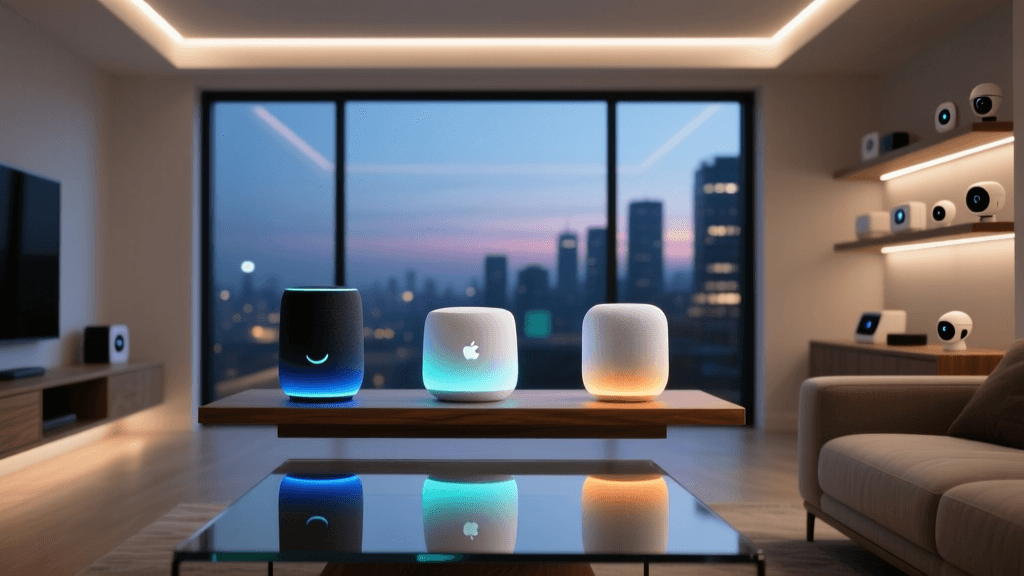
- Apple HomePod Mini and Apple TV 4K (2nd Gen or later)
- Google Nest Hub (2nd Gen) and Nest Wifi Pro
- Amazon Echo (4th Gen) and Eero 6 Routers
'The beauty of Thread Border Routers is that they work collaboratively. An Apple HomePod and a Google Nest Hub in the same home will seamlessly share the Thread mesh network, creating a unified, robust backbone for Matter devices regardless of the voice assistant you prefer.'
How to Build a Hybrid Smart Home Network
The most common mistake smart home enthusiasts make is trying to force a single protocol to do everything. A premium, reliable smart home utilizes a hybrid approach, leveraging the strengths of both Thread and Wi-Fi while ignoring Wi-Fi Direct entirely.
Step 1: Secure Your Wi-Fi Infrastructure
Upgrade to a Wi-Fi 6 or Wi-Fi 6E mesh router system. This ensures that your high-bandwidth devices (smart TVs, security cameras, laptops) have dedicated airtime and do not interfere with your IoT devices. Utilize network segmentation (IoT VLANs) if your router supports it, keeping your smart plugs and bulbs isolated from your personal computers for security.
Step 2: Deploy Thread Border Routers Strategically
Place Thread Border Routers (like a HomePod Mini or Nest Hub) in central locations. Because Thread creates a mesh, you do not need a border router in every room. Two or three border routers spread across a standard 2,500-square-foot home will provide overlapping coverage, ensuring that if one router reboots, the Thread mesh seamlessly fails over to the next available border router.
Step 3: Buy Thread for Sensors and Switches
When shopping for door/window sensors, motion detectors, smart locks, and smart blinds, exclusively look for the 'Thread' or 'Matter over Thread' badge. Brands like Eve, Yale, and Nanoleaf are leading this charge. This will save you from the nightmare of replacing batteries every two months.
Step 4: Reserve Wi-Fi for High-Data Devices
Limit your Wi-Fi IoT connections to devices that require high bandwidth or constant power. Smart thermostats (like Ecobee), video doorbells, smart displays, and whole-home audio systems belong on your Wi-Fi network.
Final Verdict: Which Protocol Should You Choose?
The debate between Thread and Wi-Fi is not a zero-sum game; it is a matter of assigning the right tool to the right job.
Choose Thread if: You are deploying battery-powered sensors, smart locks, motorized blinds, or whole-home smart lighting. Thread's mesh reliability, local execution, and ultra-low power consumption make it the undisputed champion of the low-power IoT space. Furthermore, investing in Thread today guarantees your devices will be compatible with the upcoming wave of Matter-certified ecosystems.
Choose Wi-Fi if: You are installing security cameras, video doorbells, smart displays, or high-fidelity audio equipment. Wi-Fi's massive bandwidth and existing infrastructure make it irreplaceable for data-heavy applications. Just be mindful of router congestion and ensure you are using modern Wi-Fi 6 hardware to manage the traffic efficiently.
Ignore Wi-Fi Direct: Unless you are casting a video from your phone to a TV or connecting to a wireless printer, Wi-Fi Direct has no place in your smart home infrastructure. It lacks the centralized management and mesh-routing capabilities required for automated home environments.
Ultimately, the smart home of the future is hybrid. By leveraging Thread for the 'nervous system' of your home (sensors and switches) and Wi-Fi for the 'sensory organs' (cameras and displays), you will build an ecosystem that is both lightning-fast and unshakeably reliable.