The Smart Thermostat Showdown: Budget vs. Premium
The smart home market has evolved dramatically over the last decade, and nowhere is this more apparent than in the realm of climate control. Gone are the days when a smart thermostat was a luxury item reserved for tech enthusiasts with massive budgets. Today, homeowners are faced with a compelling dilemma: do you invest in a premium, feature-rich device that promises to be the ultimate command center for your home's HVAC system, or do you opt for a budget-friendly alternative that covers the smart basics at a fraction of the cost?
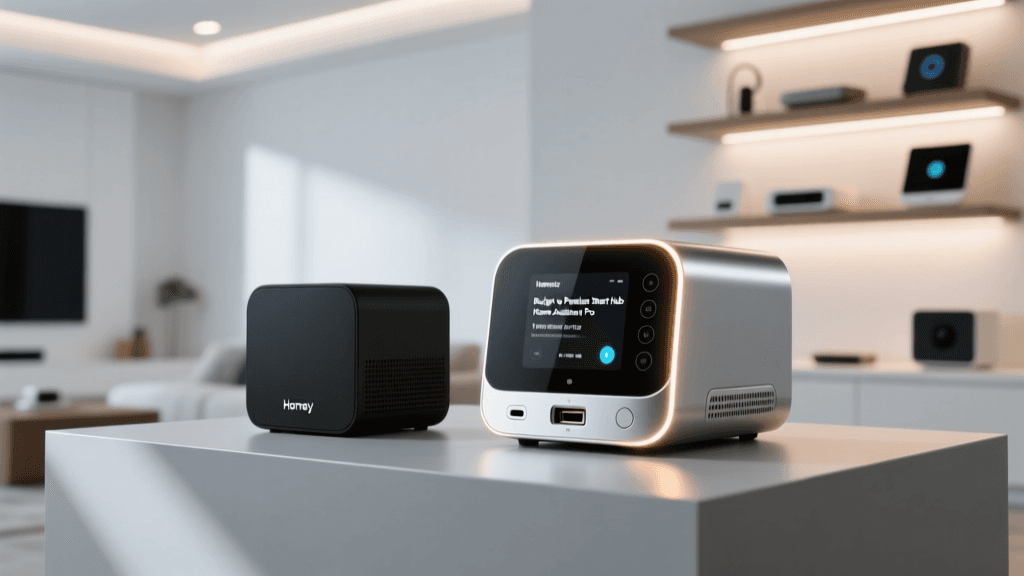
In this comprehensive value analysis, we are putting the ultimate budget champion against the undisputed luxury heavyweight. In the budget corner, we have the Wyze Smart Thermostat, a device that shocked the industry with its aggressive pricing and surprisingly robust feature set. In the premium corner, we have the Ecobee Smart Thermostat Premium, a powerhouse of environmental sensing, voice control, and ecosystem integration. By dissecting their specifications, sensor ecosystems, installation requirements, and long-term energy savings, we aim to answer the ultimate question: Is the premium price tag truly justified, or is the budget pick the smarter financial move?
Contender Profiles
The Budget Pick: Wyze Smart Thermostat
Wyze built its brand on disrupting the smart home market by offering high-quality, no-nonsense devices at rock-bottom prices. The Wyze Smart Thermostat typically retails between $50 and $70, making it one of the most affordable Wi-Fi-enabled thermostats on the market. Despite its low cost, it does not look or feel cheap. Featuring a sleek, glass-like front panel and a minimalist interface, it mimics the aesthetic of much more expensive devices. It offers 7-day flexible scheduling, usage history tracking, geofencing, and integration with the broader Wyze ecosystem. However, to hit this price point, Wyze had to make compromises, most notably in the realm of native smart home ecosystem support and advanced environmental sensing.
The Luxury Pick: Ecobee Smart Thermostat Premium
Retailing at around $250, the Ecobee Smart Thermostat Premium is positioned as the ultimate upgrade for the connected home. It is not just a thermostat; it is a smart home hub, an air quality monitor, and a premium speaker all rolled into one. The Premium model features a stunning glass and metal design, built-in Alexa and Siri support, Spotify Connect, and a dedicated SmartSensor that manages hot and cold spots by detecting room occupancy and temperature. Furthermore, it monitors indoor air quality, alerting you to spikes in VOCs (volatile organic compounds) and CO2. It is a device designed for users who want absolute control, deep data insights, and seamless integration into complex smart home setups.
Head-to-Head Specification Comparison
Before diving into the nuanced user experience, let us look at the raw data. The following table highlights the core differences in hardware and software capabilities between these two vastly different devices.
| Feature | Wyze Smart Thermostat | Ecobee Smart Thermostat Premium |
|---|---|---|
| Approximate Retail Price | $50 - $70 | $249 |
| Display | Hidden LED matrix behind glass | High-res color touchscreen |
| Remote Sensors Included | No (Sold separately) | Yes (1 SmartSensor included) |
| Built-in Voice Assistant | No | Alexa & Siri built-in |
| Apple HomeKit Support | No | Yes |
| Air Quality Monitoring | No | Yes (VOC & CO2) |
| HVAC Maintenance Alerts | Basic (Filter reminders) | Advanced (Runtime anomalies) |
| C-Wire Required | Yes (Adapter sold separately) | Yes (Power Extender Kit included) |
Deep Dive: Smart Sensors and Zoning
The most significant differentiator between budget and premium thermostats is how they handle the physical reality of your home. Most homes suffer from uneven heating and cooling; the hallway where the thermostat is located might be a comfortable 72 degrees, while the upstairs bedroom is sweltering at 78 degrees.
The Ecobee Premium solves this elegantly with its included SmartSensor. This remote puck communicates with the main thermostat to prioritize occupied rooms. If you are working in your home office during the day, the Ecobee reads the temperature from the office sensor rather than the empty hallway, ensuring your immediate environment is comfortable. You can add multiple sensors to create a pseudo-zoned HVAC system, a feature that is practically unparalleled in the consumer market.
The Wyze Smart Thermostat, on the other hand, relies primarily on the thermistor built into the main wall unit. While Wyze does sell separate Climate Sensors, the integration and ecosystem reliability do not quite match the seamless, plug-and-play nature of Ecobee's proprietary sensor network. If your home has a relatively open floor plan or a well-balanced HVAC system, Wyze's main-unit sensing will be perfectly adequate. However, for multi-story homes or houses with notorious cold spots, Ecobee's sensor ecosystem provides a tangible, daily comfort upgrade that justifies a portion of its premium cost.
Ecosystem Compatibility and Voice Control
Smart home enthusiasts know that a device is only as good as its ability to play nicely with others. This is where the budget vs. premium divide becomes a chasm.
The Ecobee Premium is an ecosystem agnostic's dream. It natively supports Amazon Alexa, Google Assistant, and Apple HomeKit. The built-in microphone array means you can use the thermostat as a voice command center for your entire home, set timers, or even make intercom calls. Furthermore, its support for Apple HomeKit is a massive draw for iPhone users who prioritize local processing and data privacy. Ecobee also supports advanced automation platforms like Samsung SmartThings and IFTTT, allowing for deeply customized triggers (e.g., turning on the AC when a specific smart lock is engaged).
The Wyze Thermostat is designed to live primarily within the Wyze app ecosystem. It integrates well with Amazon Alexa and Google Assistant, allowing for basic voice commands like 'Set the temperature to 70 degrees.' However, it lacks native Apple HomeKit support, which is a dealbreaker for a growing segment of the smart home market. While workarounds exist using third-party hubs or Homebridge, out-of-the-box compatibility is limited. If you are heavily invested in Apple's ecosystem or require complex, cross-brand automations, Wyze will feel restrictive.
Visualizing the Value: Feature Score Breakdown
To quantify the differences, we have scored both thermostats across five critical categories. This visualization highlights where the premium price goes and where the budget option punches above its weight.
Installation, Compatibility, and the C-Wire Factor
A smart thermostat is useless if you cannot wire it to your wall. Both the Wyze and Ecobee require a C-wire (common wire) to provide continuous 24V power to their Wi-Fi radios and displays. Older homes often lack this wire, leading to a major installation hurdle.
Here, Ecobee provides a massive value-add: every Premium box includes a Power Extender Kit (PEK). This small module wires directly into your HVAC control board, allowing you to multiplex existing wires to simulate a C-wire connection without running new cables through your walls. It requires a bit of DIY confidence, but it saves you a $150 electrician visit.
Wyze assumes you already have a C-wire. If you do not, you must purchase a third-party C-wire adapter separately. While the installation of the Wyze unit itself is famously straightforward and guided by an excellent in-app wizard, the lack of an included adapter kit means the 'budget' price can quickly balloon if your home's wiring is outdated.
Energy Savings and ROI Analysis
The primary justification for any smart thermostat is energy efficiency. According to the U.S. Department of Energy, you can save as much as 10% a year on heating and cooling by simply turning your thermostat back 7 to 10 degrees for 8 hours a day from its normal setting. Smart thermostats automate this process using geofencing and smart schedules, ensuring you never pay to heat or cool an empty house.
Furthermore, the EPA's ENERGY STAR program highlights that certified smart thermostats can significantly reduce peak load demand and optimize HVAC runtime based on local weather data. Both Wyze and Ecobee utilize weather-intelligent pre-conditioning, but how does this translate to Return on Investment (ROI)?
The ROI Calculation:
Assume an average annual HVAC spend of $1,200. A conservative smart thermostat savings estimate is 10%, or $120 per year.
- Wyze ROI: At a $60 purchase price, the Wyze pays for itself in just six months. Every year after that is pure savings.
- Ecobee ROI: At a $250 purchase price, the Ecobee takes roughly two years to break even on energy savings alone.
However, the Ecobee offers secondary financial benefits. Its advanced HVAC monitoring can detect when your system is running longer than usual to reach the target temperature, alerting you to potential refrigerant leaks or failing components before they result in a catastrophic $5,000 compressor replacement. For homeowners with aging HVAC systems, this predictive maintenance feature alone can justify the premium price tag.
Privacy and Data Security
In an era of increasing digital surveillance, the data collected by your smart home devices matters. The Ecobee Premium processes a vast amount of environmental and occupancy data. Fortunately, Ecobee has a strong reputation for transparency, offering robust privacy controls and local processing options via HomeKit. The built-in Alexa can be physically muted via a hardware switch on the side of the unit, providing peace of mind for privacy advocates.
Wyze has historically faced scrutiny regarding server security and firmware vulnerabilities, though the company has made significant strides in recent years to implement end-to-end encryption and two-factor authentication. Because Wyze relies heavily on cloud-based processing for its smart schedules and geofencing, an internet outage will temporarily disable some of its 'smart' features, whereas Ecobee retains more local processing capabilities, ensuring your home remains comfortable even if your Wi-Fi goes down.
The Final Verdict: Which Should You Buy?
The choice between the Wyze Smart Thermostat and the Ecobee Smart Thermostat Premium ultimately comes down to your home's physical layout, your existing smart home ecosystem, and how you define 'value.'
Choose the Budget Pick (Wyze) if:
- You want the fastest possible financial ROI on your smart home investment.
- You live in a smaller home or apartment with an open floor plan where remote sensors are unnecessary.
- You already have a C-wire and primarily use Amazon Alexa or Google Assistant.
- You prefer a minimalist, set-it-and-forget-it approach to climate scheduling.
Choose the Premium Pick (Ecobee) if:
- You live in a multi-story home with distinct hot and cold zones that require remote sensor management.
- You are deeply embedded in the Apple HomeKit ecosystem or require complex, cross-platform automations.
- You want to monitor indoor air quality (VOCs and CO2) alongside temperature.
- You lack a C-wire and want to utilize the included Power Extender Kit to avoid hiring an electrician.
In conclusion, the Wyze Smart Thermostat is a masterclass in delivering 80% of the premium experience for 20% of the price. It is the undisputed king of budget value. However, the Ecobee Smart Thermostat Premium is not merely resting on brand prestige; its advanced sensor network, air quality monitoring, and included installation accessories provide a holistic home management experience that the budget tier simply cannot replicate. Both are exceptional choices, provided they align with your specific household needs.