Introduction to the Samsung SmartThings Ecosystem
The smart home landscape is dominated by a few major players, but for enthusiasts and power users who demand granular control, broad protocol support, and deep automation capabilities, the Samsung SmartThings ecosystem remains a titan. Originally founded in 2012 and acquired by Samsung in 2014, SmartThings has transitioned from a niche hobbyist platform into a mainstream powerhouse. Today, it serves as the central nervous system for millions of homes, bridging the gap between legacy Z-Wave and Zigbee devices and the emerging Matter and Thread standards. Unlike closed gardens that restrict you to specific hardware, SmartThings prides itself on agnosticism, allowing you to mix and match thousands of devices from hundreds of manufacturers. In this comprehensive guide, we will explore the core hardware that powers the platform, detail the best compatible devices available on the market, walk through advanced automation strategies, and evaluate how SmartThings stacks up against Apple HomeKit, Amazon Alexa, and Google Home in terms of privacy, local processing, and overall versatility. Whether you are upgrading from a basic smart speaker setup or building a new home from scratch, understanding the intricacies of SmartThings is crucial for creating a resilient, responsive, and truly intelligent living space.
The Core Hardware: Hubs, Stations, and Bridges
At the heart of any robust SmartThings setup is a central hub. While early iterations required you to purchase Samsung-branded hubs, the ecosystem has recently diversified to include specialized hardware tailored to different user needs. Understanding which hub to buy is the most critical first step in your smart home journey.
Samsung SmartThings Station
Priced at approximately $60, the SmartThings Station is an entry-level hub that doubles as a fast wireless charger for Qi-enabled devices. However, its most important feature is its role as a Thread border router and a Matter controller. It does not natively support Zigbee or Z-Wave, meaning it is best suited for users who are fully committed to the new Matter standard or those who primarily use Wi-Fi and Thread-based devices. It also features Ultra-Wideband (UWB) technology, which allows it to interact seamlessly with Samsung Galaxy SmartTags for precise indoor location tracking.
Samsung SmartThings Station Pro
For around $130, the Station Pro offers a more robust solution. Like its smaller sibling, it acts as a Thread border router and Matter controller, but it boasts a more powerful internal antenna array and an Ethernet port for a hardwired, rock-solid network connection. This is highly recommended for larger homes where wireless interference might cause Thread mesh networks to drop packets. The inclusion of an Ethernet port ensures that your hub remains connected to your router even if your Wi-Fi network experiences temporary congestion.
Aeotec Smart Home Hub (SmartThings Edition)
If you have a home filled with legacy Zigbee and Z-Wave devices, the Aeotec Smart Home Hub (priced around $130) is the undisputed champion. Officially licensed to run the SmartThings platform, this hub includes radios for Z-Wave 700 series, Zigbee 3.0, Wi-Fi, and Bluetooth, alongside Thread and Matter support. It also features a battery backup and an Ethernet port. For power users migrating from older SmartThings Hub v3 units, the Aeotec hub provides the most comprehensive protocol support available, ensuring that your older sensors and locks are not left behind as the industry shifts toward Matter.
Top Compatible Devices and Cost Breakdown
One of the primary advantages of SmartThings is its massive library of compatible devices. Because Samsung has maintained an open developer platform and actively pursued Works With SmartThings (WWST) certifications, you are rarely locked into a single brand. Below is a curated table of top-tier devices that integrate flawlessly with the SmartThings ecosystem, complete with protocol details and average retail costs.
| Device Model | Category | Protocol | Avg. Cost | Best Use Case |
|---|---|---|---|---|
| Schlage Encode Plus | Smart Lock | Wi-Fi / Thread / Matter | $299 | Keyless entry, Apple HomeKey, and remote locking via SmartThings. |
| Aeotec Door/Window Sensor 7 | Contact Sensor | Z-Wave 700 | $39 | Ultra-fast local execution for security routines and lighting triggers. |
| Philips Hue Bridge | Lighting Hub | Zigbee / Matter | $59 | Bridging the entire Hue ecosystem into SmartThings for synchronized scenes. |
| Ecobee SmartThermostat | Climate | Wi-Fi | $249 | Geofencing-based HVAC control and room sensor integration. |
| Samsung SmartThings Multipurpose Sensor | Motion/Temp | Zigbee | $29 | Detecting garage door tilt status and monitoring ambient room temperatures. |
When building your network, it is highly recommended to prioritize Z-Wave and Zigbee devices for sensors and switches. Unlike Wi-Fi devices, which can congest your primary router and suffer from latency, Z-Wave and Zigbee create independent mesh networks that communicate directly with your hub. This ensures that a physical light switch operates instantly, even if your home internet connection is temporarily down. For a deeper understanding of how the industry is unifying these disparate protocols, the Connectivity Standards Alliance (CSA) provides extensive documentation on how Matter and Thread are bridging the gap between legacy ecosystems and modern smart home standards.
Building Advanced Automations and Routines
The true magic of any smart home lies in its automations. SmartThings offers a highly visual, logic-based routine builder within its mobile app that caters to both beginners and advanced users. At its core, the automation engine relies on 'If This, Then That' logic, but with the ability to string together multiple conditions, delays, and device actions.
Example 1: The 'Leaving Home' Security Routine
Using the geofencing capabilities of the SmartThings app, you can create a routine that triggers when the last person leaves the designated home radius. The 'If' condition is set to 'Member location: Everyone has left'. The 'Then' actions can be sequenced: first, lock all compatible smart locks (e.g., Schlage Encode Plus); second, arm the security system; third, adjust the Ecobee thermostat to 'Away' mode to save energy; and finally, turn off all interior lights and smart plugs. You can even add a 60-second delay before triggering a notification to your phone, ensuring you have time to retrieve a forgotten item without tripping the alarm.
Example 2: Local Processing and Edge Drivers
Historically, SmartThings relied heavily on cloud processing. If your internet went down, your motion-triggered lights would fail to turn on. To solve this, Samsung introduced SmartThings Edge Drivers. Edge Drivers are Lua-based scripts that run locally on your hub. When you install a compatible Edge Driver for a Z-Wave or Zigbee device, the automation logic is executed entirely on the local hardware. This reduces latency from hundreds of milliseconds to virtually zero, creating an instant, tactile response that rivals traditional wired switches. For users building a new SmartThings network, verifying that a device has an official or community-built Edge Driver is a crucial step before purchasing.
Webhooks and API Integration
For power users, SmartThings supports webhooks and a robust REST API. This allows you to trigger SmartThings routines from external services like IFTTT, Home Assistant, or custom Node-RED flows. For instance, you could set up a webhook that triggers a 'Movie Night' lighting scene in SmartThings whenever your Plex media server detects that a movie has started playing on your living room TV.
SmartThings vs. The Competition
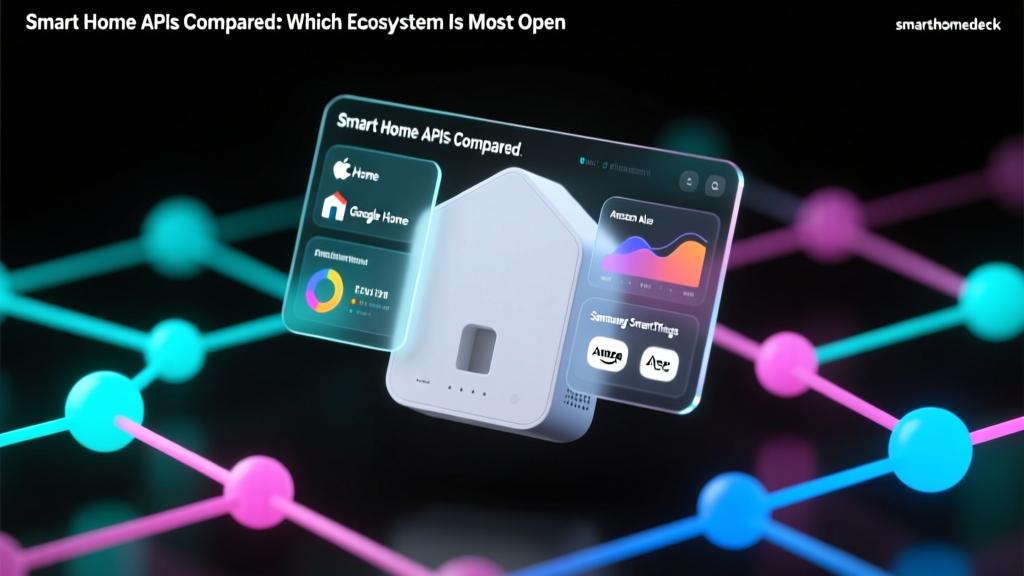
How does Samsung's platform compare to the walled gardens of Apple, Amazon, and Google? While Apple HomeKit excels in privacy and local processing, it suffers from a limited device roster and high hardware costs. Amazon Alexa and Google Home offer massive device compatibility but lean heavily on cloud processing and voice-first interactions, often lacking the deep, condition-based automation logic required for complex routines. SmartThings strikes a unique balance: it offers near-universal device compatibility while increasingly pushing toward local execution via Edge and Matter.
As visualized above, SmartThings leads the pack in device compatibility and automation depth. While Apple HomeKit currently maintains a slight edge in pure local processing due to its strict hardware certification requirements, SmartThings is rapidly closing this gap through its aggressive rollout of Matter support and Edge Drivers. For users who refuse to compromise on device choice, SmartThings remains the superior platform.
Privacy, Security, and Data Handling
In an era where data privacy is a paramount concern, Samsung has fortified the SmartThings ecosystem with its proprietary Knox security framework. Knox provides hardware-backed encryption for the hubs, ensuring that the cryptographic keys used to secure your Z-Wave and Zigbee networks are isolated from the main processor. Furthermore, Samsung has committed to local execution for Matter devices, meaning that the data generated by your sensors and switches does not need to be routed through external cloud servers to trigger an automation.
However, it is important to note that Wi-Fi-based devices and third-party cloud integrations (like linking your Ecobee or Ring account) still require cloud communication. To maximize privacy, users should prioritize local protocols (Z-Wave, Zigbee, Thread) and utilize Edge Drivers whenever possible. For more information on Samsung's overarching smart home initiatives and security commitments, you can review the official Samsung SmartThings portal.
Final Verdict: Who is SmartThings For?
The Samsung SmartThings ecosystem is not necessarily the easiest platform for a casual user who only wants to turn on a single smart bulb with their voice. It is, however, the ultimate platform for the dedicated smart home enthusiast, the DIY homeowner, and anyone who values protocol diversity. By supporting Z-Wave, Zigbee, Wi-Fi, Thread, and Matter, SmartThings ensures that your hardware investments are protected against the shifting winds of industry standards. Whether you choose the budget-friendly SmartThings Station for a Matter-based apartment setup or the powerhouse Aeotec Hub for a sprawling estate filled with legacy sensors, SmartThings provides the depth, flexibility, and increasingly local control necessary to build a truly autonomous home. As the Matter standard matures and Edge Drivers continue to expand, SmartThings is solidifying its position as the most versatile and future-proof smart home hub platform on the market.