The Golden Rules of Rental Smart Home Installations
Transitioning into a smart home ecosystem is often associated with homeownership, involving hardwired thermostats, drilled security cameras, and permanent fixture replacements. However, the modern renter faces a unique set of challenges: strict lease agreements, the constant threat of forfeited security deposits, and the absolute necessity of reversibility. According to legal experts at Nolo, tenants generally cannot make permanent alterations to a rental property without explicit written consent from the landlord. This means that drilling holes for wired doorbells or replacing existing deadbolts is usually off the table.
Fortunately, the smart home industry has evolved to accommodate the multi-family dwelling market. By focusing on wireless protocols, battery-powered sensors, and non-destructive mounting techniques, you can build a fully automated, highly secure apartment without leaving a single mark on the drywall. To succeed, you must adhere to three golden rules of rental installations:
- Non-Destructive Mounting: Rely on tension rods, freestanding mounts, and advanced adhesive solutions rather than screws and drywall anchors.
- Plug-and-Play Power: Avoid devices that require a neutral wire or hardwired electrical boxes. Opt for battery-operated or standard 120V plug-in devices.
- 100% Reversibility: Every device you install must be removable in under an hour, restoring the apartment to its exact move-in condition.
Smart Locks: Securing Your Space Without Changing the Hardware
The front door is the most critical entry point, but landlords rarely allow tenants to replace the entire lock cylinder or exterior hardware. The solution lies in retrofit smart locks. These devices replace only the interior thumb-turn mechanism while leaving the exterior deadbolt and keyhole completely untouched. This ensures your landlord can still use their master key in an emergency, keeping you fully compliant with your lease.
The August Wi-Fi Smart Lock (approx. $230) is the gold standard for renters. It mounts directly over your existing interior thumb-turn using the provided screws. Because it utilizes your original deadbolt, there is no misalignment issues with the door frame. For doors with unconventional thumb-turns or where even removing the interior screws is prohibited, the SwitchBot Lock (approx. $180) offers a brilliant alternative. It uses industrial-grade 3M VHB (Very High Bond) adhesive tape to attach a motorized housing directly over the existing thumb-turn. The SwitchBot physically turns the lock for you via a mechanical arm, requiring zero disassembly of the original hardware.
Pro-Tip for Lock Calibration: When installing a retrofit lock in an older apartment building, doors often warp due to humidity changes. Always perform the auto-calibration process during the warmest part of the day when the door is most swollen, ensuring the motor has enough torque to lock it even when the weather shifts.
For a comprehensive breakdown of how these retrofit mechanisms hold up over time, Wirecutter's extensive smart lock testing consistently highlights the reliability of interior-only retrofit kits for multi-family dwellings.
No-Drill Smart Lighting and the "Painter's Tape" Trick
Lighting sets the mood and is foundational to smart home automation. For overhead fixtures controlled by standard wall switches, smart bulbs like the Philips Hue White and Color Ambiance or the budget-friendly WiZ bulbs are ideal. Simply swap the bulb, leave the wall switch permanently in the "on" position, and control the lighting via your phone or voice assistant. For floor and table lamps, smart plugs like the Kasa Smart Plug Mini ($15) offer a cheap, effective way to automate "dumb" lighting.
The real challenge for renters is bias lighting and accent lighting, specifically LED light strips. Adhesive-backed LED strips (like those from Govee) are notorious for peeling off cheap apartment paint or, worse, ripping the drywall paper when removed. To solve this, professional installers use the "Painter's Tape Trick":
- Clean the top of the door frame or wall molding with isopropyl alcohol and let it dry.
- Apply a strip of high-quality blue painter's tape (like 3M ScotchBlue) to the surface.
- Apply the LED strip's adhesive (or a 3M Command Strip) directly onto the painter's tape.
When your lease ends, the painter's tape is designed to peel away cleanly without leaving residue or damaging the underlying paint, ensuring you get your full security deposit back.
Wireless Security, Leak Detection, and Climate Control
Apartments are highly susceptible to environmental hazards and shared-wall security vulnerabilities. Wireless sensors are your best defense.
Water Leak Sensors
Water damage is a leading cause of security deposit disputes. The EPA notes that household leaks can waste nearly 10,000 gallons of water annually, and in an apartment, a leaking pipe under the sink can damage the unit below, making you liable. Place a battery-powered Aqara Water Leak Sensor or the Eve Water Guard (which features a braided sensor cable you can snake under appliances) directly beneath the kitchen sink, bathroom vanity, and water heater. These integrate seamlessly with smart plugs; if a leak is detected, an automation can instantly shut off a smart-valve or trigger a loud siren to alert neighbors.
Climate Control for Window ACs and Mini-Splits
Most rentals lack central HVAC, relying instead on wall-mounted mini-splits or window air conditioning units. You cannot replace these with a smart thermostat. Instead, use an IR (Infrared) blaster like the Sensibo Sky or Mysa for AC. These devices sit on a shelf or mount via adhesive and learn the infrared codes of your AC's remote control. They allow you to schedule cooling, use geofencing to turn the AC off when you leave for work, and monitor ambient room temperature.
Overcoming Apartment Wi-Fi Congestion with Local Hubs
One of the most overlooked aspects of apartment smart home setup is network congestion. In a multi-family building, dozens of routers are broadcasting on the 2.4GHz band, creating massive interference. As Wired's guide to apartment Wi-Fi points out, dense living environments severely degrade the performance of Wi-Fi-dependent smart devices.
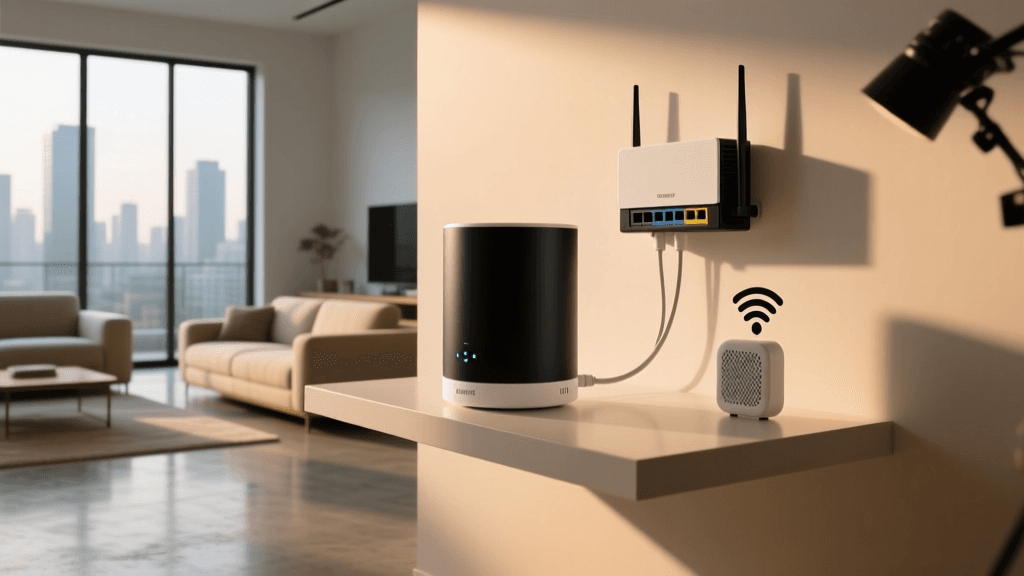
To combat this, avoid Wi-Fi-heavy ecosystems where every bulb and sensor connects directly to your router. Instead, invest in a local smart home hub that utilizes Zigbee or Thread protocols. These mesh networks operate on 2.4GHz but use different channels and low-power signaling that cuts through apartment interference much better than standard Wi-Fi.
Cost comparison between renter-friendly wireless setups and traditional hardwired homeowner setups across four smart home categories.
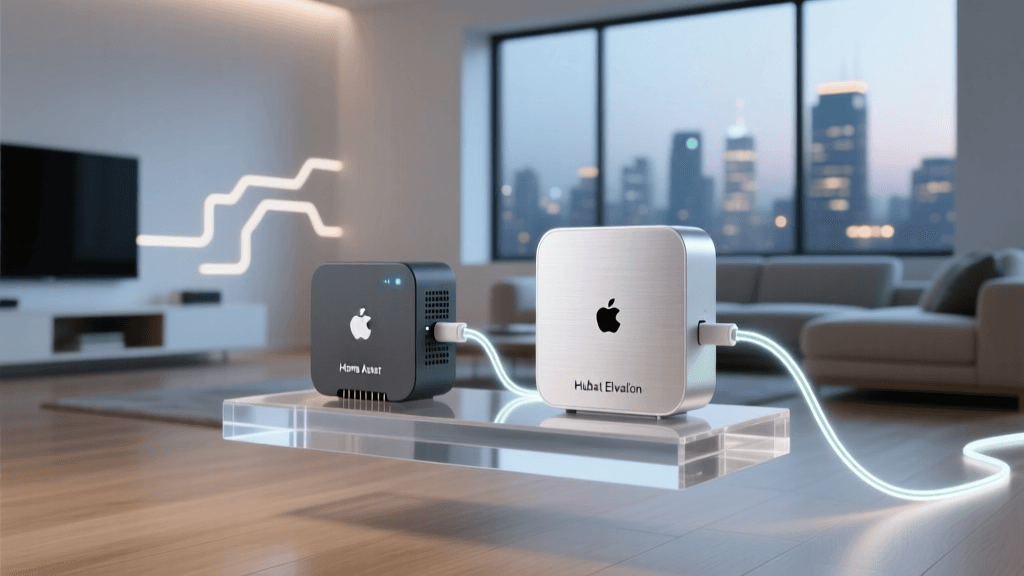
Devices like the Apple HomePod Mini (which acts as a Thread border router) or the Hubitat Elevation hub keep your smart home traffic local. This not only reduces the load on your apartment's Wi-Fi router but also ensures your automations continue to run even if the building's internet connection drops.
Rental-Friendly Device Comparison Matrix
When selecting devices for your apartment, prioritizing reversibility and mounting methods is crucial. Below is a comparison of top-tier rental-friendly devices across essential categories.
| Device Category | Top Product Pick | Mounting Method | Est. Cost | Reversibility Rating |
|---|---|---|---|---|
| Retrofit Lock | August Wi-Fi Smart Lock | Thumb-turn screws | $230 | 100% (Invisible from outside) |
| Smart Lock (No-Screw) | SwitchBot Lock | 3M VHB Adhesive | $180 | 100% (Requires adhesive remover) |
| LED Accent Strip | Govee RGBIC Pro | Painter's Tape Trick | $70 | 95% (Safe on most paints) |
| IR Climate Blaster | Sensibo Sky | Freestanding / Adhesive | $120 | 100% |
| Window Sensor | Aqara Door/Window | Adhesive Foam Tape | $20 | 100% |
Automation Workflows Tailored for Renters
Once your hardware is installed without damaging the property, the real magic happens in the software. Apartment living requires specific automation workflows that account for shared spaces and noise ordinances.
- The "Quiet Arrival" Routine: In a house, a smart lock might trigger a loud chime or turn on bright overhead lights. In an apartment, configure your geofencing to trigger only dim, warm-toned smart bulbs and a silent notification to your phone when you unlock the door after 10 PM, respecting neighbors sharing walls.
- Shared Hallway Monitoring: If you have a doorbell camera (like the battery-powered Ring Video Doorbell mounted with a no-drill adhesive mount), set up privacy zones in the app to block out your neighbor's door or the shared hallway, ensuring you only record activity directly in front of your unit.
- Window AC Optimization: Use a smart plug and a wireless temperature sensor. Create an automation that turns on the window AC via the IR blaster only when the room temperature exceeds 74°F AND your phone's GPS shows you are within 2 miles of the apartment. This prevents the loud compressor from running while you are at work, saving on utility bills.
Moving Out: The Reversibility Checklist
The ultimate test of a rental-friendly smart home is move-out day. To ensure a seamless transition and the return of your security deposit, follow this reversal checklist:
- Adhesive Removal: Never pull 3M VHB tape straight off the wall or door. Use a hairdryer to heat the adhesive for 30 seconds, then use dental floss to saw through the foam backing. Clean any residue with Goo Gone or isopropyl alcohol.
- Factory Resets: Ensure all hubs, locks, and cameras are factory reset and removed from your cloud accounts. Leaving an August lock tied to your account can prevent the next tenant from setting it up, prompting the landlord to charge you for a replacement.
- Hardware Restoration: Reattach the original thumb-turn to your front door and store the original screws in a taped envelope attached to the back of the smart lock box.
- Paint Touch-ups: Keep a small sample of the apartment's wall paint (often provided by the landlord at move-in) to dab over any minor scuffs caused by tension rods or sensor mounts.
By treating your smart home setup as a modular, temporary overlay rather than a permanent fixture, you can enjoy the convenience, security, and energy savings of modern automation while keeping your landlord happy and your deposit secure.