The Multi-Ecosystem Dilemma in Modern Smart Homes
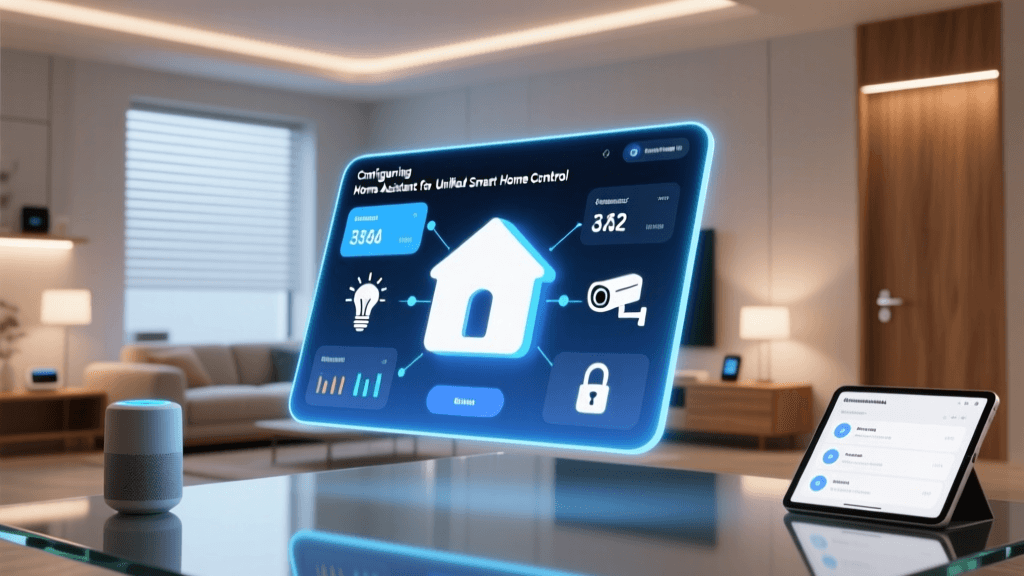
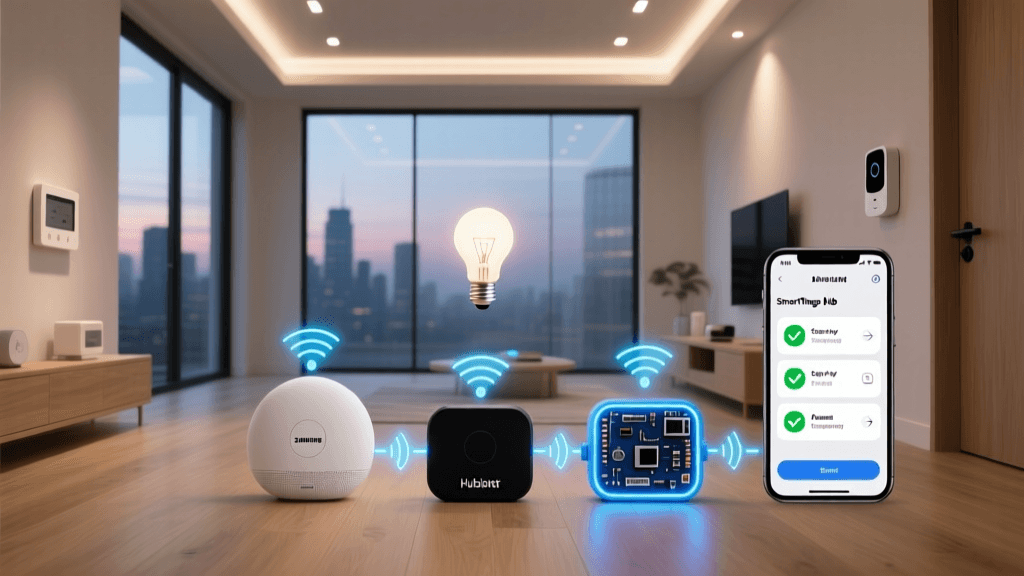
In the modern connected home, ecosystem fragmentation is the single largest barrier to a seamless user experience. It is incredibly common for a household to feature a mix of iOS and Android users, meaning that Apple HomeKit, Google Home, and Amazon Alexa must somehow coexist. Historically, this required purchasing duplicate hardware or relying on fragile, cloud-dependent IFTTT applets. Today, however, the landscape has shifted dramatically. By leveraging Home Assistant as a central hub and utilizing the Matter and Thread protocols, DIY installers and homeowners can build a robust, multi-ecosystem integration that exposes every device to every voice assistant and native app simultaneously.
This comprehensive setup guide will walk you through the hardware requirements, network configuration, and step-by-step software integration required to bridge your smart home across Apple, Google, and Amazon ecosystems without sacrificing local control or privacy.
Hardware Requirements and Cost Breakdown
To act as the ultimate bridge between ecosystems, your central server must be capable of running Home Assistant OS, hosting the Matter Server add-on, and managing local network traffic efficiently. While you can run Home Assistant on a virtual machine, a dedicated, low-power micro-computer is highly recommended for multi-ecosystem stability.
| Hardware Option | Estimated Cost | Pros | Cons |
|---|---|---|---|
| Home Assistant Green | $99 | Plug-and-play, official support, silent operation, includes Matter/Thread readiness via USB dongles. | Not as powerful as an Intel NUC for heavy AI or Frigate NVR workloads. |
| Raspberry Pi 5 (8GB) | $80 + Accessories | Highly customizable, massive community support, excellent processing power. | Requires separate SSD for reliability (SD cards corrupt easily), complex initial OS flashing. |
| Intel N100 Mini PC | $150 - $200 | Overkill performance, supports Proxmox virtualization, NVMe storage, multiple Ethernet ports for VLANs. | Larger physical footprint, requires manual OS installation and Proxmox configuration. |
| Home Assistant Connect ZBT-1 | $39 | Essential USB dongle for Zigbee and Thread/Matter coordination. Acts as a Thread Border Router. | Requires a USB extension cable to avoid 2.4GHz interference from the host PC. |
Pro Tip: If you are serious about multi-ecosystem integration, the Home Assistant Connect ZBT-1 (formerly known as SkyConnect) is virtually mandatory. It allows your Home Assistant instance to natively communicate with Matter-over-Thread devices and act as a Thread Border Router, bypassing the need to rely solely on Apple or Google's proprietary Thread implementations.
Step 1: Network Preparation and VLAN Configuration
Before installing any software, your local network must be optimized for multi-cast traffic. Smart home protocols like Chromecast, AirPlay, and Matter rely heavily on mDNS (Multicast DNS) to discover devices. If you segment your IoT devices onto a separate VLAN (which is highly recommended for security), mDNS broadcasts will be blocked by default at the router level.
Configuring the mDNS Reflector
To allow your Apple TVs, Nest Hubs, and Echo Dots to discover devices residing on a restricted IoT VLAN, you must enable an mDNS reflector or repeater.
- pfSense / OPNsense: Navigate to Services > Avahi and enable the mDNS reflector across your main LAN and IoT VLAN interfaces.
- UniFi Dream Machine: Enable 'Multicast DNS' under Settings > Networks > [Your Network] > Advanced.
- IGMP Snooping: Ensure IGMP snooping is enabled on your managed switches to prevent multicast traffic from flooding your entire network, which can cause Wi-Fi congestion and dropouts for low-power Thread devices.
Step 2: Installing Home Assistant and the Matter Server
Once your hardware is flashed with Home Assistant OS and connected to your network, the next phase is configuring the Matter protocol. Matter, backed by the Connectivity Standards Alliance (CSA), is the universal language that allows devices to be commissioned into multiple ecosystems simultaneously.
Adding the Matter Integration
- Navigate to Settings > Devices & Services > Add Integration.
- Search for and install the Matter (BETA) integration. (Note: Despite the legacy 'BETA' tag in some UI menus, the Home Assistant Matter Documentation confirms it is production-ready for most major device categories).
- Home Assistant will prompt you to install the Matter Server Add-on. Click 'Install' and ensure 'Start on boot' is enabled.
- Once the server is running, you can begin commissioning Matter devices using the companion app or by scanning the QR code via the Home Assistant dashboard.
Understanding Thread Mesh Topologies
Matter-over-Thread devices (like the Eve Energy smart plug or Nanoleaf Essentials bulbs) require a Thread Border Router. By plugging the Connect ZBT-1 into your Home Assistant server and flashing it with the Thread firmware, Home Assistant becomes a Border Router. However, for optimal mesh stability, you should also leverage your existing ecosystem hardware. The Apple TV 4K (3rd Gen), Google Nest Hub (2nd Gen), and Amazon Echo (4th Gen) all act as Thread Border Routers. Thread mesh networking allows these routers to share credentials and create a single, unified mesh network, ensuring that a device in the backyard can route its signal through a nearby smart bulb back to your central hub.
Step 3: Bridging to Apple HomeKit, Google Home, and Alexa
With your devices aggregated into Home Assistant via Zigbee, Z-Wave, Wi-Fi, and Matter, the final step is exposing them outward to the major voice assistants. This is where the true multi-ecosystem bridge is realized.
Exporting to Apple HomeKit
Do not confuse the 'HomeKit' integration (which imports Apple devices into HA) with the HomeKit Bridge integration (which exports HA devices to Apple). We want the latter.
- Go to Settings > Devices & Services > Add Integration > HomeKit Bridge.
- Select the domains you wish to expose (Lights, Switches, Climate, Sensors, Locks).
- Home Assistant will generate a unique HomeKit QR code and PIN.
- Open the Apple Home app on your iOS device, select 'Add Accessory', and scan the QR code. Your entire smart home will instantly populate in Apple HomeKit, fully controllable via Siri and the Home app.
- For detailed configuration options, refer to the official Home Assistant HomeKit Bridge documentation to learn how to map specific color temperatures and fan speeds correctly.
Exporting to Google Home and Amazon Alexa
While you can manually configure OAuth2 servers and port forwarding to connect Home Assistant to Google and Amazon, the most secure and reliable method for DIY installers is utilizing the Nabu Casa Home Assistant Cloud subscription ($6.50/month). This service provides a secure, encrypted tunnel that exposes your local devices to Google Assistant and Alexa without opening any ports on your router.
- Create an account at Nabu Casa and link it to your Home Assistant instance via Settings > Home Assistant Cloud.
- Enable the Google Assistant and Amazon Alexa toggles.
- Open the Google Home app or Alexa app, search for the 'Home Assistant' skill/action, and log in with your Nabu Casa credentials.
- Trigger a device sync ('Hey Google, sync my devices'). All entities you have exposed in the Cloud settings will appear in your respective ecosystems.
Protocol compatibility across major ecosystems
As illustrated in the chart above, while Wi-Fi remains the most universally supported protocol out-of-the-box, Matter and Thread are rapidly closing the gap, offering superior local latency and mesh reliability without congesting your primary Wi-Fi network. By using Home Assistant as the translation layer, you bypass the native limitations of Zigbee and Z-Wave, exposing those legacy protocols to Apple and Google as if they were native Matter devices.
Troubleshooting Multi-Ecosystem Sync Issues
Even with a perfect setup, multi-ecosystem bridges can encounter synchronization hurdles. Here is how to troubleshoot the most common issues encountered during installation.
1. Device State Latency in Voice Assistants
Symptom: You turn on a light via a physical Zigbee switch, but Google Home or Apple Home still shows the light as 'Off' for 10-15 seconds.
Solution: This is usually caused by polling intervals or delayed webhook pushes. Ensure that your Zigbee network is utilizing Zigbee2MQTT rather than the older ZHA integration, as Z2M pushes state changes via MQTT instantly. Furthermore, verify that your Nabu Casa cloud connection shows a 'Connected' status with latency under 150ms in the Home Assistant Cloud settings.
2. Thread Devices Dropping Off the Mesh
Symptom: Matter-over-Thread devices become unresponsive in Home Assistant and Apple Home simultaneously.
Solution: Thread relies on a mesh of always-powered router devices. If you place a Thread sensor in a location surrounded by concrete or metal, it may fail to maintain a link to the Border Router. Add a smart plug (like the Eve Energy or Aqara Smart Plug) halfway between the sensor and your Home Assistant Connect ZBT-1 to act as a Thread mesh repeater. Additionally, ensure your Thread network credentials are synchronized across your Apple TVs and Home Assistant by using the 'Share Credentials' feature in the Thread dashboard.
3. HomeKit Bridge Fails to Discover Server
Symptom: The Apple Home app cannot find the HomeKit Bridge accessory during the pairing process.
Solution: This is almost exclusively a network routing issue. Verify that your iOS device and the Home Assistant server are on the same IP subnet during the initial pairing process. If you are using a multi-VLAN setup, temporarily move your smartphone to the IoT VLAN to complete the pairing. Once paired, the mDNS reflector will handle the cross-VLAN state updates.
Conclusion
Building a multi-ecosystem smart home no longer requires compromising on hardware choices or forcing every family member to use the same mobile app. By deploying Home Assistant as your central brain, utilizing the Connect ZBT-1 for robust Thread and Zigbee coordination, and leveraging the Matter protocol, you create a resilient, privacy-focused smart home. Apple users can rely on Siri and HomeKit automations, Android users can utilize Google Home routines, and Alexa owners can maintain their preferred voice commands—all while the underlying local network handles the heavy lifting with zero cloud dependency for critical automations. With the right network preparation and hardware selection, your multi-ecosystem bridge will provide a seamless, unified experience for years to come.