The Shift from Convenience to Conservation
As global energy prices fluctuate and environmental concerns take center stage, the modern smart home is evolving. It is no longer just about voice-activated novelty or remote convenience; it is about intelligent, automated resource management. For homeowners and renters alike, the intersection of Internet of Things (IoT) technology and utility consumption presents a massive opportunity to reduce monthly overhead and lower carbon footprints. Smart home energy management is the practice of using connected devices to monitor, analyze, and optimize the power usage of your household.
Historically, homeowners only understood their energy consumption when the monthly utility bill arrived in the mail. By then, the damage was done. Today, real-time data granularity allows us to see exactly how much power our HVAC systems, appliances, and electronics draw at any given second. In this comprehensive guide, we will explore the foundational pillars of smart energy management: whole-home energy monitors, smart thermostats, smart plugs, and the automation routines that tie them all together.
Whole-Home Energy Monitors: Seeing the Invisible
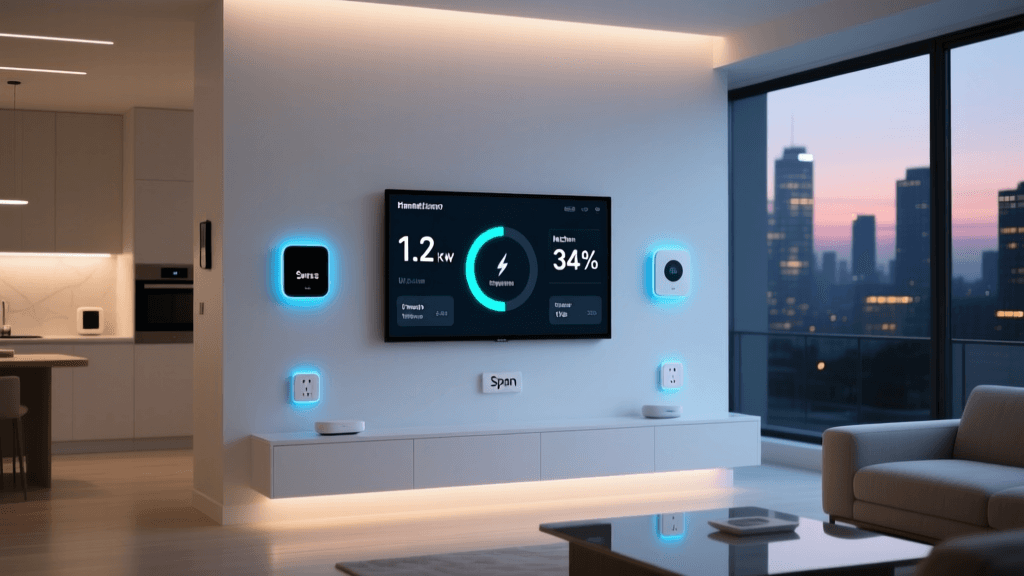
The first step in managing your home's energy is understanding where it goes. According to the U.S. Department of Energy's Home Energy Audits guide, identifying energy waste is the most critical step toward improving efficiency. Smart energy monitors bridge the gap between your electrical panel and your smartphone, providing real-time visibility into your home's power draw.
How Energy Monitors Work
Most whole-home energy monitors utilize Current Transformer (CT) clamps. These are non-invasive sensors that clip onto the main power lines entering your electrical panel. As alternating current (AC) flows through the wire, it generates a magnetic field. The CT clamp reads this magnetic field and translates it into a readable amperage and wattage metric, which is then transmitted via Wi-Fi to a cloud dashboard or local server.
There are two primary categories of energy monitors on the market today:
- Whole-Home Aggregate Monitors: Devices like the Sense Energy Monitor use machine learning algorithms to analyze the high-frequency electrical noise on your main lines. By identifying the unique "signatures" of different appliances (e.g., the specific voltage dip and harmonic signature of a microwave turning on), Sense attempts to disaggregate your data and tell you exactly which devices are running without needing individual circuit sensors.
- Circuit-Level Monitors: Devices like the Emporia Vue 2 or Span Panel take a more manual, highly accurate approach. They utilize multiple CT clamps (often 16 to 32 individual sensors) that attach to specific breaker circuits in your panel. This guarantees 100% accurate tracking of individual zones, such as your EV charger, water heater, or kitchen outlets, though it requires significantly more installation effort.
Installation and Safety Considerations
While smart plugs are strictly plug-and-play, energy monitors require you to open your main electrical panel. Safety Warning: Even if you turn off the main breaker, the service entrance wires coming from the utility grid remain live and carry lethal current. While many DIY enthusiasts install these devices themselves, hiring a licensed electrician for a 30-minute installation is highly recommended to ensure safety and code compliance. Furthermore, you must ensure your monitor is compatible with your electrical system (e.g., standard US split-phase 120V/240V vs. European three-phase systems).
Smart Thermostats: The Heavy Lifters of HVAC Efficiency
Heating and cooling account for nearly half of the average home's energy consumption. Therefore, upgrading to a smart thermostat offers the highest and fastest return on investment (ROI) in the smart home ecosystem. The U.S. Department of Energy notes that properly utilizing smart thermostat features can significantly reduce HVAC waste through automated setbacks and intelligent scheduling.
Key Features That Drive Savings
Modern smart thermostats do far more than allow you to change the temperature from your phone. They utilize a suite of sensors and algorithms to optimize runtime:
- Geofencing: By linking to your smartphone's GPS, the thermostat creates a virtual perimeter around your home. When the last person leaves the perimeter, the HVAC system automatically shifts to an "Eco" or "Away" setpoint, ensuring you never pay to heat or cool an empty house.
- Learning Algorithms: Devices like the Google Nest Learning Thermostat observe your manual adjustments over a week and build a customized schedule based on your actual habits, adjusting for thermal inertia (how long it takes your specific home to reach the target temperature).
- Room Sensors: The Ecobee SmartThermostat Premium utilizes remote Bluetooth and occupancy sensors placed in distant bedrooms. This solves the common problem of a thermostat located in a naturally warm hallway, ensuring the rooms you are actually occupying are kept comfortable, rather than overworking the system to satisfy a hallway sensor.
- Time-of-Use (TOU) Optimization: If your utility company charges different rates based on the time of day, advanced thermostats can pre-cool or pre-heat your home during off-peak hours when electricity is cheap, then coast through peak hours when rates spike.
Top Smart Thermostats Compared
| Device | Approx. Price | Key Energy Feature | Ecosystem Compatibility | C-Wire Required? |
|---|---|---|---|---|
| Google Nest Learning (4th Gen) | $240 - $280 | Auto-Schedule & AI Eco-Mode | Google Home, Matter, Alexa | Preferred (Power-sharing available) |
| Ecobee SmartThermostat Premium | $220 - $250 | SmartSensors & Time-of-Use | Apple HomeKit, Alexa, Google | Yes (or use included PEK kit) |
| Honeywell Home T9 | $170 - $200 | Multi-Room Focus Sensors | Alexa, Google Home, IFTTT | Yes (or use included adapter) |
| Amazon Smart Thermostat | $60 - $80 | Hunches & Energy Star Certified | Alexa (Ring integration) | Yes (C-Wire mandatory) |
Note: Always verify your HVAC system's wiring before purchasing. A "C-Wire" (Common Wire) provides continuous 24V power to the thermostat. If your home lacks one, you may need an adapter kit or professional rewiring.
Visualizing Your Power Consumption and Savings
Understanding where your money goes helps prioritize your smart home purchases. Based on aggregate user data and utility studies, here is how different smart device categories contribute to overall annual energy savings.
Chart Note: Savings vary wildly based on local climate, utility rates, and home insulation. Thermostats yield the highest raw dollar savings due to the massive energy draw of HVAC systems, while energy monitors yield indirect savings by exposing hidden waste.
Slaying Vampire Power with Smart Plugs
"Vampire power" or "phantom load" refers to the electricity consumed by electronic devices while they are turned off or in standby mode. The Lawrence Berkeley National Laboratory estimates that standby power accounts for 5% to 10% of residential energy use. Devices like desktop computers, gaming consoles, cable boxes, and older televisions constantly draw power to maintain network connections, internal clocks, or instant-on features.
Smart plugs, such as the TP-Link Kasa EP25 or Wemo Smart Plug, act as automated gatekeepers. By plugging your entertainment center or home office power strip into a smart plug, you can schedule the power to completely cut off at 1:00 AM and turn back on at 7:00 AM. Modern smart plugs also feature built-in energy monitoring, allowing you to track the exact wattage of the connected device and calculate its daily cost via the companion app.
The Matter Protocol and Smart Plugs
When purchasing smart plugs for energy management, look for devices that support the Matter protocol. Matter ensures local control without relying on distant cloud servers. This means your automated energy-saving routines will continue to execute even if your home internet connection drops, ensuring you never accidentally leave a space heater or window AC unit running while on vacation.
Building an Automated Energy Ecosystem
The true power of smart home energy management is realized when devices communicate with one another through a centralized hub (like Apple HomePod, Amazon Echo, or a Home Assistant server). Here are three advanced automation routines designed to slash your utility bills:
1. The "Last to Leave" HVAC Kill-Switch
Relying solely on a thermostat's internal motion sensor can lead to false "Away" states if you are reading quietly in a bedroom. Instead, create a routine that triggers only when all household members' smartphones have left the geofenced radius.
Trigger: Last user leaves geofence.
Action: Set Thermostat to Eco-Mode, turn off all smart plugs connected to entertainment centers, and ensure all smart lights are off.
2. Solar Production Syncing (For EV Owners)
If you have rooftop solar and an energy monitor that tracks solar export, you can automate your EV charger to only run when the house is generating surplus power.
Trigger: Energy Monitor reports Solar Export > 2000W for 10 continuous minutes.
Action: Turn on Smart Plug connected to Level 1 EV charger (or send API command to smart EV charger like ChargePoint).
Reverse Trigger: Solar Export drops below 500W (e.g., a cloud passes or evening begins).
Reverse Action: Pause EV charging to prevent pulling expensive power from the grid.
3. Peak-Rate Window AC Throttling
For homes without central air, window AC units are notorious energy hogs.
Trigger: Time reaches 4:00 PM (Utility Peak Pricing start) AND Outdoor Temperature > 85°F.
Action: Turn on smart ceiling fans to create a wind-chill effect, and raise the smart plug connected to the Window AC unit's "Eco" threshold by 3 degrees.
Calculating ROI: Do Smart Energy Devices Pay for Themselves?
Before investing hundreds of dollars into smart home infrastructure, it is vital to calculate the Return on Investment (ROI). The EPA ENERGY STAR program states that certified smart thermostats can save homeowners an average of 8% on heating and 10% on cooling bills annually. For a household spending $2,000 a year on HVAC, that equates to roughly $180 in annual savings, meaning a $200 smart thermostat pays for itself in just over a year.
Furthermore, many local utility providers offer aggressive rebate programs to incentivize grid stability. It is incredibly common for utility companies to offer instant rebates ranging from $50 to $100 for purchasing an ENERGY STAR-certified smart thermostat, and some even provide free or heavily discounted smart energy monitors or smart plugs in exchange for enrolling in "Demand Response" programs. In a Demand Response program, you grant the utility permission to slightly adjust your thermostat during rare grid-emergency heatwaves, earning you annual credits on your bill.
"Upgrading to a smart thermostat is one of the most cost-effective energy improvements a homeowner can make, often yielding a higher percentage return than physical insulation upgrades when factoring in utility rebates and behavioral automation." — SmartHomeDeck Energy Analysis Team
Privacy and Data Security in Energy Monitoring
While tracking your energy usage is financially beneficial, it does introduce privacy considerations. Detailed energy monitor data can theoretically reveal your daily routines—when you wake up, when you leave for work, and even what appliances you use for cooking. When selecting an energy monitor or thermostat, review the manufacturer's privacy policy. Opt for brands that offer local-data processing options (like Home Assistant integrations) or those that explicitly state they do not sell granular user data to third-party advertisers. Always enable Two-Factor Authentication (2FA) on your smart home accounts to prevent malicious actors from manipulating your HVAC system or monitoring your home's occupancy status.
Conclusion
Smart home energy management transforms your living space from a passive consumer of electricity into an active, responsive ecosystem. By combining the granular visibility of whole-home energy monitors with the automated efficiency of smart thermostats and the phantom-load elimination of smart plugs, you can drastically reduce your utility overhead. While the upfront costs and installation requirements can seem daunting, the combination of monthly utility savings, utility company rebates, and the environmental benefits make smart energy devices one of the most practical and impactful upgrades you can make to your home today.