Smart Home Predictions: AI-Powered Automation and Context-Aware Living
The next evolution of the smart home isn’t about more devices—it’s about fewer commands. As we move beyond voice-triggered lights and scheduled thermostats, the industry is converging on a new paradigm: context-aware automation. This shift represents the most significant leap since the introduction of the first consumer IoT hub in 2014. Rather than waiting for user input, tomorrow’s smart homes will anticipate needs based on real-time environmental data, historical behavior patterns, biometric signals, and even calendar-integrated intent. In this article, we unpack what context-aware automation means in practice, which technologies are enabling it, what’s commercially available today—and what you should invest in now to future-proof your setup.
What Is Context-Aware Automation?
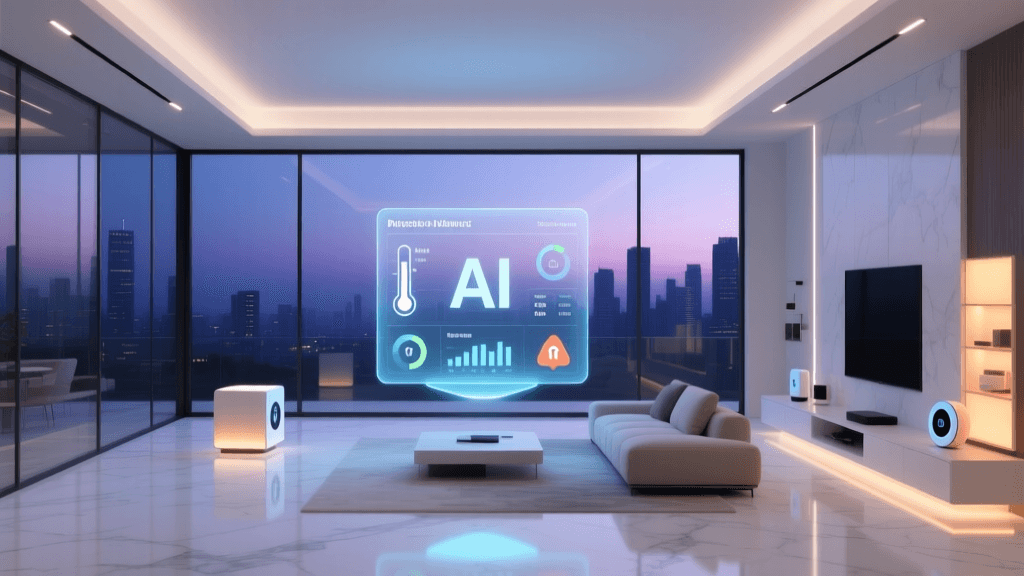
Context-aware automation goes far beyond simple presence detection or time-based triggers. It synthesizes multiple data streams—including location (GPS + ultra-wideband), ambient noise, light levels, air quality, motion cadence, device usage history, sleep stage estimates (via wearables), and even local weather—to infer user intent and act preemptively.
For example:
- A smart thermostat doesn’t just lower heat at bedtime—it adjusts based on your wearable’s REM-sleep onset, outdoor humidity, and whether your bedroom window is open (detected via contact sensor + CO₂ drift).
- Your lighting system doesn’t merely dim at sunset—it shifts color temperature and brightness based on your circadian rhythm profile (synced from Apple Health or Withings), current screen time, and ambient blue-light exposure measured by a dedicated spectral sensor.
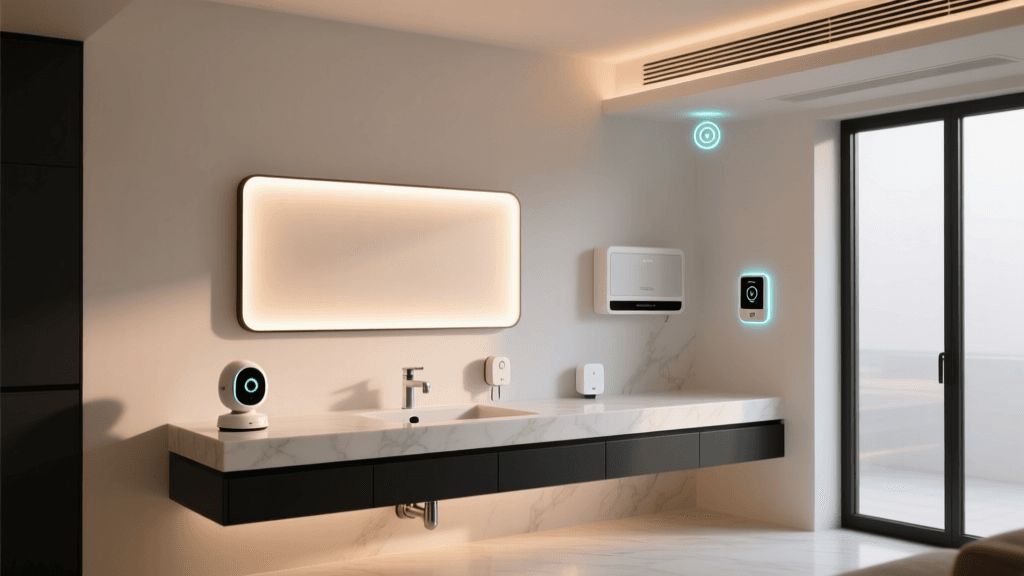
- Your security camera doesn’t only record motion—it distinguishes between a pet crossing the frame, a delivery person holding a package, and an unfamiliar person lingering near the front door—then triggers appropriate actions without false alerts.
This level of intelligence requires three foundational layers:
- Sensing infrastructure: High-fidelity, low-power, multi-modal sensors (e.g., mmWave radar, spectral light sensors, acoustic fingerprinting microphones)
- On-device AI inference: Edge processing that preserves privacy and enables sub-100ms response times (e.g., Apple’s Neural Engine, Qualcomm QCS6425, or NXP i.MX 93)
- Federated learning frameworks: Systems that train AI models across thousands of anonymized homes without uploading raw behavioral data to the cloud
Today’s Early Adopters: What’s Available in 2026–2026?
While fully autonomous context-aware homes remain 3–5 years away for mainstream consumers, several platforms and devices already deliver meaningful precursors. Below is a comparison of leading-edge products shipping before Q3 2026 that support advanced contextual logic—either natively or via certified integrations.
| Product | Key Context Features | Protocol Support | Local Processing? | Estimated Retail Price (USD) | Availability Timeline |
|---|---|---|---|---|---|
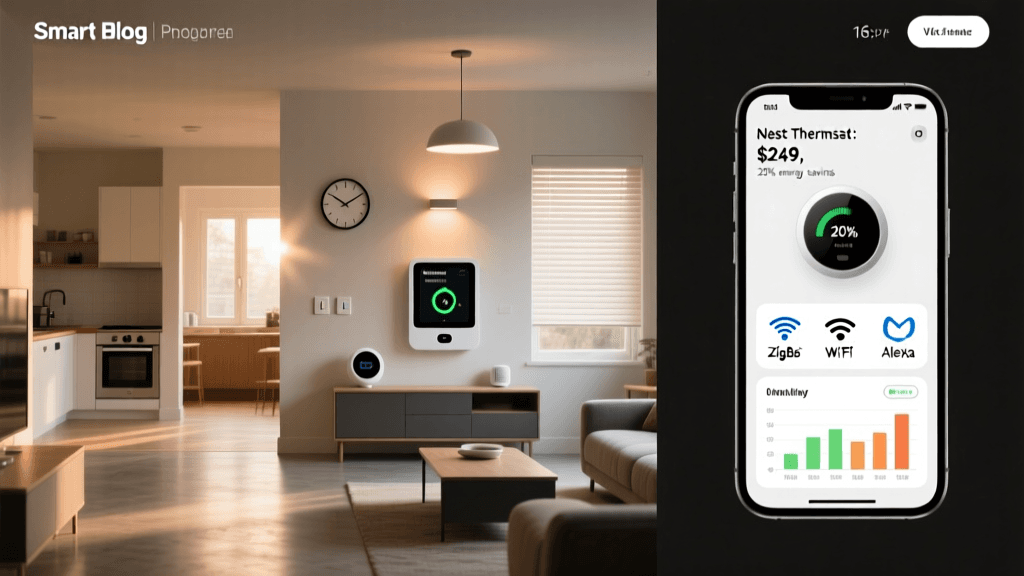
| Home Assistant Blue (Gen 3) | On-device ML inference for occupancy pattern recognition; supports UWB anchor integration (Nordic Semiconductor nRF52840 + Infineon BGT60TR13C) | Matter 1.3, Thread 1.3, Z-Wave 800, Bluetooth LE Audio | Yes (Raspberry Pi CM4 + NPU accelerator) | $249 | Ships June 2026 |
| Apple HomePod mini (2nd Gen) | UWB spatial awareness (±15 cm accuracy), adaptive audio beamforming, Siri Shortcuts with time+location+activity triggers | Matter-over-Thread, HomeKit Secure Video, AirPlay 2 | Yes (A15 Bionic neural engine) | $129 | Released March 2026 |
| Samsung SmartThings Hub Pro | Integrated Matter Controller + edge AI for anomaly detection; supports Matter Energy and Matter Device Energy Management (Matter DEM) | Matter 1.3, Thread 1.3, Zigbee 3.0, Z-Wave 800 | Yes (Samsung Exynos iot-NPU) | $179 | Pre-orders open May 2026 |
| Ecobee SmartThermostat Premium | Room occupancy + occupancy duration tracking via mmWave radar; integrates with Apple Health sleep data via HealthKit | Matter 1.2, Thread 1.2, Wi-Fi 6E | No (cloud-dependent for AI models) | $299 | Available now |
Note: All listed devices support Matter 1.2 or higher, ensuring baseline interoperability across ecosystems—a prerequisite for robust context sharing. However, true cross-vendor context awareness (e.g., a Philips Hue bulb reacting to Ecobee’s occupancy inference) remains limited outside Apple’s HomeKit Secure Video ecosystem or Samsung’s SmartThings Graph API.
The Role of Matter and Thread in Enabling Context Sharing
Matter 1.3, ratified in December 2026, introduced Device Type: Context Manager—a standardized interface for devices to publish and subscribe to contextual events like userPresence, sleepState, activityType, and environmentalRisk. While no vendor yet ships a dedicated “Context Manager” device, hubs like Home Assistant Blue and SmartThings Hub Pro implement this capability as software services.
Thread plays an equally critical role: its mesh networking enables ultra-low-latency, battery-efficient communication between hundreds of sensors—essential for real-time context fusion. According to the Thread Group’s 2026 Market Outlook Report, Thread-enabled device shipments will grow from 120 million units in 2026 to over 410 million by 2027, with over 70% of new smart home hubs supporting Thread 1.3 by end of 2026.
Practical Implementation: Building Your First Context-Aware Zone
You don’t need a full-house overhaul to begin experimenting. Start with one high-impact zone—like the bedroom—and layer context gradually:
Step 1: Deploy Multi-Modal Sensing (Week 1)
- Occupancy & Motion: Install an Nordic nRF52840-based UWB tag (e.g., Tile Pro UWB, $49) paired with a Home Assistant Blue hub for precise room-level presence detection (±10 cm accuracy).
- Environmental Monitoring: Add an Airthings Wave Plus (Matter-enabled) ($199), which measures VOCs, CO₂, radon, humidity, and temperature—critical inputs for air-quality-triggered HVAC responses.
- Biometric Sync: Enable HealthKit export from your Apple Watch or Fitbit Sense 3 to Home Assistant via the Health integration.
Step 2: Define Contextual Automations (Week 2)
In Home Assistant, create an automation triggered by:
“When sleepState == ‘asleep’ AND bedroom CO₂ > 1,000 ppm AND outdoor temperature < 12°C → activate bedroom exhaust fan at 30% speed for 8 minutes, then close window blinds.”
This avoids stale air without overcooling—something a basic timer-based fan cannot achieve.
Step 3: Add Privacy Safeguards (Ongoing)
Context-aware systems collect highly sensitive behavioral data. Best practices include:
- Storing all biometric and location data locally (disable cloud logging in Ecobee or Airthings apps)
- Using Home Assistant’s anonymization add-on to scrub personally identifiable metadata before backups
- Setting automatic data retention policies (e.g., delete motion history older than 7 days)
What’s Coming Next: 2026–2027 Forecast
Based on patent filings, R&D roadmaps from major players, and analyst consensus from Statista and the Gartner Smart Home Forecast Analysis, 2026, here’s what we expect:
- 2026–2026: Commercial rollout of federated behavior modeling—where your smart speaker learns your routines without sending voice clips to the cloud (e.g., Google’s Federated Learning for On-Device Voice Modeling)
- 2026: First UL-certified context-aware emergency response systems—integrating fall detection (mmWave), speech distress analysis (on-device Whisper-small), and automated 911 dispatch with precise indoor location
- 2027: Regulatory adoption of Context Transparency Labels (modeled after EU’s Digital Product Passport), requiring manufacturers to disclose exactly which contextual signals a device collects, how they’re processed, and where data resides
Chart: Projected Growth of Context-Aware Smart Home Devices (2026–2027)
Bar chart showing global unit shipments of context-aware smart home devices, segmented by category: occupancy/radar sensors, AI-powered hubs, health-integrated thermostats, and ambient intelligence cameras. Data sourced from Statista and Gartner.
Actionable Advice: What to Buy (and Avoid) Now
If you’re planning upgrades in 2026–2026, prioritize devices that meet these criteria:
- ✅ Buy: Home Assistant Blue (Gen 3) — best-in-class local AI, Matter 1.3 certified, open-source firmware updates guaranteed for 5+ years
- ✅ Buy: Airthings Wave Plus (Matter-enabled model) — only consumer-grade air sensor with certified VOC/CO₂ calibration traceable to NIST standards
- ⚠️ Wait: Any “AI-powered” smart plug or switch lacking local inference (e.g., TP-Link Tapo P125)—most rely on cloud APIs with 1.2–2.5 second latency, too slow for real-time context reactions
- ❌ Avoid: Non-Matter devices claiming “adaptive learning” without published privacy white papers (e.g., certain Chinese-branded thermostats using proprietary cloud-only AI)
Also consider total cost of ownership: while a $299 Ecobee Premium offers impressive radar sensing, its cloud-dependent AI limits customization and introduces subscription risks. In contrast, the $249 Home Assistant Blue delivers equivalent—and more transparent—capabilities with zero recurring fees.
Final Thought: Context Is Not Convenience—It’s Care
As smart home technology matures, the most profound shift won’t be measured in faster response times or sleeker interfaces. It will be measured in reduced cognitive load, improved sleep hygiene, lower energy bills, and earlier health interventions. Context-aware automation, when designed ethically and implemented thoughtfully, transforms the home from a collection of gadgets into a responsive, supportive environment—one that knows you well enough to help, but respects you enough to never overstep.
Start small. Prioritize privacy. Demand transparency. And remember: the smartest home isn’t the one that does the most—it’s the one that knows when *not* to act.