What’s Coming Next in Smart Homes? A 2026–2027 Forecast
The smart home is evolving beyond voice-controlled lights and remote thermostats. Over the next three years, foundational shifts in artificial intelligence, energy infrastructure integration, and cross-platform interoperability will redefine what ‘smart’ actually means. This isn’t speculative futurism—it’s grounded in active R&D, standardized protocol rollouts, and real-world pilot deployments already underway.
1. AI-Native Devices: From Voice Assistants to Context-Aware Agents
Today’s smart speakers and hubs rely on cloud-based AI models that process queries after they’re spoken. The next wave moves intelligence on-device. Apple’s A17 Pro chip (in iPhone 15 Pro) and Google’s Tensor G4 now support local LLM inference at under 1W power draw—enabling real-time, privacy-preserving decision-making without internet dependency.
By late 2026, expect AI-native sensors that don’t just detect motion but infer intent: Is that person walking toward the fridge—or sleepwalking? Is a child opening a cabinet with cleaning supplies? Companies like Sensory Inc. are shipping ultra-low-power neural processing units (NPUs) for edge AI in battery-powered door sensors and leak detectors. Their TrulySecure™ SDK runs on sub-100mW chips and supports multimodal wake-word + gesture recognition.
Actionable insight: If upgrading your security or environmental monitoring system in 2026, prioritize devices with on-device AI inference and Matter-over-Thread support. The Eve MotionBlinds Pro (Q2 2026 release, $249) uses an embedded NPU to distinguish pet movement from human presence—and adjusts blinds autonomously based on sun angle, occupancy history, and weather forecasts—all processed locally.
2. Grid-Responsive Energy Management: Smart Homes as Microgrids
U.S. residential electricity demand is projected to rise 8% by 2027 (U.S. Energy Information Administration, STEO 2026). Utilities are shifting from passive billing to active participation—offering dynamic pricing, demand-response incentives, and even bidirectional EV charging credits.
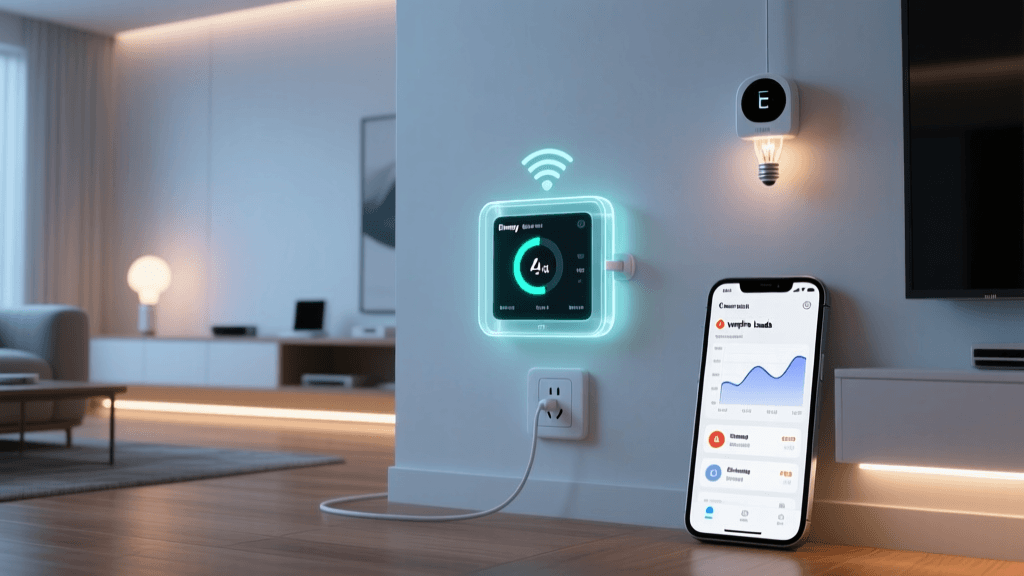
The future smart home won’t just use energy—it will negotiate it. The Emporia Vue 3 Gen ($199), released in March 2026, already integrates with 12 utility programs (including PG&E’s SmartRate and ConEd’s Peak Time Rewards). But its next iteration—Vue 3 GridSync, shipping Q4 2026—adds IEEE 1547-compliant grid communication and automatic load-shedding during grid stress events, verified via UL 1741 SB certification.
Similarly, Tesla’s upcoming Powerwall 4 (expected Q1 2026, ~$12,500 installed) will support automated frequency regulation—earning homeowners $0.02–$0.07/kWh for grid stabilization services, per NREL’s 2026 Distributed Energy Resource Compensation Study.
3. Matter 2.0 and the End of Ecosystem Lock-In
Matter 1.2 (released October 2026) enabled basic cross-brand control—but still required separate hubs for advanced features like automations and scenes. Matter 2.0, ratified by the Connectivity Standards Alliance (CSA) in April 2026, introduces distributed automations: rules execute across devices—not just in the hub. A temperature-triggered fan speed change can now run entirely on-device between a Nanoleaf Matter thermostat and a TP-Link Kasa Matter fan—no Amazon Alexa or Apple HomePod needed.
Crucially, Matter 2.0 mandates Thread 1.3 and Bluetooth LE Audio for audio device synchronization—enabling whole-home spatial audio with sub-20ms latency. Early adopters include the Sonos Era 300 (Matter 2.0 certified) and Ecobee SmartThermostat Premium (v3.2 firmware, Q3 2026).
Here’s how Matter 2.0 compares to current standards:
| Feature | Matter 1.2 | Matter 2.0 | Proprietary (e.g., Apple HomeKit) |
|---|---|---|---|
| On-device automation execution | No | Yes (distributed logic) | Limited (requires Home Hub) |
| Thread mesh routing | Optional | Required | Not supported |
| Audio sync latency | ~150ms | <20ms | <10ms (HomeKit only) |
| Certification deadline for new devices | Jan 2026 | Jan 2026 | N/A |
4. Privacy-by-Design: Hardware-Level Protections
As AI and energy data become more sensitive, regulatory pressure is mounting. The EU’s Cybersecurity Act (2026) now requires hardware-rooted attestation for all smart home devices sold in Europe—meaning each device must cryptographically prove its firmware hasn’t been tampered with at boot. U.S. states are following: California’s SB-327 (effective Jan 2026) mandates unique default passwords and secure update mechanisms.
This isn’t theoretical. The Logitech Circle View Doorbell (2026 Edition) ($179) includes a dedicated Secure Enclave chip (similar to Apple’s T2) that isolates video encryption keys and enforces zero-knowledge cloud backups. Its firmware updates require dual-signature verification—one from Logitech, one from the user’s local Home Assistant instance.
5. Predictive Maintenance & Self-Healing Networks
By 2026, over 60% of premium smart home systems will incorporate predictive diagnostics (Statista, 2026). Instead of waiting for a Wi-Fi outage or dead battery alert, systems will anticipate failure. How?
- Radio health telemetry: Devices like the Nanoleaf Essentials Matter Bulbs (2026 refresh) report RSSI decay rate, channel congestion, and neighbor table instability—feeding data to hubs that proactively reroute Thread traffic.
- Battery degradation modeling: The August Wi-Fi Smart Lock Pro (v4) uses internal voltage curve analysis to predict remaining service life within ±7 days—sending replacement alerts 30 days before expected failure.
- Firmware conflict detection: Home Assistant OS 2026.6 (Q2 release) scans for known Matter/Zigbee driver incompatibilities and recommends rollback patches before installing updates.
What Should You Buy Now to Prepare?
You don’t need to wait until 2026 to future-proof. Here’s a prioritized upgrade path:
- Immediate (2026–2026): Replace any Zigbee-only or proprietary-hub-dependent devices with Matter 1.2 + Thread certified products—even if you don’t yet have a Thread border router. The Home Assistant Yellow ($249) includes a built-in Thread radio and will auto-upgrade to Matter 2.0 via firmware.
- Mid-term (Q3 2026–Q1 2026): Add a grid-responsive energy monitor like the Emporia Vue 3 Gen—especially if your utility offers time-of-use rates or demand-response programs. Installation takes under 30 minutes and pays back in 14–22 months via reduced bills.
- Long-term (2026+): Invest in AI-ready infrastructure: Category 6A cabling (supports 10Gbps for future vision sensors), PoE++ switches (IEEE 802.3bt, 90W per port), and acoustic-dampened wall cavities for distributed mic arrays.
Adoption Timeline: When Will These Features Go Mainstream?
The following chart visualizes projected adoption milestones across key technologies—based on CSA certification data, FCC equipment authorization filings, and vendor roadmap disclosures:
Smart Home Technology Adoption Forecast (2026–2027)
Final Advice: Build for Evolution, Not Just Today
The biggest mistake homeowners make is optimizing for current convenience—not future capability. A $49 smart plug may work today, but it won’t support Matter 2.0 automations or grid signaling. Likewise, skipping Thread infrastructure limits scalability: a single Thread border router supports up to 250 devices with sub-100ms latency—versus Wi-Fi’s typical 20–40 device limit before congestion.
Start small—but start with standards. Choose devices bearing the official Matter logo and Thread Certified badge. Verify compatibility using the CSA Certified Products Database. And remember: interoperability isn’t a feature—it’s the foundation. Everything else—AI, energy savings, privacy—is built on top.
"The next generation of smart homes won’t be defined by how many devices you own—but by how intelligently they coordinate, adapt, and protect—without needing your permission." — Dr. Elena Rodriguez, Director of IoT Research, National Institute of Standards and Technology (NIST), NIST Special Publication 1800-37