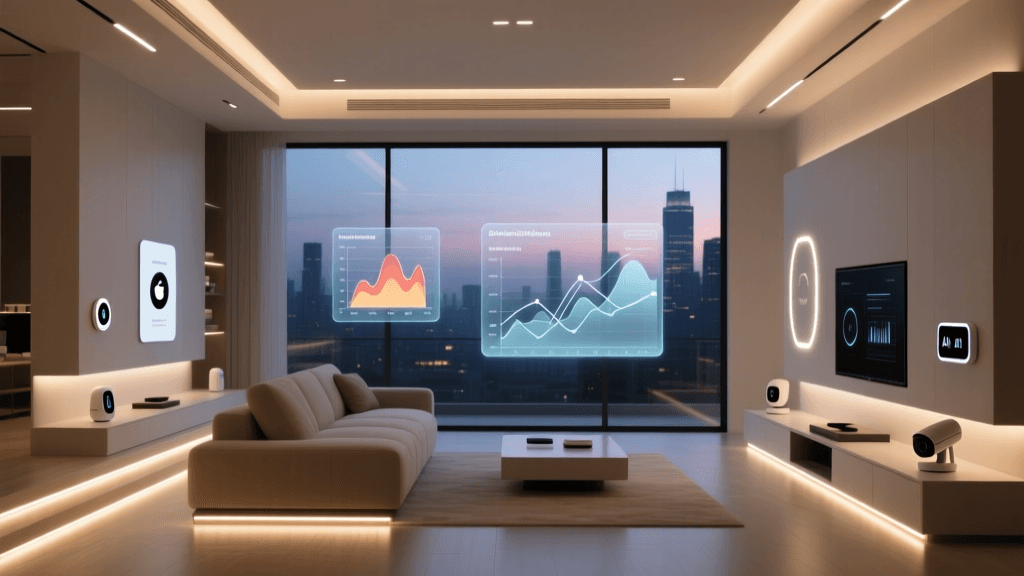
The Shift from Reactive to Predictive Smart Homes
For the past decade, the smart home industry has been defined by reactivity. You press a button, a light turns on. You set a schedule, the thermostat adjusts. You cross a digital geofence, and the front door unlocks. While these automations offer convenience, they fundamentally rely on manual input and rigid, pre-programmed routines. The next frontier of the smart home market is a radical departure from this paradigm: the transition from reactive automation to predictive, ambient intelligence.
As artificial intelligence (AI) and machine learning (ML) models become small enough to run on local edge devices, smart homes are evolving into proactive environments. Instead of waiting for a command, the home anticipates your needs based on historical behavior, biometric feedback, and real-time environmental data. This shift is not just a software update; it represents a fundamental restructuring of the smart home hardware market, sensor technologies, and data privacy standards.
What is Ambient Intelligence (AmI) in the Smart Home?
Ambient Intelligence (AmI) refers to electronic environments that are sensitive and responsive to the presence of people. In a mature AmI smart home, the technology recedes into the background. You do not interact with an app or a voice assistant; the home simply adapts to you. The lighting adjusts its color temperature based on the time of day and your circadian rhythm. The HVAC system pre-cools a specific zone because it has learned that you typically enter that room at 6:00 PM after a workout.
This requires a massive upgrade in sensor fusion. Legacy smart homes rely on single-point data (e.g., a door sensor opening). Future smart homes utilize multi-modal sensor arrays that combine millimeter-wave (mmWave) radar, thermal imaging, and acoustic monitoring to build a real-time, three-dimensional understanding of the home's occupancy and the occupants' physical states.
Market Trends: AI and the Matter Protocol Adoption
The widespread adoption of predictive AI in the home is being accelerated by the unification of device communication protocols. Historically, fragmented ecosystems (Zigbee, Z-Wave, Wi-Fi, proprietary RF) created data silos that made comprehensive AI training impossible. The introduction of the Matter protocol, backed by the Connectivity Standards Alliance (CSA), is breaking down these walls. By providing a unified, IP-based communication layer, Matter allows local hubs to ingest standardized data from hundreds of devices, providing the rich datasets required for local machine learning models.
Market analysis indicates a rapid expansion in AI-integrated home automation. The convergence of local processing power and unified protocols is driving significant investment.
AI Smart Home Market Growth
Key Technologies Driving the Future
Edge Computing and Local AI
Cloud-dependent AI is too slow and privacy-invasive for the ambient home of the future. If a sensor detects a fall, or if a room needs immediate climate adjustment, the system cannot afford the 400-millisecond latency of a round-trip to a cloud server. Edge computing brings AI processing directly to the local hub. Devices like the Hubitat Elevation Model C-8 (approx. $160) and the Apple HomePod Mini (approx. $99) are increasingly utilizing local neural engines to process routines and sensor data without an internet connection. This ensures that predictive automations fire in under 20 milliseconds, creating a truly seamless, ambient experience.
Advanced Sensor Fusion: The Rise of mmWave Radar
Passive Infrared (PIR) motion sensors have been the standard for occupancy detection for years. However, PIR only detects gross physical movement. If you sit still on the couch reading a book, a PIR sensor assumes the room is empty and turns off the lights. The future belongs to millimeter-wave (mmWave) radar sensors operating in the 60GHz frequency band.
Products like the Aqara Presence Sensor FP2 (approx. $75) and the Everything Presence One (approx. $110) utilize mmWave technology to detect micro-movements, including the rise and fall of a human chest during breathing. Furthermore, these sensors do not just detect presence; they map the room in a grid, allowing users to define up to 30 distinct zones. This means your home knows the exact difference between you sitting at your desk versus lying on the bed, enabling hyper-specific predictive automations.
Actionable Guide: Preparing Your Home for the AI Era
To transition your home from a reactive setup to a predictive, ambient environment, you must upgrade your foundational hardware. Below is a strategic comparison of legacy technologies versus the future standards required for AI-driven automation.
| Technology Category | Legacy Standard | Future Standard (AI-Ready) | Estimated Cost Range | Top Product Examples |
|---|---|---|---|---|
| Occupancy Sensing | PIR (Passive Infrared) | mmWave Radar (60GHz) with Zone Mapping | $65 - $120 | Aqara FP2, Everything Presence One, SwitchBot Motion Sensor |
| Processing Hub | Cloud-Dependent Wi-Fi Hubs | Local Edge Hubs with Thread/Matter Support | $100 - $200 | Hubitat C-8, Apple TV 4K, SwitchBot Hub 2 |
| Climate Control | Programmable Smart Thermostats | Predictive HVAC with Multi-Zone Sensor Fusion | $150 - $250 | Ecobee Smart Thermostat Premium, Flair Smart Vents |
| Lighting Control | Smart Bulbs (Wi-Fi/Bluetooth) | Circadian Rhythm Tunable LEDs (Zigbee/Matter) | $30 - $80 per fixture | Philips Hue White Ambiance, Nanoleaf Essentials Matter |
Step-by-Step Upgrade Path
- Step 1: Establish a Local Brain. Migrate away from purely cloud-based ecosystems. Invest in a local hub that supports Matter and Thread protocols to ensure low-latency, offline-capable processing.
- Step 2: Replace PIR with mmWave. Identify high-traffic and high-stillness areas (living rooms, home offices, bathrooms). Replace standard motion sensors with mmWave radar sensors to provide your AI hub with continuous, accurate occupancy data.
- Step 3: Implement Environmental Baselines. Use smart plugs with energy monitoring (e.g., Eve Energy, $40) to track appliance usage patterns. Feed this data into your hub's rule engine to identify energy-wasting anomalies.
Energy Management in the Predictive Home
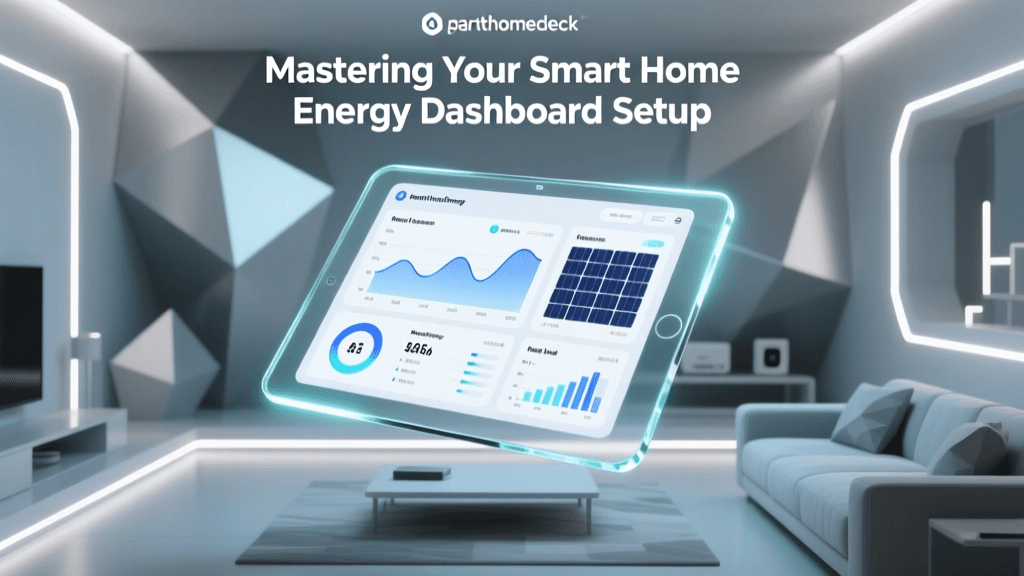
One of the most significant market drivers for ambient AI is energy efficiency. As utility companies implement dynamic time-of-use (TOU) pricing, predictive homes can automatically manage loads. An AI-driven home does not just turn off the AC when you leave; it pre-cools the home during off-peak hours when electricity is cheap, utilizing the home's thermal mass to maintain comfort during peak pricing hours. By integrating smart electrical panels, such as the Span Smart Panel (approx. $3,500 installed), the home's AI can prioritize essential circuits during grid constraints or solar-battery depletion events, ensuring seamless energy resilience.
Privacy and Security in the Age of Predictive AI
The transition to ambient intelligence requires a home to know everything about its occupants: when they sleep, where they sit, and their daily routines. This level of granular data collection raises severe privacy concerns. The National Institute of Standards and Technology (NIST) has continually emphasized the critical need for robust security frameworks in IoT environments, noting that the proliferation of connected sensors vastly expands the attack surface for malicious actors.
To mitigate these risks, the industry is pivoting toward Local-First Privacy Architectures. In a properly configured predictive home, raw sensor data (like mmWave point clouds or acoustic signatures) is processed locally on the edge hub. The AI extracts the intent or state (e.g., 'Room Occupied', 'User Sleeping') and immediately discards the raw data. Only anonymized state changes are synced to the cloud for remote app access, ensuring that your behavioral biometrics never leave your local network. When purchasing new AI-enabled devices, consumers must prioritize brands that explicitly advertise local processing and end-to-end encryption for any necessary cloud telemetry.
Conclusion
The smart home industry is maturing from a collection of novelty gadgets into a cohesive, intelligent infrastructure. The convergence of the Matter protocol, edge computing, and advanced mmWave sensor fusion is laying the groundwork for Ambient Intelligence. By proactively upgrading your home's local processing capabilities and occupancy sensors, you can future-proof your investment, drastically reduce your energy footprint, and experience the true, frictionless promise of the smart home.