The Dawn of the Cognitive Smart Home
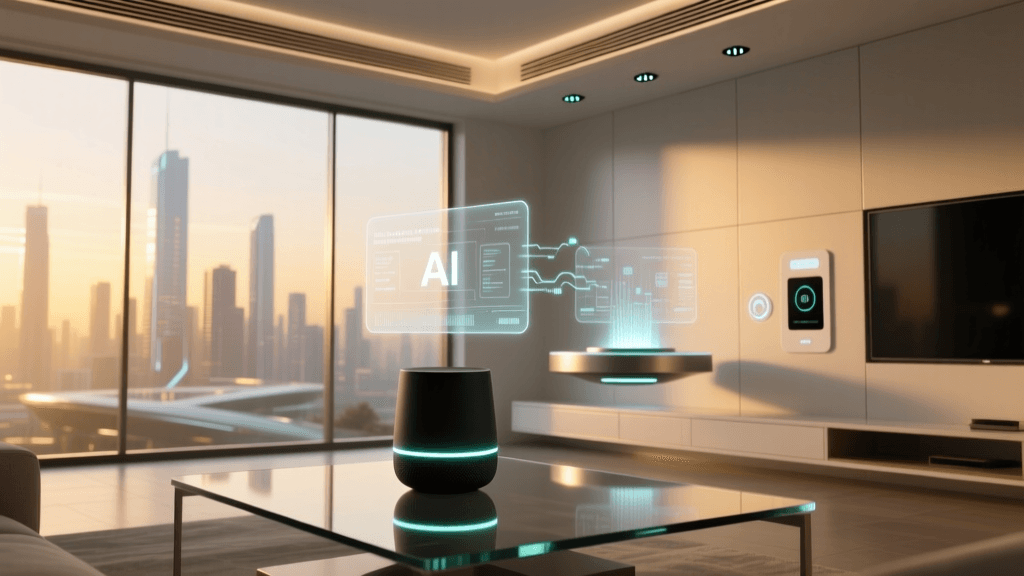
For the past decade, the smart home industry has been defined by connectivity. We have successfully figured out how to connect light bulbs, thermostats, and door locks to the internet, allowing users to control their environments from their smartphones. However, as we look toward the next generation of home automation, the paradigm is shifting dramatically. We are moving from a 'connected' era to a 'cognitive' era. The future of smart home technology is not just about remote control; it is about localized intelligence, unified communication standards, and proactive ambient computing.
Two massive technological shifts are driving this evolution: the migration from cloud-based processing to Edge AI, and the universal adoption of the Matter protocol over Thread mesh networks. Together, these innovations promise to solve the biggest pain points of modern smart homes—latency, privacy vulnerabilities, ecosystem fragmentation, and internet dependency. In this comprehensive guide, we will explore what is coming next in the smart home space, backed by industry standards and actionable advice on how to future-proof your investment today.
Edge AI: Bringing the Brain Home
Historically, smart home devices have relied heavily on cloud computing. When you speak to a voice assistant or trigger a motion-activated camera, the data is sent to a remote server farm, processed, and the result is sent back to your device. While this allows for powerful machine learning models, it introduces significant latency, requires a constant internet connection, and raises severe privacy concerns.
Edge AI changes this dynamic by processing data locally on the device itself or on a local hub within your home. By leveraging specialized neural processing units (NPUs) and tensor chips, devices can now perform complex tasks like facial recognition, natural language processing, and anomaly detection without a single byte of data leaving your local network.
The Core Benefits of Edge Processing
- Ultra-Low Latency: Local processing reduces response times from hundreds of milliseconds to mere single digits. A smart lock utilizing Edge AI can recognize a face and unlock the door in under 50 milliseconds, compared to the 800+ milliseconds required for cloud verification.
- Enhanced Privacy: With Edge AI, sensitive data like video feeds and voice recordings never touch external servers. The device extracts the metadata (e.g., 'person detected') and discards the raw footage locally, ensuring your privacy remains intact.
- Offline Reliability: When your internet service provider experiences an outage, an Edge AI-powered home continues to function. Automations, security alarms, and local voice commands operate seamlessly on your local network.
'The transition to Edge AI in IoT devices represents a fundamental shift in how we handle consumer data. By keeping processing local, manufacturers can deliver advanced AI features while inherently complying with stringent data privacy frameworks.' — Industry Analysis on IoT Privacy Architectures
Hardware Leading the Edge AI Revolution
Major tech companies are already embedding Edge AI silicon into their hardware. Amazon's AZ1 Neural Edge processor, found in newer Echo devices, processes speech recognition locally. Apple's HomePod and Apple TV 4K utilize the Neural Engine to process Siri requests and HomeKit Secure Video locally. Similarly, Google's Tensor chips in Nest devices handle on-device machine learning for audio and video analytics, drastically reducing the need for premium cloud subscriptions.
Matter and Thread: The End of the Walled Garden
While Edge AI solves the intelligence and privacy bottleneck, the Matter protocol solves the fragmentation problem. Developed by the Connectivity Standards Alliance (CSA), Matter is an open-source, royalty-free standard that allows devices from different manufacturers to communicate seamlessly. Whether you buy a smart plug from TP-Link, a lock from Yale, or a thermostat from Ecobee, Matter ensures they will work together natively within Apple Home, Amazon Alexa, Google Home, and Samsung SmartThings.
The Role of Thread in the Matter Ecosystem
Matter itself is an application layer, meaning it needs a transport protocol to move data. While it can run over Wi-Fi and Ethernet for high-bandwidth devices like cameras, its true power is unlocked via Thread networking. Thread is a low-power, wireless mesh networking protocol based on IPv6 and the 802.15.4 standard.
Unlike Zigbee or Z-Wave, which require proprietary, manufacturer-specific hubs to bridge the gap between the mesh network and your IP network, Thread utilizes 'Border Routers.' Devices you likely already own—such as the Apple TV 4K, Nest Hub Max, or Amazon eero routers—contain Thread radios. They act as Border Routers, seamlessly bridging your Thread mesh devices directly to your local IP network without a single point of failure. If one Border Router goes offline, the mesh dynamically reroutes through another.
Data Visualization: The Latency Advantage
To understand the sheer performance leap that Edge AI and local Matter/Thread networks provide over legacy cloud-dependent setups, consider the latency differences across common smart home device categories. The chart below illustrates the average response times (in milliseconds) when comparing cloud-dependent architectures to localized Edge AI and Thread architectures.
Three Major Predictions for the Next Decade
As Edge AI and Matter mature, they will lay the groundwork for entirely new categories of home automation. Based on current R&D trajectories and silicon roadmaps, here are three definitive predictions for the future of the smart home.
1. Ambient Computing and Zero-UI Interfaces
The future smart home will not require you to bark commands at a speaker or tap an app. Ambient computing relies on a network of localized sensors—mmWave radar, LiDAR, and thermal imaging—to understand the context of a room. Edge AI will process this sensor fusion locally to anticipate your needs. If the system detects you reading a book in the living room at 8 PM, it will automatically adjust the color temperature of the lights to 2700K, lower the blinds, and set the thermostat to your preferred evening baseline. The interface becomes the environment itself, reacting to human presence and behavior without explicit input.
2. Predictive Energy Arbitrage
As residential solar, battery storage (like the Tesla Powerwall), and EV chargers become ubiquitous, the smart home will become an active participant in the energy grid. According to the U.S. Department of Energy, smart home energy management systems are pivotal for future grid stability. In the coming years, local AI hubs will engage in predictive energy arbitrage. By analyzing local weather patterns, your historical usage, and real-time utility pricing, your home will automatically decide when to store energy in your battery, when to power your home from the grid, and when to sell excess solar back to the utility company during peak pricing hours—all executed locally to ensure immediate response to grid signals.
3. Biometric and Health-First Environments
Privacy-preserving Edge AI will enable the home to become a passive health monitor. Wi-Fi sensing technology and mmWave radar can track breathing rates, sleep cycles, and even detect falls without the use of invasive cameras. Because this highly sensitive biometric data is processed entirely on the Edge, consumers will be more willing to adopt these technologies. The home will be able to alert emergency contacts if an elderly resident experiences a fall, or adjust the HVAC system's humidity and air filtration based on the real-time respiratory needs of the occupants.
Comparison Table: Cloud vs. Edge Smart Home Architectures
To summarize the shift in smart home paradigms, the table below compares the legacy cloud-dependent model with the emerging Edge AI and Matter/Thread model across critical performance metrics.
| Feature | Legacy Cloud Architecture | Future Edge AI & Matter Architecture |
|---|---|---|
| Response Latency | High (300ms - 1500ms) | Ultra-Low (10ms - 50ms) |
| Internet Dependency | Critical (Fails offline) | Minimal (Local automations persist) |
| Data Privacy | Low (Data stored on corporate servers) | High (Raw data stays on local network) |
| Ecosystem Compatibility | Fragmented (Proprietary hubs required) | Unified (Matter ensures cross-brand support) |
| Network Topology | Star (All devices connect to Wi-Fi router) | Mesh (Thread devices route through each other) |
| Subscription Costs | High (Cloud storage & AI features paywalled) | Low (Local AI processing is free) |
How to Future-Proof Your Smart Home Today
You do not need to wait five years to begin transitioning to this new architecture. By making strategic purchasing decisions today, you can build a foundation that will seamlessly integrate with the cognitive smart home of tomorrow.
1. Invest in Thread Border Routers
Before buying Thread-enabled sensors and smart locks, ensure you have the infrastructure to support them. Upgrade your primary smart home hubs to devices that double as Thread Border Routers. The Apple TV 4K (3rd Gen with Wi-Fi + Ethernet), the Google Nest Hub (2nd Gen), and Amazon Echo (4th Gen) all contain Thread radios. If you use a mesh Wi-Fi system like the eero 6 or eero Pro 6E, your router network itself acts as a massive, home-wide Thread Border Router.
2. Prioritize Matter-Certified Devices
When shopping for new smart home gear, look for the official Matter logo on the packaging. While older Zigbee and Z-Wave devices will continue to work via legacy bridges, Matter-over-Thread devices represent the future standard. Brands like Nanoleaf, Eve Systems, and Aqara are already shipping Matter-native devices that offer instant local control and unparalleled reliability.
3. Transition to Local Control Hubs
For advanced users willing to take full control of their Edge AI environment, investing in a local smart home server is the ultimate future-proofing step. Platforms like Home Assistant (running on a Raspberry Pi or an Intel NUC) allow you to integrate thousands of devices, run local AI add-ons for object detection (like Frigate for security cameras), and execute complex automations with zero cloud dependency. This ensures that no matter what happens to corporate cloud services, your home's intelligence remains entirely in your hands.
Conclusion
The smart home is growing up. The novelty of turning on a light bulb with a smartphone is fading, replaced by a demand for reliability, speed, and uncompromising privacy. The convergence of Edge AI and the Matter protocol over Thread networks is not just a minor iterative update; it is a fundamental rewiring of how our living spaces interact with us. By shifting the 'brain' of the smart home from distant server farms to the edge of the network, and by tearing down the walls between competing ecosystems, the industry is finally delivering on the true promise of home automation. By understanding these shifts and investing in the right local infrastructure today, you can ensure your home is ready for the intelligent, ambient, and secure future that is just around the corner.