Introduction to Ambient Health Monitoring
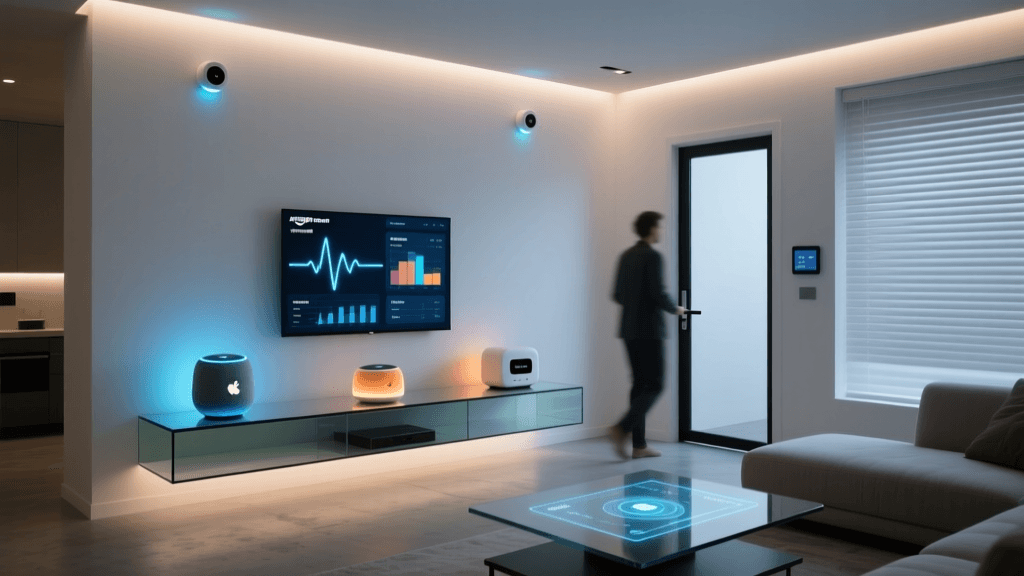
The smart home landscape is undergoing a profound transformation. While early adoption focused on convenience—like turning off lights with voice commands or adjusting thermostats remotely—the next frontier is deeply personal. Emerging smart home wellness devices are shifting the focus from home automation to human health. This concept, known as "ambient health monitoring," involves using non-invasive, passive sensors integrated into the home environment to track vital signs, sleep quality, and environmental hazards without requiring the user to wear a device.
For years, the health tracking market has been dominated by wearables like the Apple Watch, Oura Ring, and Fitbit. While highly effective, wearables suffer from compliance issues; users often forget to charge them, find them uncomfortable at night, or simply experience "tracking fatigue." Ambient wellness devices solve this problem by embedding health monitoring directly into the furniture, walls, and infrastructure of your home. In this comprehensive guide, we will explore the most promising emerging categories of smart home wellness devices, how they work, what they cost, and how to integrate them into your existing smart home ecosystem.
The Shift from Wearables to Ambient Tech
According to research from Johns Hopkins Medicine, while wearable sleep trackers are popular, their accuracy can vary, and user compliance drops significantly over time. Ambient technology bypasses the need for user interaction. By utilizing advanced sensor arrays—such as millimeter-wave (mmWave) radar, bio-impedance scales, and laser-scattering particulate sensors—these devices collect continuous, longitudinal data in the background. This passive data collection provides a more holistic view of your health trends over months and years, rather than just isolated daily snapshots.
Key Categories of Smart Wellness Devices
1. Sleep Tracking Radars and Mats
Sleep is the cornerstone of wellness, and ambient sleep trackers have become incredibly sophisticated. Instead of wearing a smartwatch to bed, users can now rely on under-mattress sensors or bedside radar units.
- Under-Mattress Mats: Devices like the Withings Sleep Tracking Mat (approx. $129) use pneumatic and piezoelectric sensors to detect micro-movements, heart rate, and respiratory rate. They slide directly under your mattress, making them completely invisible. Setup requires a standard Wi-Fi connection and calibration via a companion app to account for mattress thickness and firmness.
- mmWave Radar: Emerging bedside devices utilize Frequency Modulated Continuous Wave (FMCW) radar. This technology emits low-power radio waves that bounce off the sleeper's chest, detecting the millimeter-level expansions and contractions of breathing and heartbeats without any physical contact. These devices are highly accurate and are increasingly being integrated into smart bedside lamps and alarm clocks.
2. Advanced Air Quality Monitors
Indoor air quality (IAQ) is a critical but often overlooked component of home wellness. The U.S. Environmental Protection Agency (EPA) notes that indoor levels of pollutants can be two to five times higher than outdoor levels. Smart air quality monitors go beyond basic smoke detectors to provide real-time, actionable data on the air you breathe.
- The Awair Element ($299): Tracks Temperature, Humidity, CO2, VOCs (Volatile Organic Compounds), and PM2.5 (fine particulate matter). It features a localized LED display and integrates with HVAC systems to automatically trigger air purifiers or open smart vents when CO2 levels exceed 1,000 ppm.
- Airthings View Plus ($299): Adds Radon detection to the standard suite of IAQ metrics. Radon is a naturally occurring radioactive gas that is the second leading cause of lung cancer. The View Plus uses Thread and Wi-Fi for connectivity and offers an excellent e-ink display that doesn't emit disruptive blue light at night.
3. Smart Water Quality and Leak Prevention
Water wellness is an emerging category that bridges health and home protection. Devices like the Phyn Smart Water Assistant and Flo by Moen attach to your main water line. While primarily known for leak detection and automatic shut-off valves, advanced models now monitor water pressure anomalies and usage patterns that can indicate pipe degradation or contamination risks, ensuring the water you drink and bathe in remains safe.
4. Smart Mirrors and Body Composition Scanners
Smart mirrors represent the high-end tier of ambient wellness. Products like the Nura Smart Mirror or high-end fitness mirrors incorporate two-way glass, hidden OLED displays, and bio-impedance handlebars. When you hold the handles, the mirror sends a harmless, low-level electrical current through your body to measure body fat percentage, muscle mass, and water weight. These devices typically range from $800 to $2,500 and require dedicated 240V or high-amperage 120V electrical circuits, as well as robust Wi-Fi bandwidth for streaming guided wellness routines.
Understanding the Metrics: What Your Data Actually Means
To get the most out of ambient wellness devices, you need to understand the metrics they track. Here is a breakdown of the most common health and environmental measurements:
- PM2.5 (Particulate Matter 2.5): Measured in micrograms per cubic meter (µg/m³). These are fine particles that can penetrate deep into the lungs. A good indoor level is below 12 µg/m³.
- VOCs (Volatile Organic Compounds): Measured in parts per billion (ppb). Emitted by paints, cleaning supplies, and furniture. High VOC levels cause headaches and respiratory irritation.
- CO2 (Carbon Dioxide): Measured in parts per million (ppm). High indoor CO2 (above 1,000 ppm) causes drowsiness and cognitive decline. Smart monitors can trigger fresh air intake systems when levels spike.
- HRV (Heart Rate Variability): Measured in milliseconds (ms). Tracked by sleep mats and radars, HRV is the variance in time between heartbeats. A higher HRV generally indicates better recovery and lower physiological stress.
Comparison of Top Emerging Wellness Devices
| Device | Category | Key Sensors / Metrics | Connectivity | Estimated Cost |
|---|---|---|---|---|
| Withings Sleep Mat | Sleep Tracking | Heart Rate, Snoring, Sleep Cycles | Wi-Fi 2.4GHz | $129 |
| Awair Element | Air Quality | PM2.5, VOCs, CO2, Temp, Humidity | Wi-Fi | $299 |
| Airthings View Plus | Air Quality | Radon, PM2.5, CO2, VOCs | Thread, Wi-Fi, BLE | $299 |
| Flo by Moen | Water Wellness | Pressure, Flow Rate, Temperature | Wi-Fi 2.4GHz | $500 - $700 |
| Nura Smart Mirror | Body Composition | Bio-impedance, BMI, Muscle Mass | Wi-Fi 5GHz, BLE | $1,500+ |
Market Growth and Adoption Trends
The transition from novelty gadgets to essential health infrastructure is driving massive market growth. Consumer adoption is being fueled by an increased awareness of indoor environmental quality and a desire for passive health tracking. Below is a visualization of the projected market expansion for smart home health and wellness devices over the next several years.
Smart Home Wellness Market Growth
Aging in Place: A Critical Use Case
One of the most profound applications of ambient wellness technology is "aging in place." The National Institute on Aging (NIA) highlights that technology can significantly help older adults live independently for longer. Ambient sensors can monitor daily routines without the stigma or discomfort of wearable panic buttons or cameras.
For example, mmWave presence sensors placed in hallways and bathrooms can learn a senior's typical daily movement patterns. If the system detects that the individual has been stationary in the bathroom for an unusual amount of time, or if their gait speed (measured by radar) has significantly slowed over a few weeks, the system can automatically alert a caregiver or family member. This proactive approach shifts elder care from reactive emergency response to preventative wellness management.
Privacy and Data Security Considerations
Health data is highly sensitive, and moving it from a wearable on your wrist to a device connected to your home Wi-Fi network introduces new privacy vectors. When evaluating emerging wellness devices, consider the following:
Local vs. Cloud Processing: Devices that process data locally (using edge computing) are inherently more private. For instance, some advanced sleep radars calculate heart rate and breathing on the device's internal chip and only send anonymized trend data to the cloud, rather than raw biometric streams.
- Data Encryption: Ensure the device uses end-to-end encryption (TLS 1.2 or higher) for data in transit, and that the manufacturer adheres to strict data retention policies.
- Camera-Free Monitoring: A major advantage of radar and pneumatic sensors over smart cameras is that they do not capture optical images. This makes them suitable for highly private areas like bedrooms and bathrooms where optical cameras would be a severe privacy violation.
- Compliance: While most consumer smart home devices are not covered by HIPAA (Health Insurance Portability and Accountability Act) because they are not provided by a healthcare provider, reputable companies will still adhere to stringent data protection frameworks like GDPR and CCPA.
How to Integrate Wellness Devices into Your Ecosystem
To maximize the utility of ambient wellness devices, they should not exist in silos. Integrating them into your broader smart home ecosystem allows for automated wellness routines.
Apple HomeKit and Health Integration
Many premium air quality and sleep monitors now support Apple HomeKit. When linked, data from devices like the Airthings or Withings can flow directly into the Apple Health app on your iPhone. This allows you to correlate your environmental data (e.g., high bedroom CO2) with your physiological data (e.g., poor deep sleep scores), providing a complete picture of your wellness.
The Matter Protocol
The rollout of the Matter smart home standard is a game-changer for wellness devices. Matter ensures that devices can communicate locally across different ecosystems (Apple, Google, Amazon, Samsung) without relying on third-party cloud servers. When shopping for new air quality monitors or smart plugs for your air purifiers, look for the Matter logo to ensure future-proof compatibility and faster, local automation execution.
Automated Wellness Routines
Using platforms like Home Assistant or Apple Home, you can create powerful automations based on wellness data:
- The "Fresh Air" Automation: IF Awair Element detects CO2 > 1,200 ppm AND outdoor air quality index (AQI) is < 50, THEN turn on the smart HVAC fan to circulate fresh air.
- The "Sleep Hygiene" Automation: IF Withings Sleep Mat detects you have fallen asleep, THEN dim all hallway lights to 0%, lower the smart thermostat by 2 degrees, and activate white noise machines.
Conclusion
The emergence of ambient health and wellness devices marks a maturation of the smart home industry. We are moving past the era of merely turning lights on and off with our voices, entering an era where our homes actively participate in our well-being. By passively monitoring our sleep, the air we breathe, and the water we use, these devices provide invaluable insights without adding to our daily cognitive load.
As you begin to incorporate these technologies into your home, start with the basics: a high-quality air quality monitor for your primary living space and a non-invasive sleep tracker for your bedroom. Pay close attention to data privacy, prioritize devices that support modern connectivity standards like Thread and Matter, and use the data to make informed, actionable changes to your daily routines and home environment. The smart home of the future isn't just connected; it's deeply, proactively caring.