The Paradigm Shift: From Reactive to Predictive
For the past decade, the smart home industry has been defined by reactivity. You press a button on your phone to turn on the lights, or you speak a voice command to adjust the thermostat. While this level of remote control and basic automation has brought undeniable convenience, it fundamentally requires human initiation. The future of smart home technology, however, is not about giving you more apps to manage; it is about removing the need for management altogether. We are currently witnessing a massive paradigm shift toward Ambient Intelligence (AmI) and predictive automation. In this new era, your home does not wait for your command. Instead, it leverages artificial intelligence, advanced sensor fusion, and machine learning to anticipate your needs, optimize energy consumption, and adapt to your lifestyle in real-time.
This transition from a 'connected home' to a 'predictive home' is being driven by localized edge computing, the unification of device languages through new interoperability standards, and the integration of biometric and environmental sensors. Understanding this shift is crucial for any homeowner, tech enthusiast, or real estate professional looking to future-proof their property and invest in technologies that offer genuine long-term value rather than fleeting novelty.
Core Technologies Powering Ambient Intelligence
To move beyond simple 'if-this-then-that' routines, a smart home requires a foundational layer of technologies capable of processing complex, multi-variable data without relying on cloud servers. Three core pillars are making the predictive home a reality.
The Matter Protocol and Unified Ecosystems
Predictive AI requires access to a holistic dataset of your home's activity. Historically, walled gardens (like Apple HomeKit, Google Home, and Amazon Alexa) fragmented this data. The introduction of the Matter protocol, backed by the Connectivity Standards Alliance, has fundamentally changed this landscape. Matter allows devices from different manufacturers to communicate locally and securely. When your Matter-enabled smart lock, HVAC system, and lighting network share a unified local mesh, the central hub can correlate data points—such as the front door unlocking, the living room occupancy increasing, and the ambient temperature dropping—to trigger a seamless, predictive welcome-home environment without ever pinging an external server.
Edge AI and Local Processing
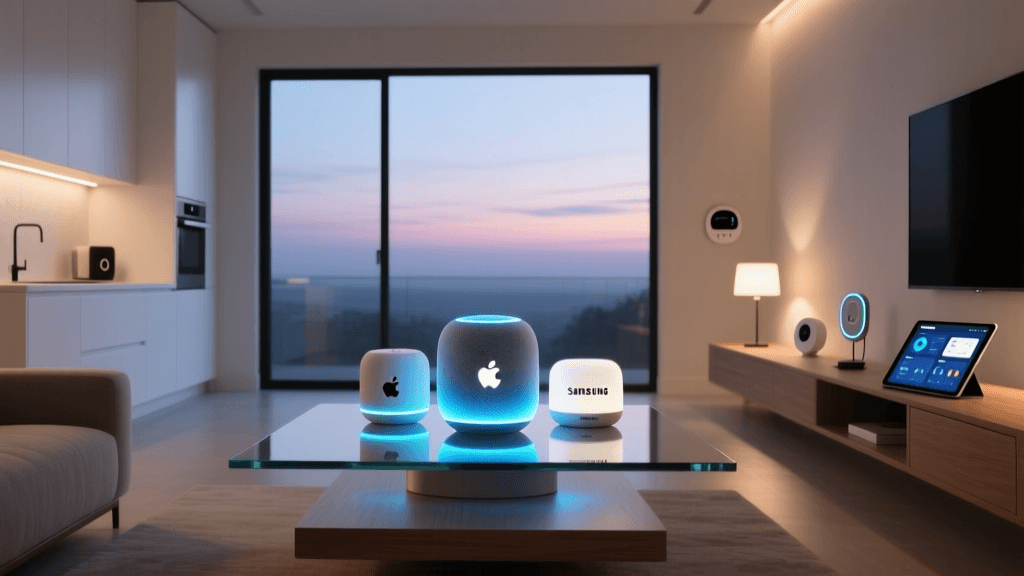
Cloud dependency introduces latency and privacy concerns, both of which are unacceptable for predictive ambient intelligence. The future lies in Edge AI, where machine learning models run directly on local hubs. Devices like the Home Assistant Yellow (featuring a Raspberry Pi Compute Module 4) or the Apple HomePod (2nd Gen) with its built-in neural engine, process voice, spatial, and environmental data locally. This allows the home to learn patterns—such as the exact time you wake up based on your movement and the ambient light levels—and execute routines with zero latency, even if your internet connection goes down.
Advanced Sensor Fusion: mmWave and LiDAR
Traditional Passive Infrared (PIR) motion sensors are binary; they only know if motion is present or absent. If you sit still reading a book, a PIR sensor assumes the room is empty and turns off the lights. The predictive home utilizes millimeter-wave (mmWave) radar and LiDAR. The Aqara Presence Sensor FP2 (retailing around $60) uses mmWave to detect micro-movements, including human breathing, allowing it to map a room into multiple zones and track the exact posture and location of up to five people simultaneously. This level of granular data allows the home to predict your intent: if the sensor detects you sitting on the sofa with a book, it can automatically adjust the reading lights and lower the blinds, rather than just relying on a time-based schedule.
Predictive Energy Management: The Ultimate ROI
Perhaps the most tangible benefit of the predictive smart home is its ability to autonomously manage energy consumption. As utility companies increasingly adopt time-of-use (TOU) pricing and dynamic grid demands, a home that can predict and shift its energy load is a financial necessity. According to the EPA's Energy Star program, certified smart thermostats can save homeowners an average of 8% on heating and cooling bills, but predictive AI takes this much further by integrating whole-home power monitoring.
Devices like the Span Smart Panel replace your traditional electrical breaker box with an intelligent hub that monitors energy usage at the circuit level. When paired with AI-driven software, the Span panel can predict high-load events. For example, if it predicts a severe weather event based on local API data, or anticipates a peak-pricing window from your utility provider, it can proactively shed non-essential loads (like delaying the EV charger or dimming non-critical circuits) while preserving power to the refrigerator and HVAC. Similarly, the Ecobee Smart Thermostat Premium ($249) uses built-in radar and local weather prediction algorithms to pre-cool or pre-heat your home during off-peak hours, leveraging the home's thermal mass to save money before the peak rate even begins.
| Device Category | Top Predictive Product | Estimated Cost | Predictive Capability |
|---|---|---|---|
| Smart Thermostat | Ecobee Smart Thermostat Premium | $249 | Pre-cools based on weather forecasts and utility TOU rates. |
| Electrical Panel | Span Smart Panel | $5,000+ (w/ install) | Sheds specific circuits autonomously during peak grid demand. |
| Occupancy Sensor | Aqara Presence Sensor FP2 | $60 | Zone-specific climate/lighting adjustments based on posture. |
| Sleep Tracker | Eight Sleep Pod 4 | $2,295+ | Adjusts bed temperature dynamically based on biometric feedback. |
Ambient Intelligence in Health, Wellness, and Security
Beyond energy, predictive technology is turning the home into a proactive wellness and security environment. In the bedroom, the Eight Sleep Pod 4 utilizes a network of biometric sensors to track heart rate variability (HRV), respiratory rate, and sleep stages. Rather than just recording this data for a morning report, the Pod's AI dynamically adjusts the temperature of each side of the bed in real-time to prevent you from waking up during deep sleep cycles.
In terms of air quality, the Airthings View Plus ($299) doesn't just measure radon, CO2, and VOCs; it uses predictive algorithms to correlate indoor air quality drops with outdoor weather patterns and household activities, proactively signaling your HVAC system to increase fresh air intake or trigger smart purifiers before pollutant levels reach a harmful threshold.
Security is also evolving from reactive recording to predictive deterrence. AI-enabled cameras, such as the Ubiquiti UniFi AI Bullet, use onboard neural networks to differentiate between humans, animals, and vehicles. More importantly, they can detect 'loitering' or anomalous behavioral patterns—like a person lingering near a side gate at 2 AM—and trigger predictive deterrents (flashing lights, two-way audio warnings) before a break-in occurs, rather than just sending you a push notification of a crime in progress.
Charting the Growth of AI in Smart Homes
The market is rapidly shifting from standard connected devices (which require user input or basic scheduling) to AI-predictive devices that act autonomously. The following chart illustrates the projected trajectory of this transition over the next five years.
Privacy and Security in the Age of Ambient AI
The elephant in the room with Ambient Intelligence is privacy. A home that knows when you sleep, how you move, and what your biometric data looks like is a treasure trove of sensitive information. The U.S. Department of Energy and various consumer advocacy groups frequently highlight the vulnerabilities of cloud-dependent IoT devices. If a predictive home relies entirely on cloud processing, the risk of data breaches and unauthorized surveillance is significant.
This is why the future of predictive smart homes is inextricably linked to local processing and Edge AI. When shopping for predictive devices, consumers must prioritize brands that offer local execution and end-to-end encryption. Apple's HomeKit Secure Video and the local processing capabilities of platforms like Home Assistant ensure that your behavioral data never leaves your local network. In the predictive era, a smart home's intelligence should be a private butler, not a corporate data broker.
Actionable Steps to Future-Proof Your Home Today
You do not need to wait five years to experience the benefits of a predictive smart home. By making strategic purchasing decisions today, you can lay the groundwork for an ambient intelligence ecosystem.
- Prioritize Matter Compatibility: When buying new sensors, plugs, or lighting, ensure the packaging features the Matter logo. This guarantees the device can participate in local, cross-brand predictive routines.
- Invest in a Local Hub: Move away from relying solely on cloud-based Wi-Fi devices. Invest in a robust local hub like the Hubitat Elevation or an Apple TV 4K to serve as the local brain for your home's automations.
- Upgrade to Smart Thermostats with Geofencing and Sensors: If you are still using a programmable thermostat, upgrade to an Ecobee or Nest. Utilize the included room sensors to teach the system your household's actual occupancy patterns, allowing it to predict heating and cooling needs.
- Map Your Electrical Load: Consider installing a smart energy monitor like the Sense Home Energy Monitor ($299). While it doesn't control circuits like the Span panel, its AI learns to identify the unique electrical signatures of your appliances, giving you the foundational data needed to make predictive energy decisions.
- Replace PIR Sensors with mmWave: Swap out outdated motion sensors in high-traffic or stationary-occupancy rooms (like home offices and living rooms) with mmWave presence sensors to eliminate the frustration of lights turning off while you are working.
Conclusion
The era of the 'app-controlled home' is peaking and preparing to sunset. The future belongs to the predictive home—a living space that utilizes Ambient Intelligence, Edge AI, and advanced sensor fusion to operate quietly in the background. By shifting the burden of management from the homeowner to the house itself, predictive smart home technology promises a future that is not only more convenient but vastly more energy-efficient, secure, and aligned with our natural human rhythms. By understanding these foundational shifts and investing in interoperable, locally-processed technologies today, you can ensure your home is ready for the intelligent tomorrow.