The Shift from Reactive to Predictive Automation
For the past decade, the smart home industry has been defined by reactivity. We have relied on smartphone apps, wall-mounted touchscreens, and voice assistants to execute explicit commands. You ask your smart speaker to turn off the lights, or you open an app to lower the thermostat before arriving home. While this level of control was revolutionary in the early 2010s, it represents only the infancy of domestic technology. The true vision of a smart home is not one that requires constant management, but one that manages itself.
Today, we are witnessing a massive paradigm shift toward predictive home automation and ambient computing. Driven by advancements in edge artificial intelligence, millimeter-wave (mmWave) radar, and unified communication protocols, the modern smart home is learning to anticipate human needs before a command is ever issued. This transition is fundamentally reshaping future living, turning our residences into intuitive, proactive environments that adapt to our biological rhythms, daily habits, and energy consumption patterns in real-time.
What is Ambient Computing in the Smart Home?
Ambient computing refers to technology that fades into the background of our daily lives. Instead of interacting with a distinct device—like a tablet or a smart speaker—you interact with the environment itself. The home becomes the computer. In a fully realized ambient smart home, sensors and local AI engines work in tandem to monitor occupancy, ambient light, temperature, and even biometric data, adjusting the environment seamlessly.
The goal of ambient computing is zero-interaction automation. When you walk into a room, the lighting adjusts to your preferred circadian color temperature based on the time of day and the amount of natural sunlight entering the window. The HVAC system preemptively cools the bedroom 30 minutes before your typical sleep time, factoring in the current outdoor humidity. This level of predictive automation requires a dense network of high-fidelity sensors and a robust, low-latency mesh network capable of processing data locally without relying on cloud servers.
Core Technologies Driving the Predictive Home
To move from a reactive setup to a predictive one, three foundational technologies must be integrated into your home's infrastructure:
1. Millimeter-Wave (mmWave) Presence Sensing
Traditional Passive Infrared (PIR) motion sensors are fundamentally flawed for ambient computing. PIR sensors only detect gross physical movement; if you sit still on the couch reading a book, the sensor assumes the room is empty and turns off the lights. Millimeter-wave radar solves this. Operating at high frequencies (typically 24GHz or 60GHz), mmWave sensors can detect micro-movements, including the subtle rise and fall of a human chest during breathing.
Products like the Aqara Presence Sensor FP2 (retailing around $69) utilize mmWave to map a room in multiple zones, tracking the exact location and posture (standing, sitting, or fallen) of up to five people simultaneously. This granular data allows automation engines to trigger highly specific, predictive routines based on exact occupancy states rather than simple motion.
2. Thread and the Matter Protocol
Predictive automation requires instantaneous communication between dozens of sensors and actuators. Wi-Fi is too congested and power-hungry, while Zigbee can suffer from bandwidth bottlenecks. The future relies on Thread, an IPv6-based, low-power mesh networking protocol operating on the 2.4GHz spectrum. Thread creates a self-healing web of devices where every smart plug and sensor acts as a router, eliminating dead zones.
Layered on top of Thread is Matter, the universal application-layer protocol developed by the Connectivity Standards Alliance. Matter ensures that a Thread-based sensor from one brand can seamlessly trigger a Wi-Fi-based smart bulb from another, completely bypassing proprietary cloud hubs. This interoperability is the bedrock of complex, multi-device predictive routines.
3. Edge AI and Local Processing Hubs
Cloud latency and internet outages are unacceptable in a predictive home. If your internet drops, your home should not lose its intelligence. Edge AI hubs process sensor data locally using onboard neural processing units (NPUs). Devices like the Home Assistant Green ($99) or the Apple TV 4K (acting as a HomeKit hub) run local automation engines that evaluate sensor inputs in milliseconds, ensuring your predictive routines execute instantly and privately.
Practical Applications: How Your Home Will Anticipate You
The integration of these technologies unlocks profound improvements in comfort, energy efficiency, and health.
Climate and Energy Optimization
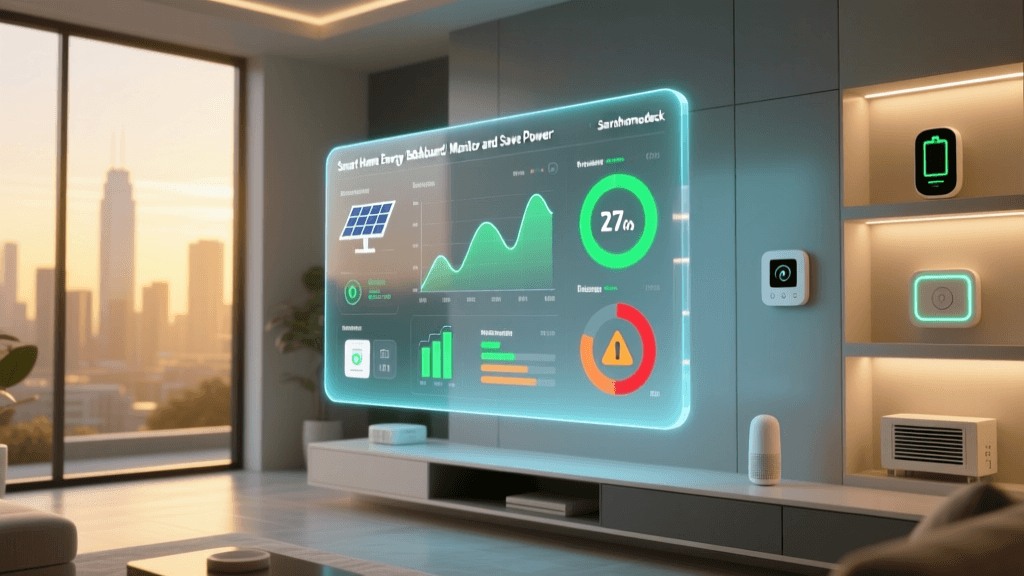
According to the U.S. Environmental Protection Agency (EPA), certified smart thermostats can save homeowners an average of 8% on heating and cooling bills. However, predictive climate control takes this further. By fusing data from mmWave presence sensors, smart window contacts (like the Eve Door & Window), and local weather APIs, the home can predict thermal loss. If the system detects that a window has been open for 10 minutes and the room is unoccupied, it will automatically shut off the local HVAC zone to prevent energy waste, resuming the optimal temperature only when the window closes and occupancy is detected.
Circadian Lighting and Wellness
Lighting systems like Lutron Caseta or Philips Hue can be programmed to follow the sun's natural trajectory. But a predictive home adjusts this dynamically. If ambient light sensors detect an overcast, dark afternoon, the system will proactively boost the interior lux levels and shift the color temperature to a cooler 4000K to maintain your alertness, seamlessly transitioning to a warm 2200K amber glow as your typical bedtime approaches to stimulate melatonin production.
Proactive Elder Care and Aging in Place
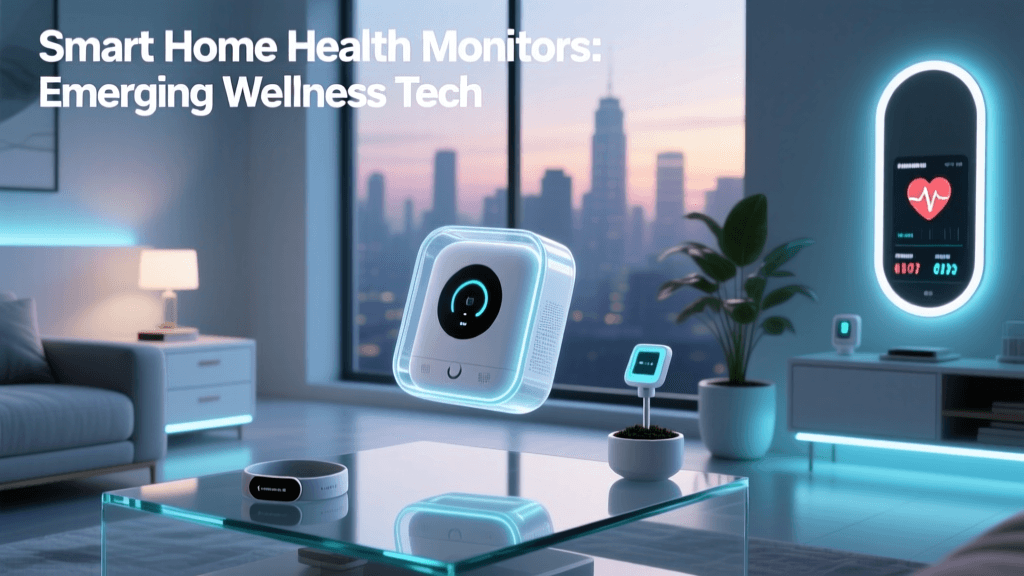
One of the most promising frontiers for predictive tech is healthcare. Companies like Vayyar are utilizing 60GHz RF sensors to monitor the daily routines of elderly residents without the privacy invasion of optical cameras. By establishing a baseline of normal behavior—such as the typical time spent in the bathroom or the frequency of kitchen visits—the system can predict and alert caregivers to anomalies. A sudden deviation, such as a lack of movement in the bedroom by 9:00 AM, or a detected change in gait speed, can trigger a proactive wellness check.
Transitioning Your Home: A Comparison and Action Plan
Upgrading to a predictive home requires strategic hardware investments. Below is a comparison between a standard reactive setup and a modern predictive ambient setup.
| Feature | Reactive Smart Home (Legacy) | Predictive Ambient Home (Future) |
|---|---|---|
| Occupancy Detection | PIR Motion Sensors ($20-$40) | mmWave Presence Sensors ($50-$80) |
| Network Protocol | Wi-Fi / Zigbee (Hub dependent) | Thread / Matter (Mesh, self-healing) |
| Processing Location | Cloud Servers (High latency) | Edge AI Hubs (Local, <50ms latency) |
| Automation Trigger | Voice Command / App Button / Basic Timer | Sensor Fusion / Behavioral AI / Contextual |
| Estimated Starter Cost | $150 - $300 | $400 - $750 |
Actionable Steps to Upgrade
- Step 1: Establish a Local Hub. Purchase a local automation controller like the Home Assistant Green or an Apple TV 4K. This ensures your automations run locally, eliminating cloud lag and internet dependency.
- Step 2: Build a Thread Border Router Network. Install at least two Thread-enabled smart plugs or hubs (such as the Eve Energy Plug or Nanoleaf Shapes) to create a resilient mesh network backbone for your sensors.
- Step 3: Replace PIR with mmWave. Swap out traditional motion sensors in high-occupancy static zones (living rooms, home offices) with mmWave sensors like the Aqara FP2 to enable true presence-based lighting and climate control.
- Step 4: Implement Contextual Variables. Use your automation software to create routines that require multiple conditions. For example: 'Turn on the office lights' should only trigger if presence is detected AND the ambient lux level is below 300 AND your digital calendar shows you are working from home.
Privacy and the Edge Computing Advantage
As homes become denser with sensors capable of tracking breathing patterns and daily routines, privacy becomes a paramount concern. The shift toward predictive automation is inextricably linked to the rise of edge computing. In a cloud-dependent reactive home, sensor data is constantly beamed to corporate servers for processing, creating a massive vulnerability footprint.
In a predictive ambient home, data is processed locally on the edge hub. The mmWave sensor detects your presence and sends a simple boolean state (Occupied/Unoccupied) to the local hub via Thread. The hub makes the decision to adjust the thermostat and sends a local command to the HVAC relay. No biometric or behavioral data ever leaves your local network. Cybersecurity authorities, including the Cybersecurity and Infrastructure Security Agency (CISA), strongly advocate for local network segmentation and minimizing external data transmission for IoT devices to mitigate the risk of remote exploitation and data harvesting.
The ultimate luxury in the future smart home is not the ability to control everything from your phone, but the freedom from having to control anything at all.
Conclusion: Embracing the Invisible Interface
The future of smart home technology is not about adding more screens, more apps, or more complex voice commands. It is about the invisible interface. Predictive home automation and ambient computing represent the maturation of the IoT industry, moving us away from the novelty of remote-controlled gadgets and toward deeply integrated, responsive environments. By investing in Thread networks, mmWave sensing, and local edge processing today, homeowners can future-proof their properties, drastically reduce energy waste, and create living spaces that genuinely understand and anticipate the human experience.