The concept of a futuristic home that anticipates your needs, adjusts its environment automatically, and keeps you secure from afar is no longer confined to science fiction. Today, connected living is a reality accessible to everyone. Whether you are looking to save on energy bills, enhance your home security, or simply add a layer of convenience to your daily routine, understanding the technology behind these devices is the first step. In this comprehensive guide, we will explore exactly how smart home devices work, break down the essential categories, and provide actionable advice on building a seamless, secure ecosystem.
What Are Smart Home Devices and How Do They Work?
At their core, smart home devices are physical objects equipped with sensors, processors, and communication hardware that allow them to connect to the internet or a local network. This interconnected web of devices is commonly referred to as the Internet of Things (IoT). Unlike traditional appliances that require manual operation, smart devices can collect data, process it, and take autonomous actions based on predefined rules or artificial intelligence algorithms.
The anatomy of a typical smart device involves three main components:
- Sensors: These gather information from the environment. For example, a smart thermostat uses temperature and humidity sensors, while a smart security camera uses motion and image sensors.
- Processors: The internal microcontroller or CPU interprets the sensor data. In some devices, this processing happens locally (edge computing), while in others, the data is sent to a cloud server for analysis.
- Transmitters/Connectivity Modules: These allow the device to communicate with your smartphone, a central hub, or other devices using wireless protocols like Wi-Fi, Bluetooth, Zigbee, or Thread.
When you issue a voice command to turn off the lights, the audio is captured by a smart speaker, converted into digital data, sent to a cloud server for natural language processing, and then a signal is relayed back to your smart bulbs to execute the command. This entire loop happens in a fraction of a second, creating the illusion of magic.
Essential Categories of Smart Home Technology
The smart home market is vast, but most devices fall into a few core categories designed to improve comfort, security, and efficiency. If you are just starting your journey, exploring our guide on smart home hubs can help you understand the central brains that tie these categories together.
Smart Speakers and Displays
Smart speakers and displays serve as the primary voice-controlled interfaces for your home. Powered by virtual assistants like Amazon Alexa, Google Assistant, or Apple Siri, these devices allow you to control other gadgets, play music, set timers, and ask questions using natural language. Smart displays add a visual element, making them ideal for viewing security camera feeds, following cooking recipes, or making video calls.
Smart Lighting
Smart lighting goes far beyond simple remote control. Modern smart bulbs, switches, and LED strips can change colors, adjust color temperatures to match your circadian rhythm, and dim automatically based on the time of day. By integrating motion sensors, your lights can turn on when you enter a room and turn off when it is empty, significantly reducing energy waste. For a deeper dive into creating the perfect ambiance, check out our smart lighting setup guide.
Smart Security and Access Control
Home security has been revolutionized by connected technology. This category includes video doorbells, indoor and outdoor cameras, smart locks, and window sensors. Modern cameras utilize on-device AI to distinguish between humans, pets, and vehicles, drastically reducing false alarms. Smart locks allow you to grant temporary digital keys to guests or delivery personnel, while sensors can trigger alarms or send instant notifications to your phone if a door is left ajar. Learn more about protecting your property in our smart home security article.
Smart Climate Control
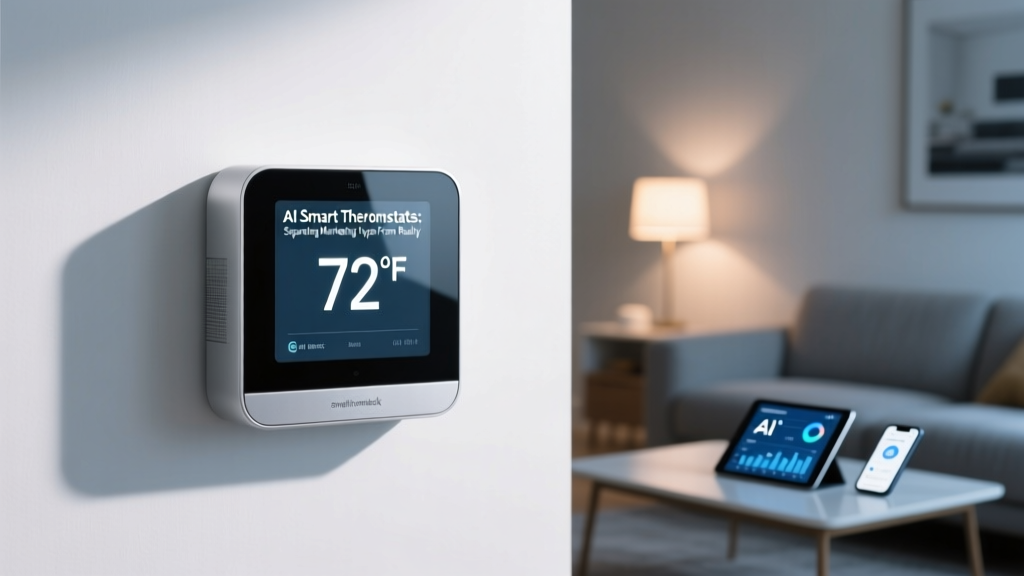
Heating and cooling account for the largest portion of home energy usage. Smart thermostats learn your schedule and preferences over time, automatically adjusting the temperature when you are asleep or away. Many utilize geofencing, which uses your smartphone's location to turn down the HVAC system when the last person leaves the house and pre-condition the air right before you arrive.
Smart Plugs and Appliances
Smart plugs are the most accessible entry point into home automation. They allow you to turn any standard appliance, like a coffee maker or a vintage lamp, into a smart device. Beyond plugs, native smart appliances—such as robotic vacuums that map your floor plan, refrigerators that track inventory, and washing machines that notify you when a cycle is complete—are becoming increasingly common.
Understanding Smart Home Protocols and Connectivity
One of the most confusing aspects of building a smart home is navigating the various wireless protocols. Not all devices use Wi-Fi, and understanding the differences is crucial for building a reliable network.
- Wi-Fi: Ideal for high-bandwidth devices like security cameras and smart displays. However, Wi-Fi consumes more power and can congest your home network if you have dozens of devices connected directly to your router.
- Bluetooth / BLE (Bluetooth Low Energy): Used primarily for proximity-based connections, such as smart locks or setting up a new device via your smartphone. It has a limited range and is not ideal for whole-home automation.
- Zigbee and Z-Wave: These are low-power, mesh networking protocols. Instead of connecting directly to your router, devices connect to each other, passing signals along until they reach a central hub. This creates a highly reliable network that does not interfere with your Wi-Fi.
- Thread and Matter: The latest evolution in smart home connectivity. Thread is a low-power, IP-based mesh networking protocol, while Matter is a unified application layer standard backed by industry giants. Matter ensures that devices from different brands work together seamlessly, regardless of the ecosystem you choose.
According to ENERGY STAR, certified smart thermostats can save households an average of 10% to 15% on heating and cooling costs annually, making them one of the most financially beneficial smart devices you can install.
How to Choose the Right Smart Home Ecosystem
An ecosystem is the software platform that unifies your devices, allowing them to work together in automated routines. While the new Matter standard is breaking down barriers, choosing a primary ecosystem is still necessary for the best user experience.
Amazon Alexa
Alexa boasts the largest library of compatible devices and skills. It is highly versatile, widely available across various price points, and excels at e-commerce integration and multi-room audio. However, the app interface can sometimes feel cluttered due to the sheer volume of features.
Google Home
Google Home leverages the company's immense search and AI capabilities, making it the smartest assistant for answering complex questions and managing calendars. Its interface is clean, and its voice recognition is highly accurate, though it relies heavily on cloud processing.
Apple HomeKit
Apple's ecosystem is renowned for its strict privacy standards and premium user experience. HomeKit processes many commands locally via the Apple TV or HomePod, ensuring faster response times and keeping your data off the cloud. The trade-off is a smaller selection of compatible devices and a generally higher price point for hardware.
Samsung SmartThings and Home Assistant
For those who want broader compatibility, SmartThings offers an excellent hub-based solution that supports Zigbee, Z-Wave, and Wi-Fi. For advanced users and privacy advocates, Home Assistant is an open-source platform that runs locally on a dedicated server or Raspberry Pi, offering unparalleled customization without relying on external cloud servers.
Privacy, Security, and Best Practices
As our homes become more connected, they also become potential targets for cyber threats. Securing your smart home is not optional; it is a fundamental requirement. The Federal Trade Commission (FTC) regularly issues guidelines on IoT security, emphasizing the need for proactive network management.
Follow these best practices to safeguard your connected home:
- Segment Your Network: Most modern routers allow you to create a separate 'Guest' or 'IoT' network. Connect all your smart home devices to this isolated network. If a smart bulb is compromised, the hacker cannot access your personal computers or smartphones on the main network.
- Use Strong, Unique Passwords: Never leave default passwords on your devices or hubs. Use a password manager to generate and store complex passwords for every smart home account.
- Enable Two-Factor Authentication (2FA): Wherever possible, enable 2FA on your smart home apps. This adds a critical layer of defense against unauthorized access.
- Keep Firmware Updated: Manufacturers release firmware updates to patch security vulnerabilities. Enable automatic updates in your device settings to ensure you are always protected against the latest threats.
- Review App Permissions: Regularly audit the permissions granted to your smart home apps. Does a smart plug really need access to your precise GPS location and contacts? Revoke unnecessary permissions to protect your personal data.
Furthermore, the introduction of the Matter protocol, overseen by the Connectivity Standards Alliance (CSA), includes built-in security requirements like encrypted communications and secure over-the-air updates, making the next generation of smart devices inherently more secure.
Frequently Asked Questions
Do smart home devices use a lot of electricity?
Individually, most smart home devices consume very little power. Smart bulbs, sensors, and plugs typically draw less than a watt of electricity in standby mode. However, having dozens of devices can add a small amount to your overall energy bill. That said, the energy savings generated by smart thermostats and automated lighting routines almost always outweigh the minimal power required to keep the devices connected.
Can smart home devices work without the internet?
It depends on the device and the protocol it uses. Devices that rely heavily on cloud processing, like most smart speakers and cloud-based cameras, will lose their 'smart' features if the internet goes down. However, devices using local hubs and protocols like Zigbee, Z-Wave, or Thread (especially those integrated via Home Assistant or Apple HomeKit) can continue to function, run automations, and respond to physical switches even during an internet outage.
Are smart home devices safe from hackers?
No device is 100% immune to hacking, but the risk can be reduced to near zero with proper network hygiene. The most common vulnerabilities occur when users leave default passwords unchanged or fail to update firmware. By segmenting your IoT devices on a separate Wi-Fi network, using strong passwords, and purchasing from reputable brands that provide long-term security updates, your smart home will remain highly secure.
What is the best smart home device for beginners?
The best starting point is usually a smart speaker or display, such as an Amazon Echo or Google Nest Hub, paired with a few smart plugs and smart bulbs. This combination requires minimal technical knowledge, offers immediate convenience, and allows you to experiment with voice commands and basic scheduling before investing in more complex systems like smart locks or hardwired lighting switches.
How do I ensure my devices from different brands work together?
Look for the 'Matter' logo on product packaging. Matter is the new industry-wide standard designed specifically to solve the problem of interoperability. Additionally, using a central hub or a robust ecosystem app like Samsung SmartThings or Apple HomeKit can bridge the gap between older devices that use different communication protocols.
Building a smart home is a journey, not a destination. By understanding the underlying technology, choosing the right protocols, and prioritizing security, you can create a connected living space that is not only highly convenient but also safe, efficient, and tailored perfectly to your lifestyle.