The Shift to Local, Open-Source Smart Home Control
For years, the smart home industry has been dominated by proprietary hubs. Devices like the Philips Hue Bridge, Samsung SmartThings Hub, and Amazon Echo (with built-in Zigbee) have served as the gatekeepers of our connected homes. While these closed ecosystems offer plug-and-play simplicity, they come with significant drawbacks: reliance on cloud servers, limited device compatibility, delayed firmware updates, and the constant threat of planned obsolescence. As the smart home market has matured, a vocal and highly technical community of enthusiasts has pivoted toward open-source protocols and community-driven software to reclaim local control.
The Zigbee protocol, maintained by the Connectivity Standards Alliance (CSA), is an IEEE 802.15.4-based wireless standard designed for low-power, low-data-rate mesh networking. Because the core Zigbee specification is open and well-documented, the open-source community has built powerful alternatives to proprietary hubs. Today, community-driven platforms like Zigbee2MQTT and Home Assistant's ZHA (Zigbee Home Automation) integration offer vastly superior device support, granular network troubleshooting tools, and true local execution compared to their corporate counterparts.
The Community Titans: Zigbee2MQTT vs. ZHA
When discussing open-source Zigbee support, two major projects dominate the landscape. Both leverage the same underlying hardware coordinators but take fundamentally different architectural approaches to managing the mesh network.
Zigbee2MQTT: The Universal Translator
Zigbee2MQTT is a community-driven bridge that translates Zigbee device messages into MQTT (Message Queuing Telemetry Transport) payloads. By decoupling the Zigbee network from the home automation platform, Zigbee2MQTT allows users to integrate their Zigbee devices into virtually any smart home system that supports MQTT, including Home Assistant, OpenHAB, Node-RED, and Domoticz. The Zigbee2MQTT GitHub Repository is a testament to community collaboration, boasting support for thousands of devices, including obscure, region-specific, and newly released Tuya and Aqara sensors that proprietary hubs often ignore.
ZHA (Zigbee Home Automation): Native Integration
ZHA is the native Zigbee integration built directly into the core of Home Assistant. Unlike Zigbee2MQTT, which requires a separate Node.js process and an MQTT broker (like Mosquitto), ZHA handles the Zigbee stack internally using the Python-based zigpy library. The Home Assistant ZHA Integration Documentation highlights its ease of use for those already committed to the Home Assistant ecosystem. ZHA is heavily focused on standard Zigbee 3.0 compliance, ensuring that certified devices pair quickly and operate with high stability without the need for custom external converters.
Hardware Selection: The Silicon That Powers the Community
The open-source Zigbee experience is heavily dependent on the USB coordinator (dongle) you choose. The community has extensively tested various silicon chips, and the consensus is clear: the chipset dictates your network's maximum device capacity, stability, and range.
- Texas Instruments CC2652P: Currently the gold standard for Zigbee2MQTT. It features a built-in power amplifier (PA) and low-noise amplifier (LNA), providing excellent range and stability. Found in the popular Sonoff Zigbee 3.0 USB Dongle Plus (Model P), which typically retails for $25 to $30.
- Silicon Labs EFR32MG21: The chip of choice for ZHA and the emerging Thread/Matter ecosystems. It offers robust multiprotocol support and high memory capacity. The Home Assistant SkyConnect (now Connect ZBT-1) uses this chip and costs around $30.
- ConBee II (deCONZ): An older but highly respected coordinator by Dresden Elektronik. While it has its own software (deCONZ), it is supported by both ZHA and Z2M. However, at $45+, it is largely being superseded by the newer CC2652P and EFR32MG21 dongles in community recommendations.
Data Comparison: Proprietary vs. Open-Source Hubs
To understand the practical benefits of the open-source approach, we must compare it directly to the proprietary hubs most consumers are familiar with. The following table breaks down the core differences in capability, cost, and community support.
| Feature | Philips Hue Bridge | Samsung SmartThings V3 | Zigbee2MQTT (Sonoff CC2652P) | ZHA (HA SkyConnect) |
|---|---|---|---|---|
| Architecture | Closed / Cloud-Dependent | Closed / Cloud-Dependent | Open / Local MQTT | Open / Native Local |
| Max Device Limit | ~63 Devices | ~32 Zigbee Devices | 200+ Devices | 150+ Devices |
| Tuya / Generic Support | Poor / Non-existent | Moderate (Cloud polling) | Excellent (Custom converters) | Good (Zigpy quirks) |
| Network Mapping (LQI) | No | No | Yes (Visual Map) | Yes (Visual Map) |
| Hardware Cost | $60 - $70 | $70 - $90 | $25 - $30 | $30 - $35 |
Visualizing Device Support Growth
One of the most significant advantages of community-driven open-source projects is the sheer speed at which new devices are reverse-engineered and supported. When a new, affordable smart home sensor hits the market from manufacturers like Moes, Sonoff, or TuYa, proprietary hubs may take months to add support—if they ever do. The open-source community often adds support within days via custom converters or quirks. The chart below illustrates the approximate number of supported Zigbee devices across major platforms.
Bar chart comparing supported device counts across proprietary and open-source Zigbee platforms.
As visualized above, Zigbee2MQTT supports nearly 2,800 distinct device models, dwarfing the proprietary alternatives. This massive library is maintained entirely by volunteers who submit pull requests to add device-specific configurations, ensuring that obscure attributes (like specific vibration sensitivity thresholds or custom valve states) are properly exposed to the user.
Network Optimization: The Power of LQI Mapping
Proprietary hubs treat the Zigbee mesh network as a black box. If a sensor drops offline, the user is left guessing whether the battery is dead, the device is too far away, or there is wireless interference. Open-source platforms expose the raw data of the Zigbee protocol, specifically the LQI (Link Quality Indicator) and routing tables.
LQI is a measurement of the signal quality of a received packet. In Zigbee2MQTT and ZHA, users can generate a visual network map that displays every device, its parent router, and the LQI score of the connection. This allows for precise network optimization:
- Identifying Weak Links: Spot battery-powered end devices with low LQI scores and move them closer to a mains-powered router (like a smart plug or smart bulb).
- Channel Interference: Zigbee operates on the 2.4 GHz spectrum, which is heavily congested by Wi-Fi. Open-source tools allow you to manually change your Zigbee channel. The community strongly recommends using Zigbee channels 11, 15, 20, or 25, and configuring your 2.4 GHz Wi-Fi router to channels 1, 6, or 11 to prevent overlap and packet loss.
- Router Placement: By analyzing the visual map, users can strategically place Zigbee routers (mains-powered devices) to create redundant paths, ensuring that if one router fails, the mesh automatically heals and reroutes traffic.
Practical Setup: Building a Community-Driven Network
Transitioning from a proprietary hub to an open-source Zigbee network requires a modest upfront investment in hardware and a willingness to learn. Here is a practical, actionable guide to building a robust, community-supported Zigbee network.
Recommended Hardware and Costs
- Compute Device: A Raspberry Pi 4/5, an Intel N100 Mini PC, or a refurbished enterprise micro PC (e.g., Lenovo ThinkCentre Tiny). Cost: $50 - $150.
- Zigbee Coordinator: Sonoff Zigbee 3.0 USB Dongle Plus (CC2652P version). Cost: $25.
- USB Extension Cable: A 3-foot USB 2.0 extension cable. This is mandatory to move the coordinator away from the USB 3.0 port's electromagnetic interference, which is known to severely degrade 2.4 GHz Zigbee signals. Cost: $5.
- Software Platform: Home Assistant OS (Free, Open-Source).
Best Practices for Network Reliability
"The biggest mistake newcomers make with open-source Zigbee is plugging the coordinator directly into the back of a Mini PC or Raspberry Pi. The USB 3.0 noise floor will cripple your mesh. Always use a shielded extension cable and place the coordinator in an elevated, central location."
Furthermore, when pairing devices via Zigbee2MQTT, it is highly recommended to enable "Permit Join" only when actively adding a device, and to disable it immediately after. This prevents unauthorized devices from attempting to join your mesh and reduces unnecessary network traffic. For battery-powered sensors, always pair them in their final physical location to ensure they bind to the nearest, most optimal router rather than the coordinator itself.
The Future: Thread, Matter, and Open-Source Evolution
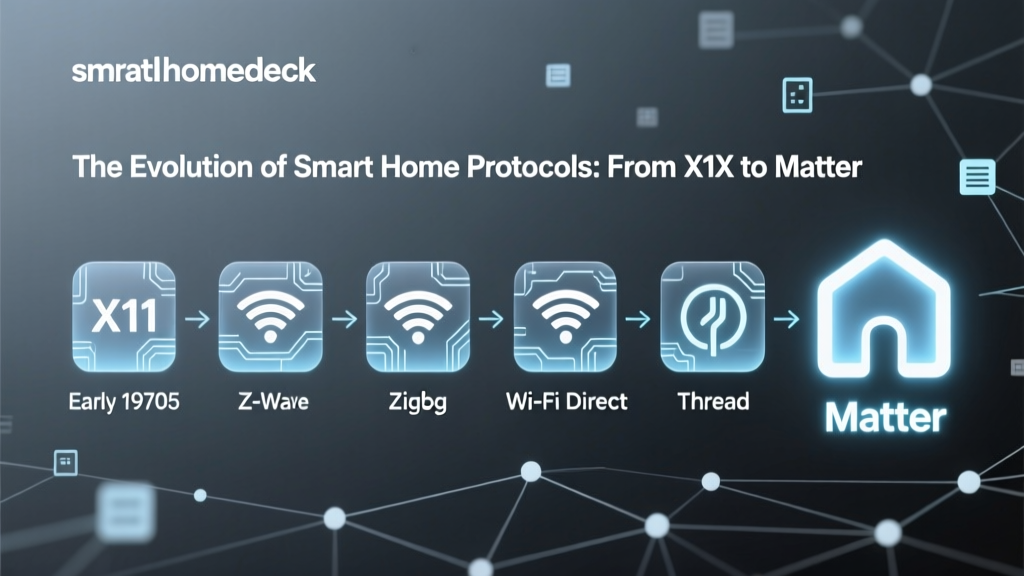
While Zigbee remains the workhorse of the open-source smart home, the community is already looking toward the future: Thread and Matter. Thread uses the same IEEE 802.15.4 radio standard as Zigbee but replaces the proprietary application layer with IPv6, allowing devices to communicate directly over your local IP network without a traditional hub bottleneck.
The open-source community is at the forefront of Thread adoption. Projects like OpenThread (originally developed by Nest and now open-sourced) and the integration of Thread Border Routers into Home Assistant via the Silicon Labs EFR32MG21 chips (like the SkyConnect) mean that the same hardware used for ZHA today can often be flashed to support Thread tomorrow. The community's rapid development of Matter controllers within Home Assistant ensures that as new Matter-over-Thread devices hit the market, open-source users will have day-one local control, bypassing the fragmented and often buggy implementations found in commercial smart home apps.
Conclusion
The transition to open-source Zigbee management via Zigbee2MQTT or ZHA represents a fundamental shift in how we interact with our smart homes. By abandoning the artificial limitations and cloud dependencies of proprietary hubs, users gain access to a vastly superior ecosystem characterized by massive device compatibility, granular network troubleshooting, and absolute local privacy. While the learning curve is steeper than scanning a QR code on a commercial app, the long-term reliability, cost savings, and immense support of the open-source community make it the undisputed choice for serious smart home enthusiasts. Whether you are integrating a niche TuYa moisture sensor or building a whole-home Thread mesh, the community-driven approach ensures your hardware remains useful, relevant, and entirely under your control.