The Matter Hype vs. The Zigbee Reality
When the Connectivity Standards Alliance (CSA) officially launched Matter, the smart home industry collectively held its breath. Promising a unified, IP-based application layer that would finally end the era of fragmented ecosystems, Matter was heralded as the ultimate savior of the connected home. In the rush of excitement, a common misconception began to circulate among consumers and tech enthusiasts alike: the belief that older, non-IP mesh protocols like Zigbee were suddenly obsolete, destined for the technology graveyard alongside Z-Wave and proprietary RF standards.
However, as the dust settles on the initial Matter rollout, a different reality has emerged. Zigbee is not just surviving; it is thriving. With over a decade of market dominance, billions of deployed devices, and a deeply entrenched manufacturing supply chain, Zigbee 3.0 remains the undisputed heavyweight champion of low-power, budget-friendly smart home sensors and lighting networks. To understand why Zigbee remains a cornerstone of modern smart home architecture—even in homes heavily invested in Matter and Thread—we must examine the technical, economic, and practical realities of building a connected home today.
Technical Showdown: Zigbee 3.0 vs. Thread and Wi-Fi
To understand Zigbee's enduring relevance, we must first clarify a fundamental technical distinction. Matter is an application layer protocol; it dictates how devices communicate their state and understand commands, but it does not define the radio waves they use. Matter runs over Wi-Fi, Ethernet, and Thread. Zigbee, on the other hand, is a full-stack protocol, encompassing both the network routing layer and the application layer (Zigbee Cluster Library).
Both Zigbee and Thread share the same underlying physical radio standard: IEEE 802.15.4, which operates primarily on the 2.4 GHz band and is designed for low-power, low-data-rate mesh networking. However, their network layers diverge significantly. Thread is built on 6LoWPAN, providing native IPv6 addressing to every single sensor and bulb. While this is a massive advantage for IP routing and direct internet connectivity, it comes with a heavy hardware tax. Running a full IPv6 stack requires significantly more RAM, flash memory, and processing power on the device's microcontroller.
Zigbee uses its own proprietary network layer. It does not assign IP addresses to end devices; instead, it uses 16-bit short addresses managed by a central Coordinator. This architectural difference means Zigbee chips can be manufactured with much smaller memory footprints, resulting in lower silicon costs and reduced power consumption for 'sleepy' end devices.
| Feature | Zigbee 3.0 | Thread (Matter) | Wi-Fi (Low Power) |
|---|---|---|---|
| Radio Standard | IEEE 802.15.4 | IEEE 802.15.4 | IEEE 802.11 (2.4/5 GHz) |
| Network Topology | Mesh (Coordinator required) | Mesh (Border Router required) | Star (Hub/Router required) |
| IP Addressable | No (Requires Gateway/Bridge) | Yes (Native IPv6) | Yes (Native IPv4/IPv6) |
| Avg. Chip Cost | Low ($1.00 - $2.00) | Medium ($2.50 - $4.00) | High ($3.00 - $6.00) |
| Sleepy Device Battery | 1.5 to 3+ Years (CR2032) | 1 to 2 Years (CR2032) | Months (Requires larger cells) |
According to the Connectivity Standards Alliance (CSA), the ongoing development of Zigbee continues in parallel with Matter, specifically targeting use cases where the overhead of IP networking is unnecessary or cost-prohibitive. The CSA recognizes that for a simple magnetic door sensor, the ability to route an IPv6 packet is overkill; what matters is a two-year battery life and a $15 retail price tag.
Why Zigbee Still Wins for Specific Use Cases
The Lighting Monopoly
When it comes to smart lighting, Zigbee remains the gold standard. The most prominent example is Philips Hue. The Hue ecosystem, which boasts tens of millions of users worldwide, is built entirely on Zigbee. Why hasn't Signify (the parent company of Hue) migrated to Thread or Matter-over-Thread? The answer lies in local reliability and mesh density.
A Zigbee mesh network thrives on mains-powered devices acting as routers. In a home with 30 Zigbee smart bulbs, the mesh network becomes incredibly dense and resilient. Commands sent from a Zigbee switch to a Zigbee bulb travel over the local 802.15.4 mesh in milliseconds, without ever touching a Wi-Fi router, an IP stack, or the cloud. Transitioning this massive installed base to Thread would require replacing billions of dollars worth of existing infrastructure. Instead, Hue has embraced Matter by updating the Hue Bridge to act as a Matter Bridge, exposing its Zigbee bulbs to Apple Home, Google Home, and Amazon Alexa via the Matter protocol, while keeping the underlying local mesh intact.
Budget and Micro-Sensors
The economics of smart home sensors heavily favor Zigbee. Brands like Aqara, Sonoff, and Third Reality dominate the market by offering highly reliable contact sensors, temperature monitors, and motion detectors for between $12 and $25. Because Zigbee chips require less memory and simpler antennas than Thread or Wi-Fi chips, manufacturers can keep the Bill of Materials (BOM) incredibly low.
Furthermore, Zigbee's 'Sleepy End Device' (SED) polling mechanism is highly optimized. A Zigbee door sensor can wake up, transmit a state change, and return to sleep in milliseconds, allowing a standard CR2032 coin cell battery to last upwards of two to three years. While Thread is catching up in power efficiency, the current generation of Thread sensors often costs 30% to 50% more than their Zigbee counterparts, making Zigbee the undisputed choice for users outfitting an entire home with dozens of sensors.
Bridging the Gap: Integrating Zigbee into a Matter Ecosystem
The true beauty of the Matter era is not that it replaces Zigbee, but that it provides a universal translation layer for it. This is achieved through Matter Bridges. A Matter Bridge is a device (or software service) that connects to a legacy network (like Zigbee) and exposes those devices to the Matter fabric as if they were native Matter devices.
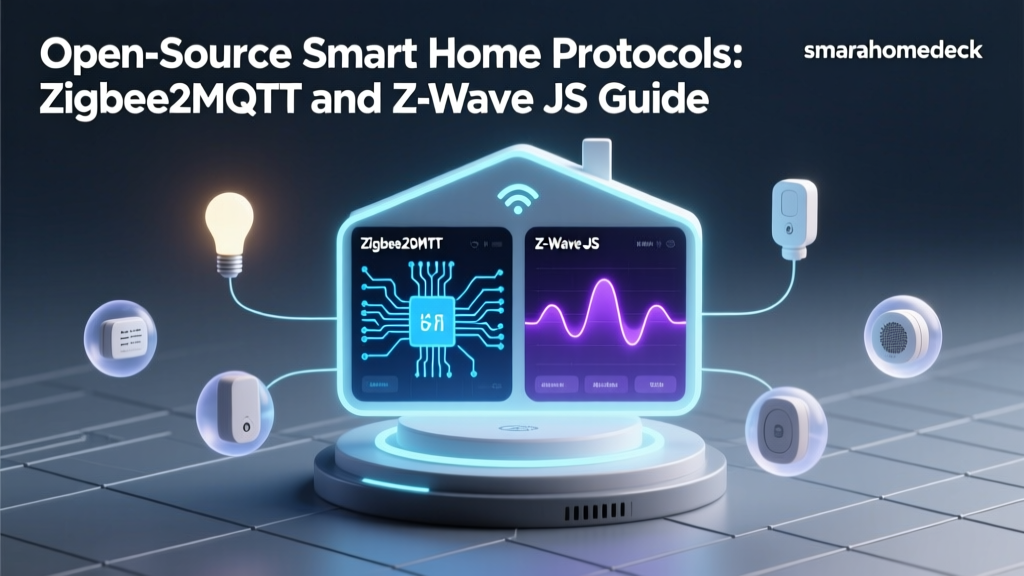
For example, if you have a Home Assistant setup running the Zigbee2MQTT project, you can use the Home Assistant Matter Server add-on. Zigbee2MQTT acts as the Zigbee coordinator, translating raw 802.15.4 radio signals into MQTT topics. Home Assistant then bridges those MQTT entities into the Matter protocol. To your Apple TV or Google Nest Hub, your $15 Zigbee Sonoff temperature sensor looks and acts exactly like a native Matter device.
This bridging capability completely neutralizes the 'vendor lock-in' fear that historically plagued Zigbee. In the past, if you bought a proprietary Zigbee hub, you were tied to that manufacturer's app. Today, an open-source Zigbee coordinator allows you to pull devices from any manufacturer and bridge them into any Matter-compatible ecosystem.
Actionable Guide: Building a Hybrid Smart Home Network
If you are building or upgrading a smart home today, the most robust, cost-effective, and future-proof strategy is a hybrid network. Here is a practical, step-by-step guide to building a hybrid Zigbee and Matter architecture.
Step 1: Establish an Open Zigbee Backbone
Avoid proprietary hubs that limit your integration options. Instead, invest in an open Zigbee coordinator.
- Hardware Recommendation: Home Assistant Connect ZBT-1 (formerly SkyConnect) or the Sonoff Zigbee 3.0 USB Dongle Plus (P-Version). Both cost around $30 to $35 and feature excellent range and stability.
- Software Recommendation: Install Zigbee2MQTT alongside an MQTT broker (like Mosquitto). Zigbee2MQTT supports over 3,000 devices from hundreds of vendors, ensuring you are never locked into a single brand.
- Placement Tip: Plug your Zigbee coordinator into a USB 2.0 extension cable (at least 3 feet long) and place it away from your Wi-Fi router. USB 3.0 ports and Wi-Fi routers generate massive 2.4 GHz interference that can cripple a Zigbee mesh.
Step 2: Deploy Zigbee for High-Density, Low-Cost Nodes
Use Zigbee for devices where cost and battery life are paramount.
- Lighting: Purchase Philips Hue bulbs for premium color accuracy, or IKEA TRADFRI / Third Reality Zigbee bulbs for budget-friendly smart lighting. These act as mesh routers, strengthening your network.
- Sensors: Buy Aqara P1 Motion Sensors (approx. $25, features a 5-year battery life and adjustable blind zones) or Sonoff SNZB-02D Temperature/Humidity sensors (approx. $18, features an LCD screen).
- Switches: Use battery-free Zigbee switches utilizing the Zigbee Green Power standard, such as those from Friends of Hue or Vimar, which harvest energy from the physical button press.
Step 3: Use Matter for High-Bandwidth and IP-Native Devices
Reserve Matter-over-Thread and Matter-over-Wi-Fi for devices that require IP addressing, higher bandwidth, or seamless cloud-to-cloud integrations.
- Thread Devices: Use Thread for smart plugs (like the Eve Energy or TP-Link Tapo Matter plugs) and advanced climate controls (like the Eve Thermo). Thread's native IPv6 routing ensures these critical nodes remain accessible even if the primary hub reboots.
- Wi-Fi Devices: Use Matter-over-Wi-Fi for high-bandwidth devices like smart displays, robotic vacuums, and Matter-enabled security cameras, which would choke a low-bandwidth 802.15.4 mesh network.
Step 4: Unify with a Matter Controller
Use a platform like Apple HomePod, Google Nest Hub, or Home Assistant as your primary Matter Controller. Ensure your Zigbee hub (like Home Assistant or an Aqara M2 Bridge) is set to 'Matter Bridge' mode. This allows your voice assistants and automation routines to interact with your entire hybrid network seamlessly, without needing to know which radio protocol a specific device is using.
The Fragmentation of Thread vs. The Unity of Zigbee
One of the hidden advantages Zigbee currently holds over Thread is network unity. In the Zigbee world, a Coordinator (your hub) manages the entire network. If you add a new router, it seamlessly integrates into the existing mesh.
Thread, by design, allows for multiple Border Routers (e.g., an Apple TV, a HomePod, and an Eero router all acting as Border Routers simultaneously). While this sounds great for redundancy, in practice, it can lead to mesh fragmentation, where devices partition into separate Thread networks that struggle to merge, causing latency and dropped commands. The Thread Group is actively working on improvements to multi-router mesh merging, but as of today, a well-managed Zigbee network with a single, strong Coordinator often provides a more predictable and stable user experience for DIY smart home enthusiasts.
Conclusion: Coexistence, Not Replacement
The narrative that Matter is the 'Zigbee killer' is fundamentally flawed. Matter and Zigbee operate at different layers of the networking stack and serve different economic and technical realities. Matter is the future of application-layer interoperability, ensuring that a smart plug from Brand A works with a smart speaker from Brand B. But for the physical transport of tiny data packets across a dense mesh of battery-powered sensors and smart bulbs, Zigbee 3.0 remains an unparalleled, cost-effective workhorse.
By leveraging Matter Bridges and open-source coordinators like Zigbee2MQTT, smart home enthusiasts can enjoy the best of both worlds: the ultra-low cost and battery efficiency of Zigbee, combined with the universal compatibility and modern interface of the Matter ecosystem. In the modern smart home, Zigbee isn't dead—it has simply evolved into the invisible, reliable foundation upon which the Matter revolution is being built.