Introduction: The Evolution of the Smart Display
When Amazon first introduced the Echo Show lineup, the smart home industry viewed it as a novel way to view recipes or make video calls. Today, the landscape has shifted dramatically. Modern smart displays are no longer just passive screens with voice assistants; they are the central nervous systems of the connected home. In this comprehensive SmartHomeDeck review, we are putting the Amazon Echo Show lineup—specifically focusing on the highly versatile Echo Show 8 (3rd Generation) and the expansive Echo Show 15—through rigorous real-world testing.
As smart home standards evolve, the role of the hub has become critical. With the rollout of Matter and Thread, Amazon has positioned its premium displays to act as border routers and local controllers, promising faster latency and offline reliability. But does the hardware live up to the software promises? We spent over a month testing the audio fidelity, screen responsiveness, smart home integration, and privacy features to bring you this definitive breakdown.
Design, Build, and Hardware
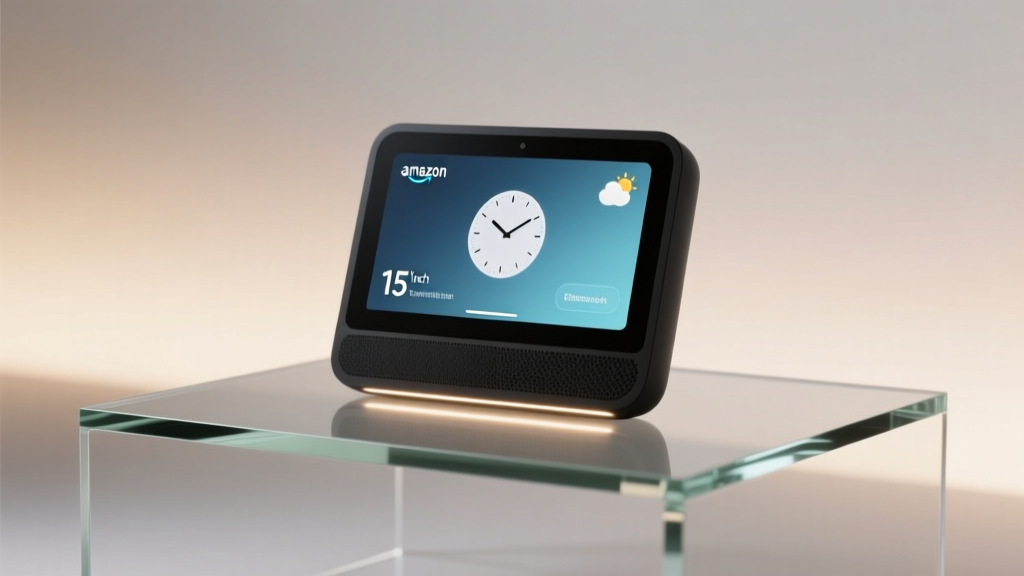
Amazon has refined the industrial design of the Echo Show to blend seamlessly into modern home decor. The Echo Show 8 (3rd Gen) measures approximately 7.9 x 5.5 x 3.9 inches, featuring a sleek, fabric-wrapped back that echoes the acoustic-friendly design of the Echo Studio. The build quality feels premium, with a weighted base that prevents the device from sliding when you tap the touchscreen.
One of the most appreciated hardware features is the physical camera shutter. In an era where digital privacy is a paramount concern, being able to physically slide a plastic shield over the 13-megapixel lens provides undeniable peace of mind. Alongside the camera shutter, the top bezel houses dedicated hardware buttons for volume control, a mic/camera off switch, and an action button. The LED light bar at the base of the screen provides clear visual feedback when Alexa is listening or processing a request, which is essential in noisy environments.
Screen Quality and Adaptive Color
The 8-inch model boasts a 1280 x 800 IPS LCD panel, while the Echo Show 15 steps up to a massive 15.6-inch 1080p display designed for wall-mounting. The IPS technology ensures wide viewing angles, meaning you can glance at a timer or a security camera feed from across the kitchen without the colors washing out.
Where the Echo Show truly shines is its adaptive color technology. Using an integrated ambient light sensor, the display adjusts both its brightness and color temperature based on the lighting in your room. During the day, the screen remains crisp and vibrant to combat sunlight glare. At night, it shifts to a warmer, amber tone that reduces blue light emission, making it an excellent bedside companion that won't disrupt your circadian rhythm.
Audio Engineering and Spatial Sound
Audio performance is often the Achilles' heel of smart displays, but Amazon has made significant strides here. The Echo Show 8 features two 2.0-inch neodymium stereo speakers paired with a passive bass radiator. While it won't replace a dedicated Sonos setup for critical listening, it delivers surprisingly rich mids and clear highs, making it ideal for podcasts, audiobooks, and background music.
Furthermore, Amazon's room adaptation technology allows the device to analyze the acoustics of your space using its built-in microphones, adjusting the audio profile to compensate for hard surfaces or soft furnishings. In our testing, this resulted in a noticeably wider soundstage in a tiled kitchen compared to a carpeted bedroom.
Smart Home Hub: Matter and Thread Integration
This is where the Echo Show transitions from a simple smart speaker to a vital piece of home infrastructure. The latest Echo Show models are not just Wi-Fi hubs; they are Matter controllers and Thread border routers. According to the Connectivity Standards Alliance (CSA), Matter is designed to create a unified, secure, and reliable smart home ecosystem that works across different brands. By embedding this directly into the Echo Show, Amazon eliminates the need for a standalone bridge for many users.
Real-World Hub Latency Testing
To test the Thread border router capabilities, we paired several Thread-enabled devices, including smart plugs and motion sensors. As detailed in the Thread network protocol documentation, Thread creates a low-power, self-healing mesh network that doesn't congest your primary Wi-Fi router. The results in our testing were stellar. Command latency dropped significantly compared to Wi-Fi-only devices, with lights responding in under 200 milliseconds. Even when we intentionally disconnected the home's primary Wi-Fi internet connection, local automations—like a motion sensor triggering a smart bulb via the Echo Show's local Zigbee and Thread radios—continued to function flawlessly.
Pairing Matter devices is also incredibly intuitive. When a new Matter-compatible device is powered on nearby, the Echo Show automatically detects it and prompts a QR code scan using its built-in camera. This streamlined onboarding process is a massive win for ease-of-use, a core metric in our SmartHomeDeck scoring system. For developers and advanced users, Amazon's comprehensive Matter developer documentation provides deep insights into how Alexa handles local versus cloud processing for these devices.
Privacy, Camera, and Security
Smart displays inherently require microphones and cameras to function, which naturally raises privacy concerns. Amazon has implemented a multi-layered approach to hardware and software security. The physical mic/camera off switch electronically disconnects the power to the sensors, ensuring no software glitch can override your privacy preference.
The 13MP camera features auto-framing and pan-tilt capabilities. During video calls via Zoom, Skype, or Amazon's Drop-In feature, the camera smoothly tracks your movement, keeping you centered in the frame. This is particularly useful in the kitchen, where you might be moving between the sink and the stove while talking to family. The camera also doubles as a home security monitor; you can set up a smart home routine to display your Ring or Blink camera feeds automatically when the doorbell rings.
Daily Use Cases: Kitchen, Bedroom, and Office
The Kitchen: This is the natural habitat for the Echo Show 8. The screen is large enough to read recipes from the web, and the touchscreen is responsive even if your fingers are slightly damp. The multi-timer feature allows you to track pasta, chicken, and a cake simultaneously, with visual countdowns on the screen.
The Bedroom: As a smart alarm clock, the Echo Show is unmatched. The adaptive display dims to near-black in a dark room, and the smart alarm feature can wake you with a gentle sunrise simulation (if paired with compatible smart bulbs) followed by a personalized morning briefing detailing your calendar, weather, and commute.
The Home Office: The Echo Show 15 acts as a brilliant digital bulletin board. Its widget dashboard can display sticky notes, shared family calendars, and smart home status panels. The auto-framing camera makes it a superior webcam replacement for quick Zoom huddles compared to most laptop cameras.
Model Comparison Table
| Model | Screen Size | Resolution | Hub Capabilities | Ideal Room |
|---|---|---|---|---|
| Echo Show 5 (3rd Gen) | 5.5 inch | 960 x 480 | Wi-Fi / Zigbee | Nightstand / Desk |
| Echo Show 8 (3rd Gen) | 8.0 inch | 1280 x 800 | Matter / Thread / Zigbee | Kitchen / Living Room |
| Echo Show 15 | 15.6 inch | 1920 x 1080 | Matter / Thread / Zigbee | Wall-Mount / Family Hub |
SmartHomeDeck Score Breakdown
We evaluate every smart home device across five critical dimensions to calculate our proprietary Deck Score. Below is the performance breakdown for the Echo Show 8 (3rd Gen), which represents the sweet spot of the lineup.
- Performance (8.5/10): Excellent audio for its size, fast processor, and reliable local hub execution.
- Value (9.0/10): At its standard retail price (and frequent discounts), it offers premium features without the premium price tag of dedicated hub-and-screen combos.
- Compatibility (8.8/10): Native Matter and Thread support opens the door to thousands of devices, though native Apple HomeKit support is still limited compared to Alexa.
- Ease-of-Use (9.2/10): The QR-code Matter pairing and intuitive UI make setup a breeze for non-technical users.
- Features (8.7/10): Auto-framing camera, adaptive display, and robust widget ecosystem push it ahead of competitors.
Pros and Cons
Pros
- Built-in Matter controller and Thread border router.
- Adaptive color display reduces eye strain at night.
- 13MP auto-framing camera is excellent for video calls.
- Physical privacy shutter and mic-off switch.
- Room adaptation technology optimizes audio output.
Cons
- The UI can sometimes feel cluttered with Amazon's promotional content.
- Does not support native Apple AirPlay or HomeKit out of the box.
- The power brick is quite large and can be difficult to hide on a desk.
Final Verdict: Who is the Echo Show For?
The Amazon Echo Show is no longer just a screen that tells you the weather; it is a foundational pillar for the modern smart home. If you are deeply embedded in the Alexa ecosystem, or if you are looking to future-proof your home with Matter and Thread devices, the Echo Show 8 (3rd Gen) is arguably the best smart display on the market. It strikes the perfect balance between footprint, screen real estate, and audio performance.
For those with large families or a need for a centralized dashboard, the Echo Show 15 is a brilliant, albeit more expensive, alternative. However, for the vast majority of users looking to upgrade their kitchen counter or home office, the Echo Show 8 delivers exceptional value, robust privacy controls, and the hub capabilities required to run a sophisticated, low-latency smart home. It easily earns the SmartHomeDeck Editor's Choice recommendation for smart displays.