Introduction: The Budget Smart Thermostat Promise
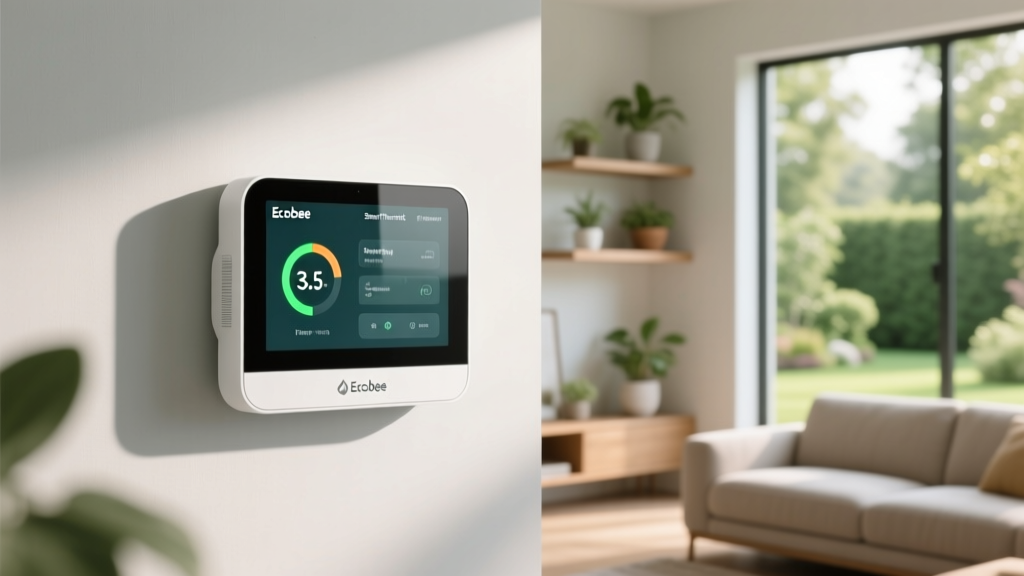
When it comes to upgrading your home's climate control, the market has long been dominated by premium heavyweights like the Nest Learning Thermostat and the Ecobee SmartThermostat Premium. These devices boast beautiful touchscreens, built-in voice assistants, and advanced room sensors, but they also command premium prices, often hovering between $200 and $250. Enter the Amazon Smart Thermostat. Developed in partnership with Honeywell Home, this unassuming device retails for a fraction of the cost, frequently dipping below $60 during sales. But in the smart home ecosystem, a low upfront price tag can sometimes mask hidden costs, compatibility headaches, or missing features that negate long-term value.
In this comprehensive review, we are looking at the Amazon Smart Thermostat strictly through the lens of Value-for-Money and Total Cost Assessment. We will go beyond the basic spec sheet to evaluate the hidden costs of installation, the reality of energy savings, ecosystem limitations, and the true three-year Total Cost of Ownership (TCO). Is this budget-friendly dial the smartest financial move for your HVAC system, or a false economy that will leave you upgrading in a year?
SmartHomeDeck Deck Score Breakdown
Our proprietary Deck Score evaluates smart home devices across five critical dimensions. Here is how the Amazon Smart Thermostat stacks up from a value perspective:
- Performance (8/10): Relays Honeywell's reliable T6 Pro internal hardware. Temperature holding and scheduling are rock-solid.
- Value (10/10): Unbeatable price-to-performance ratio. The ROI timeline is measured in months, not years.
- Compatibility (7/10): Works with 80% of standard HVAC systems but lacks support for complex multi-stage or dual-fuel setups without extra wiring.
- Ease-of-Use (8/10): Physical buttons are intuitive, though the lack of an on-device screen means you must rely on your smartphone for deep adjustments.
- Features (6/10): Stripped down to the essentials. No room sensors, no built-in speaker, and no advanced AI learning algorithms.
Hardware and Design: What Do You Actually Get?
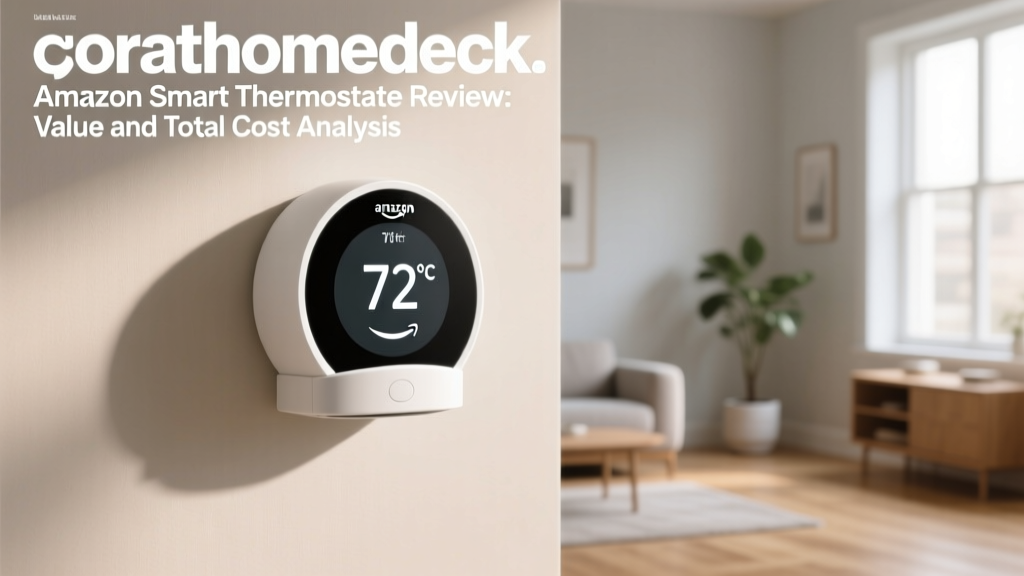
To understand the value proposition, we must first look at the physical hardware. The Amazon Smart Thermostat is essentially a rebranded and slightly modified Honeywell Home T6 Pro Z-Wave thermostat, adapted for Wi-Fi and Alexa integration. It features a minimalist, square design with a mirrored glass finish and physical buttons for Up, Down, and Mode selection.
The most glaring omission for users accustomed to premium thermostats is the lack of a digital display screen. Instead of showing you the current temperature, humidity, and weather forecast on the wall, the device uses a series of subtle LED indicators. To see your actual temperature or change a schedule, you must open the Alexa app on your phone. From a pure cost-assessment perspective, this is where Amazon saved the most money. Touchscreens, proximity sensors, and high-resolution displays are expensive components. By offloading the user interface to the smartphone you already own, Amazon slashed the manufacturing cost, passing those savings directly to the consumer.
Installation and the Hidden Costs of the C-Wire
When calculating the total cost of any smart thermostat, the hardware price is only the beginning. Installation is where budget thermostats can suddenly become expensive. The Amazon Smart Thermostat requires a C-wire (Common wire) to provide continuous 24V power to its Wi-Fi radio.
If your home was built in the last 15 years, you likely have a C-wire tucked behind your old thermostat. If you do, installation is a free, 15-minute DIY job. However, if you have an older home lacking a C-wire, you face a fork in the road that impacts your total cost assessment:
- The C-Wire Adapter Route ($15 - $25): Amazon and Honeywell sell C-wire adapters that plug into your HVAC control board. This is a cheap fix, but it requires you to open your furnace or air handler, which can be intimidating and may void certain HVAC warranties if done incorrectly.
- Professional Installation ($100 - $150): Hiring an HVAC technician to run a new 18/5 thermostat wire from your attic or basement to your wall will immediately triple the total cost of your Amazon Smart Thermostat project.
Value Tip: Before purchasing, pull your current thermostat off the wall and check for a blue or black wire connected to the 'C' terminal. If it is there, your installation cost remains $0.
Energy Savings and 3-Year Total Cost of Ownership (TCO)
The primary financial justification for any smart thermostat is energy savings. According to the U.S. Department of Energy, you can save up to 10% a year on heating and cooling by adjusting your thermostat 7 to 10 degrees for 8 hours a day from its normal setting. Furthermore, the EPA's Energy Star program notes that certified smart thermostats save an average of 8% on cooling and 10% on heating bills, translating to roughly $50 to $75 annually for the average American household.
But how does the Amazon Smart Thermostat's TCO compare to premium models when we factor in hardware, installation accessories, and three years of energy savings? While premium models like Nest and Ecobee use advanced AI and remote room sensors to squeeze out an extra 2% to 3% in efficiency, the sheer upfront cost of those devices takes years to recoup.
3-Year Total Cost of Ownership Comparison
As the chart illustrates, the Amazon Smart Thermostat achieves a negative net cost (meaning it pays for itself and generates net savings) well within the first 18 months. Even if you have to buy a C-wire adapter, the total out-of-pocket expense is under $85. Premium thermostats, despite slightly higher absolute energy savings due to room sensors, take 3 to 4 years just to break even on their initial $250 hardware investment.
Ecosystem Compatibility: The Alexa Advantage and Matter Support
From a software perspective, the Amazon Smart Thermostat is deeply entrenched in the Alexa ecosystem. It does not have Alexa built-in (there is no microphone or speaker), but it leverages Alexa Hunches and geofencing. If you leave your geofenced perimeter and forget to set the thermostat to 'Away', Alexa can automatically adjust it for you. Conversely, if your Alexa-enabled smart lock is triggered at bedtime, the thermostat can automatically drop the temperature for optimal sleeping conditions.
Crucially for long-term value, Amazon has rolled out Matter support to this device via firmware updates. Matter is the new universal smart home standard backed by Apple, Google, and Amazon. This means that even if you decide to migrate away from Alexa to Apple HomeKit or Google Home in the future, your $60 thermostat will not become expensive e-waste. It will remain compatible and controllable via the Matter protocol, vastly extending the hardware's lifecycle and protecting your initial investment.
The Room Sensor Deficit: Where Budget Shows Its Limits
To provide a fair total cost assessment, we must address the Amazon Smart Thermostat's biggest limitation: the lack of remote room sensors. Premium thermostats from Ecobee and Nest support Bluetooth or Wi-Fi room sensors that you place in bedrooms or home offices. These sensors tell the main thermostat to prioritize the temperature of the occupied room, rather than the hallway where the thermostat is mounted.
If you live in a single-story home with an open floor plan, or a modern apartment with balanced ductwork, you will not miss the room sensors. However, if you live in a multi-story home with significant temperature variance (e.g., a hot upstairs bedroom and a cold downstairs living room), the Amazon Smart Thermostat will struggle to keep you comfortable without overworking your HVAC system. In these specific scenarios, the 'value' of the Amazon device drops, and investing in an Ecobee (which includes a sensor in the box) becomes the more financially sound decision for long-term comfort and targeted energy efficiency.
Feature Comparison Table
| Feature | Amazon Smart Thermostat | Nest Learning Thermostat | Ecobee SmartThermostat Premium |
|---|---|---|---|
| Average Retail Price | $60 - $80 | $229 - $249 | $229 - $249 |
| C-Wire Required? | Yes (Adapter sold separately) | No (Can steal power, but C-wire recommended) | Yes (Power Extender Kit included) |
| Room Sensors | Not Supported | Supported (Sold separately) | Supported (1 included in box) |
| On-Device Screen | No (LED indicators only) | Yes (High-res color touchscreen) | Yes (Color touchscreen) |
| Matter Support | Yes (via firmware update) | Yes (via firmware update) | Yes (via firmware update) |
| Estimated Annual Savings | $50 - $65 | $60 - $75 | $60 - $80 |
Pros and Cons
Pros:
- Unmatched ROI: The low entry price means the device pays for itself through energy savings in under 18 months.
- Reliable Hardware: Backed by Honeywell's decades of HVAC manufacturing expertise.
- Matter Future-Proofing: Ensures the device won't be locked into a single ecosystem forever.
- Geofencing & Hunches: Automated away-modes prevent you from paying to heat or cool an empty house.
- No Subscription Fees: All features, including historical energy usage data, are completely free.
Cons:
- No On-Device Display: Requires pulling out your phone to check the exact temperature or change schedules on the fly.
- No Room Sensor Support: A dealbreaker for multi-story homes with uneven heating and cooling.
- C-Wire Dependency: Older homes will require additional hardware or professional wiring.
- Limited HVAC Compatibility: Struggles with complex dual-fuel, multi-stage, or whole-home humidifier/dehumidifier setups.
Final Verdict: Who is the Ultimate Value Pick For?
When evaluating the smart thermostat market through a strict Value-for-Money and Total Cost Assessment lens, the Amazon Smart Thermostat is the undisputed champion for the average homeowner. If you have a standard single-stage HVAC system, a C-wire already in your wall, and live in a relatively well-balanced single-story home or apartment, spending $250 on a Nest or Ecobee is a luxury tax you do not need to pay. The Amazon Smart Thermostat will deliver 90% of the energy-saving benefits for 25% of the upfront cost.
However, value is not just about the lowest price; it is about the right tool for the job. If your home suffers from severe hot and cold spots, or if you have a complex heat pump system with auxiliary emergency heat, the Amazon thermostat's limitations will cost you in comfort and potential HVAC inefficiencies. In those specific edge cases, the higher upfront TCO of an Ecobee SmartThermostat Premium (with its included room sensor and advanced wiring terminals) is justified.
But for the vast majority of users looking to dip their toes into smart climate control, automate their away-schedules, and lower their monthly utility bills without breaking the bank, the Amazon Smart Thermostat is a masterclass in budget-friendly smart home engineering.