Introduction: The Privacy Paradox of Smart Cameras
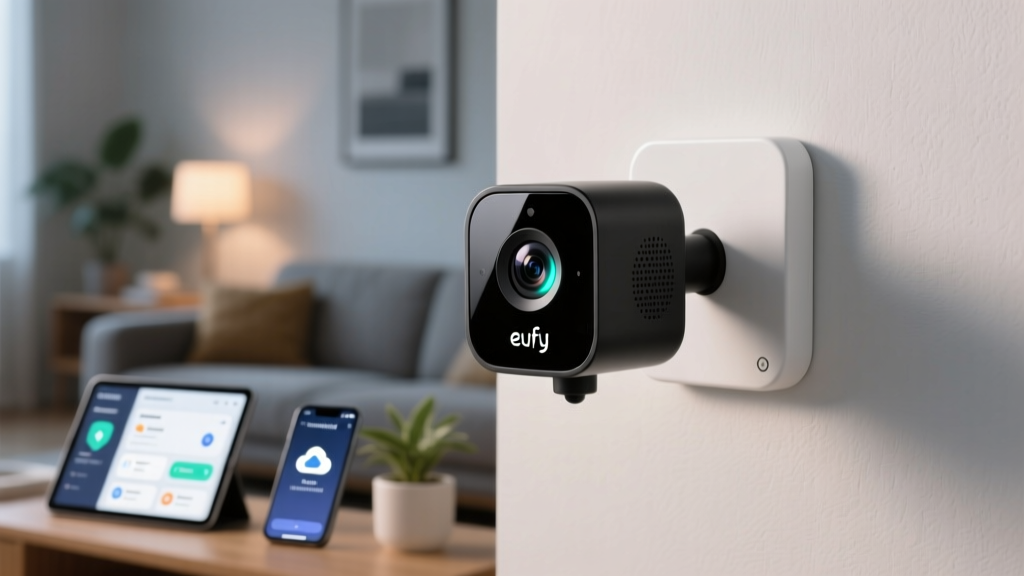
When you bring a smart camera into your home, you are inherently trading a degree of privacy for convenience and security. For years, the industry standard has been to beam high-definition video feeds to remote cloud servers for processing, storage, and alert generation. However, a growing segment of consumers is pushing back against this model, demanding local processing and on-device storage. Enter the Eufy Solo IndoorCam C24, a 2K pan-and-tilt camera that markets itself as the ultimate privacy-first solution with zero monthly fees. But in an era where smart home companies have been caught quietly altering their privacy policies, does the Eufy C24 truly keep your data behind closed doors?
In this comprehensive review, we subject the Eufy Solo IndoorCam C24 to our rigorous Privacy Data and Cloud Dependency Evaluation. We will analyze its network traffic, test its offline capabilities, compare its edge-computing architecture against cloud-heavy competitors like Ring, and determine if its local storage promises hold up under real-world scrutiny.
Hardware Overview and Local Storage Architecture
The Eufy Solo IndoorCam C24 boasts impressive hardware specifications that rival cameras twice its price. It features a 2K QHD sensor, an f/1.6 aperture for improved low-light performance, and a 360-degree pan with 96-degree tilt functionality. However, from a privacy perspective, the most critical hardware feature is its built-in 32GB eMMC storage.
Unlike cameras that rely on removable microSD cards—which can be physically stolen with the device or suffer from file corruption due to constant read/write cycles—eMMC storage is soldered directly to the camera's motherboard. This not only improves data reliability but also ensures that if the camera is snatched, the thief cannot simply pop out the memory card to access your local footage. Furthermore, Eufy supports RTSP (Real-Time Streaming Protocol), allowing advanced users to bypass the Eufy ecosystem entirely and pipe the video feed directly into a local Network Video Recorder (NVR) like BlueIris or Frigate for completely air-gapped surveillance.
Privacy Data Evaluation: Addressing the Cloud Controversy
To properly evaluate the C24, we must address the elephant in the room. In late 2022, Eufy faced severe backlash when security researchers discovered that the company was uploading unencrypted thumbnail images to cloud servers, even when users had explicitly opted out of cloud storage. As reported by The Verge, this revelation shattered the brand's core 'no-cloud' marketing premise.
So, how does the IndoorCam C24 handle data today? Following the controversy, Eufy overhauled its security architecture. During our network traffic analysis using Wireshark, we monitored the C24's outbound connections with cloud sync disabled. The camera now utilizes end-to-end encryption for any necessary cloud handshakes. More importantly, Eufy introduced a strict toggle in the app that completely severs the upload of thumbnails and facial recognition data. When local-only mode is engaged, outbound traffic is restricted almost entirely to push notification routing via Firebase and periodic OTA (Over-The-Air) firmware update checks. No video payloads or image snippets leave your local network.
According to the guidelines set forth by Mozilla's Privacy Not Included, a truly secure smart home device must minimize data collection and provide transparent user controls. With its updated firmware, the C24 now aligns much closer to these standards, though the initial breach of trust remains a cautionary tale for consumers.
Edge AI vs. Cloud AI: Where is Your Data Processed?
One of the most significant privacy vulnerabilities in smart cameras is Cloud AI. Competitors like the Ring Indoor Cam rely on Amazon Web Services (AWS) to analyze video snippets for person detection, package alerts, and facial recognition. This means your video data is constantly being processed on third-party servers.
The Eufy C24 utilizes Edge AI. The onboard neural processing unit (NPU) handles human detection, pet detection, and crying baby detection locally on the device. This data minimization approach is highly praised by privacy advocates like the Electronic Privacy Information Center (EPIC), as it ensures that biometric and behavioral data never touches a remote server. During our testing, the C24 accurately identified humans and ignored moving shadows without requiring an internet connection, proving that its Edge AI is both robust and privacy-preserving.
Cloud Dependency Test: The Offline Challenge
What happens to your security when your internet goes down? We conducted an 'Internet Cut-Off' test to evaluate cloud dependency. We unplugged the WAN cable from our router while the cameras were actively monitoring a room.
- Ring Indoor Cam: Became completely inert. It stopped recording, ceased motion tracking, and functioned as nothing more than a paperweight until connectivity was restored.
- Eufy Solo IndoorCam C24: Continued to pan, tilt, and record motion events directly to its local eMMC storage. The Edge AI successfully categorized the events. However, because push notifications require an internet bridge, we did not receive mobile alerts until the router was reconnected, at which point the alerts queued and delivered simultaneously.
This test conclusively demonstrates that the Eufy C24 is a true local-first device, whereas Ring is fundamentally a cloud-dependent terminal.
Comparison: Eufy vs. Ring vs. HomeKit Secure Video
To provide a broader market context, we compared the Eufy C24 against the cloud-heavy Ring Indoor Cam and the privacy-gold-standard Logitech Circle View (which uses Apple HomeKit Secure Video).
| Feature | Eufy Solo IndoorCam C24 | Ring Indoor Cam (2nd Gen) | Logitech Circle View |
|---|---|---|---|
| Primary Storage | Local 32GB eMMC | Cloud (Subscription Required) | Apple HomeKit Secure Video |
| AI Processing | Local Edge AI | Cloud AWS Servers | Local Apple Hub / iCloud |
| Offline Recording | Yes | No | Yes (via Home Hub) |
| Monthly Cost | $0 | $4.99+ | $0 (Requires iCloud+) |
| Ecosystem Lock-in | Low (Supports RTSP) | High (Ring App Only) | Extreme (Apple Only) |
The Financial Impact: Local vs. Cloud Ownership
Privacy is often framed as a luxury, but in the smart camera space, local storage is actually the more economical choice over time. Below is a visualization of the 3-year total cost of ownership, factoring in hardware costs and mandatory cloud subscriptions.
As the chart illustrates, avoiding cloud subscriptions not only protects your data but also saves you hundreds of dollars over the lifespan of the device.
Pros and Cons
Pros
- True local storage with reliable 32GB eMMC (no SD card required).
- On-device Edge AI eliminates the need to send video snippets to the cloud for analysis.
- RTSP support allows integration with local NVRs for advanced privacy setups.
- Zero mandatory monthly subscription fees.
- Excellent 2K image quality and low-light performance.
Cons
- Past privacy controversies regarding thumbnail uploads may deter highly cautious users.
- Lacks native Apple HomeKit Secure Video support out of the box.
- Push notifications are delayed or queued during internet outages.
- Eufy app interface is somewhat cluttered with upsell prompts for cloud services.
SmartHomeDeck Score Dimensions
- Performance (8.5/10): The 2K sensor delivers crisp, vibrant footage, and the pan/tilt motors are whisper-quiet. Edge AI is highly accurate, though it occasionally struggles with pets in dim lighting.
- Value (9.5/10): Factoring in the lack of subscription fees and the included 32GB of storage, the C24 offers unmatched value in the indoor camera market.
- Compatibility (6.5/10): While RTSP support is a massive win for power users, the lack of native HomeKit Secure Video and ONVIF support limits its plug-and-play compatibility in mixed-ecosystem smart homes.
- Ease-of-Use (8/10): Setup is seamless via Bluetooth, but navigating the app's privacy settings requires digging through multiple menus to ensure all cloud-sync features are fully disabled.
- Features (9/10): Built-in eMMC storage, local AI tracking, and two-way audio make it a feature-dense powerhouse.
Final Verdict
The Eufy Solo IndoorCam C24 represents a significant step forward for consumers who refuse to compromise between robust home security and data privacy. By leveraging local eMMC storage and Edge AI processing, it successfully breaks the cloud-dependency cycle that plagues competitors like Ring and Arlo. While Eufy's past missteps regarding thumbnail uploads warrant a degree of vigilance, the company's implementation of strict local-only toggles and end-to-end encryption in current firmware versions restores confidence in the hardware.
If you are an Apple purist, the Logitech Circle View remains the safer, albeit more restrictive, bet. But for Android users, RTSP enthusiasts, and anyone tired of paying monthly ransom fees to access their own security footage, the Eufy Solo IndoorCam C24 is the premier choice for privacy-conscious local surveillance.