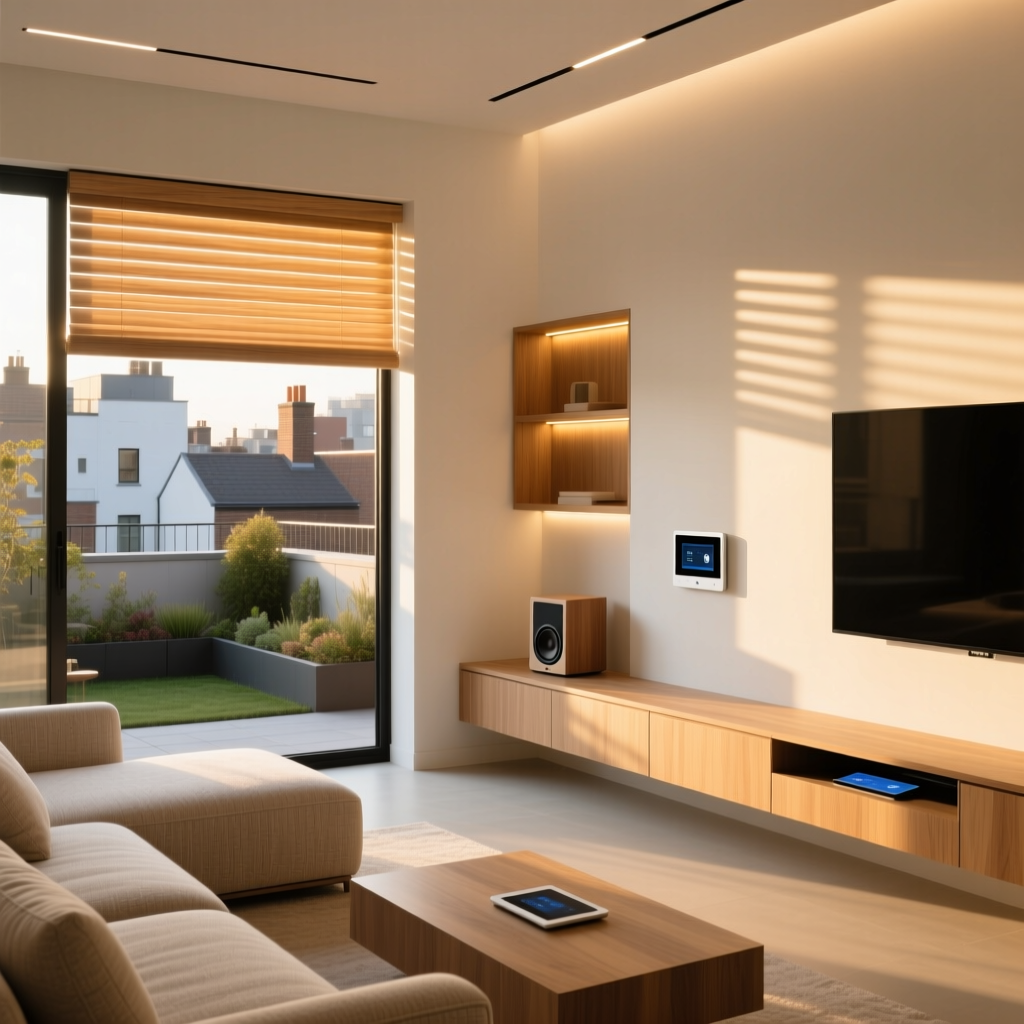
When building a comprehensive smart home, enthusiasts often prioritize lighting, security, and climate control. However, smart window treatments are the unsung heroes of a truly automated living space. They regulate indoor temperatures, protect furniture from UV damage, and provide instant privacy. While the market is flooded with motorized fabric shades and vinyl alternatives, real wood blinds remain a coveted architectural feature for their warmth and timeless elegance. Enter the Lutron Serena Smart Wood Blinds, a product that attempts to marry traditional, high-end aesthetics with cutting-edge smart home automation.
In this in-depth review, we explore whether the Lutron Serena Smart Wood Blinds live up to the brand's premium reputation. We will examine the build quality, motor performance, setup process, and ecosystem integration to help you decide if they are the right investment for your home. For more insights on automated window coverings, be sure to check out our comprehensive guide to smart window treatments.
Product Overview: Elevating Traditional Aesthetics
Lutron has long been the gold standard in both commercial and residential shading solutions. The Serena lineup represents their direct-to-consumer and custom-integrator smart shading family. While the Serena Honeycomb Shades are incredibly popular for their insulating properties, the Serena Smart Wood Blinds cater to a different demographic: homeowners who demand the organic texture, visual weight, and classic appeal of real wood.
Unlike many budget-friendly smart blinds that rely on Wi-Fi or Bluetooth, Lutron utilizes its proprietary Clear Connect RF protocol. This ensures that your window treatments operate on a dedicated, low-interference network, freeing up your home's Wi-Fi bandwidth and guaranteeing reliability. The Serena Wood Blinds are designed to integrate seamlessly into the broader Lutron Caséta smart lighting ecosystem, allowing for synchronized scenes that adjust both your lights and your blinds with a single tap or voice command.
Design & Build Quality: The Beauty of Real Basswood
The most striking feature of the Serena Smart Wood Blinds is the material. Lutron uses premium North American basswood, which is renowned for its lightweight yet durable properties. Basswood is less prone to warping than heavier woods, making it an ideal candidate for motorized applications where the lifting and tilting mechanisms must handle the physical stress of the slats over thousands of cycles.
Finish Options and Customization
Lutron offers a curated selection of painted and stained finishes. Whether you are looking for a crisp, modern white to match your baseboards or a rich, dark walnut stain to complement hardwood floors, the palette is designed to suit a variety of interior design schemes. The finish quality is exceptional, featuring a UV-resistant coating that prevents fading and yellowing, even on south-facing windows that endure relentless sunlight.
The Headrail and Hardware
One of the primary concerns with motorized wood blinds is the headrail. Motors, batteries, and receivers take up space, often resulting in bulky, unsightly headers. Lutron has engineered a remarkably streamlined headrail that conceals the motor cartridge and RF receiver without sacrificing structural integrity. The mounting brackets are heavy-duty steel, designed to support the significant weight of real wood over wide window spans. You can also choose between standard ladder cords or woven cloth tapes, the latter adding a bespoke, tailored look that elevates the overall design.
Performance & Motorization: Whisper-Quiet Precision
A smart blind is only as good as its motor. If the mechanism is loud, jerky, or unreliable, the smart features become a novelty rather than a convenience. Lutron's engineering shines in this department, leveraging technology adapted from their high-end Sivoia QS shading systems.
Acoustic Profile
The motor in the Serena Wood Blinds is astonishingly quiet. When adjusting the tilt of the wooden slats, the sound is reduced to a faint, low-frequency hum. This is a massive improvement over the harsh, grinding gears found in cheaper, off-the-shelf smart blinds. You can schedule your blinds to open at dawn without the motor noise waking up the household.
Precision Alignment
Perhaps the most impressive performance feature is Lutron's electronic limit setting and alignment technology. If you have three wood blinds side-by-side on a large bay window, budget smart blinds will inevitably drift out of sync over time, resulting in a messy, uneven appearance. The Serena Wood Blinds communicate with each other and the Lutron bridge to ensure that every single slat across multiple windows aligns perfectly. This synchronized movement creates a visually stunning, uniform facade that is the hallmark of a luxury smart home.
Tilt vs. Lift Functionality
It is important to note that the Serena Wood Blinds primarily focus on precision tilt control. While some configurations and larger Lutron systems offer lift-and-tilt for wood, the core Serena wood blind experience is optimized for tilting the 2-inch or 2.5-inch slats to manage glare and privacy. Because real wood is heavy, lifting a fully extended wood blind requires a massive motor and heavy-duty cabling, which compromises the sleek headrail design. For most users, the ability to tilt the blinds open to let in diffuse light, or close them tightly for privacy, satisfies 90% of their daily shading needs.
Setup Experience & App Control
Setting up smart home devices can often be a frustrating ordeal, but Lutron has refined their onboarding process to be as painless as possible. However, because these are premium, custom-sized products, the physical installation requires a bit more effort than hanging a standard tension rod.
Physical Installation
The blinds arrive pre-assembled and custom-cut to your exact window specifications. The installation involves securing the heavy-duty steel brackets into the window frame or wall, ensuring they are perfectly level. Once the brackets are in place, the headrail snaps securely into position. If you opt for the battery-powered version, you will need to route the slim battery wand (which holds standard D-cell batteries) discreetly behind the blind or along the window casing. For those undergoing a renovation, hardwired low-voltage options are available, eliminating the need for battery changes entirely.
Pairing and the Lutron App
To unlock the smart features, the blinds must be paired with a Lutron bridge, such as the Caséta Smart Bridge or the RA2 Select Main Repeater. Using the Lutron app, you simply put the bridge into pairing mode and press the hidden button on the blind's motor cartridge. The Clear Connect RF protocol ensures the pairing is instantaneous and does not require messing with 2.4GHz Wi-Fi networks or Bluetooth proximity.
The Lutron app is highly intuitive. It allows you to name your blinds, group them into rooms, and set precise favorite tilt positions. The app's scheduling feature is where the system truly excels. You can set schedules based on fixed times, or utilize the astronomical clock, which adjusts the opening and closing times dynamically based on the local sunrise and sunset throughout the changing seasons.
Ecosystem Compatibility & Smart Home Integration
A premium smart device must play nicely with the rest of your home. Lutron is widely regarded as the most ecosystem-friendly brand in the smart shading industry, and the Serena Wood Blinds are no exception.
Voice Assistants and Native Apps
Out of the box, the Serena Wood Blinds integrate natively with Apple HomeKit, Amazon Alexa, and Google Assistant. Because the Lutron bridge handles the processing, voice commands are executed with zero latency. Asking Siri to 'close the living room blinds' results in an immediate, synchronized response. For Apple users, the HomeKit integration is particularly robust, allowing the blinds to be included in complex HomeKit automations alongside smart lighting and thermostats.
Advanced Integrations
Beyond the big three voice assistants, Lutron supports Samsung SmartThings, IFTTT, and Sonos. The Sonos integration is a unique feature: you can program your Lutron system to automatically lower the blinds and dim the lights when you start playing music or watching a movie through your Sonos home theater setup. Furthermore, integrating the blinds with a smart home hub like Hubitat or Home Assistant (via community drivers or native Lutron IP integrations) opens up advanced local-control automations, such as closing the blinds automatically if an indoor temperature sensor detects excessive solar heat gain.
Pros & Cons: Is the Premium Price Justified?
No product is perfect, and the Serena Smart Wood Blinds are no exception. Here is a breakdown of what we loved, and where the product falls short.
Pros
- Premium Materials: Genuine North American basswood with high-quality, UV-resistant finishes.
- Whisper-Quiet Motor: Exceptionally quiet operation that won't disrupt your living space.
- Perfect Alignment: Multiple blinds on the same wall will always remain in perfect synchronization.
- Reliable Connectivity: Clear Connect RF protocol ensures 100% reliability without clogging your Wi-Fi network.
- Broad Ecosystem Support: Native compatibility with HomeKit, Alexa, Google, SmartThings, and Sonos.
Cons
- Premium Pricing: Significantly more expensive than fabric smart shades or off-the-shelf retail alternatives.
- Hub Requirement: You must purchase a Lutron bridge to access smart features and voice control.
- Weight Limitations: Due to the heavy nature of real wood, lift functionality is limited or unavailable on wider spans; they are primarily tilt-only.
- Battery Wand Aesthetics: If not hardwired, the external D-cell battery wand must be hidden, which can be tricky on certain window frames.
Frequently Asked Questions
Do Lutron Serena Wood Blinds require a hub?
Yes. To utilize the smart features, scheduling, and voice control, the blinds must connect to a Lutron bridge, such as the Caséta Smart Bridge or the RA2 Select Main Repeater. The blinds use Lutron's proprietary Clear Connect RF protocol, which offers vastly superior range and reliability compared to Wi-Fi or Bluetooth, but it requires the bridge to translate those RF signals to your home network. If you are already building a smart home ecosystem with Lutron switches and dimmers, you likely already own the required bridge.
How long do the batteries last in the motorized wood blinds?
If you opt for the battery-powered configuration, the Serena Wood Blinds use a discreet wand that holds standard D-cell batteries. Because the blinds primarily use low-power RF communication and the motor only draws significant current during the brief moments of tilting, battery life is exceptional. Under normal use (adjusting twice a day), you can expect the batteries to last anywhere from one to three years, depending on the size and weight of the specific blind. For a maintenance-free experience, Lutron highly recommends hardwiring the blinds during new construction or renovations.
Can I install Serena Wood Blinds myself?
While it is physically possible for a seasoned DIYer to install them, Lutron strongly recommends professional installation, especially for real wood blinds. Wood blinds are substantially heavier than fabric honeycomb shades. Ensuring that the mounting brackets are securely anchored into the window framing or structural studs is critical for safety and long-term reliability. Furthermore, professional installers can ensure the laser-level precision required for the blinds to operate smoothly without binding, and they can expertly conceal the battery wands or route low-voltage wiring.
Do they offer both lift and tilt functionality?
The core appeal and primary smart function of the Serena Wood Blinds is precision tilt control. Tilting allows you to manage glare, direct sunlight away from screens, and maintain privacy while still allowing ambient light to filter into the room. While Lutron does offer lift-and-tilt options in some of their custom, hardwired architectural shading lines, the standard Serena Wood Blind lineup is heavily optimized for tilt-only operation. This design choice preserves the sleekness of the headrail and reduces the mechanical strain required to lift heavy wooden slats vertically, thereby extending the lifespan of the motor.