Mastering Seasonal Room Adjustments: Summer vs. Winter
As the seasons shift, the thermal dynamics of your home change dramatically. The sun sits higher in the sky during the summer, driving intense solar heat gain through south and west-facing windows. In the winter, the lower solar angle and freezing outdoor temperatures create drafty, heat-starved environments. Relying solely on your central HVAC system to combat these shifts is not only inefficient but incredibly costly. According to the U.S. Department of Energy, heating and cooling account for nearly half of the average home's utility bills. By implementing targeted, room-by-room smart home adjustments, you can bridge the gap between summer cooling and winter heating while maximizing comfort and minimizing energy waste.
This comprehensive guide explores how to transform your living room and bedroom into year-round sanctuaries. We will cover specific device recommendations, budget tiers, advanced automation routines, and aesthetic considerations to ensure your smart home adapts seamlessly to the changing seasons.
The Living Room: Your Year-Round Climate Hub
The living room is typically the largest shared space in a home, featuring expansive windows and high occupancy rates. Managing this space requires a multi-pronged approach that addresses solar radiation, ambient temperature, and atmospheric lighting.
Summer Setup: Beating the Solar Heat Gain
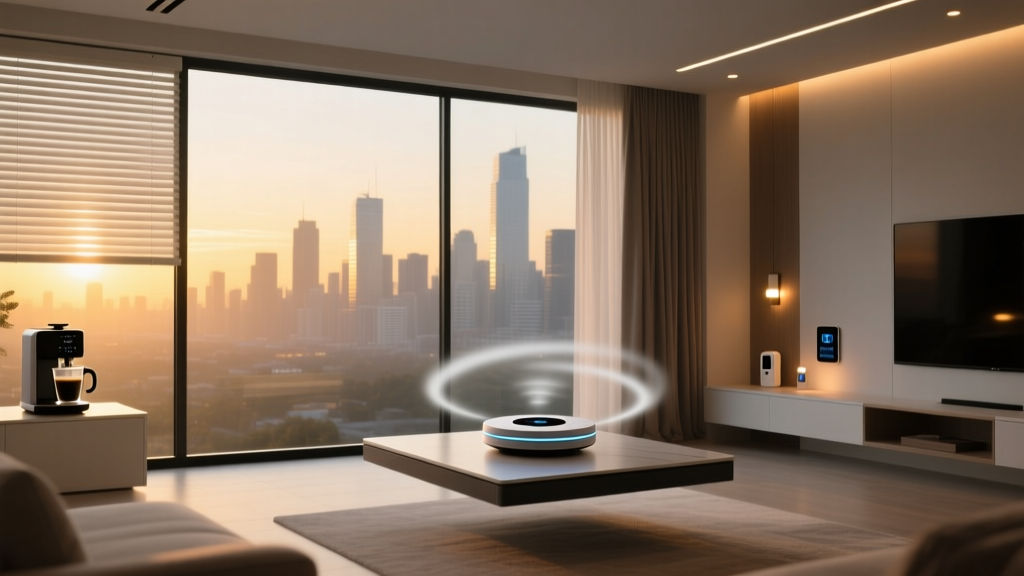
In the summer, your primary enemy is solar heat gain. When direct sunlight hits your windows, it turns your living room into a greenhouse. To combat this, automated window treatments are essential. The SwitchBot Blind Tilt is an excellent, non-invasive retrofit solution. It attaches directly to your existing blind wands and uses a light sensor to track the sun's movement. By integrating the SwitchBot Hub 2, you can create a routine that tilts the blinds upward during the brightest parts of the day (10 AM to 4 PM), blocking direct UV rays while still allowing ambient, diffused light to enter.
For homes with ductless mini-splits or window AC units, the Sensibo Sky smart AC controller is a game-changer. It acts as an advanced IR blaster that connects to your Wi-Fi network, granting you geofencing capabilities. Imagine your AC automatically turning on when you are two miles away from home, ensuring the living room is a crisp 72°F by the time you walk through the door, rather than running the unit all day while the house is empty.
Winter Setup: Retaining Warmth and Creating Ambiance
When winter arrives, the goal shifts to heat retention and creating a cozy, inviting atmosphere. The Ecobee SmartThermostat Premium is the undisputed leader for whole-home winter management. Its remote room sensors utilize infrared occupancy detection to ensure the living room reaches your desired temperature when you are actively using it, ignoring empty hallways or guest rooms. Furthermore, the Ecobee Premium features a built-in air quality monitor that tracks Volatile Organic Compounds (VOCs) and alerts you when to open a window or turn on an ERV (Energy Recovery Ventilator), which is crucial during the tightly sealed winter months.
Lighting plays a massive psychological role in winter comfort. As the days grow shorter, the Philips Hue White and Color Ambiance line can mimic the warmth of a fireplace. By setting a "Winter Evening" scene, your bulbs shift to a 2000K color temperature (a deep, warm amber), which promotes melatonin production and creates a snug environment. The National Institute of General Medical Sciences highlights that aligning indoor lighting with natural circadian rhythms is vital for maintaining healthy sleep-wake cycles, especially when natural sunlight is scarce.
The Bedroom: Optimizing Sleep Through Temperature Shifts
Science shows that the human body requires a drop in core temperature to initiate and maintain deep sleep. However, achieving this optimal sleep environment requires entirely different strategies depending on the season.
Summer Sleep: Active Cooling Solutions
Running a central AC at 65°F all night is a recipe for a massive electricity bill and a dry, uncomfortable throat. The Eight Sleep Pod Cover offers a revolutionary approach to summer sleep. Instead of cooling the entire room, the Pod uses a water-based thermal regulation system built directly into the mattress cover. It actively pulls heat away from your body, allowing you to set the bedroom thermostat to a much more economical 74°F while your bed remains a crisp 68°F. The Pod's dual-zone capability means you and your partner can sleep at different temperatures, eliminating the classic thermostat wars.
Pairing this with a smart ceiling fan controller, like the Bond Bridge, allows you to automate fan speeds based on the room's real-time humidity and temperature, creating a localized wind-chill effect without overworking your compressor.
Winter Sleep: Radiant Heat and Circadian Lighting
Winter bedrooms often suffer from cold spots, particularly near exterior walls and windows. If your home utilizes hydronic radiators, the Eve Thermo Smart Radiator Valve is an indispensable upgrade. Utilizing Thread and Matter protocols for ultra-reliable, low-latency communication, Eve Thermo replaces your manual radiator knob. You can schedule the radiator to blast heat an hour before bedtime and then dial back to an eco-friendly 62°F once you are under heavy duvets. Its "open window detection" will automatically shut off the radiator if you crack a window for fresh air, preventing you from literally heating the neighborhood.
Waking up in the pitch-black winter morning is a jarring experience. The Hatch Restore 2 smart alarm clock solves this by utilizing a gradual, 30-minute sunrise simulation. Starting with a faint, warm red glow and slowly transitioning to a bright, cool daylight spectrum, it gently suppresses melatonin and signals to your brain that it is time to wake, making those dark January mornings significantly more bearable.
Energy Savings: Standard vs. Smart Seasonal Setups
Upgrading to a seasonal smart home setup requires an upfront investment, but the return on investment through energy savings is substantial. The EPA's Energy Star program notes that certified smart thermostats alone can save homeowners roughly 8% on heating and cooling bills annually. When combined with automated blinds and targeted room sensors, the savings compound.
Monthly Energy Consumption by Room
Budget Tiers for Seasonal Smart Upgrades
Not every home requires a complete overhaul. Below is a structured breakdown of how to approach seasonal room adjustments based on your budget.
| Tier | Target Room | Recommended Devices | Estimated Cost |
|---|---|---|---|
| Starter | Living Room | Sensibo Sky, Wyze Bulb Color, Smart Plug for lamps | $120 - $180 |
| Mid-Range | Bedroom | Eve Thermo (x2), Hatch Restore 2, SwitchBot Blind Tilt | $350 - $500 |
| Pro | Whole Home | Ecobee Premium, Eight Sleep Pod, Philips Hue Starter Kit, Bond Bridge | $1,500 - $2,800 |
Advanced Automation Routines
The true magic of a smart home lies in automation. By using platforms like Home Assistant, Apple HomeKit, or advanced Alexa Routines, you can create logic-based triggers that adapt to the seasons automatically.
The "Summer Breeze" Routine
- Trigger: Outdoor temperature exceeds 78°F AND indoor living room temperature exceeds 74°F.
- Condition: Time is between 12:00 PM and 5:00 PM (Peak solar hours).
- Action 1: SwitchBot Blind Tilt closes south-facing blinds to 15% to block direct UV.
- Action 2: Sensibo Sky activates the living room mini-split to "Cool" mode at 73°F with "Auto" fan speed.
- Action 3: Smart plug turns on the living room HEPA filter to manage increased summer ozone and pollen.
The "Winter Cozy" Routine
- Trigger: Motion detected in the living room via Ecobee Room Sensor AND outdoor temperature is below 40°F.
- Condition: Time is after 5:00 PM (Post-sunset).
- Action 1: Ecobee pushes living room setpoint to 71°F, prioritizing the occupied zone.
- Action 2: Philips Hue lights transition to "Candlelight" scene (2000K, 40% brightness).
- Action 3: Smart fireplace insert (via Bond Bridge or IR blaster) powers on to a low flame setting for radiant, localized heat.
Installation Tips and Aesthetic Considerations
When integrating seasonal smart devices, aesthetics and placement are just as important as functionality. For smart blinds like the SwitchBot, ensure the solar panel accessory is mounted on the upper corner of the window frame where it receives maximum daylight without becoming an eyesore. The adhesive used is generally strong, but cleaning the surface with isopropyl alcohol before application ensures it survives the temperature fluctuations near the glass.
For smart radiator valves like the Eve Thermo, remember that they rely on measuring the ambient air temperature near the radiator. If your radiator is tucked behind a heavy sofa or thick winter curtains, the valve will get a false reading and overheat the room. Rearranging furniture to allow proper convective airflow is a free but vital installation step.
From a design perspective, hide your smart hubs and IR blasters. The Sensibo Sky, for instance, needs a clear line of sight to your AC unit. Rather than mounting it awkwardly on the wall, consider placing it on a high bookshelf or using a discrete, 3D-printed mount that blends with your ceiling molding. Finally, embrace the seasonal color palette. In the summer, program your smart bulbs to emit cool, crisp whites (4000K-5000K) during the day to make the space feel airy and open. In the winter, lean heavily into deep reds, ambers, and warm golds to visually warm the room before the heater even kicks on.
Conclusion
Seasonal room adjustments are no longer about manually fiddling with thermostats and drawing heavy curtains. By strategically deploying smart climate controllers, automated window treatments, and circadian lighting, you can create living spaces that intuitively adapt to the extreme shifts between summer heat and winter cold. Whether you are starting with a simple smart AC controller in the living room or investing in a fully automated, biometric-tracking sleep sanctuary, the intersection of comfort, aesthetics, and energy efficiency is entirely within your reach. Embrace the changing seasons, and let your smart home do the heavy lifting.