The Evolution of the Smart Nursery
Welcoming a new baby into your home is a joyous milestone, but it inevitably brings a wave of anxiety regarding safety, sleep, and environmental comfort. The modern nursery has evolved far beyond a simple crib and a rocking chair. Today, a smart nursery leverages interconnected IoT (Internet of Things) devices to create a responsive, secure, and highly optimized environment for your infant. From computer-vision sleep trackers to automated blackout shades and VOC-detecting air purifiers, smart home technology empowers parents with real-time data and peace of mind.
However, building a smart baby room requires a careful balance between technological convenience and stringent safety protocols. Unlike a smart living room or kitchen, the nursery demands rigorous attention to physical safety (such as cord management and mounting heights), digital privacy (securing Wi-Fi cameras), and pediatric health guidelines. In this comprehensive guide, we break down the essential devices, budget tiers, automation routines, and safety considerations needed to build the ultimate smart nursery.
Core Pillars of a Smart Baby Room
1. Intelligent Monitoring & Breathing Wearables
The cornerstone of any smart nursery is the baby monitor. Modern smart monitors have transcended basic audio and video feeds, integrating advanced sensors and artificial intelligence to track sleep patterns, breathing rates, and room conditions.
- Nanit Pro Smart Baby Monitor: Utilizing an over-the-crib mount and computer vision, the Nanit Pro tracks your baby's breathing motion using specialized swaddles or breathing bands, eliminating the need for wearable socks. It provides detailed sleep analytics, including time to fall asleep and night waking frequency.
- Owlet Dream Duo: This system pairs an HD video camera with the Smart Sock, which wraps around the baby's foot to monitor heart rate and oxygen levels. While highly popular, parents must remember that the American Academy of Pediatrics (AAP) advises against relying on consumer cardiorespiratory monitors as a substitute for safe sleep practices, as they are not proven to prevent SIDS.
- Cubo Ai Plus: Focused heavily on safety, the Cubo Ai features AI-powered covered-face and rollover detection, alerting parents immediately if a baby's face is obscured or if they roll onto their stomach before they are developmentally ready.
2. Climate & Air Quality Control
Infants have developing respiratory systems and breathe at a faster rate than adults, making them highly susceptible to indoor air pollutants, volatile organic compounds (VOCs), and dust. According to the Environmental Protection Agency (EPA), indoor air can be significantly more polluted than outdoor air, often due to off-gassing from new nursery furniture, paints, and cleaning products.
- Dyson Purifier Cool Autoreact (TP7A): A premium choice that captures 99.97% of particles and destroys formaldehyde. Its bladeless design is a crucial safety feature for when the baby begins crawling and walking.
- Eve Room (Thread/Matter): A compact indoor air quality monitor that tracks VOCs, temperature, and humidity. Integrating this with your smart home hub allows you to trigger the air purifier automatically when VOC levels spike after a diaper change or room cleaning.
3. Automated Lighting & Soundscapes
Lighting and sound are the primary regulators of a baby's circadian rhythm. Melatonin production in infants is highly sensitive to light exposure, particularly blue light.
- Hatch Rest+ (2nd Gen): The gold standard for nursery sound machines and nightlights. It features a remote control, toddler-clock functionality for later years, and an audio monitor. You can program it to emit a dim, warm-red glow during midnight feeds to avoid disrupting melatonin production.
- Philips Hue Smart Bulbs: Install Hue bulbs in the nursery's main fixtures. Using the Hue app, you can create a 'Midnight' scene that limits brightness to 5% and shifts the color spectrum to deep amber or red.
4. Smart Window Treatments
Blackout curtains are non-negotiable for promoting healthy infant sleep, especially during summer months and afternoon naps. Motorized smart blinds eliminate the strangulation hazard of traditional pull cords while offering precise light control.
- Lutron Serena Smart Wood Blinds: Premium, ultra-quiet motorized blinds that integrate seamlessly with Apple HomeKit, Amazon Alexa, and Google Home. They can be scheduled to open gradually in the morning to gently wake your toddler.
- SwitchBot Blind Tilt: A budget-friendly, retrofit solution that attaches to your existing blind wand, allowing you to automate the tilt of your current blackout blinds via a smart hub.
Budget Tiers for Your Smart Nursery
Outfitting a nursery can be expensive. Below is a structured breakdown of three budget tiers to help you prioritize your investments based on your financial comfort level and technological needs.
| Tier | Estimated Cost | Core Devices Included | Best For |
|---|---|---|---|
| Starter | $200 - $350 | Hatch Rest+, Wyze Cam v3 (as monitor), Smart Plug for lamp, Govee Wi-Fi Thermometer | First-time parents on a budget seeking basic automation and sound control. |
| Mid-Range | $600 - $900 | Nanit Pro, Philips Hue Starter Kit, SwitchBot Blind Tilt, Eve Room Air Quality Sensor | Tech-savvy parents wanting deep sleep analytics and automated environmental controls. |
| Pro | $1,500+ | Owlet Dream Duo, Dyson Autoreact Purifier, Lutron Serena Blinds, Dedicated IoT Network Router | Enthusiasts demanding premium aesthetics, medical-grade tracking, and ultimate convenience. |
Device Investment Comparison
When allocating your budget, it helps to understand where the bulk of your investment will go. The visualization below illustrates the average cost distribution across major smart nursery categories.
Essential Automation Routines for Parents
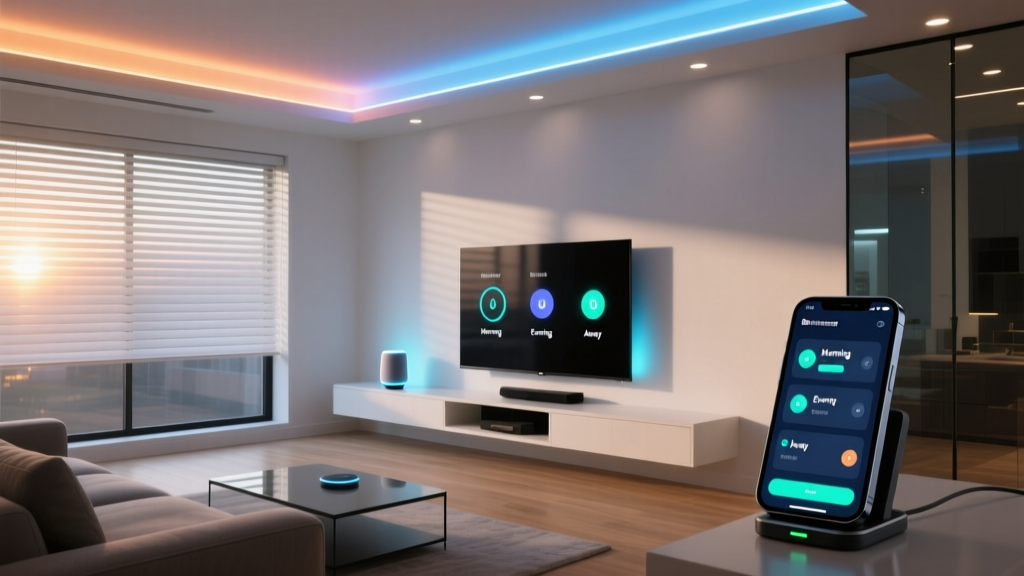
The true magic of a smart home lies in automation. By linking your nursery devices through platforms like Apple HomeKit, Amazon Alexa, Google Home, or Home Assistant, you can create routines that respond to your baby's needs and your daily schedule.
The 'Midnight Feed' Routine
Waking up at 3:00 AM is disorienting. Place a smart button (like the Flic 2 or Philips Hue Dimmer Switch) on the nursery doorframe or your nightstand.
- Trigger: Pressing the smart button.
- Actions: Philips Hue main lights turn off. Hatch Rest+ switches to the 'Diaper Change' preset (10% brightness, warm red light, soft stream sounds). The smart thermostat lowers the ambient temperature by 1 degree to keep the room cool and comfortable.
The 'Nap Time' Protocol
Consistency is key to infant sleep training. Automate the room's transition into a sleep-inducing environment.
- Trigger: Voice command ('Hey Siri, start Nap Time') or scheduled time.
- Actions: Lutron Serena blinds close completely. The Dyson purifier ramps up to its highest fan speed for 10 minutes to clear the air, then drops to whisper-quiet auto mode. The Hatch Rest+ begins playing white noise at 60 decibels.
The 'Morning Wake-Up' Transition
For toddlers transitioning out of the crib, abrupt wake-ups can lead to crankiness. Use a gradual sunrise routine.
- Trigger: Scheduled for 6:45 AM.
- Actions: Smart blinds open to 20% tilt. Hue lights slowly fade from 0% to 30% brightness in a warm amber tone over 15 minutes. The Hatch Rest+ plays gentle bird songs, signaling to the toddler that it is almost time to get out of bed.
Safety, Privacy, and Secure Installation
While smart devices offer immense convenience, the nursery is a sensitive environment where physical and digital safety must be paramount. The Centers for Disease Control and Prevention (CDC) highlights that maintaining a safe sleep environment—free of loose bedding, cords, and overheating—is critical for reducing the risk of Sudden Infant Death Syndrome (SIDS) and accidental suffocation.
Physical Safety & Cord Management
Strangulation from window blind cords and baby monitor power cables is a severe and documented hazard. Never mount a camera or run a power cord within three feet of the crib. If your camera requires a wall plug near the crib, use rigid, screw-in cord concealers that a baby cannot pull down as they learn to stand. For smart blinds, ensure you purchase models that are entirely cordless or feature enclosed, tensioned pull-systems that are completely inaccessible to little hands.
Digital Privacy & Network Security
Wi-Fi-enabled baby monitors have occasionally been the target of cyber intrusions. To secure your smart nursery:
- Implement a Guest VLAN: Do not put your baby monitor on the same Wi-Fi network as your personal laptops and smartphones. Create a dedicated 'IoT Guest Network' on your router. If a smart plug or camera is compromised, the hacker cannot access your personal data or primary devices.
- Enforce 2FA and Strong Passwords: Never use the default password provided by the manufacturer. Enable Two-Factor Authentication (2FA) on the companion apps for Nanit, Owlet, and Hatch.
- Disable UPnP: Universal Plug and Play (UPnP) on routers can inadvertently expose your internal cameras to the public internet. Disable this feature in your router's admin settings.
'A smart nursery should act as an invisible assistant. The technology should never introduce new hazards, whether physical cords or digital vulnerabilities, into the space where your child is most vulnerable.' — SmartHomeDeck Safety Editorial Team
Design & Aesthetic Integration
Nurseries are often meticulously designed with specific color palettes, themes, and soft textures. Bulky, blinking tech gadgets can easily disrupt the serene aesthetic you have curated.
- Conceal Hubs and Bridges: Devices like the Philips Hue Bridge or Lutron Smart Bridge require ethernet connections and power. Hide these inside a closet, behind a bookshelf, or in a ventilated decorative basket to keep surfaces clean.
- Choose Neutral Hardware: When purchasing smart plugs or air quality sensors, opt for white or matte black finishes that blend into baseboards and walls. Brands like Eve and Aqara offer minimalist, Apple-esque designs that look more like modern decor than industrial tech.
- Wall-Mounting vs. Shelving: Over-the-crib mounts (like the Nanit floor stand or wall arm) are highly functional but visually dominant. If you prefer a minimalist look, consider a high-shelf placement for a wide-angle camera, ensuring it is secured with museum wax or safety straps so it cannot be knocked over by a climbing toddler in the future.
Transitioning from Nursery to Toddler Room
One of the greatest advantages of investing in a smart nursery is the longevity of the devices. As your baby grows into a toddler, the room's requirements shift. The Hatch Rest+ transforms into an 'OK to wake' clock, glowing green only when it is an acceptable time to leave the bed. The Nanit or Cubo Ai cameras continue to provide valuable insights into toddler sleep regressions and night terrors. Smart blinds and automated lighting routines remain relevant, helping to enforce boundaries and maintain healthy circadian rhythms well into the preschool years.
Conclusion
Building a smart nursery is an investment in your child's safety, health, and sleep—and by extension, your own well-being. By carefully selecting devices that prioritize secure data practices, adhering to pediatric safe-sleep guidelines, and leveraging automation to handle the midnight chaos, you can create a sanctuary that is as intelligent as it is comforting. Start with the essentials, secure your network, and let the technology handle the heavy lifting so you can focus on what truly matters: bonding with your new arrival.