The Smart Home Ecosystem Wars: An Overview
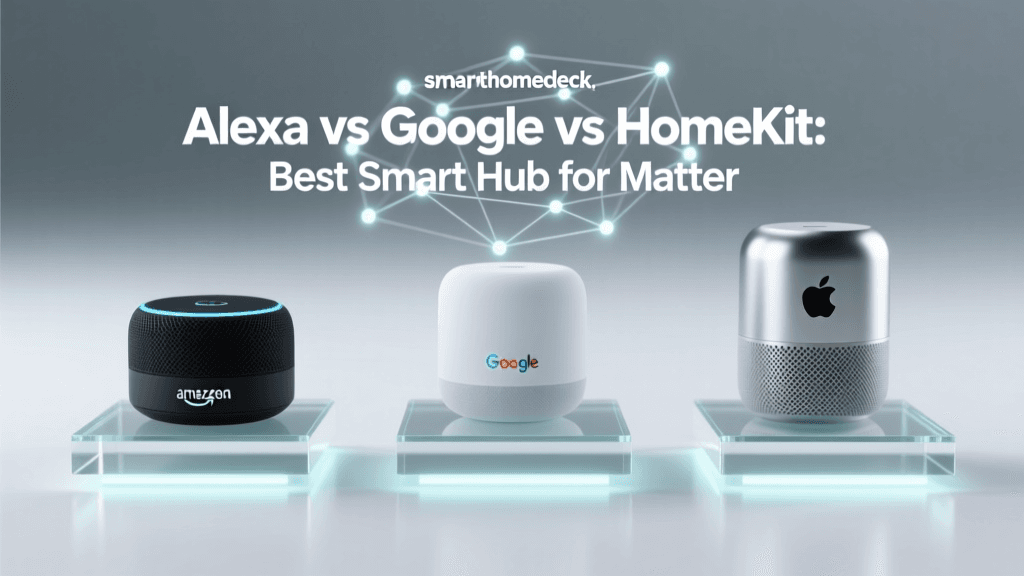
Building a smart home is no longer just about buying a single connected light bulb; it is about choosing a foundational ecosystem that will dictate how every device in your house communicates, automates, and secures your space. The modern smart home landscape is dominated by three major titans: Amazon Alexa, Google Home, and Apple HomeKit. Each platform brings a distinct philosophy to the table, ranging from Amazon's aggressive hardware expansion and universal compatibility, to Google's AI-driven intelligence, and Apple's uncompromising stance on privacy and premium integration.
Choosing the right ecosystem is a critical decision that impacts your budget, your daily routines, and the long-term viability of your connected devices. A fragmented smart home leads to app fatigue and unreliable automations, while a unified ecosystem creates a seamless, invisible layer of convenience over your daily life. In this comprehensive head-to-head comparison, we will dissect the hardware, software protocols, automation capabilities, and privacy frameworks of Alexa, Google Home, and Apple HomeKit to help you determine which platform deserves the command center of your home.
Amazon Alexa: The Compatibility King
Amazon Alexa has maintained its position as the market leader in the smart home space by prioritizing one core metric: sheer compatibility. If a smart home device exists, there is a near 100% guarantee that it works with Alexa. Amazon achieves this through a low barrier to entry for third-party manufacturers and a massive portfolio of first-party Echo devices that act as local hubs.
Hardware and Protocol Support
The Alexa ecosystem is powered by the Echo lineup. The standard Echo Dot (5th Gen) remains the most popular entry point, offering improved audio and a built-in temperature sensor. However, the true power of Alexa lies in devices like the Echo (4th Gen) and the Echo Show 10, which feature built-in Zigbee 3.0 hubs. This allows users to connect compatible smart locks, sensors, and lights directly to the speaker without needing a proprietary bridge. Furthermore, newer Echo devices are being updated to act as Thread Border Routers, preparing the network for the upcoming wave of Matter-compatible devices.
Automations and Intelligence
Alexa's automation engine relies on 'Routines'. While the interface can feel slightly dated compared to its competitors, its functionality is vast. Alexa supports complex triggers, including sound detection (like a baby crying or a dog barking), geofencing, and even 'Hunches'—a feature where Alexa proactively turns off lights or locks doors if it senses you have gone to bed. Additionally, Amazon's acquisition of Ring and Blink means that Alexa offers the most robust native integration for budget-friendly home security cameras and video doorbells.
Pros and Cons of Alexa
- Pros: Unmatched third-party device compatibility; built-in Zigbee hubs in select devices; excellent budget-friendly security options via Ring; proactive 'Hunches' automation.
- Privacy Concerns: Historically faced scrutiny over data collection and voice recording retention policies.
- App Experience: The Alexa app can feel cluttered and overwhelming due to the sheer volume of supported devices and skills.
Google Home: The Intelligence Leader
Google Home (now largely transitioning under the 'Google Nest' and revamped Google Home app branding) leverages the company's unparalleled expertise in artificial intelligence and natural language processing. If your priority is a voice assistant that actually understands conversational context and complex queries, Google is the undisputed champion.
Hardware and Protocol Support
Google's hardware strategy focuses on premium aesthetics and advanced sensor integration. The Nest Hub (2nd Gen) features a 7-inch display and utilizes a Soli radar chip for contactless sleep tracking and presence detection. On the networking side, the Nest Wifi Pro is a powerhouse, combining Wi-Fi 6E mesh routing with a built-in Thread Border Router, making it one of the most future-proof networking hubs on the market for IoT devices. Google has also been aggressive in adopting the Matter standard, ensuring that the Google Home app is ready for cross-platform device pairing.
Automations and Intelligence
Google's automation capabilities are deeply integrated into its AI ecosystem. The Google Home app's 'Automations' tab allows for highly visual, script-like logic using 'Starters' and 'Actions'. Google's voice recognition is superior in multi-user environments, easily distinguishing between different family members to provide personalized calendar updates and commute times. Furthermore, Google's Nest Aware subscription provides advanced AI features for security cameras, such as familiar face detection and intelligent audio alerts for smoke alarms or breaking glass.
Pros and Cons of Google Home
- Pros: Superior natural language processing and conversational AI; excellent multi-user voice recognition; Nest Wifi Pro offers top-tier Thread and Wi-Fi 6E support.
- Cons: Slightly smaller third-party compatible device library compared to Alexa; Google has a history of abandoning or rebranding smart home services (e.g., the transition from 'Works with Nest' to Google Home).
- Privacy: As an advertising-driven company, Google's data collection practices remain a primary concern for privacy-focused consumers.
Apple HomeKit: The Privacy and Premium Choice
Apple HomeKit is the most restrictive yet arguably the most secure and polished smart home ecosystem. Apple prioritizes local processing, end-to-end encryption, and a seamless user experience over mass-market compatibility. To use HomeKit, you must be embedded in the Apple hardware ecosystem, requiring an iPhone for setup and an Apple TV or HomePod to act as a home hub for remote access and automations.
Hardware and Protocol Support
Apple does not manufacture a dedicated smart home 'hub' in the traditional sense; instead, it relies on the HomePod mini and the Apple TV 4K (Ethernet model). Both devices act as Thread Border Routers. Apple enforces strict 'Works with Apple HomeKit' certification requirements, which means manufacturers must include specialized security chips and adhere to rigorous performance standards. This results in a highly reliable, albeit smaller, catalog of premium devices from brands like Eve, Nanoleaf, Schlage, and Ecobee. Apple also champions 'Adaptive Lighting', a feature that automatically adjusts the color temperature of your smart bulbs throughout the day to match natural circadian rhythms.
Automations and Intelligence
The Apple Home app is widely considered the most beautifully designed and intuitive interface among the big three. Automations are robust, supporting NFC tag triggers (allowing you to tap your iPhone on a sticker to run a scene) and complex conditional logic. However, Siri's voice intelligence lags significantly behind Alexa and Google. Siri is best used for direct, explicit commands ('Turn off the living room lights') rather than conversational queries or complex web searches.
Pros and Cons of Apple HomeKit
- Pros: Industry-leading privacy and end-to-end encryption; HomeKit Secure Video processes footage locally without cloud subscription fees; beautiful, unified app interface; local network processing ensures automations work even if the internet goes down.
- Cons: High cost of entry (requires Apple hardware); significantly smaller compatible device library; Siri's AI capabilities are outdated compared to competitors.
Head-to-Head Ecosystem Comparison
To visualize how these platforms stack up against each other across critical smart home metrics, review the detailed comparison table below:
| Feature | Amazon Alexa | Google Home | Apple HomeKit |
|---|---|---|---|
| Entry Cost | Low ($50+) | Medium ($99+) | High ($99+ Hub required) |
| Hub Requirement | Optional (Built into some Echos) | Optional (Built into Nest Wifi) | Mandatory (HomePod/Apple TV) |
| Native Protocols | Wi-Fi, Zigbee, BLE, Thread (newer) | Wi-Fi, Thread, BLE, Chromecast | Wi-Fi, Thread, BLE, Matter |
| Privacy Focus | Low/Medium | Low/Medium | Very High |
| Voice AI Quality | Excellent | Superior | Basic |
| Security Video | Ring (Cloud Subscription) | Nest Aware (Cloud Subscription) | HKSV (iCloud Storage, Local AI) |
Smart Home Market Share and Feature Scoring
When evaluating these ecosystems, industry analysts and smart home enthusiasts often score them based on a combination of device compatibility, automation depth, voice AI accuracy, and privacy frameworks. The chart below illustrates a composite 'Ecosystem Feature Score' out of 100, reflecting the current state of the market.
Ecosystem Feature Scores
While Apple scores lower on overall compatibility and voice AI, it consistently ranks highest in independent NIST IoT Cybersecurity Guidelines evaluations regarding local data processing and encryption standards. Conversely, Alexa's massive score is driven by its sheer volume of supported hardware and aggressive third-party integrations.
The Matter Protocol: A Unifying Future?
No discussion of the ecosystem wars is complete without addressing Matter. Developed by the Connectivity Standards Alliance (CSA), Matter is an open-source, royalty-free connectivity standard designed to eliminate the walled gardens that have historically plagued the smart home industry. Matter allows devices to communicate locally over Wi-Fi or Thread, ensuring that a smart lock or light bulb can simultaneously be controlled by Alexa, Google Home, and Apple HomeKit without relying on cloud-to-cloud integrations.
All three major ecosystems have pledged full support for Matter and act as Thread Border Routers. However, the transition is ongoing. While new devices launching today feature the Matter logo, legacy devices will rely on firmware updates or cloud-bridging. For the consumer, Matter means that the 'ecosystem war' is slowly shifting from a battle over hardware exclusivity to a battle over software experience, app design, and advanced automation logic. According to the Apple Support HomeKit Guide, Apple has already integrated Matter support directly into iOS, allowing users to scan a Matter QR code and instantly add a device to their Home app, bypassing manufacturer apps entirely.
Security and Privacy: The Hidden Battleground
As smart homes incorporate cameras, microphones, and smart locks, security becomes paramount. This is where the ecosystems diverge most sharply. Amazon and Google rely heavily on cloud processing. When you ask Alexa to turn on a light, the audio is often sent to Amazon's servers for processing. Similarly, security cameras from Ring and Nest require cloud subscriptions to store footage and utilize AI detection features.
Apple takes a fundamentally different approach with HomeKit Secure Video (HKSV). HKSV routes camera footage through your local HomePod or Apple TV, where the AI analysis (detecting people, pets, or vehicles) happens on-device. The encrypted video is then sent directly to your private iCloud storage. Apple cannot view your footage, and there is no monthly subscription fee required for camera recording, provided you have an adequate iCloud+ storage plan. For privacy advocates, this local-first, encrypted architecture makes HomeKit the only viable choice for securing the interior of a home.
Final Verdict: Which Ecosystem Should You Choose?
The 'best' smart home ecosystem does not exist in a vacuum; it depends entirely on your existing tech stack, your budget, and your tolerance for complexity.
Choose Amazon Alexa If:
You are a tinkerer who wants access to the widest possible array of budget-friendly devices. If you want to mix and match brands, utilize Zigbee sensors without buying extra hubs, and rely on Ring for affordable home security, Alexa's unmatched compatibility and proactive 'Hunches' make it the most versatile platform on the market.
Choose Google Home If:
You are deeply embedded in Google's software ecosystem (Gmail, Calendar, Android) and prioritize conversational AI. If you want a voice assistant that can answer complex, multi-part questions and you plan to build a robust Thread network using the Nest Wifi Pro, Google offers the smartest software experience, provided you are comfortable with Google's data collection policies.
Choose Apple HomeKit If:
You are an iPhone user who values privacy, security, and a polished, ad-free interface above all else. If you are willing to pay a premium for HomeKit-certified devices and want the peace of mind that comes with local processing, end-to-end encryption, and HomeKit Secure Video, Apple's walled garden is a beautifully secure sanctuary for your connected home.