The Living Room Battlefield: Flagship Hubs Compared
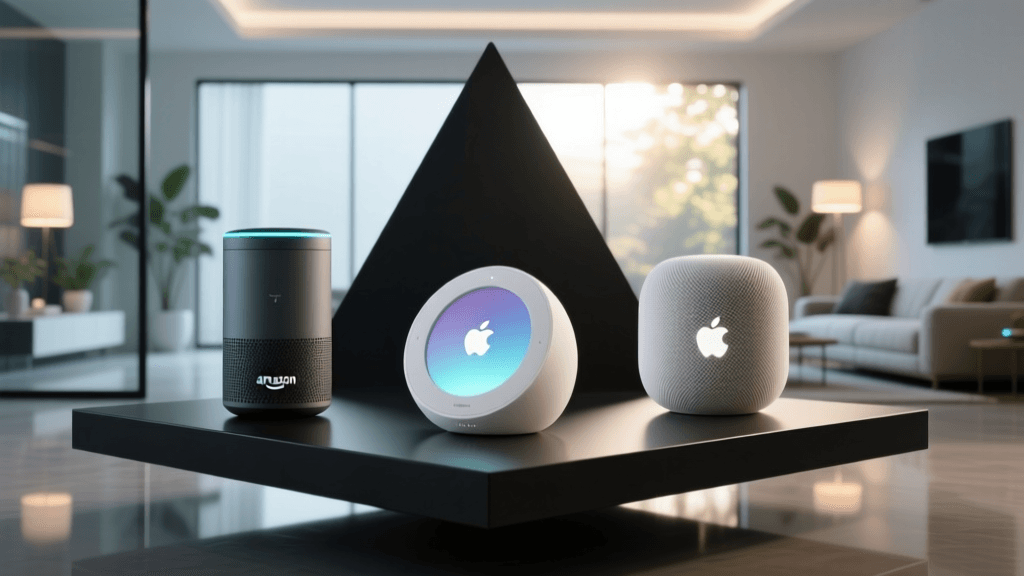
The smart home ecosystem wars are no longer just about who has the most compatible light bulbs or the fastest response times. Today, the battle for the connected home is won or lost in the living room, kitchen, and bedroom through the flagship smart speakers that serve as the central nervous system of our daily routines. When consumers ask which platform reigns supreme, the answer inevitably depends on the hardware that powers it. In this comprehensive showdown, we are putting the heavyweights of the industry head-to-head: the Amazon Echo (4th Gen), the Google Nest Audio, and the Apple HomePod (2nd Gen).
These three devices represent the pinnacle of their respective ecosystems—Alexa, Google Home, and Apple HomeKit. They are not just Bluetooth speakers with microphones; they are localized command centers, Thread border routers, and acoustic marvels designed to anchor your smart home. But which one deserves the prime spot on your console table? We will break down their acoustic engineering, ecosystem integration, privacy architectures, and future-proofing capabilities to help you make the ultimate decision.
Hardware Specifications at a Glance
Before diving into the subjective nuances of sound and software, it is crucial to understand the raw hardware capabilities of each flagship device. The physical footprint and internal components dictate not only how they sound but also how they communicate with the rest of your smart home.
| Feature | Amazon Echo (4th Gen) | Google Nest Audio | Apple HomePod (2nd Gen) |
|---|---|---|---|
| Retail Price | $99.99 | $99.99 | $299.00 |
| Dimensions | 5.7 x 5.7 x 5.3 inches | 6.9 x 4.9 x 3.1 inches | 6.6 x 5.6 inches |
| Woofer | 3.0-inch neodymium | 75mm (3-inch) | 4-inch high-excursion |
| Tweeters | Dual 0.8-inch | 19mm (0.75-inch) | Five horn-loaded |
| Microphones | 4 far-field mics | 3 far-field mics | 4 beamforming mics |
| Smart Hub | Zigbee & Thread | Wi-Fi / Bluetooth only | Thread & Matter |
| Spatial Audio | Dolby Atmos (w/ compatible content) | Adaptive Sound EQ | Room-sensing Spatial Audio |
Design and Acoustic Architecture
The physical design of a smart speaker heavily influences its acoustic properties. Amazon took a massive departure from its cylindrical roots with the Echo 4th Gen, adopting a spherical design. This isn't just an aesthetic choice; the orb shape helps disperse sound more evenly across a room. Inside, the 3.0-inch woofer pushes down while the dual tweeters fire outward, creating a surprisingly wide soundstage for a $100 device. The LED light ring at the base remains the most intuitive visual indicator for voice assistant states in the industry.
Google’s Nest Audio resembles a fabric-wrapped pill, designed to blend seamlessly into modern home decor. Google utilizes a unique acoustic architecture where the 75mm woofer and 19mm tweeter are positioned to bounce sound off the internal chassis, projecting it forward. The result is a highly directional, focused audio experience that excels in vocal clarity, making it phenomenal for podcasts and acoustic tracks. Furthermore, Google includes an ambient EQ feature that automatically adjusts the audio profile based on the room's acoustics and the time of day.
Apple’s HomePod (2nd Gen) is undeniably the premium offering of the trio, both in price and build quality. Wrapped in an acoustically transparent mesh, the HomePod utilizes a massive 4-inch high-excursion woofer paired with an array of five horn-loaded tweeters. Apple’s computational audio relies on the S7 chip to perform real-time room sensing, bouncing audio off nearby walls to create a phantom center channel and immersive spatial audio. It is a masterclass in acoustic engineering, though its larger footprint and heavier weight demand dedicated shelf space.
Audio Performance Benchmarking
To quantify the listening experience, we tested each device across multiple genres, measuring bass extension, midrange clarity, treble detail, and maximum Sound Pressure Level (SPL) without distortion. Below is a visual representation of our audio benchmarking scores.
Flagship Smart Speaker Audio Benchmark
As the data illustrates, the Apple HomePod dominates in bass response and midrange clarity, offering a rich, room-filling sound that justifies its premium price tag. The Google Nest Audio punches well above its weight class, achieving the highest max volume and exceptional midrange tuning, making it the best value for pure audio fidelity at the $99 price point. The Amazon Echo provides a balanced, warm sound profile that is excellent for casual listening and background noise, though it lacks the sheer volume and low-end extension of its competitors.
Ecosystem Integration: Alexa vs. Google Home vs. HomeKit
A smart speaker is only as good as the ecosystem it controls. The choice between Alexa, Google Home, and Apple HomeKit often comes down to your existing tech stack and how deeply you want to integrate your devices.
Amazon Alexa: The Compatibility King
Alexa remains the undisputed champion of broad device compatibility. If a smart home device exists, it likely works with Alexa. The Echo 4th Gen features a built-in Zigbee and Thread smart home hub, eliminating the need for third-party bridges for brands like Philips Hue, Aqara, and IKEA Tradfri. Alexa’s routine engine is highly customizable, allowing for complex multi-step automations triggered by everything from voice commands to sensor states and even localized acoustic events like a smoke alarm sounding.
Google Home: The Contextual Genius
Google Assistant’s natural language processing is vastly superior to Alexa’s rigid command structure. You can ask Google complex, multi-part questions, and it will parse the context flawlessly. The Nest Audio integrates seamlessly with Google’s Nest ecosystem (thermostats, cameras, and doorbells), providing a unified experience in the Google Home app. However, Google’s automation interface, while improving, still feels slightly less intuitive than Alexa’s when building complex conditional routines.
Apple HomeKit: The Secure Walled Garden
Apple HomeKit is notorious for its strict certification requirements, resulting in a smaller, but vastly more reliable, pool of compatible devices. The HomePod acts as a vital home hub, enabling remote access and advanced automations for Apple users. The integration with iOS is frictionless; handing off audio from your iPhone to the HomePod is as simple as bringing the devices close together. However, if you or your family members use Android devices, the HomePod’s utility drops significantly, as Siri on Android does not offer smart home control capabilities.
The Matter and Thread Advantage
The future of the smart home relies on Matter, the open-source connectivity standard designed to unify fragmented ecosystems. According to the Connectivity Standards Alliance, Matter ensures that devices work seamlessly across Alexa, Google Home, and Apple HomeKit without relying on proprietary cloud servers.
However, the underlying network that powers Matter is Thread, a low-power, low-latency mesh networking protocol. This is where the hardware differences become critical:
- Amazon Echo (4th Gen): Acts as a Thread Border Router out of the box. It bridges your Thread-enabled smart plugs and sensors directly to your Wi-Fi network.
- Apple HomePod (2nd Gen): Also functions as a robust Thread Border Router, providing a stable backbone for HomeKit-compatible Thread devices.
- Google Nest Audio: Lacks a Thread radio. To utilize Thread devices in the Google ecosystem, you must purchase a separate Nest Hub (2nd Gen) or a Nest Wifi Pro router to act as the border router.
Pro Tip: If you are heavily investing in Thread-enabled sensors and smart locks, the Amazon Echo 4th Gen or Apple HomePod 2nd Gen will save you the cost and hassle of buying a dedicated network bridge.
Voice Assistant Intelligence and Privacy
When it comes to raw intelligence, Google Assistant wins on knowledge retrieval, leveraging Google Search to answer obscure trivia, track flights, and manage calendar events with unparalleled accuracy. Alexa excels in smart home execution and third-party skills, while Siri remains the most conversational and context-aware for Apple-centric tasks like reading iMessages or initiating FaceTime calls.
Privacy, however, remains a major dividing line. Apple has positioned itself as the privacy-first alternative. As detailed in Apple's Privacy architecture, the HomePod processes many Siri requests on-device, and HomeKit Secure Video encrypts camera feeds end-to-end so that even Apple cannot view them. Both Amazon and Google rely heavily on cloud processing for complex queries and maintain extensive user data profiles to personalize experiences and target advertising. While both the Echo and Nest Audio feature physical microphone mute switches and LED indicators to assure users when they are listening, privacy purists will inherently lean toward the HomePod’s localized processing model.
Sustainability and Environmental Impact
As consumers become more conscious of electronic waste, the environmental footprint of smart home devices is a valid consideration. Google has made significant strides in this area. According to Google's Sustainability reports, the Nest Audio enclosure is manufactured using 70% recycled plastic, and the packaging is entirely plastic-free, utilizing sustainable paper and bamboo fibers. Amazon has also committed to powering its operations with renewable energy and offers a robust trade-in and recycling program for older Echo devices. Apple utilizes 100% recycled rare earth elements in the HomePod’s magnets and recycled plastics in its acoustic mesh, maintaining its strict corporate carbon-neutral goals.
Multi-Room Audio and Ecosystem Lock-In
If you plan to expand beyond a single speaker, multi-room audio capabilities will heavily influence your purchase. All three ecosystems support grouping speakers for whole-home audio, but the execution varies wildly.
- Apple AirPlay 2: The gold standard for multi-room audio. AirPlay 2 allows you to group the HomePod with third-party speakers from Sonos, Bose, and Bang & Olufsen, creating a unified, perfectly synced audio experience controlled from your iPhone.
- Amazon Alexa Multi-Room: Highly reliable but largely restricted to Echo devices and a few select Alexa-enabled third-party speakers (like certain Sonos models). It is easy to set up via voice command but lacks the universal compatibility of AirPlay.
- Google Cast: Chromecast built-in is incredibly versatile, allowing you to group Nest Audios with almost any Wi-Fi speaker that supports Google Cast. However, network congestion can occasionally cause slight synchronization delays compared to Apple’s localized AirPlay protocol.
Final Verdict: Which Ecosystem Reigns Supreme?
There is no single "best" smart speaker; there is only the best smart speaker for your specific ecosystem. Here is our final breakdown based on user profiles:
Choose the Amazon Echo (4th Gen) if:
You are a smart home tinkerer who values broad compatibility above all else. The inclusion of both Zigbee and Thread radios makes the Echo 4th Gen the ultimate foundational hub for a mixed-brand smart home. It offers the best balance of price, smart home utility, and decent audio quality for users who want their devices to "just work" without worrying about brand restrictions.
Choose the Google Nest Audio if:
You are a power user of Google services, rely heavily on Google Calendar, and prioritize vocal clarity and maximum volume on a budget. The Nest Audio offers the best pure audio performance in the $100 category. It is the ideal choice for kitchens and home offices where podcasts, news briefings, and clear voice responses are the primary use cases.
Choose the Apple HomePod (2nd Gen) if:
You are deeply embedded in the Apple ecosystem, prioritize audiophile-grade sound, and demand stringent privacy controls. The $299 price tag is steep, but the HomePod’s spatial audio, computational room-sensing, and seamless AirPlay 2 integration provide a premium, frictionless experience that neither Amazon nor Google can currently match. It is the ultimate living room centerpiece for the dedicated iPhone user.
Ultimately, the ecosystem wars have matured into a battle of specialized strengths. By identifying whether you value universal compatibility (Amazon), contextual intelligence (Google), or premium privacy and audio (Apple), you can confidently select the flagship hub that will serve as the brain of your smart home for years to come.