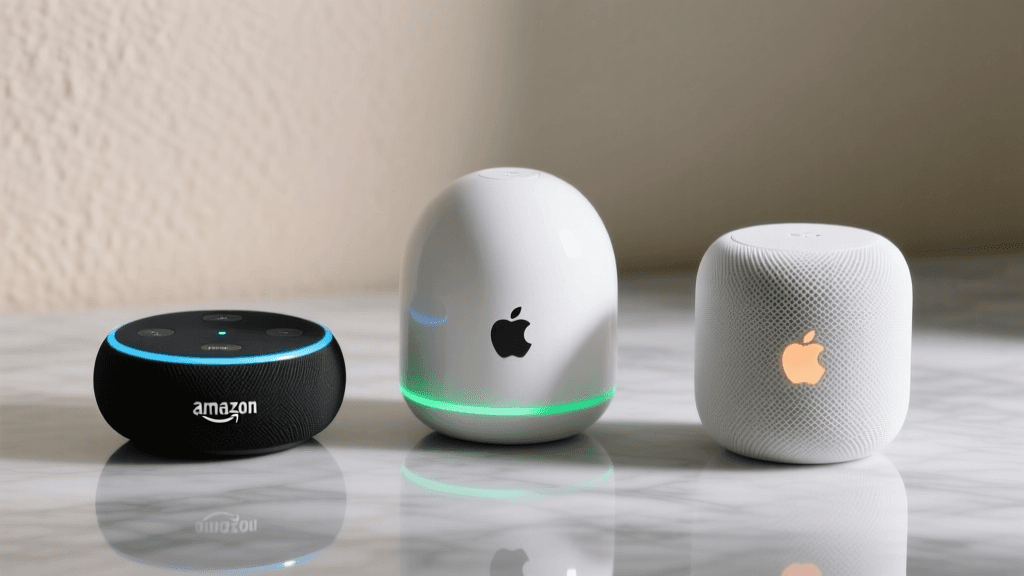
Building a connected home is one of the most exciting technological upgrades you can make, but choosing the right foundational platform is critical. In this comprehensive smart home review, we are putting the two undisputed titans of the industry head-to-head: Amazon Alexa and Google Home. Whether you are upgrading your current setup or starting from scratch with our beginner smart home guide, the ecosystem you choose will dictate the hardware you buy, the automations you can create, and the overall seamlessness of your daily life.
Both platforms have evolved far beyond simple voice-activated timers and weather updates. Today, they serve as the central nervous system for complex networks of lighting, security, climate control, and entertainment. But which one truly deserves the crown? To answer this, we must look past the marketing and dive deep into performance, automation capabilities, ecosystem compatibility, and overall value. Let us explore the ultimate smart home review showdown to help you decide which digital assistant belongs in your home.
Side-by-Side Specification Comparison
Before we dissect the nuances of each platform, it is helpful to look at the raw capabilities and structural differences between the two ecosystems. The following table highlights the core specifications that define the Amazon Alexa and Google Home experiences.
| Feature Category | Amazon Alexa | Google Home |
|---|---|---|
| Voice Assistant Engine | Alexa (Custom Amazon NLP) | Google Assistant (Google Knowledge Graph) |
| Native Hub Hardware | Echo Show, Echo Studio, Echo Hub | Nest Hub, Nest Hub Max, Nest Audio |
| Wireless Protocols Built-in | Wi-Fi, Bluetooth, Zigbee, Matter, Thread (select models) | Wi-Fi, Bluetooth, Thread (select models), Matter |
| Automation Engine | Alexa Routines (Highly customizable) | Google Home Automations (Starter & Advanced scripts) |
| Smart Home Protocol Support | Matter, Zigbee, Wi-Fi, Bluetooth Mesh | Matter, Thread, Wi-Fi, Bluetooth |
| Mobile Application | Alexa App (Feature-dense, complex) | Google Home App (Visual, intuitive, device-centric) |
| Third-Party Device Compatibility | Over 100,000+ unique devices | Over 50,000+ unique devices |
| Multi-User Voice Recognition | Yes (Voice Profiles) | Yes (Voice Match) |
Performance & Voice Recognition
At the heart of any smart home review is the fundamental question: how well does the system listen, understand, and execute? When it comes to raw voice recognition and natural language processing, Google Home holds a distinct advantage, largely due to its integration with the vast Google Knowledge Graph. If you ask a complex, multi-layered question or a conversational query, Google Assistant is significantly better at parsing context and delivering accurate, conversational responses. Its Voice Match technology is also incredibly adept at distinguishing between different household members, even in noisy environments, ensuring that personal calendars and tailored responses are routed correctly.
Amazon Alexa, however, has made massive strides in closing this gap. While Alexa might occasionally stumble on obscure trivia or highly conversational prompts compared to Google, its performance in executing smart home commands is virtually flawless. Alexa's far-field microphone arrays, particularly in devices like the Echo Studio and the latest Echo Dots, are exceptional at picking up wake words from across a large room, even over the sound of a running television or a loud kitchen blender. Furthermore, Alexa's processing speed for local smart home commands feels noticeably snappier. When you say, "Alexa, turn off the living room lights," the execution is nearly instantaneous, whereas Google Home sometimes introduces a micro-second delay as it routes the command through cloud servers.
For users who prioritize smart home control over using their speaker as a conversational search engine, Alexa's performance is incredibly reliable. However, if your smart home review criteria include using the assistant as a hands-free search engine, recipe reader, and conversational companion, Google Home remains the undisputed champion of natural language understanding.
Smart Home Features & Automation
The true power of a connected home lies in automation—the ability for your devices to act without you having to issue a voice command. In this arena, the contrast between the two platforms is stark, and it heavily influences the outcome of this smart home review.
Amazon Alexa offers one of the most robust and accessible routine builders on the market. The Alexa app allows you to create complex, multi-step routines triggered by a vast array of conditions. You can trigger actions based on time of day, sunrise and sunset, device states (like a smart lock being unlocked or a motion sensor detecting movement), voice commands, or even specific sounds like a baby crying or a dog barking. The inclusion of "Wait" commands and conditional logic (e.g., "If the temperature is above 75 degrees, turn on the fan, otherwise do nothing") makes Alexa a powerhouse for DIY smart home enthusiasts. For those looking to push the boundaries of automation, integrating Alexa with platforms discussed in our Matter vs. Zigbee comparison opens up even more local processing possibilities.
Google Home has historically lagged in this department, relying on the now-deprecated IFTTT (If This Then That) for complex logic. However, the introduction of the new Google Home app and the "Automations" tab has significantly leveled the playing field. Google now offers visual scripting blocks that allow for starter conditions and specific actions. While it is cleaner and more visually intuitive than Alexa's list-based approach, Google's automation engine still lacks some of the granular, niche triggers that Alexa supports natively. For example, Alexa's "Hunches" feature proactively suggests or executes actions based on learned behavior (like turning off a light it suspects you left on), a proactive feature Google is still refining.
Ultimately, if you want to build intricate, condition-based automations without relying on third-party software, Amazon Alexa is the superior choice. If you prefer a clean, straightforward interface for basic scheduling and presence-based automations, Google Home is more than capable and much easier to teach to family members.
Ecosystem & Device Compatibility
A smart home platform is only as good as the devices it supports. Amazon's strategy has always been one of aggressive, open expansion. Alexa boasts compatibility with hundreds of thousands of third-party devices, ranging from premium smart lighting brands like Philips Hue and Lutron to budget-friendly Wi-Fi plugs found on online marketplaces. If a smart device exists, it almost certainly works with Alexa. This massive ecosystem makes it incredibly easy to mix and match brands, ensuring you are never locked into a single hardware manufacturer. Furthermore, Amazon has been a driving force behind the Matter protocol, ensuring that new Alexa hubs act as Thread border routers and Matter controllers, future-proofing your investment.
Google Home takes a slightly more curated approach. While its compatibility list is still massive and covers all major smart home brands (Ecobee, Ring, Yale, TP-Link), it is more selective about lesser-known, budget-tier devices. This curation often results in a more stable, less buggy user experience, as Google enforces stricter integration guidelines for the "Works with Google Home" badge. Google's ecosystem also benefits heavily from native integration with Android devices, Chromecast, and Nest products. If you are heavily invested in the Google suite of services—using Google Calendar, Google Maps, and YouTube—the synergy between your phone, your TV, and your smart speakers is unparalleled.
Another critical factor in this smart home review is the mobile application interface. The Google Home app is widely considered the gold standard for visual device management. It uses a clean, room-based dashboard that makes it easy to see the status of your home at a glance and control devices via large, tactile buttons. The Alexa app, by contrast, is often criticized for being cluttered. It is packed with menus, skills, shopping features, and social tabs that can make finding a simple light switch toggle feel like a chore. For pure ecosystem management and visual appeal, Google Home wins decisively.
Value, Pricing & Hardware Options
When evaluating the total cost of ownership, both platforms offer highly accessible entry points, but their hardware strategies differ. Amazon frequently discounts its Echo line of speakers and displays, making it incredibly cheap to populate multiple rooms with Alexa-enabled devices. The Echo Dot is often the most affordable smart speaker on the market during sales events, and the Echo Show lineup provides excellent value for smart displays, complete with built-in Zigbee hubs in certain models to connect sensors and locks directly without a bridge.
Google's Nest hardware is generally positioned at a slightly higher price point, reflecting its premium audio tuning and minimalist, fabric-forward aesthetic that blends seamlessly into modern home decor. The Nest Audio and Nest Hub Max offer exceptional sound quality and screen resolution, respectively. However, Google does not discount its hardware as aggressively or as frequently as Amazon. Furthermore, Google has moved many of its advanced Nest features, such as continuous video recording for Nest cameras and advanced health tracking, behind the Nest Aware subscription paywall.
Amazon also has its own subscription service, Alexa+, which offers premium features like advanced emergency assist and ad-free music, but the core smart home functionality of Alexa remains completely free and un-gated. For budget-conscious users looking to blanket their home in smart audio and voice control, Amazon's aggressive pricing and frequent hardware bundles offer undeniable value. For users who prioritize high-fidelity audio and premium industrial design, Google's Nest line justifies its slightly higher cost. To see how these speakers compare purely on audio output, check out our roundup of the best smart speakers for audio quality.
The Verdict: Which Smart Home Ecosystem is Right for You?
Concluding this extensive smart home review requires matching the platform to your specific lifestyle, technical expertise, and existing hardware. There is no single "best" platform; rather, there is a best platform for you.
Choose Amazon Alexa If:
- You are an Automation Enthusiast: If you want to create complex, multi-condition routines using motion sensors, temperature triggers, and time delays, Alexa's routine builder is vastly superior.
- You Want Maximum Device Compatibility: If you plan on mixing budget Wi-Fi plugs with premium Zigbee sensors, Alexa's massive "Works with" library and built-in hub hardware ensure everything connects seamlessly.
- You are on a Budget: Amazon's frequent sales on Echo devices make it the most cost-effective way to add voice control to every room in your house.
- You Rely on Amazon Services: If you use Prime for shopping, Amazon Music for audio, and Ring for security, the native integrations provide a highly cohesive experience.
Choose Google Home If:
- You Prioritize Natural Language & Search: If you use your smart speaker to ask complex questions, manage family calendars, and look up recipes, Google Assistant's conversational AI is unmatched.
- You Want a Clean, Visual App Interface: The Google Home app is a joy to use, offering a beautiful, intuitive dashboard that makes managing rooms and devices effortless for every member of the family.
- You are Deep in the Google Ecosystem: If you use Android phones, Chromecast for streaming, and Google Workspace, the synergy between your devices is incredibly smooth.
- You Value Premium Aesthetics & Audio: Google's Nest hardware line features beautiful, minimalist designs and generally superior out-of-the-box audio tuning compared to standard Echo devices.
Ultimately, the rise of the Matter protocol is slowly erasing the hard lines between these two ecosystems. As detailed in our guide to Matter, modern devices can now be controlled by both platforms simultaneously, allowing you to mix and match hardware with greater freedom than ever before. However, the "brain" of your automations will still rely on the platform you choose as your primary hub.
Frequently Asked Questions
Can I use Amazon Alexa and Google Home together in the same house?
Yes, you can absolutely use both platforms in the same home, though it requires some careful management. Many modern smart devices, such as Philips Hue, Ecobee thermostats, and Kasa smart plugs, allow you to link your account to both the Alexa app and the Google Home app simultaneously. This means you can use a Google Nest Hub in the kitchen and an Amazon Echo in the living room to control the same lights. However, you cannot use them to trigger each other's native routines, and managing device names across two different apps can become tedious. With the rollout of Matter, multi-admin control is becoming much more streamlined, allowing a single device to be natively controlled by both ecosystems without cloud-linking workarounds.
Which platform is better for smart home security and privacy?
Both Amazon and Google have faced scrutiny regarding data privacy, but both have also implemented robust, hardware-level privacy controls. Every Echo and Nest device features a physical microphone mute button that electronically disconnects the mics, ensuring the device cannot listen. Amazon provides a comprehensive privacy dashboard where you can review and delete your voice history, and it offers features like Alexa's "Guard" (now Emergency Assist) which listens for the sound of breaking glass or smoke alarms. Google offers similar voice history management and uses on-device processing for certain commands to reduce cloud data transmission. Ultimately, the "safer" platform depends on which parent company's data privacy policies you trust more, as both utilize enterprise-grade encryption for smart home data transmission.
How does the Matter protocol change this smart home review comparison?
The Matter protocol is fundamentally shifting the smart home landscape by decoupling device compatibility from the voice assistant. Historically, a smart home review would heavily penalize a platform if it lacked support for a specific brand. Today, if a device is Matter-certified, it is guaranteed to work with both Amazon Alexa and Google Home natively, utilizing local network processing for faster, more reliable control. This means your choice between Alexa and Google is no longer about which devices will work, but rather which software interface, automation engine, and voice AI you prefer. Matter ensures that your hardware investments are protected, regardless of which digital assistant you ultimately choose to command them.
Do I need a premium subscription for either ecosystem?
No, the core functionality of both Amazon Alexa and Google Home is completely free. You do not need a subscription to control smart devices, create routines, use voice commands, or intercom between rooms. However, both companies offer premium tiers for advanced features. Amazon offers Alexa+ (and Amazon Music Unlimited) for ad-free listening, advanced emergency response features, and deeper integrations. Google offers Nest Aware, which is highly recommended if you use Nest security cameras, as it unlocks continuous video recording, intelligent person and package detection, and professional monitoring. If your smart home is heavily focused on security cameras, a Google Nest Aware subscription provides immense value; if your focus is purely on automation and lighting, neither subscription is necessary.